Rabih Alameddine - The Hakawati
Здесь есть возможность читать онлайн «Rabih Alameddine - The Hakawati» весь текст электронной книги совершенно бесплатно (целиком полную версию без сокращений). В некоторых случаях можно слушать аудио, скачать через торрент в формате fb2 и присутствует краткое содержание. Год выпуска: 2009, Издательство: Anchor, Жанр: Современная проза, на английском языке. Описание произведения, (предисловие) а так же отзывы посетителей доступны на портале библиотеки ЛибКат.
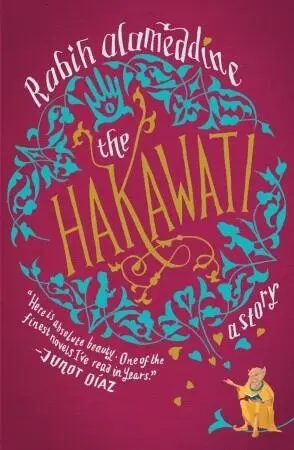
- Название:The Hakawati
- Автор:
- Издательство:Anchor
- Жанр:
- Год:2009
- ISBN:нет данных
- Рейтинг книги:4 / 5. Голосов: 1
-
Избранное:Добавить в избранное
- Отзывы:
-
Ваша оценка:
The Hakawati: краткое содержание, описание и аннотация
Предлагаем к чтению аннотацию, описание, краткое содержание или предисловие (зависит от того, что написал сам автор книги «The Hakawati»). Если вы не нашли необходимую информацию о книге — напишите в комментариях, мы постараемся отыскать её.
, or storyteller, and his bewitching tales are interwoven with classic stories of the Middle East. Here are Abraham and Isaac; Ishmael, father of the Arab tribes; the beautiful Fatima; Baybars, the slave prince who vanquished the Crusaders; and a host of mischievous imps. Through Osama, we also enter the world of the contemporary Lebanese men and women whose stories tell a larger, heartbreaking tale of seemingly endless war, conflicted identity, and survival. With
, Rabih Alameddine has given us an
for this century.
The Hakawati — читать онлайн бесплатно полную книгу (весь текст) целиком
Ниже представлен текст книги, разбитый по страницам. Система сохранения места последней прочитанной страницы, позволяет с удобством читать онлайн бесплатно книгу «The Hakawati», без необходимости каждый раз заново искать на чём Вы остановились. Поставьте закладку, и сможете в любой момент перейти на страницу, на которой закончили чтение.
Интервал:
Закладка:
“Distract me,” Fatima said.
“Let us decorate the room again,” said Job. The imps were lounging around her bed.
“No,” she replied. “Tell me a story, a tale so strange, a tale so true, so wonderful and engrossing that it will seduce my mind.”
“Demon tales,” cried Ezra.
“No,” Fatima said. “I know those too well.”
“Parrot tales,” said Isaac. “Those are the best.”
“I will tell them,” said Ishmael.
“No, I will,” said Elijah.
“Me, me, me.”
And Fatima decided that Ishmael would begin and the imps would take turns. “However, if one of the servant girls comes in here, she is going to be confounded by your presence. Make yourselves less shocking.” Ishmael and Isaac turned into red parrots. The rest followed suit in their different colors. The rainbow-hued parrots perched atop the bed’s backrest, the curtain rods, the lamps, and the short column at the foot of the bed.

My uncle Wajih was born two years after Samia. He arrived with little fuss. “He’s going to grow up wise,” the midwife said. His arrival was the cause of many a celebration. The bey himself blessed my uncle. “He’ll become the head of an illustrious family, a reaper of honor, an amasser of wealth, and a man of substance.” My grandfather offered cigars to all the men in the village. My grandmother offered sweets. Evil Sitt Hawwar had to keep quiet for a while.
My uncle Halim made his first appearance in our world in 1925. There were no delivery complications; the umbilical cord did not accidentally strangle him. Yet my grandmother recognized that something was off the instant she held him in her arms. His head seemed just a tad too warm, and his eyes seemed to flutter jerkily when closed. “He’s going to be a dreamer,” said the midwife.
My father came next, in 1930, and two years later came Uncle Jihad. They were their parents’ favorites. “We were too young,” my grandfather told me once. “It’s not that we didn’t love all our children. We did. But then your father, Farid, was born. We had been married for eleven years. We were — I don’t know — more mature. There was a difference, but it wasn’t intentional.”
I didn’t care. I was busy watching a lizard stand utterly still.
“Your grandmother loved Farid. He was special, much smarter than his siblings. If you placed all three other children on one scale and your father on the other, his intelligence would outweigh all of theirs. And then Jihad — he spoke before he was nine months old. He was brilliant. He made me so proud. How can you blame your grandmother for treating them differently? How can you blame her for loving them more? They were the chosen ones.”
Upon returning to his house, Baybars found the old mayor’s intendants and attendants waiting for him. He inquired how he could help them, and they said, “We offer condolences on the death of the mayor, congratulations on your promotion, and our services.” Baybars asked that each inform him of his duty and salary with the previous administration.
“There were no salaries, sire. The previous mayor slurped any government money that appeared in his bowl. We earned our keep from the duties and taxes paid by Cairo’s cadres of thieves, gamblers, wine merchants, and criminals.”
“And how do you collect those duties?”
“Each cadre has a head, and the head of heads is Commander Khanjar, chief of the city’s gates.” Baybars ordered his new staff to give up their wayward ways. “I will pay your salaries, enough to feed and clothe your families. You may not collect funds from anywhere else. Renounce your past misdeeds, swear vows of honesty, pray, and fast. If I hear of any of you committing a deed that would anger God, I, the mayor of Cairo, will seek revenge.” And his staff swore allegiance to God and Baybars. “Get me Othman,” Baybars demanded.
That night, Baybars and Othman paid the commander a visit at his headquarters. Surrounded by his men, he sat on his chair like a prideful tiger wearing clothes that were much too fancy. Khanjar did not stand to greet his visitors, nor did he ask after their health, because he possessed a head swelled with self-importance.
Baybars greeted the commander with “Peace be upon you.”
Khanjar replied, “I know not peace. State your need, boy. Are you the one who was given the mayor’s suit? Are you the one who fooled Othman and Harhash onto the path of virtue? Follow me, be my boy, and I will reward you. I will take care of all your needs, all your wants, and more.” Othman chimed in, “We have come here to ask for your blessing.”
The commander beamed. Joy and greed burst from his eyes. “Then your presence here is most welcome. If you capture one of my artisans, release him and I will remunerate you. Obey me and acquire wealth, but cross me and you will regret it for the rest of your shortened life.”
“We aim only to please you, my father,” Othman said. “But how will I know if I catch one of your people?”
Khanjar thought. “Maybe if they gave you a secret word. You must punish anyone who does not work for me and spare those who do.”
Othman objected. “No word remains secret in the criminal world for long. It would be better if you introduced us to the members of the cadres. Inform the clans that the new mayor wishes to know them one and all.”
Quawk, began the parrot Ishmael. A quawk here, a quawk there. Let us embark on the tales of the wise parrot. There was once a wealthy merchant who married a young woman of exquisite beauty. On their wedding night, he informed his lovely wife that he would be leaving on an extended journey the following day. His wife asked him not to go. She would be lonely. He said, “My business demands that I travel. I buy my silk in China, my cotton in Egypt. Spice I procure from India, and perfume from Persia. My shops need merchandise,” and she replied, “But I need you. I have no need for money with you by my side.”
Her husband glowed with pride and said, “A moneyless man is a fatherless one, and a home without money is haunted. The sun never shines on an indigent.” But, as the saying goes, a man who is given to much traveling does not deserve to be married.
The following day, the merchant walked to the bazaar and bought a magnificent parrot and a magpie. He charged his wife to obtain the sanction of both birds whenever she had to make a decision. Then he threatened the birds with a horrifying death if they allowed his wife to betray him. And off on his journey he went. Weeks passed, and then months, and the merchant extended his expedition longer and longer. One day, as the winsome wife hung laundry on the roof, she noticed a royal procession below. She saw a handsome prince astride a steed, and her heart was filled with love and lust. The prince chanced to glance up and was dazzled by the fair lady’s loveliness. Upon returning to his castle, he sent an old woman to the lady’s home with an invitation to his palace for that evening, which she duly accepted. Arraying herself in the finest apparel and donning her best jewels, she faced the birds.
“Dear magpie,” she said. “What thinkest thou of the propriety of my purpose?”
“I like it not,” said the magpie. “I forbid thee to leave.”
The lovely lady opened the cage door and wrung the magpie’s neck. She turned to the parrot. “My dear parrot. What thinkest thou of the propriety of my purpose?”
And the prudent parrot said, “My lady. You are most fair tonight. You are lovelier than the new moon, which weeps in shame and quivers with envy at the mere mention of your name. Sit, my lady. Let me entertain you for a while. I am a hakawati, and your gloriousness inspires me to tell a great tale. Allow me to begin.”
Читать дальшеИнтервал:
Закладка:
Похожие книги на «The Hakawati»
Представляем Вашему вниманию похожие книги на «The Hakawati» списком для выбора. Мы отобрали схожую по названию и смыслу литературу в надежде предоставить читателям больше вариантов отыскать новые, интересные, ещё непрочитанные произведения.










Обсуждение, отзывы о книге «The Hakawati» и просто собственные мнения читателей. Оставьте ваши комментарии, напишите, что Вы думаете о произведении, его смысле или главных героях. Укажите что конкретно понравилось, а что нет, и почему Вы так считаете.