Rabih Alameddine - The Hakawati
Здесь есть возможность читать онлайн «Rabih Alameddine - The Hakawati» весь текст электронной книги совершенно бесплатно (целиком полную версию без сокращений). В некоторых случаях можно слушать аудио, скачать через торрент в формате fb2 и присутствует краткое содержание. Год выпуска: 2009, Издательство: Anchor, Жанр: Современная проза, на английском языке. Описание произведения, (предисловие) а так же отзывы посетителей доступны на портале библиотеки ЛибКат.
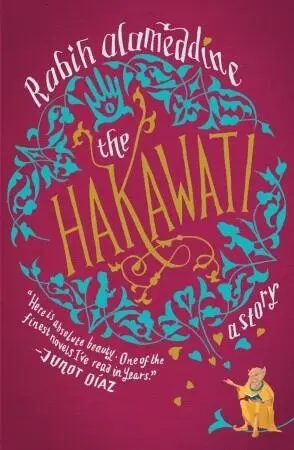
- Название:The Hakawati
- Автор:
- Издательство:Anchor
- Жанр:
- Год:2009
- ISBN:нет данных
- Рейтинг книги:4 / 5. Голосов: 1
-
Избранное:Добавить в избранное
- Отзывы:
-
Ваша оценка:
The Hakawati: краткое содержание, описание и аннотация
Предлагаем к чтению аннотацию, описание, краткое содержание или предисловие (зависит от того, что написал сам автор книги «The Hakawati»). Если вы не нашли необходимую информацию о книге — напишите в комментариях, мы постараемся отыскать её.
, or storyteller, and his bewitching tales are interwoven with classic stories of the Middle East. Here are Abraham and Isaac; Ishmael, father of the Arab tribes; the beautiful Fatima; Baybars, the slave prince who vanquished the Crusaders; and a host of mischievous imps. Through Osama, we also enter the world of the contemporary Lebanese men and women whose stories tell a larger, heartbreaking tale of seemingly endless war, conflicted identity, and survival. With
, Rabih Alameddine has given us an
for this century.
The Hakawati — читать онлайн бесплатно полную книгу (весь текст) целиком
Ниже представлен текст книги, разбитый по страницам. Система сохранения места последней прочитанной страницы, позволяет с удобством читать онлайн бесплатно книгу «The Hakawati», без необходимости каждый раз заново искать на чём Вы остановились. Поставьте закладку, и сможете в любой момент перейти на страницу, на которой закончили чтение.
Интервал:
Закладка:
The beys were uniformly unintelligent, probably because of inbreeding — there were only two other families that the men were allowed to marry from. According to my grandfather, inbreeding negatively affected the males, but the women in the family were exceptionally quick. Therefore, my grandfather insisted, the bey’s wife would have recognized that changes were afoot. The politics of the land would not remain the same, and, to maintain their power, the beys couldn’t rely solely on the blind support of the ignorant. They would need a new source of loyalty. Mahdallah Arisseddine and his family, particularly his second son, Jalal, would prove to be the bey’s boon in later years. But now I’m ahead of myself.

My father was drugged unconscious, his head slightly raised. He looked unfamiliar, his nose now enormous, the only part of him that hadn’t shrunk. The ventilator’s thick accordion tube forced its way inside his mouth to his lungs, coercing his chest into expansion and contraction. His chest, sparsely haired, dry, taut, looked like an Indian medicine drum. Thin, translucent ocher-colored tubes drew blood from his side into a dialysis machine, which pumped the cleansed blood back into his system. A catheter attached to a suction machine went up his penis, through the urethra, sucking out his urine.
Effusions of sound. My sister weeping in the corner, her sharp intakes of breath in discord with those of the ventilator. The chugalug of dialysis, the technician in charge of the machine seeming mesmerized by its churning liquid sounds. The metronomic beats of the monitor. Jagged Richter line in red, loopy one in white, a wavy yellow, and a green on a screen above my father’s head. Could Mesmer have ever envisioned the hypnotic movement and sound of these modern contraptions? I needed to slap myself, remind myself this wasn’t a dream, nor was it a repeat of an earlier scene. We’d huddled around a hospital bed for my mother years earlier, and now my father.
I stood at the foot of the bed, staring at him, my left hand touching his foot. My niece entered the room and waddled toward me, looking as if she might give birth then and there. She stood beside me and stroked my back. My sister turned around, wiped her tears with the back of her forefingers.
“One of you has to go out there,” Salwa said. “I need a break. There are a lot of people, and your aunt is driving me crazy.”
“I’ll do it,” Lina said. She moved to my father’s bedside, kissed his forehead. “Everything will be all right,” she told him, her voice breaking again. She covered her mouth, turned around, took out tissues from her bra. “Talk to him,” she said. “Tin Can says he can still hear us. Comfort him. You know how frightened he gets.”
Salwa took my father’s hand and squeezed it. “It’s me, Grandfather.” She looked at me, motioned with her head to the chair. I moved it for her, and she lowered her weight onto it. “Are you in pain?” she asked him. She sounded so mature, confident. “Can you hear me? If you can, squeeze my hand.”
He squeezed. My fingers twitched with a mind of their own.
“Are you in pain? Squeeze my hand if yes.” He squeezed again. “Is it the pillows?” Squeeze. On either side of the bed, Salwa and I raised him a bit by his shoulders. We fluffed the pillows beneath him. “Is this better? Do you need water?” Salwa dipped gauze in a cup and wiped it across his mouth, above and below the ventilator tube. He pressed his lips together, holding the gauze in place for a brief moment. “Your lips look very dry. Would you like me to run moisturizer on them?” He didn’t squeeze. “Do you still hear me?” She stroked his forehead. “Sleep now. I know the dialysis hurts, but it won’t last long. You’ll have new blood. The kidneys aren’t working, and that’s why you’ve been feeling awful. Don’t be afraid. We’re all here.”
She reached out to me. I moved to her side, took her offered hand. She directed me to her shoulders, and I massaged them. “The anesthesiologist said the drugs make him forget everything,” she told me. “I don’t think he’s really awake, do you? It’s probably better that way.”
The story of how my great-grandfather fell in love is relatively well known, so I won’t get into it here. Just think Tristan and Isolde on a train from Tripoli to Beirut, without the deaths or whale weights. There was singing, though, of a different kind.
Who am I kidding? I have to tell you the story, at least the highlights. I can’t help myself. Besides, you might be one of the few people who haven’t heard it.
The Ottoman sultan must have been trying to impress the bey, for the gift was notable, even though it went unappreciated by its recipient. My great-grandmother Mona was more than a maid, not simply a housekeeper. She was an entertainer; she played the oud, had a delightfully soft voice, and knew more than one hundred songs, including some folk melodies from her native Albania. Because she performed the songs of praise well, she was one of the sultan’s favorites, which was why she had remained a virgin in his harem.
I believe she lost her virginity on the train trip.
My great-grandfather must have cursed his luck and the bey’s entire family while he made the long and tiring journey to the northern city. But then he arrived at the sultan’s ship to claim her. He stopped cursing his luck when he saw her walk down the plank with her small oud and her belongings in a satchel. And he thanked God when, four hours later, she sang a story of love that night on the train, sweet chords, dulcet tones. As for my great-grandmother: she had never met a soul who looked at her so adoringly. Hope flowered in her heart, hope of being seen as someone different, someone better, hope of being seen.
“I can’t let you clean house for the bey,” he told her. “I just can’t.”
“I do what I must.”
“I’ll not have you sing for another man.”
At the village, my great-grandfather didn’t go directly to the bey’s mansion. He stopped at his parents’ house, dropped off the oud, and walked to the mansion, with my great-grandmother a step behind. He made the introductions and said, “I beg your indulgence, O Bey. This maid would be of great value to me. I live alone, with no one to take care of me. My room needs a woman’s touch. I can’t have guests since I don’t know how to brew coffee. If you can spare her, I’d love to own her.”
The bey laughed. “You think me a fool. She’ll be doing more than brewing coffee for you. She’s not much to look at, but she’ll do. I don’t need her. Take her. We can’t have the village’s future doctor remain inexperienced in the ways of the world.”
My great-grandparents walked out together with the bey’s blessing.
And my great-grandfather said, “I wish to spend my life with you.”
My great-grandmother said, “I will be your family and you will be my man.”
And my great-grandmother never played the oud for anyone else again.
Years earlier, when the bey married, twenty-one village women cooked for two whole weeks, and the wedding lasted six days. When Mahdallah’s brother married, his wedding lasted three days. My great-grandparents’ wedding lasted all of one hour.
Mahdallah had to state the Shahada and convert to Islam. His first conversion.
Mona brewed coffee for his guests in the small room. They were happy and content, took care of each other, and began to consider a family. Their first son, my great-uncle Aref, was born in Beirut before my great-grandfather returned to assume his rightful duties as the doctor of his home village.
Читать дальшеИнтервал:
Закладка:
Похожие книги на «The Hakawati»
Представляем Вашему вниманию похожие книги на «The Hakawati» списком для выбора. Мы отобрали схожую по названию и смыслу литературу в надежде предоставить читателям больше вариантов отыскать новые, интересные, ещё непрочитанные произведения.










Обсуждение, отзывы о книге «The Hakawati» и просто собственные мнения читателей. Оставьте ваши комментарии, напишите, что Вы думаете о произведении, его смысле или главных героях. Укажите что конкретно понравилось, а что нет, и почему Вы так считаете.