Rabih Alameddine - The Hakawati
Здесь есть возможность читать онлайн «Rabih Alameddine - The Hakawati» весь текст электронной книги совершенно бесплатно (целиком полную версию без сокращений). В некоторых случаях можно слушать аудио, скачать через торрент в формате fb2 и присутствует краткое содержание. Год выпуска: 2009, Издательство: Anchor, Жанр: Современная проза, на английском языке. Описание произведения, (предисловие) а так же отзывы посетителей доступны на портале библиотеки ЛибКат.
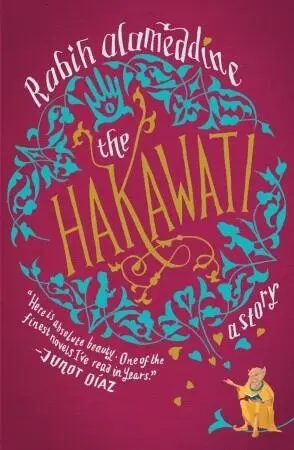
- Название:The Hakawati
- Автор:
- Издательство:Anchor
- Жанр:
- Год:2009
- ISBN:нет данных
- Рейтинг книги:4 / 5. Голосов: 1
-
Избранное:Добавить в избранное
- Отзывы:
-
Ваша оценка:
The Hakawati: краткое содержание, описание и аннотация
Предлагаем к чтению аннотацию, описание, краткое содержание или предисловие (зависит от того, что написал сам автор книги «The Hakawati»). Если вы не нашли необходимую информацию о книге — напишите в комментариях, мы постараемся отыскать её.
, or storyteller, and his bewitching tales are interwoven with classic stories of the Middle East. Here are Abraham and Isaac; Ishmael, father of the Arab tribes; the beautiful Fatima; Baybars, the slave prince who vanquished the Crusaders; and a host of mischievous imps. Through Osama, we also enter the world of the contemporary Lebanese men and women whose stories tell a larger, heartbreaking tale of seemingly endless war, conflicted identity, and survival. With
, Rabih Alameddine has given us an
for this century.
The Hakawati — читать онлайн бесплатно полную книгу (весь текст) целиком
Ниже представлен текст книги, разбитый по страницам. Система сохранения места последней прочитанной страницы, позволяет с удобством читать онлайн бесплатно книгу «The Hakawati», без необходимости каждый раз заново искать на чём Вы остановились. Поставьте закладку, и сможете в любой момент перейти на страницу, на которой закончили чтение.
Интервал:
Закладка:

King Saleh of Egypt had a judge who was as evil as his countenance. If one examined his features clearly, one could ascertain that he was touched by Satan: his ears stuck out, and the top of his left had a jagged rip, as if he were a feral cat that had lost a fight. This man, one of the king’s council members, had grown in power through duplicity and treachery. Mischief-making was the sweet his heart craved, and perfidy the air he breathed. He was known by the name Mustapha al-Kallaj, but that was not the one he was born with. He was Arbusto. He was born in Faro, Portugal, the nephew of a king. He was raised in opulence, educated by masters, loved by his parents, but the richest soil and deepest well water cannot turn an evil seed into a fruitful tree.
A sister was born, two years his junior. Even as a young girl, she was as wise as a sage, as beautiful as a perfect emerald. She sat at the feet of her teachers, quenched her thirst for knowledge. She was called the Rose of Portugal, carried herself with the grace of a cypress.
Her iniquitous brother stole her honor on her fourteenth birthday. He impressed himself upon her in her chambers. As soon as her handmaidens heard her shrieks, they rushed to her rescue, only to be slain by his sword. When the foul Arbusto left, his sister crawled to the butchered corpses of her friends and covered her hands in their stillwarm blood.
“The sacrifices you have offered will never be in vain,” she said. “We will walk the Garden together.” She stabbed her heart with a dagger.
In the morning, the girl’s mother wailed, “I have lost two children to the night.” The king ordered Arbusto’s arrest, but none could find him. He sailed to Cairo, and used his scholarship and cunning to masquerade as a learned Muslim.
Arbusto became King Saleh’s judge, and the king relied on his counsel.
Arbusto’s heart filled with hatred and scorn when he saw Baybars in his new suit standing at the diwan’s door as the prince of protocol. He wrote a letter to a man by the name of Azkoul, a malicious soul who delighted in murder, massacre, and mayhem. “As soon as you finish reading this note,” it said, “you should be riding toward Cairo. Come to the diwan, and the man who asks what it is you need is the one I want not breathing. Tell him you have a proposal for the diwan, and offer him a folded piece of paper. When he turns his back to you, strike him dead. I will ensure that you are not punished.” Azkoul flushed with joy at the prospect of a killing.
At the court, Prince Baybars received the paper from Azkoul and turned his back to open the diwan’s door. Azkoul took out his sword and raised it to strike. As Baybars swung the doors open, Azkoul’s bloodied head rolled into the diwan, and his body collapsed behind the prince.
“What manner of murder is this?” bellowed the king’s judge. “How can the prince of protocol kill a seeker of the diwan?”
Two men entered the diwan and bowed before the king. “No one but us killed the seeker,” the fierce Uzbeks confessed. To an astonished council they relayed the story. “The man is named Azkoul; he is an infamous killer. We saw him enter the city and recognized him. We trailed him, knowing that where he travels treachery follows. We saw him raise his sword to kill the prince, who had his back turned, and we struck, cutting a cankerous blight from a devout world.”
And the king said, “Justice prevails again.”
Baybars thanked the Uzbeks for saving his life and invited them to be his guests. The Uzbeks rode with Baybars out of the palace. When they arrived at Najem’s, they asked if this was his home, and the prince replied that it belonged to his uncle. Baybars could not own a house, since he himself was owned. “But that is not true,” one of the Uzbeks said. “We will present our case to the king tomorrow.”
In the morning, the prince and the fighters knelt before the king. The Uzbeks said, “Your Majesty, Prince Baybars is not a slave. He is naught but a son of kings. We have proof of his history and his genealogy.”
The king said, “I would like to hear about Prince Baybars. How did he come about? Who is he? What happened? Tell me his story.”
My grandfather died in April 1973. I had just gotten home from school when Aunt Samia’s panicked Filipina maid called on my mother, saying that my grandfather, who was visiting his daughter, wasn’t doing well. My mother ran up the stairs in her housedress and clogs.
My grandfather lay shivering on the couch, Aunt Samia on her knees before him. She shivered as well, but it was an altogether different kind. “I don’t understand,” she said. “What can I do?” My grandfather clutched his chest with his right hand. When Aunt Samia saw my mother, she begged, “Help me, please.” My mother knelt beside my aunt. Shoulder to shoulder, they seemed to be praying before my grandfather, the altar. I was the only witness.
“His heart,” my aunt said. She had called an ambulance. “He wants to know his name.” Her voice sounded like cheap plastic. “He doesn’t know who he is?”
My grandfather had trouble breathing. He shook his head. “No,” he uttered.
“Hold on, Father,” Aunt Samia said. “Help is on the way.”
“Your name is Ismail al-Kharrat,” my mother said.
“We know you,” Aunt Samia said. “You’ll be fine. We know who you are.”
His eyelids fluttered; his eyes seemed to scream in pain. “He doesn’t know my name.”
“Who doesn’t?” my mother asked. “Osama? He knows your name. We all do.”
“No,” he said. “He knows not.” His tremors subsided.
“Calm down, Father,” Aunt Samia said. “Just breathe. In, out. Don’t worry.”
And he shook again, an unearthly quiver. “No.” His hand tightened.
Aunt Samia whimpered. My mother teared. “He knows your name,” she said. “He always knew your name.”
“No,” he said. “He knows not my name.”
“Say your name,” my mother said. “Whisper in my ears and He will hear it.” Aunt Samia stared at my mother. She grasped her arm. “In my ears,” my mother said. “From mine to His.”
She moved her head to my grandfather’s lips. And my grandfather spoke.
“The Saviour knows your name,” my mother said. “He knows.”
The paramedics arrived five minutes later. They rolled him on the gurney into the elevator. “You drive.” Aunt Samia handed my mother the keys. “You’ll get us there before they do.” They trampled down the stairs. The clamor of my mother’s clogs slapping the stone echoed off the walls. He died on the way.
I knew his names. I knew his story.
My mother didn’t want me to attend his funeral. I was too young, she insisted. I’d be scarred. At first, my father agreed with her. I would attend the consolations but not the burial.
But then Aunt Samia had a fit. And Uncle Wajih had a fit. And Uncle Halim had a fit. I was twelve, a man, and this was family. I became the cutoff: any cousin older than I was (Anwar, Hafez) would attend; younger ones (Munir, etc.) wouldn’t.
My mother wept continuously and didn’t leave her room. By early evening, when the rest of the family and guests began to stream in, she was called out. She wore mourning black, which accentuated the redness of her puffy eyes. Upon seeing her, Aunt Nazek bellowed, “Look. Look and see the grief your leaving has caused.” Aunt Samia beat her chest and yelled, “Why, Father, why? Why did you leave me?”
My father’s cousins, the Arisseddines, took over logistics. They began to send their children out with the death announcement to all the Druze villages. They seemed so efficient and meticulous. The sons of Jalal Arisseddine divvied up the important families, government officials, and parliamentarians. The sons of my father’s uncle Ma  an divided up the villages and the religious communities. Every time my father approached his cousins, he forgot what he was about to say, and was led back to his chair by Lina, who didn’t leave his side. He seemed shrouded in fog. The Arisseddine women greeted arriving mourners and guided them toward the family. They moved chairs from Uncle Jihad’s apartment into ours. Cups of coffee were in constant rotation.
Интервал:
Закладка:
Похожие книги на «The Hakawati»
Представляем Вашему вниманию похожие книги на «The Hakawati» списком для выбора. Мы отобрали схожую по названию и смыслу литературу в надежде предоставить читателям больше вариантов отыскать новые, интересные, ещё непрочитанные произведения.









Обсуждение, отзывы о книге «The Hakawati» и просто собственные мнения читателей. Оставьте ваши комментарии, напишите, что Вы думаете о произведении, его смысле или главных героях. Укажите что конкретно понравилось, а что нет, и почему Вы так считаете.