Rabih Alameddine - The Hakawati
Здесь есть возможность читать онлайн «Rabih Alameddine - The Hakawati» весь текст электронной книги совершенно бесплатно (целиком полную версию без сокращений). В некоторых случаях можно слушать аудио, скачать через торрент в формате fb2 и присутствует краткое содержание. Год выпуска: 2009, Издательство: Anchor, Жанр: Современная проза, на английском языке. Описание произведения, (предисловие) а так же отзывы посетителей доступны на портале библиотеки ЛибКат.
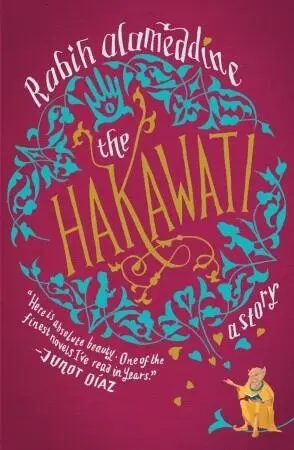
- Название:The Hakawati
- Автор:
- Издательство:Anchor
- Жанр:
- Год:2009
- ISBN:нет данных
- Рейтинг книги:4 / 5. Голосов: 1
-
Избранное:Добавить в избранное
- Отзывы:
-
Ваша оценка:
The Hakawati: краткое содержание, описание и аннотация
Предлагаем к чтению аннотацию, описание, краткое содержание или предисловие (зависит от того, что написал сам автор книги «The Hakawati»). Если вы не нашли необходимую информацию о книге — напишите в комментариях, мы постараемся отыскать её.
, or storyteller, and his bewitching tales are interwoven with classic stories of the Middle East. Here are Abraham and Isaac; Ishmael, father of the Arab tribes; the beautiful Fatima; Baybars, the slave prince who vanquished the Crusaders; and a host of mischievous imps. Through Osama, we also enter the world of the contemporary Lebanese men and women whose stories tell a larger, heartbreaking tale of seemingly endless war, conflicted identity, and survival. With
, Rabih Alameddine has given us an
for this century.
The Hakawati — читать онлайн бесплатно полную книгу (весь текст) целиком
Ниже представлен текст книги, разбитый по страницам. Система сохранения места последней прочитанной страницы, позволяет с удобством читать онлайн бесплатно книгу «The Hakawati», без необходимости каждый раз заново искать на чём Вы остановились. Поставьте закладку, и сможете в любой момент перейти на страницу, на которой закончили чтение.
Интервал:
Закладка:
“The biggest one is immense. We cannot open it within the palace.”
“That is surely the one I must start with,” Othman said.
And Othman led twenty of the king’s servants out of the palace, carrying a large, bundled pavilion, which could not be unfurled except in pieces.
Baybars exclaimed, “You have outdone yourself, Othman. This is fit for a king.”
“For an old-fashioned king,” Othman said. “Tan is too bland a color. We must change it.” He did not add that, unless the color was turned, the king’s chamberlain might recognize the tent.
“Well,” Baybars said, “do with it what you will. Take it to Giza, and have it set up before I arrive. I am happy to have a tent of my own.” And he left his servants.
Othman told the African warriors, “You three should paint the canvas. Your lands are known for their opulent and bright colors. You would do a much better job than I.”
“A mule would do a much better job than you would,” the first warrior said.
The second added, “So would a dog.”
And the third, “But that does not mean we should do it. It is middling work.”
“Brothers, you insult me,” Othman said, “and I will not defend myself. Yet you swore to serve Baybars as I did, and if his social standing is improved by the painting of this tent, then it is not middling work. I will have the servants of the house do it. We will dye it.”
“Dye?” the first warrior said. “You might as well put up a sign that says the owner of this pavilion is a cheap fool.”
“We need pigment,” said the first. “We need limestone,” said the second. “We need gum arabic,” said the third.
“We have all that,” said Othman.
“Yes,” they said, “but we do not have elephant dung.”
“Will horse dung do?” Othman asked.
Othman and the warriors had to recruit servants and men on the street to help them carry the folded tent to the ship. He asked his mother to join them. “How long has it been since you had a holiday?” he asked her. “I will ask Baybars to hire you. You are the best cook in Cairo.”
At Giza, Othman enlisted every able man to raise the pavilion. He needed a hundred. Once it was erected, he realized that they had nowhere near the furnishings or lamps for a tent that size. “We did not think about that,” one of the warriors said.
“No matter,” said Othman. He walked to the river, where he saw the king’s servants unloading the rugs, pillows, and oil lamps for the royal tent. “My dear fellows,” he said, “the king has commanded that you deliver all the furniture to Baybars’s tent because he wishes to have dinner there.” And then he saw the servants of the king’s judge and told them the same thing. He spoke to all the viziers’ servants. By the time everything was delivered, Baybars’s tent looked as full and beautiful as a golden peacock’s tail.
Baybars arrived the next day and was furious that Othman had commandeered the entire council’s furnishings. “You have made a fool of me,” he yelled. “By God, I will skin you alive for this.” He picked up a stick, and Othman took off with Baybars behind him.
Othman reached the king’s procession. He prostrated himself before his king and said, “Your Majesty, I am under your protection. My master wishes my doom, and he said I could never serve him again unless I extended an invitation to King Saleh.”
“Your deliverance is in hand,” the king said. “Lead us to your master’s tent.”
The processioners had to rub their eyes to be sure that what they saw was not a desert mirage. Before them, Baybars’s pavilion stood as big as a city. Its colors and design were utterly new to them. White lines divided the tent like a quilt. Abstract shapes ran amok in some sections — triangles in olive green, squares in burnt umber, cones in pale lilac, circles in sky blue, ellipses in brown, swoops of yellow ocher. Other sections showed images of the great hunt — russet lions brought down by golden spears, black warriors on white stallions encircling a herd of wildebeest. And the guests looked on in stunned silence. The guests sat in the pavilion, and it still looked unpeopled. Baybars welcomed them all and ran outside and called for Othman. “Who told you to invite all these gentlemen, and how will we be able to feed and honor them?”
And Othman promised to take care of everything. He ran to the king’s cooks. “The king is having dinner at Baybars’s tent but is unsure of the quality of Baybars’s cooks. The king does not wish to insult Baybars, so he commands that you cater the dinner secretly.” He went to each of the viziers’ cooks and repeated the story. To his mother he said, “The entire court is coming to dinner. Please make my favorite dishes. These nobles will think the food their poor subjects eat is a delicacy.”
Within an hour, a feast of immense proportions was served to the king and his nobles. The king said, “In the name of God, the most merciful,” and took the first bite.
“One of my cooks makes a dish very similar to this,” one of the viziers said, “except this is much better. Its flavors are more subtle.”
“And I have the same carpet as this,” another vizier said, “but you can tell that this is of finer silk.”
The king said, “This lentil-and-rice dish is so simple, yet so delicious. Can you find out from your cooks what the secret ingredient is?”
Baybars ran to Othman and asked. Othman asked his mother. “Salt and pepper,” she said.
Everyone ate and was merry, and the king said, “May God bless the host of this feast.”
Back at the court in Cairo, Baybars knelt before his king, who did not recognize the boy his dream had once asked for, since Baybars was no longer Mahmoud. And the king announced, “A gracious host and a possessor of immaculate taste should be rewarded. I hereby offer the suit of prince of protocol to Baybars. He will be responsible for all invitations and events of this court.”
And that was how Baybars became the king’s prince of protocol.

The sound of rolling dice on the backgammon board echoed in the living room. When my father and Uncle Jihad played, the noise was as loud as a demon battle. With every move, they smacked the ivory chips on the board with a bang. They teased each other mercilessly, yelled and screamed in jest. They both liked to gamble and were good at the game. When they played other people, they were more subdued, because money was involved, but they played each other only for quarters, so they could resort to the clamor and the teasing. Manhood, not money, was at stake. I was always afraid that they would break the glass table under the board.
I was lying in bed reading, with the door closed, when the phone rang. I picked up the handset and heard my mother’s voice. She asked me if Uncle Jihad was there. There was no hello, no how are you. She said she’d been trying to get hold of him and figured he must be with my father. “Tell him to come to the phone, but don’t tell him or your father who it is.”
“Why?” I asked.
“Just do what I tell you for once.”
Uncle Jihad left his game and picked up the phone in the foyer. All he said was “Hello,” and then his face seemed to twitch and tighten. He hung up the receiver without saying anything. Before I had a chance to ask what was going on, he put his finger to his lips and smiled, asked me silently to join in his conspiracy. “I have to leave,” he announced to my father. “Clients.”
“On Sunday?” my father said from the living room. “Come finish this game. I’m trouncing you. You can’t deny me that pleasure. My luck will change if we stop. Don’t leave now. Curse you and your ancestors, you insensitive lout. Stay.”
Читать дальшеИнтервал:
Закладка:
Похожие книги на «The Hakawati»
Представляем Вашему вниманию похожие книги на «The Hakawati» списком для выбора. Мы отобрали схожую по названию и смыслу литературу в надежде предоставить читателям больше вариантов отыскать новые, интересные, ещё непрочитанные произведения.












Обсуждение, отзывы о книге «The Hakawati» и просто собственные мнения читателей. Оставьте ваши комментарии, напишите, что Вы думаете о произведении, его смысле или главных героях. Укажите что конкретно понравилось, а что нет, и почему Вы так считаете.