Rabih Alameddine - The Hakawati
Здесь есть возможность читать онлайн «Rabih Alameddine - The Hakawati» весь текст электронной книги совершенно бесплатно (целиком полную версию без сокращений). В некоторых случаях можно слушать аудио, скачать через торрент в формате fb2 и присутствует краткое содержание. Год выпуска: 2009, Издательство: Anchor, Жанр: Современная проза, на английском языке. Описание произведения, (предисловие) а так же отзывы посетителей доступны на портале библиотеки ЛибКат.
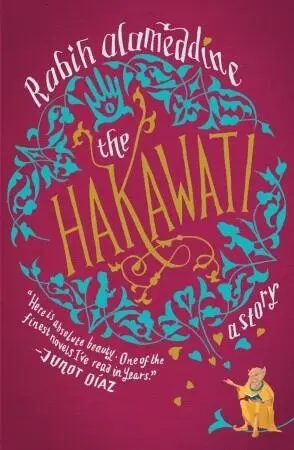
- Название:The Hakawati
- Автор:
- Издательство:Anchor
- Жанр:
- Год:2009
- ISBN:нет данных
- Рейтинг книги:4 / 5. Голосов: 1
-
Избранное:Добавить в избранное
- Отзывы:
-
Ваша оценка:
The Hakawati: краткое содержание, описание и аннотация
Предлагаем к чтению аннотацию, описание, краткое содержание или предисловие (зависит от того, что написал сам автор книги «The Hakawati»). Если вы не нашли необходимую информацию о книге — напишите в комментариях, мы постараемся отыскать её.
, or storyteller, and his bewitching tales are interwoven with classic stories of the Middle East. Here are Abraham and Isaac; Ishmael, father of the Arab tribes; the beautiful Fatima; Baybars, the slave prince who vanquished the Crusaders; and a host of mischievous imps. Through Osama, we also enter the world of the contemporary Lebanese men and women whose stories tell a larger, heartbreaking tale of seemingly endless war, conflicted identity, and survival. With
, Rabih Alameddine has given us an
for this century.
The Hakawati — читать онлайн бесплатно полную книгу (весь текст) целиком
Ниже представлен текст книги, разбитый по страницам. Система сохранения места последней прочитанной страницы, позволяет с удобством читать онлайн бесплатно книгу «The Hakawati», без необходимости каждый раз заново искать на чём Вы остановились. Поставьте закладку, и сможете в любой момент перейти на страницу, на которой закончили чтение.
Интервал:
Закладка:
“Again.” He clapped his hands for a beat. One, clap, clap, one, clap, clap. I finished, and he wanted me to start over again. Sweat dropped into my eyes. I asked him to wait a minute. I wiped my brow, took a sip of water, and scratched my itchy head. “Let me see,” he said. He stood up and held my head. He ran his callused fingers through my clammy hair. He told me to take a break and left the room. My mother rushed in a few seconds later. Anxiety paralyzed my tongue. She held my head down and searched my hair. “Oh my God,” she exclaimed. “Don’t move.” She dashed out of the room. I heard her on the phone but couldn’t discern what she said.
The whole family had to wash their hair with anti-lice shampoo. My mother called everyone in the building and demanded that they all use the medicine. The household linen was boiled and disinfected, and so was my entire wardrobe.
My sister glared every time she walked by me. I worried that she would figure out that Elie had been in my room. All my cousins avoided me. I ended up sitting under the bush in the gated garden, huddled close to Fatima. At one point, my cousins Hafez and Anwar ran toward me and started mussing up each other’s hair and screaming, “Yuck, yuck, yuck!”
At dinner that night, in front of the television news, my mother wouldn’t stop talking about the lice. I remained silent. Uncle Jihad nudged me with his elbow. “See.” He ran his palm over his smooth scalp. “Sometimes it’s good to be bald.”
It seemed every time I saw my grandfather now he was noticeably older and weaker.
He combed my hair and I wept. “I knew you’d need me.” His voice was gentle and soft, elderly and frail. After every stroke of his fine comb, he would dip it into a bowl of scalding, soapy water. “I knew they wouldn’t understand. Your parents are too modern.” He ran his left hand over my eyes, onto my forehead, all the way back to my hair and neck. “These days no one understands feelings, and when I leave this world — soon, probably — who will understand yours?” I cried, couldn’t stop my body from shaking. He combed. “You’re my boy, my blood.”
Seven
In Cairo, Baybars and his followers were housed by his aunt. “You are the son of my sister,” she told him. “You are as dear to me as you are to her. This house is your family home.” She arranged for his belongings to be moved into private chambers. She introduced him to her husband, Najem, one of the king’s viziers. That night, she laid out a wonderful feast. “Tell me about my sister,” she said. “I would love to hear her stories.” And Baybars told her how Sitt Latifah had saved his life and adopted him, how she taught him archery. His aunt’s face flushed with affection.
The next morning, Baybars wanted to breathe the fresh Cairene air. He and his warriors rode into the city. Al-Awwar was not in a good mood and made sure that his rider knew it. What was supposed to be a delightful exercise turned into a battle of wills between horse and rider. “None of our horses are happy,” the warriors said. “The vizier’s stable hands tend the vizier’s horses and not ours. We hired some help, but al-Awwar may require a stableman all to himself.”
Baybars saw that his stallion was not well groomed, his mane was not combed. Baybars apologized to his horse. Al-Awwar arched his neck and snorted.
That night, Baybars asked his uncle Najem if he knew where he could find a capable and worthy groom. The vizier said, “The stablemen’s shop is in the Rumaillah quarter, and you are sure to find a good man there. However, under no circumstance should you hire a young man by the name of Othman. The ruffian is about your age, but he has the criminal experience of an old man. He is a thief and a scofflaw who can only be controlled with a branding iron. The king has issued warrants for his arrest, but he continues to evade the law and find naïve folk to defraud.”
At the stablemen’s shop, Baybars met an old man with a beard as white as swan feathers. Baybars told the chief of the stablemen he was looking for a groom, someone who was clever and strong, honest and guileless. The chief presented a groom, but Baybars did not like him, or the second, the third, or the fourth.
An ostentatiously dressed young man with the face of a rodent entered the shop. Upon seeing him, everyone cleared out except Baybars and the chief, who ran toward the young man and prostrated himself and kissed the offered hand. Othman asked, “Did you get any money in today?” and the chief replied that he had not. “And what is he looking for?”
“He is looking for a groom, but he did not like the ones I showed him,” the chief said. “He must want a special one.”
“Do you like me?” Othman asked. And Baybars said yes.
Othman thought the young man an easy mark: he would work for him that day and rob him that night. Baybars thought, “Either that young man will obey me, or I will kill him and rid the world of a parasite.” Baybars paid the chief stableman five dinars. The chief was about to put the coins in his pocket, but Othman glared at him, and he handed the money over.
Baybars and his groom arrived at Najem’s stable. The instant the other stable hands laid eyes upon Othman, they scattered in every direction. Baybars said, “This is al-Awwar. I can see that he likes you, which is an excellent indication of your good nature. Take care of him, wash him, and feed him.”
Alone in the stable, Othman thanked God for His glorious gift. Equestrian equipment, more valuable than anything he had stolen before, hung from hooks on the wall; beautiful, intricately stitched leather saddles lay in order on a wooden bar. What would he take first? He filled his coat pockets with golden bridles and silver bits. He found a large sack, in which he placed two saddles and five silver reins. He mounted his horse and rode out of the stable.
“Where are you going?” asked Baybars, leaning against the side of the stable.
“I am going to wash the equipment,” Othman replied. “It is the groom’s job. I do not yet trust the servants here. I shall hire people I have used before.”
“But I cannot have you spending your own money on my equipment,” Baybars said. “I will give you ten dinars, and you can pay your cleaners with that.”
Greed forced Othman off his horse, and Baybars hit his new groom with the hilt of his sword. He dragged the rascal back into the barn by the hair. “You will learn your lesson, you lying ingrate.” Baybars tied Othman up and hung him from a pole. He noticed that the thief’s belt was a whip. “You wear this to inflict pain,” Baybars said. “Now, then, you will be pained by my righteous anger.” And Baybars whipped Othman until the groom fainted.
Othman awoke to find a multitude of eyes upon him. “Help me down, brothers,” he said, “for I suffer.” The other grooms did not move. “You,” Othman called to the youngest groom. “Come help me down. Let me rest for the night, and in the morning you can hang me up again.” The groom untied Othman and helped him down. Othman hit the boy, tied him up, and hung him in his place. All the other grooms hid. “Fools.” He climbed back on his horse and escaped.
In the morning, Baybars found the young groom hanging instead of Othman. He untied the boy and saddled al-Awwar. He called the grooms and asked if any knew where Othman lived. One said, “He lives in the Rumaillah quarter, in the Sharbeel neighborhood, next to the long well. I do not know the house. He has threatened to kill anyone who says where it is.”
Baybars rode out, and the African warriors emerged behind him. When he reached the neighborhood, Baybars asked a passerby if he knew Othman’s house, and the man ran in the other direction. A second man shouted, “Beware the evil eye,” and he, too, scurried away. A third refused to answer, and a fourth wet his pants and fainted. Baybars walked into the neighborhood bakery. He yelled at the baker, “My master Othman claims you cheated him out of a dozen loaves of bread, and unless you clear this up, he will burn your store down.”
Читать дальшеИнтервал:
Закладка:
Похожие книги на «The Hakawati»
Представляем Вашему вниманию похожие книги на «The Hakawati» списком для выбора. Мы отобрали схожую по названию и смыслу литературу в надежде предоставить читателям больше вариантов отыскать новые, интересные, ещё непрочитанные произведения.










Обсуждение, отзывы о книге «The Hakawati» и просто собственные мнения читателей. Оставьте ваши комментарии, напишите, что Вы думаете о произведении, его смысле или главных героях. Укажите что конкретно понравилось, а что нет, и почему Вы так считаете.