Rabih Alameddine - The Hakawati
Здесь есть возможность читать онлайн «Rabih Alameddine - The Hakawati» весь текст электронной книги совершенно бесплатно (целиком полную версию без сокращений). В некоторых случаях можно слушать аудио, скачать через торрент в формате fb2 и присутствует краткое содержание. Год выпуска: 2009, Издательство: Anchor, Жанр: Современная проза, на английском языке. Описание произведения, (предисловие) а так же отзывы посетителей доступны на портале библиотеки ЛибКат.
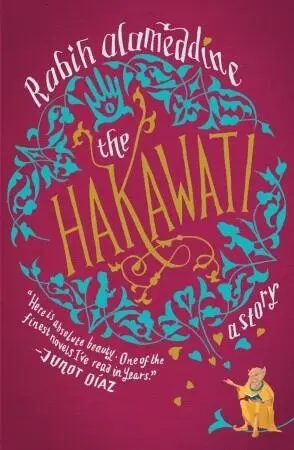
- Название:The Hakawati
- Автор:
- Издательство:Anchor
- Жанр:
- Год:2009
- ISBN:нет данных
- Рейтинг книги:4 / 5. Голосов: 1
-
Избранное:Добавить в избранное
- Отзывы:
-
Ваша оценка:
The Hakawati: краткое содержание, описание и аннотация
Предлагаем к чтению аннотацию, описание, краткое содержание или предисловие (зависит от того, что написал сам автор книги «The Hakawati»). Если вы не нашли необходимую информацию о книге — напишите в комментариях, мы постараемся отыскать её.
, or storyteller, and his bewitching tales are interwoven with classic stories of the Middle East. Here are Abraham and Isaac; Ishmael, father of the Arab tribes; the beautiful Fatima; Baybars, the slave prince who vanquished the Crusaders; and a host of mischievous imps. Through Osama, we also enter the world of the contemporary Lebanese men and women whose stories tell a larger, heartbreaking tale of seemingly endless war, conflicted identity, and survival. With
, Rabih Alameddine has given us an
for this century.
The Hakawati — читать онлайн бесплатно полную книгу (весь текст) целиком
Ниже представлен текст книги, разбитый по страницам. Система сохранения места последней прочитанной страницы, позволяет с удобством читать онлайн бесплатно книгу «The Hakawati», без необходимости каждый раз заново искать на чём Вы остановились. Поставьте закладку, и сможете в любой момент перейти на страницу, на которой закончили чтение.
Интервал:
Закладка:
“My dad said they didn’t just bomb airplanes,” she added. “They broke into offices and wrote all kinds of curse words on the blackboards. They wrote that Arabs are donkeys. They did that. And then someone went to the bathroom on a desk. That’s disgusting.”
“Yuck,” I said. “Number one or number two?”
“Number two.”
Elie came out of the building, glaring ahead, seeing nothing in his path. He cursed the sky as he walked by, his shock of black hair looking like a woodpecker’s crest. Fatima shot him hateful glares. I tried not to blink. “He’s mean,” Fatima said.
The motorcycle roared past us. Mariella held on to a smiling Elie, her hands cozy around his waist. She looked delighted. He had a large gun in a holster around his thigh.

“You mean to defeat me with a mud stain?” King Kade asked sarcastically. “I can calm the raging flood and enrage the dormant sea. I drive clouds away and call them back. I make mountains and forests quake. And you mean to vanquish me with this?” He looked down at the dirty blotch on his tunic. His eyes twinkled as he pointed toward the dark spot and chuckled. He arched his eyebrows and covered his mirthful mouth. He pointed his finger at her, then back at the stain, and broke into a fit of hysterical laughter. The laughing magician was no longer all white, no longer uncontaminated. He laughed and laughed, and his laughter changed gradually, almost imperceptibly, from breezy to throaty and phlegmy, until finally even he noticed the metamorphosis. The stain on his robe spread. His long beard grew shorter in length.
Aghast, King Kade said, “But it is not yet darkness. Night has not fallen.”
The robe grew ragged, shrank. The cloth turned threadbare and tattered before it disappeared, leaving the magician naked. His body released its hairs, and his skin darkened and shriveled. His penis and scrotum withdrew inward, and a vagina began to form. The stomach shrank, and the hips expanded. Sparse black hair sprouted out of the creature’s bald head. Every other tooth in the monster’s snarling mouth dropped to the floor, charring a small circle around it, and the teeth that remained turned as black as soot. The creature’s breath turned vile. Her breasts drooped below her sternum, and her dark nipples elongated and dripped poisonous green bile upon her leathery skin. And the eight imps appeared beside Fatima.
“Envy,” cried Ishmael. “Thy end hath come.”
“Too late,” the monster spat. She backed into the corner, tried to cower behind the throne of clouds. She hissed at the imps. “Vengeance is mine, for your brother has departed our world.”
“And you shall join him,” Ishmael said. He jumped onto the monster and bit into her flesh. Isaac joined him, and his bite produced cries and wails and the sound of breaking bone. Ezra’s sharp teeth descended upon her thigh. Jacob and Job ate her fingers, Noah her knees. Elijah swallowed her breasts. And Adam — Adam received the blood of her neck. They tore flesh, gnawed gristle, and sucked marrow. They crunched bone and chewed sinewy muscle. Their lips and cheeks turned slick and waxy red. The imps feasted until she was no more.
Sneaking out of the apartment with my oud, I ran the twenty-three paces to Uncle Jihad’s door, and knocked. I scurried inside when he opened the door and quickly shut it behind me. I always managed to make Uncle Jihad laugh, even if I hadn’t intended to.
“And which evil organization are you hiding from? The American government? Dr. No? Nixon? The Mossad? The PLO? Just tell me who’s after you and I’ll annihilate the lot of them.”
“I’m not hiding.” I went into his living room to make sure no other family member was there. “I’m being discreet.”
“Ah, discretion,” he said. “The privilege of youth.”
I sat on a chair and said, “Sit, sit,” pointing to the sofa in front of me. “You have to be my audience.”
“My God,” he gushed. He sat down, dog-eared the paperback novel he was holding, and put it aside. “I’m so flattered. I’m overwhelmed. I’m not used to being chosen by genius.”
“Stop it. You have to behave yourself. I’ve learned a new maqâm, and Istez Camil said I should play it in front of an audience for practice. He thinks I play too much by myself and don’t involve others. You’re my practice. Act like an audience, all right?”
He began clapping and cheering. I beamed. “The special one is here. Hurrah. Take a bow.” I bowed from the chair, and he continued clapping. He hooted and whistled until I picked up my oud. He quieted down when I plucked the strings to make sure it was tuned. I limbered up my fingers. “That was amazing,” he said. “More, more.”
“More of what? That was just a scale.” I began to play the maqâm, which I thought was the most beautiful melody in the world. Istez Camil had said that it was hundreds of years old and all music derived from it. I didn’t care, because I didn’t want to play any other music. I wished I were Iraqi and lived in Baghdad, in a house with an enclosed courtyard with a fountain and a pool of water, and I could have guests over all day and all night to hear me play this wonderful maqâm.
Uncle Jihad came over and kissed my brow. “That was beautiful,” he said. He bent his knees to be level with me. “I can’t believe how good you’ve gotten.”
“Istez Camil says I have a hundred more years to go before I can play well.”
“He’s right. But I can say, and I’m sure he’ll agree with me, that you play wonderfully, and with passion. You just need the hundred years of ripening.” I hugged him. He stroked the back of my head. “You should play for your father,” he added. “It might look like he wouldn’t want you to, but he does. Our grandmother, your great-grandmother, played the oud. I bet you didn’t know that. But she stopped playing after she married your great-grandfather. It was the great love story. Let me tell you the story.”
“No, no,” I said. “Tell me a story about the oud.”
“The story of the greatest musician that ever lived,” Uncle Jihad said.
“Did he play the oud?” I asked.
“He played the lyre, which was the ancestor of the oud.”
“Was he Lebanese?” I asked.
“No,” Uncle Jihad replied. “He was Italian. His name was Orpheus. He lived a long, long time ago. Before he came into being, the best musician was his father, the god Apollo. He played better than any mortal since he was a god, and that’s saying a lot. But one day Apollo and the eldest muse, Calliope, had a son called Orpheus. His father gave him his first lyre and taught him to play it. And the son overtook his father, the pupil became better than the teacher, for he was the son of the god of music and the muse of poetry. With each note, he could seduce gods, humans, and beasts. Even trees and plants were still when he played. His music was powerful enough to silence the Sirens. Orpheus was human, but he played like a god, and in doing so, he lost track of his humanity, becoming godlike. All that mattered was the perfect tone, the ultimate note. And then, as all gods must do, he fell — fell in love and became human again.
“Orpheus met Eurydice and married her, but Hymenaeus, the god of marriage, wasn’t able to bless the wedding, and the wedding torches didn’t burst into flames but fizzled instead, and the smoke brought tears to the eyes. Not too long after her marriage, Eurydice was wandering in the meadows and was spotted by the shepherd Aristaeus. Bewitched by her beauty, he whistled his appreciation, whistled low, long, and slow.”
Читать дальшеИнтервал:
Закладка:
Похожие книги на «The Hakawati»
Представляем Вашему вниманию похожие книги на «The Hakawati» списком для выбора. Мы отобрали схожую по названию и смыслу литературу в надежде предоставить читателям больше вариантов отыскать новые, интересные, ещё непрочитанные произведения.








Обсуждение, отзывы о книге «The Hakawati» и просто собственные мнения читателей. Оставьте ваши комментарии, напишите, что Вы думаете о произведении, его смысле или главных героях. Укажите что конкретно понравилось, а что нет, и почему Вы так считаете.