Rabih Alameddine - The Hakawati
Здесь есть возможность читать онлайн «Rabih Alameddine - The Hakawati» весь текст электронной книги совершенно бесплатно (целиком полную версию без сокращений). В некоторых случаях можно слушать аудио, скачать через торрент в формате fb2 и присутствует краткое содержание. Год выпуска: 2009, Издательство: Anchor, Жанр: Современная проза, на английском языке. Описание произведения, (предисловие) а так же отзывы посетителей доступны на портале библиотеки ЛибКат.
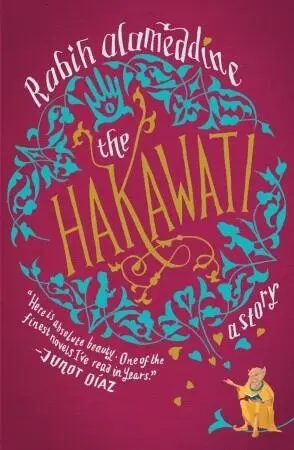
- Название:The Hakawati
- Автор:
- Издательство:Anchor
- Жанр:
- Год:2009
- ISBN:нет данных
- Рейтинг книги:4 / 5. Голосов: 1
-
Избранное:Добавить в избранное
- Отзывы:
-
Ваша оценка:
The Hakawati: краткое содержание, описание и аннотация
Предлагаем к чтению аннотацию, описание, краткое содержание или предисловие (зависит от того, что написал сам автор книги «The Hakawati»). Если вы не нашли необходимую информацию о книге — напишите в комментариях, мы постараемся отыскать её.
, or storyteller, and his bewitching tales are interwoven with classic stories of the Middle East. Here are Abraham and Isaac; Ishmael, father of the Arab tribes; the beautiful Fatima; Baybars, the slave prince who vanquished the Crusaders; and a host of mischievous imps. Through Osama, we also enter the world of the contemporary Lebanese men and women whose stories tell a larger, heartbreaking tale of seemingly endless war, conflicted identity, and survival. With
, Rabih Alameddine has given us an
for this century.
The Hakawati — читать онлайн бесплатно полную книгу (весь текст) целиком
Ниже представлен текст книги, разбитый по страницам. Система сохранения места последней прочитанной страницы, позволяет с удобством читать онлайн бесплатно книгу «The Hakawati», без необходимости каждый раз заново искать на чём Вы остановились. Поставьте закладку, и сможете в любой момент перейти на страницу, на которой закончили чтение.
Интервал:
Закладка:
“After only the opening, Urfa realized it was in for a feast. Word of him and his words spread throughout the town. The next evening, the place was packed. Many couldn’t find a seat. Twenty fully veiled women stood outside, refused seats, and didn’t interact with any of the patrons. They listened, moved and unmoving. The following night, it was forty women on one side and more than a hundred men on the other. And when the masterly hakawati told of Majnoun’s exile in the desert to avoid looking at the sweet face of his beloved, every veil turned moist, and every mustache as well. Zeki, the master storyteller of Istanbul, bewitched our little town for eight months straight.
“When I die and people begin to tell you that I wasn’t a great hakawati, you tell them I studied with the best, Istez Zeki of Istanbul. Only Nazir of Damascus was as good as Zeki, and I studied with him as well. To find a better hakawati than those two, you’d have had to go to the lands of spices and Shahrazad, to Baghdad and Persia. Zeki was a master. The only reason he ventured into our backwater town was that he had to escape Istanbul for a few years. You see, even though he was in his eighties, he had seduced a vizier’s wife. There was a price on his head. But he was so loved that other Ottoman officials helped him leave the capital. They told him to stay away for a couple of years, until they soothed the vizier’s feelings. He never returned. He was asked by an affluent man to work in Baghdad, where he was killed.
“Well, maybe I didn’t exactly study with Zeki, but I certainly studied him. Don’t tell anybody that, because it’s hard for people to discern the nuance. I heard him every evening and never missed a session. I studied his technique, his use of voice, tone, and inflection. When he paused, his audience held its breath. He was by far the best at silence. On my walk back home, I would practice saying the same words he did, in the same manner he did. I would move my hands in his way. As he reached a touching moment in the story, he had a habit of holding his hand out in front of him, palm toward God, as if offering Him that lovely moment or, better yet, offering Him the souls of all his listeners. When Zeki told us about the desert birds attempting to distract Majnoun from suicide, he had a different whistle for each bird. On the way home, I was able to whistle the way he did, and I became very good at it. His whistling birds broke open my heart. ‘Oh, Majnoun,’ the desert wren whistled, ‘kill yourself not. Consider all pleasures life can offer,’ and the quail whistled, ‘Rediscover the enjoyment of eating. Do not forsake life.’ Bewitching.
“Studying him wasn’t as easy as it sounds, because I had to be two different people simultaneously. My first listened to the story and lived in its world, and my second studied the storyteller and lived in his.
“But, then, I didn’t just learn from Zeki. God smiled upon my face and smote one of the pigeon assistants. I didn’t see what happened, but I heard everything, because I was in the main coop, cleaning. It was peace season. The assistant, his name was Emre, was flying a flock. Mehmet and Hagop were on the roof with him, drinking their tea. It seemed Emre was unable to get the pigeons to fly higher. He kept swinging his stick wider and wider, but the pigeons flew in a low circle. Hagop mocked the boy. My feelings were torn. I was happy, because Emre always mocked me, but I knew he would later take out his frustration on me.
“A troubled Emre couldn’t understand what was happening. He cursed at the sky. One of the pigeons excreted, and, of all places, the shit fell right into Emre’s eye. Mehmet screeched and said that was good luck. Temporarily blinded and befuddled, Emre covered both his eyes, cursed once more, and tried to walk away. He stumbled and fell off the roof and onto the pavement, headfirst. The building was just one story, and the ground was only hard sand. Mehmet and Hagop thought it was amusing. They roared with laughter before they considered that Emre could be hurt. When they looked over the ledge and witnessed the burgeoning pool of blood, their laughter stopped. The boy Emre became stupid and blind, and I was promoted.
“I no longer had to clean shit. Now I was responsible for feeding the pigeons. If it’s not one hole it’s another. I was also sent on errands and such. I had another boy, beneath me, to do all the shitty work. I wasn’t paid more, because, after all, Mehmet was a Turk. But I was done with work much earlier, so I was able to leave and check other cafés in the city. At first I couldn’t hear the other hakawatis, because they, too, told their tales in the evening, and I was committed to Zeki. But I would go into a café and ask the patrons to tell me stories. Most of them loved to do it, unless they were playing cards or backgammon. Someone would start a story. ‘There was or there was not,’ a man would say, and take it from there. His friends would help him tell it, correct him when he missed something, and take over if he faltered for even a second.
“Zeki ended his story when his audience ran out of tears. I felt bereft and alone when he left, but I wasn’t alone, because all his audience felt the same way. I tested every hakawati in Urfa. I even saw a Kurd, and though I didn’t understand any of the words he said, I liked the way he said them. But I didn’t do that for long, because Serhat Effendi expected me at his table. He told me, ‘You can search far and wide for the great stories, but in the end, the best ones come to you.’
“I practiced. I spun yarns for Zovik and Poor Anahid. I told stories to the uncaring pigeons as they mated. I spoke to trees, flowers, sticks, and stones. One morning, I began to tell a tale to Hagop, and he smacked me. ‘I don’t care about what you have to say,’ he yelled.
“I practiced singing like Zeki. Whenever there was a song in the story, Zeki sang it. I was happy. I had a job. I had a passion. But I had no family, and that would be my curse. You see, the family I was part of was beginning to crumble like moldy Bulgarian cheese.”

The first time I saw a real hakawati perform was in the spring of 1971, after I had just turned ten. My grandfather had come down from the mountain unannounced to visit Uncle Jihad. Lina and I were in my uncle’s living room with the two of them. Lina was there to study the paintings in Uncle Jihad’s monographs, and I was there because I had nothing better to do. There were dozens of books and monographs strewn all over the place — on the coffee table, the floor — but I was more interested in the conversation between my uncle and his father.
“I don’t want to go alone,” my grandfather said, in a tone that was both pleading and astonished that he had to restate his wish. His fingers counted worry beads.
“I can’t,” Uncle Jihad said. “I have to look after the boy.” That was a lie. I didn’t need looking after.
“We’ll bring him.” My grandfather’s gestures were becoming more expansive. “It’ll be better that way.” His hair seemed to shoot out in at least eleven different directions. “We can take Lina, too.” He looked strange. He wore the traditional Druze trousers — black, with a billowing pouch below the crotch that could hold a small goat. The religious Druze wore them, and he certainly wasn’t religious. I had never seen him dressed like that before.
“No,” Lina declared, without removing her eyes from the pictures she was perusing on the coffee table. She had her arms crossed in front of her. “I’m not going to some cheap café in some ugly neighborhood. And you,” she said to me, “stop staring at my breasts.”
“I’m not,” I replied too quickly.
Читать дальшеИнтервал:
Закладка:
Похожие книги на «The Hakawati»
Представляем Вашему вниманию похожие книги на «The Hakawati» списком для выбора. Мы отобрали схожую по названию и смыслу литературу в надежде предоставить читателям больше вариантов отыскать новые, интересные, ещё непрочитанные произведения.










Обсуждение, отзывы о книге «The Hakawati» и просто собственные мнения читателей. Оставьте ваши комментарии, напишите, что Вы думаете о произведении, его смысле или главных героях. Укажите что конкретно понравилось, а что нет, и почему Вы так считаете.