Rabih Alameddine - The Hakawati
Здесь есть возможность читать онлайн «Rabih Alameddine - The Hakawati» весь текст электронной книги совершенно бесплатно (целиком полную версию без сокращений). В некоторых случаях можно слушать аудио, скачать через торрент в формате fb2 и присутствует краткое содержание. Год выпуска: 2009, Издательство: Anchor, Жанр: Современная проза, на английском языке. Описание произведения, (предисловие) а так же отзывы посетителей доступны на портале библиотеки ЛибКат.
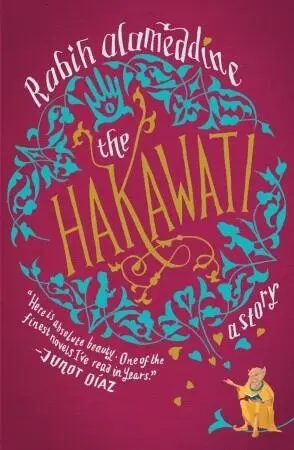
- Название:The Hakawati
- Автор:
- Издательство:Anchor
- Жанр:
- Год:2009
- ISBN:нет данных
- Рейтинг книги:4 / 5. Голосов: 1
-
Избранное:Добавить в избранное
- Отзывы:
-
Ваша оценка:
The Hakawati: краткое содержание, описание и аннотация
Предлагаем к чтению аннотацию, описание, краткое содержание или предисловие (зависит от того, что написал сам автор книги «The Hakawati»). Если вы не нашли необходимую информацию о книге — напишите в комментариях, мы постараемся отыскать её.
, or storyteller, and his bewitching tales are interwoven with classic stories of the Middle East. Here are Abraham and Isaac; Ishmael, father of the Arab tribes; the beautiful Fatima; Baybars, the slave prince who vanquished the Crusaders; and a host of mischievous imps. Through Osama, we also enter the world of the contemporary Lebanese men and women whose stories tell a larger, heartbreaking tale of seemingly endless war, conflicted identity, and survival. With
, Rabih Alameddine has given us an
for this century.
The Hakawati — читать онлайн бесплатно полную книгу (весь текст) целиком
Ниже представлен текст книги, разбитый по страницам. Система сохранения места последней прочитанной страницы, позволяет с удобством читать онлайн бесплатно книгу «The Hakawati», без необходимости каждый раз заново искать на чём Вы остановились. Поставьте закладку, и сможете в любой момент перейти на страницу, на которой закончили чтение.
Интервал:
Закладка:
“What happened to the nasty vizier?”
“He went to France, where all the jealous people are.”
“That’s not a good story. I wasn’t born playing the oud. I learned how to.”
“You’re simply remembering how to play, my dear boy.” Uncle Jihad drained his glass completely. “You’re claiming what you’ve always known.”
“What about Lina?”
“Hers is a different story,” he replied.
“How can that be? She’s my sister. We can’t have different stories.”
“Who says?”
“It doesn’t make sense,” I said. “A family has one story.”

And my grandfather said, “The next evening, when the pigeon battle was over, I cleaned everything as fast as I could and ran back to the Masal. But I had arrived late. The hakawati was well into his story and had resolved the cliffhanger.
“ ‘Please,’ I interrupted, calling to him from outside. ‘How did Antar escape the deadly trap? It would seem impossible. I must know how,’ I said in broken Turkish. I must have confounded him. He glared at me, unblinking. The owner of the café came at me. ‘Get out of here, you dirty scoundrel,’ he yelled. ‘Get back to where you came from, you unbeliever.’
“Now, mind you, insults meant nothing to me. They bounced off me like iron bounces off a magnet. No, I mean like two magnets or something like that. After all, Barbara and Joan used to insult me every day, and the other assistants at work said horrible things. I felt bad that he thought I was dirty, so I said, ‘I’m only dirty because I’ve been cleaning shit, and that’s why I was late, and if I went home to clean up I’d miss more of the story.’ It obviously didn’t impress the owner, who waved a threatening cane in my direction. ‘If you don’t scram, I’m going to tan your behind,’ and I said, ‘That’s not fair. It’s not my fault I have to work. I want to hear the tale.’ The owner raised his cane, and I was about to flee when I heard a horsy guffaw. A fat man, most respectable, in an expensive fez, suit, and tie, sat laughing at a table outside. Hookah smoke erupted out of his wide mouth. ‘Why are you insulting a future customer, my man? Let the boy stay and listen to the tale,’ he said, and the owner replied, ‘His kind will never be a customer, effendi. He’s a street boy.’ Before I could contradict him, the effendi said, ‘He’s a working boy, not an urchin. How can you turn away a boy who wants to hear a story? Come, my boy. Sit at my table, and open your ears. I don’t mind the smell of shit. And bring this boy some tea and something to eat. We have a story to listen to.’
“And that was how I was taken under the wing of Serhat Effendi.
“I was in paradise. I hardly spent any time at home anymore. Each day, as soon as the battle was over, I hurried to the Masal to hear the hakawati. I sat at Serhat Effendi’s table every evening. I was served a highly sweetened glass of hot tea and a cheap sandwich, which was still better than anything I was getting at home. The effendi was nice to me. He didn’t mind my stink, and he treated me with the utmost respect. Once, when I asked how I could repay him for the daily meal, he replied that my job was to keep him company, because he didn’t like being by himself at the café. But we hardly ever talked, except for the times I arrived a bit late and he’d whisper in my ear what I had missed. On my ninth birthday, he bought me a delicious lokum.
“The hakawati enchanted me, that much I know. Yet I began to notice that the effendi wasn’t as impressed. One night, after the storyteller had left us with another cliffhanger and Serhat Effendi was preparing to leave, I asked him whether he liked the story. You have to remember, he was showing up six nights a week to listen to this. He replied, ‘The story I like very much.’ I realized that what he had said was incomplete and hoped he would elaborate. ‘I have heard it woven more lusciously.’ He realized I didn’t understand, because he went on, ‘The story of Antar is one of the standards. This man tells it well, yet it seems that romance is not his forte. He does wonderfully with the travails and triumphs of the poet but seems to consider Abla, his enchantress and beloved, a trifle. We’re getting half a story. Don’t worry, though. It is very near the end, and we’ll get someone else next week.’
“Do you know why I’m telling you this, Osama? It’s because you should know that, no matter how good a story is, there is more at stake in the telling.
“And the effendi was right. The following week, we had a new hakawati, a much older man. At the designated time, he strode up to the dais and greeted his audience. He announced he would like to tell the story of Antar, the great black poet. I shouted, ‘No,’ and I was by no means the only one. The hakawati apologized and asked, ‘Do you not like the story, gentlemen? I assure you it is the best tale ever told. Antar was the greatest of Muslim heroes, the most passionate of lovers, and most devoted to the faith. This story is one of the finest. Trust me. Even though I’m here for only two weeks and will have to resort to an abridged version, I will enchant you.’ The listeners all as one yelled back, ‘But we have just finished hearing it. The hakawati before you told the tale of Antar.’
“The hakawati paused and contemplated the situation for a brief moment. ‘Shame. It’s an uncalled-for shame that you were forced to listen to a pitiful version of the great story told by an incompetent dunce.’ A man spoke up. ‘It was a delightful version.’ ‘Never mind,’ said the new hakawati. ‘I’ll bewitch you with my version, and you’ll forget everything that came before me.’
“The audience still objected. A few were angry. It was then that I noticed that Serhat Effendi, wearing a bemused grin, wasn’t participating in the impromptu discussion. ‘We don’t want to hear the same story,’ the crowd shouted, and Serhat Effendi called out, ‘Master Hakawati.’ The room quieted as the hakawati acknowledged the effendi. ‘Your reputation precedes you,’ the effendi said. ‘Your exquisite style is the talk of every connoisseur in our lands. We are blessed to have you here in our humble town, and we beseech you to treat us to your specialty, the tale of Majnoun and Layla. It is said that your rendition had the gracious princess weeping for two whole weeks.’ ‘Seventeen days,’ corrected the hakawati. ‘And that the Christian men of Istanbul who heard your version converted to the true faith.’ ‘That is true,’ said the hakawati. And Serhat Effendi finished with, ‘Is it, then, owing to our modesty that we are to hear the story of Antar instead of your masterpiece?’ ‘I beg your forgiveness, effendi,’ the hakawati said. ‘I would have been honored to tell you my signature tale. Unfortunately, I was instructed that under no circumstances am I to take longer than two weeks for my story. Two weeks, effendi. The only story I can tell in two weeks is that of Antar. I cannot insult my audience with a shorter version of my masterpiece. But please, dear audience, remove those sad masks from your faces. It pains me so. The happy news is that in a fortnight I’ll be replaced by a young hakawati — a child, really, trying to make a name for himself. The owner says he’s very good — for a Circassian, that is.’ And here the hakawati paused before adding, ‘And it seems the youngster is willing to work for a cup of unsorted and uncooked lentils.’
“The patrons had a fit; the café exploded. Men screamed at the owner, who tried to placate his customers. ‘Yes, of course you deserve the best,’ he repeated, until, finally, he had to apologize and promise the hakawati he could stay for as long as he needed. The hakawati smiled.
Читать дальшеИнтервал:
Закладка:
Похожие книги на «The Hakawati»
Представляем Вашему вниманию похожие книги на «The Hakawati» списком для выбора. Мы отобрали схожую по названию и смыслу литературу в надежде предоставить читателям больше вариантов отыскать новые, интересные, ещё непрочитанные произведения.










Обсуждение, отзывы о книге «The Hakawati» и просто собственные мнения читателей. Оставьте ваши комментарии, напишите, что Вы думаете о произведении, его смысле или главных героях. Укажите что конкретно понравилось, а что нет, и почему Вы так считаете.