Rabih Alameddine - The Hakawati
Здесь есть возможность читать онлайн «Rabih Alameddine - The Hakawati» весь текст электронной книги совершенно бесплатно (целиком полную версию без сокращений). В некоторых случаях можно слушать аудио, скачать через торрент в формате fb2 и присутствует краткое содержание. Год выпуска: 2009, Издательство: Anchor, Жанр: Современная проза, на английском языке. Описание произведения, (предисловие) а так же отзывы посетителей доступны на портале библиотеки ЛибКат.
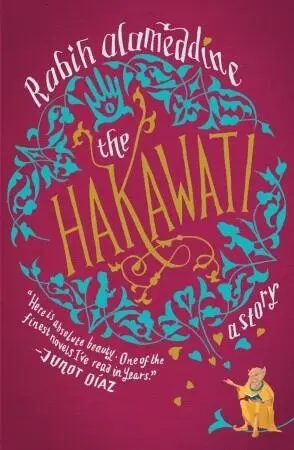
- Название:The Hakawati
- Автор:
- Издательство:Anchor
- Жанр:
- Год:2009
- ISBN:нет данных
- Рейтинг книги:4 / 5. Голосов: 1
-
Избранное:Добавить в избранное
- Отзывы:
-
Ваша оценка:
The Hakawati: краткое содержание, описание и аннотация
Предлагаем к чтению аннотацию, описание, краткое содержание или предисловие (зависит от того, что написал сам автор книги «The Hakawati»). Если вы не нашли необходимую информацию о книге — напишите в комментариях, мы постараемся отыскать её.
, or storyteller, and his bewitching tales are interwoven with classic stories of the Middle East. Here are Abraham and Isaac; Ishmael, father of the Arab tribes; the beautiful Fatima; Baybars, the slave prince who vanquished the Crusaders; and a host of mischievous imps. Through Osama, we also enter the world of the contemporary Lebanese men and women whose stories tell a larger, heartbreaking tale of seemingly endless war, conflicted identity, and survival. With
, Rabih Alameddine has given us an
for this century.
The Hakawati — читать онлайн бесплатно полную книгу (весь текст) целиком
Ниже представлен текст книги, разбитый по страницам. Система сохранения места последней прочитанной страницы, позволяет с удобством читать онлайн бесплатно книгу «The Hakawati», без необходимости каждый раз заново искать на чём Вы остановились. Поставьте закладку, и сможете в любой момент перейти на страницу, на которой закончили чтение.
Интервал:
Закладка:
There were always Armenian orphans living in the Twinings’ household, but none stayed more than a year or so. The Twinings, being good missionaries, found homes for the various children. My grandfather, though, was a different story. Since Poor Anahid became the Twinings’ maid and he was her charge, he lasted for eleven years. My grandfather claimed, and he was probably right, that the missionary doctor harbored some feeling toward him, his bastard offspring. My grandfather was an anomaly both in his length of stay at the house and in the timing of his escape to Lebanon. One can safely assume that all the orphans he grew up with, those who were not massacred during the Great War, escaped to Lebanon during the great Armenian orphan migration. My grandfather was ahead of his time. He survived the doctor’s wife, and he didn’t have to deal with the genocide and its consequences. He was blessed; hence, so was I.
In his early years, Ismail’s father carried him everywhere, even after he learned to walk. But one day, after my grandfather’s second birthday, the doctor’s wife told her husband, “Shame on you. You treat this orphan better than you treat your own blood. Do you not love your daughters? Do they not deserve your attention?” The doctor was embarrassed. “This is Barbara,” his wife added, “and this is Joan. Maybe you’ve forgotten who they are.”
Simon Twining put my grandfather down and took his daughters for a walk.
When my grandfather was four, the doctor tried to teach him to read and write, but his wife said, “Don’t be silly, my husband. English will be of little use to him. We’ll send him to school with the other Armenians. He’ll learn his language and be able to talk to his people.”
However, when my grandfather, after services on Sundays, joined the other children for Bible study with the doctor, she did not object.
“I come from a time when ink was still liquid and lush.” My grandfather broke silence as he stoked the fire. “None of this cheap Biro shit. My father’s wife thought teaching me to write was money ill spent and time wasted.” He performed the maté ritual — poured hot water from the kettle onto the metal straw, after which he ran a lemon peel across it. He replaced the now sanitized straw in the maté gourd and passed it to me. “You might think the doctor’s wife was mean, and she was, but you’d be missing the point of the story. I wasn’t allowed to learn to read, but Bible study is more valuable for a hakawati. Look at the great one, Umm Kalthoum. She was born into the poorest of families in a remote village of the Nile Delta in Lower Egypt. Umm Kalthoum should have been married off at twelve or thirteen. She would’ve remained unschooled and mothered a dozen kids: Muslim girls weren’t allowed to be educated in that part of the world. But here’s the gift, you see. At a very young age, girls are taught to read the Koran and nothing else. It gets hammered into them every day. For a singer, that’s the greatest of gifts. She learned tone and rhythm, learned perfect enunciation and breath, voice projection, inflection — you name it. She never mumbles. One can understand every word she utters. She mastered the witchcraft of voice. When the time was right, she opened her mouth, unleashed her soul, and helped all of us get closer to God. It was a gift, I tell you. The doctor’s wife may have been spiteful, but fate was on my side.”
Poor Anahid and Zovik cared for the boy, treated him as their own, but they were servants in a house that desired constant labor. My grandfather followed them around, and the maids made sure he didn’t interfere with their work.
It was at an early age that he learned to entertain himself. Sticks became his companions, and stones his toys. His inner world redecorated the outer one. His imaginary friends proved more loyal than any real ones, if only because, unlike the latter, they existed. He ate, slept, played, learned some, and avoided the Muslim boys and their Turkish insults. By the age of five, he was expected to do minor chores around the house. When he was six, the chores were no longer minor. Two years later, the doctor’s wife decided the boy should learn a trade. “Who knows how long we’ll be here to take care of him?” she said. “Better that he figures out a way to earn enough to fill his bottomless stomach.” My grandfather was given to a pigeoneer to be trained.
That was how my grandfather got swept up in the great pigeon wars of Urfa.
Long before the one God, long before Abraham, long before the city was Muslim, before it was Ottoman or Turkish, pigeons used to carry the souls of Urfa’s dead up to the heavens. Pigeons have had a special place in Urfa’s heart ever since.
“It’s not true what the Chileans say, that pigeons are rats with wings,” my grandfather said. “What do they know in Chile? You know it was a pigeon that announced the presence of land to Noah on his ark, the European rock dove, the same pigeon you see in all the cities of the world. Chile? Pfflt, let them go sour with their undrinkable pisco.”
Most homes in Urfa had ornately covered holes for the pigeons, but some had pigeon houses on their outside walls that were a diminutive replica of the original house, a clone birthed out of its forehead. In some neighborhoods, the birds had tiny palaces, with mini — crescent moons atop miniature minarets; the architectural designs of the pigeon palaces far surpassed those of the surrounding human houses.
“I hate pigeons,” my grandfather added, “but it’s not because they’re rats.”
My grandfather’s mentor was an Armenian, Hagop Sarkisyan, who in turn worked for a Turk by the name of Mehmet Effendioglu. Though not a wealthy man, the latter was a pigeon fancier who owned over three hundred pigeons. Hagop trained the pigeons and had four boys to assist. Being the youngest, my grandfather had the worst job, cleaning the shit.
“Shit everywhere,” he said. “Shit in the coops, on the terrace, on the roof. Do you have any idea what it’s like to deal with so much shit? Of course you don’t. You have a maid to pick up after you. I cleaned pigeon shit every minute of the day, and when I went home I had to wash it off me. My hair is as wild as it is today because I had to wash it so much when I was a boy.”
Hagop, the pigeoneer, was the main flocker. His first assistant was in charge of feeding the pigeons, giving them the best seeds and the strongest vitamins. The pigeons had to be good-looking and sturdy. During the off-season, this assistant steered one or two of the pigeon flocks, though not the primary one, and never, ever, while the war raged. Mehmet, the master, sat on the roof and watched.
“It was only during the battles that I didn’t have to clean,” my grandfather said. “I was allowed to watch the birds fly. I have to admit, they were beautiful up in the skies, circling and circling around an imaginary drain, then shooting out, diving like an Israeli jet. In those moments, I forgave the pigeons their shit.”
Ah, the wars, the wars. The pigeon wars of Urfa had been going on for over a thousand years. The war started every November and ended every April, which coincided, not by coincidence, with the worst weather for pigeons to roam, an aerial endurance test. In the afternoon, at four-thirty sharp, the warmongers of Urfa ascended to their roofs, where the cages were, and unleashed their flocks into the heavens. The fluttering cacophony of thousands upon thousands of wings and the jingling sounds of pigeon jewelry were heard in every corner of the city. Upon each roof, a pigeoneer steered his birds; his unblinking gaze never left his soaring flock. A long cane with a black ribbon at its end was his instrument. With each wave, he directed his birds’ flight. And when he swung a large arc, his flock dived into the middle of another, disturbing the symmetry, confusing his adversary’s pigeons.
Читать дальшеИнтервал:
Закладка:
Похожие книги на «The Hakawati»
Представляем Вашему вниманию похожие книги на «The Hakawati» списком для выбора. Мы отобрали схожую по названию и смыслу литературу в надежде предоставить читателям больше вариантов отыскать новые, интересные, ещё непрочитанные произведения.










Обсуждение, отзывы о книге «The Hakawati» и просто собственные мнения читателей. Оставьте ваши комментарии, напишите, что Вы думаете о произведении, его смысле или главных героях. Укажите что конкретно понравилось, а что нет, и почему Вы так считаете.