Rabih Alameddine - The Hakawati
Здесь есть возможность читать онлайн «Rabih Alameddine - The Hakawati» весь текст электронной книги совершенно бесплатно (целиком полную версию без сокращений). В некоторых случаях можно слушать аудио, скачать через торрент в формате fb2 и присутствует краткое содержание. Год выпуска: 2009, Издательство: Anchor, Жанр: Современная проза, на английском языке. Описание произведения, (предисловие) а так же отзывы посетителей доступны на портале библиотеки ЛибКат.
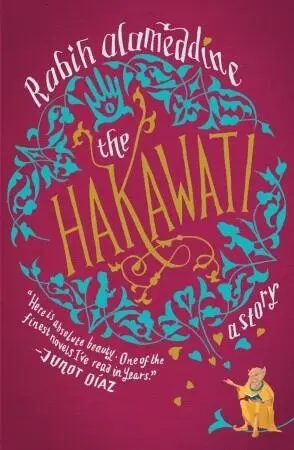
- Название:The Hakawati
- Автор:
- Издательство:Anchor
- Жанр:
- Год:2009
- ISBN:нет данных
- Рейтинг книги:4 / 5. Голосов: 1
-
Избранное:Добавить в избранное
- Отзывы:
-
Ваша оценка:
The Hakawati: краткое содержание, описание и аннотация
Предлагаем к чтению аннотацию, описание, краткое содержание или предисловие (зависит от того, что написал сам автор книги «The Hakawati»). Если вы не нашли необходимую информацию о книге — напишите в комментариях, мы постараемся отыскать её.
, or storyteller, and his bewitching tales are interwoven with classic stories of the Middle East. Here are Abraham and Isaac; Ishmael, father of the Arab tribes; the beautiful Fatima; Baybars, the slave prince who vanquished the Crusaders; and a host of mischievous imps. Through Osama, we also enter the world of the contemporary Lebanese men and women whose stories tell a larger, heartbreaking tale of seemingly endless war, conflicted identity, and survival. With
, Rabih Alameddine has given us an
for this century.
The Hakawati — читать онлайн бесплатно полную книгу (весь текст) целиком
Ниже представлен текст книги, разбитый по страницам. Система сохранения места последней прочитанной страницы, позволяет с удобством читать онлайн бесплатно книгу «The Hakawati», без необходимости каждый раз заново искать на чём Вы остановились. Поставьте закладку, и сможете в любой момент перейти на страницу, на которой закончили чтение.
Интервал:
Закладка:
“No,” the approaching yellow imp said. “I am called Jacob.”
The price of entry was her necklace of lapis beads, and she paid it.
And Jacob said, “I will offer you help, dear mistress. The paths of folly are not always distinguishable from the ways of wisdom. Please, hurry.”
Below Jacob’s gate, unrecognizable dark fruit seemed to sprout from jutting rocks. The fruit was veined, streaked, with the texture of polished marble. She stopped and reached out with her wounded arm; a bat flew down from above and covered the fruit with its satiny black wings. Its eyeless face snarled at Fatima. Bats everywhere, thousands upon thousands, hanging from fruits, from rocks. Bats flew singly in every direction, creating a barely audible, disconcerting symphony. Yet her path remained clear.
The gate was gold; its keeper was Job, the green imp; and his price for passage was the brooch of gems. The imp Job said, “I will offer assistance, madame, for you need help. Remember, sometimes it is wiser to choose death.”
Fatigue possessed Fatima entirely, took root within her soul, flourished, sprang leaves within her veins. She wished to lie down, but the earth beneath her was not inviting. She should have stopped back at the moss, left her body to the insects of the night. She should have lain down in the giant-mushroom beds. She should keep moving.
She came across a small ruby lying alongside her path, and then a sapphire, a diamond, another ruby, and then a pile, and then piles. Gems of all sizes, gold of all shapes, treasure chests that would make kings and queens salivate. And she did not have the energy to reach. She passed a gilded mirror lying against the wall. She watched her reflection, but she did not look like anyone she knew. She moved on.
The gate was mahogany, and its keeper was a blue imp. She wept as she paid with her red headscarf of silk and the gold chain around her forehead. “Your light seems to be dimming,” Noah said. “I will offer help. Delete the need to understand. In this world and that of tales, the need is naught more than a hindrance.”
Grief approached like an infection, overpowering her gradually and irrevocably. She marched, cried. A tear fell to the ground before every step, her dragging feet deleting any trace of the watermarks. The crows were in Noah’s domain, and their food was carcasses. Most of the bodies were human, flayed, hanging from rusty hooks, dripping an endless supply of red. Black birds on the ground drank from brooks of blood flowing on either side of her path. The ravenous crows fought over rotting morsels. She could not lie down here.
Elijah’s gate was turquoise. “I seek entry,” she said, “but I have nothing more to give.”
“I will take your clothes,” the indigo imp said. “Your ragged dress, your undergarments, even your shoes. I will be of service to you. I offer you this. Down here, you are always naked.”
Past Elijah’s gate, the earth upon which the dead walked was muddy ash and smoke, like the remnants of soup stock left to simmer but long forgotten. The walking dead mimicked her, thousands upon thousands — a colony of purposeless ants, they muddled about, bumping into each other, eyeless or eyes not seeing. Men, women, and children; horses, cats, and dogs; lions, tigers, and apes; dwarfs, demons, and giants. Dead. Whatever outfits any wore were frayed, their flesh decayed. She shivered. None crossed her clear path. And she came upon the seventh gate.
“I know who you are,” Fatima said to the keeper of the marble gate.
The violet imp looked surprised. “And I know who you are,” he said.
“This must be the final gate. I have arrived at the last domain. You are Adam.”
“It must be so. Welcome, my lady. Yet I still require payment. I will take the seven rings of silver around your arm. You will no longer need them.” He climbed to her shoulder, pushed down on the rings. She felt the flooding pain as they fell, dragging Jawad’s bloodied shirtsleeve. The blood thumped in her arm. It dripped from the stump where her hand used to be, drained slowly. She stared at her wound, felt her fight seep out of it.
“Walk,” Adam said. “You do not have far to go.” He blew out her lamp. “You do not need this down here. Move. I will help you. I offer this. In the underworld, death awakens.”
“And you call this help?”
She marched. As she had expected, snakes slithered everywhere except along her path. Boas, asps, and rattlers. Desert snakes, swamp snakes. She barely noticed them. Naked, helpless, exhausted, and bereft, she staggered forward. Dullness, her sole possession, clung to her.
And the ground fell below her.
And the ceiling lifted higher.
And the walls opened before her.
And Afreet-Jehanam sat on his throne.
“Approach me, seeker,” he said.

My father had his eyes closed; his breathing was shallow and slow. An oxygen mask nestled in the skin of his face. He opened his eyes, an effort that obviously exhausted him, and closed them again. My niece and I stood on either side of his bed.
Tin Can arrived with two other doctors. As if they were part of a club, all three had trimmed black beards and short curly hair — Tin Can had the bushiest eyebrows. I didn’t recognize the other two, though they obviously knew the family. “You’re not looking too well, Mr. al-Kharrat,” one of the doctors said. He wore a Titian-red shirt under his white coat. “We can’t have that. The Adha holiday is tomorrow, and your family’s all here.”
My father smiled wanly behind the mask. He tried to remove it but couldn’t. Lina leaned over and pulled it down a little. He mumbled something.
“He says maybe Ali and the Virgin can intervene,” Lina said. Everyone laughed. I didn’t understand the joke, probably the punch line of a ditty making the Lebanese rounds, to which I was yet to be privy.
The doctor in the red shirt said he wanted to look at the vitals and left for the nurses’ desk. The third doctor, a pulmonologist with sea-bass eyes, listened to my father’s lungs. Tin Can suggested to my niece that she shouldn’t remain standing for so long. The pulmonologist asked why the electrodes were not attached. My sister gasped. Dr. Titian returned and sheepishly announced that there were no vitals, because the monitors had not been recording. Two nurses rushed in. One dragged a portable machine, and the other hurriedly attached electrodes to my father’s chest. The overbite nurse who had given him a bath at noon had forgotten to reattach the tabs, and the other nurses and doctors had not noticed in more than five hours. Doctor Titian pressed buttons on the machine. “Something’s wrong,” he said. He walked over to my father. “The pacemaker has stopped.” Dr. Titian looked at the lump in my father’s chest. He tapped it twice, went back to his machine, then back to my father’s chest, then the machine.
And the jinn returned to my father’s eyes. Instantaneous. His face muscles relaxed. His bony fingers ungripped the bed rail. He took a deep breath.
“Don’t scare us like that,” Tin Can joked.
“Now you can celebrate the holiday,” the pulmonary specialist said.
“With your whole family,” Dr. Titian, my father’s cardiac surgeon, added.
With the palm of my hand, I covered my sister’s eyes. I gently forced her to close them. She had a murderous glare. “Breathe,” I whispered. “Breathe.” She rested her arms on my shoulders. My hand remained on her face until I felt it dampen.
Fatima wanted to tell the jinni to return her hand. She wanted to challenge him. She craved revenge. She genuflected before Afreet-Jehanam. “I have come down to die.”
Читать дальшеИнтервал:
Закладка:
Похожие книги на «The Hakawati»
Представляем Вашему вниманию похожие книги на «The Hakawati» списком для выбора. Мы отобрали схожую по названию и смыслу литературу в надежде предоставить читателям больше вариантов отыскать новые, интересные, ещё непрочитанные произведения.









Обсуждение, отзывы о книге «The Hakawati» и просто собственные мнения читателей. Оставьте ваши комментарии, напишите, что Вы думаете о произведении, его смысле или главных героях. Укажите что конкретно понравилось, а что нет, и почему Вы так считаете.