Rabih Alameddine - The Hakawati
Здесь есть возможность читать онлайн «Rabih Alameddine - The Hakawati» весь текст электронной книги совершенно бесплатно (целиком полную версию без сокращений). В некоторых случаях можно слушать аудио, скачать через торрент в формате fb2 и присутствует краткое содержание. Год выпуска: 2009, Издательство: Anchor, Жанр: Современная проза, на английском языке. Описание произведения, (предисловие) а так же отзывы посетителей доступны на портале библиотеки ЛибКат.
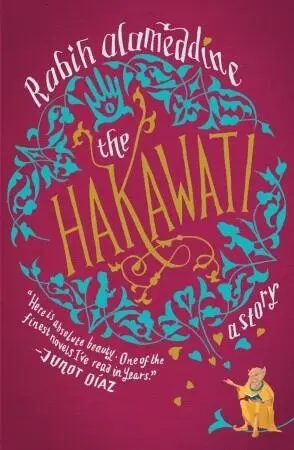
- Название:The Hakawati
- Автор:
- Издательство:Anchor
- Жанр:
- Год:2009
- ISBN:нет данных
- Рейтинг книги:4 / 5. Голосов: 1
-
Избранное:Добавить в избранное
- Отзывы:
-
Ваша оценка:
The Hakawati: краткое содержание, описание и аннотация
Предлагаем к чтению аннотацию, описание, краткое содержание или предисловие (зависит от того, что написал сам автор книги «The Hakawati»). Если вы не нашли необходимую информацию о книге — напишите в комментариях, мы постараемся отыскать её.
, or storyteller, and his bewitching tales are interwoven with classic stories of the Middle East. Here are Abraham and Isaac; Ishmael, father of the Arab tribes; the beautiful Fatima; Baybars, the slave prince who vanquished the Crusaders; and a host of mischievous imps. Through Osama, we also enter the world of the contemporary Lebanese men and women whose stories tell a larger, heartbreaking tale of seemingly endless war, conflicted identity, and survival. With
, Rabih Alameddine has given us an
for this century.
The Hakawati — читать онлайн бесплатно полную книгу (весь текст) целиком
Ниже представлен текст книги, разбитый по страницам. Система сохранения места последней прочитанной страницы, позволяет с удобством читать онлайн бесплатно книгу «The Hakawati», без необходимости каждый раз заново искать на чём Вы остановились. Поставьте закладку, и сможете в любой момент перейти на страницу, на которой закончили чтение.
Интервал:
Закладка:
“Hagop was good, but not outstanding. There was another pigeoneer, an Armenian by the name of Eshkhan, who was the prince of them all. He could direct his pigeons by simply whistling. Tweet, and his flock would circle; tweet, and it would come home. Eshkhan won the war more often than not, and it wasn’t because he had the best pigeons. He could have sold his cocks for a fortune and bought better pigeons to train, but he never did. You see, everyone thinks it’s about the money, but it isn’t. It’s about bragging rights. It’s about manhood.”
The war was won by him who had lost the fewest pigeons to either capture or death. He who ensured his pigeons didn’t get lost or exhausted was a pigeoneer worth his salt, and not many were. Every day as the war raged, pigeons soared until fatigue seeped into their wings; oxygen rebelled and escaped their blood. Out of the sky, birds dropped, falling like bombs released by fighter squadrons, littering the earth with deformed corpses. Dazed, bewildered, and confused, some birds followed unfamiliar flocks and landed on alien rooftops, to be captured and paraded that evening at the local café, the spoils of war, the dishonor of their pigeoneers, the dilution of manliness.
“There are wars in the Lebanese cities,” my grandfather said, “but they’re not anything like those up north. It’s done for fun here. It might get nasty in Beirut, but it’s not a real war. If one of your cocks ends up with someone else’s flock, you can get it back. The gentlemen’s rule in Beirut is first time free. You see, in a warless zone, most of the cocks are mated, and a pigeon always wants to return home to its mate, so it’s hard to keep a captured cock. You’d have to slay it. In a war zone, each team has about two hundred cocks and five hens. The flying teams consisted only of males, primarily Dewlaps. It’s about the war, not pigeon fancying. The pigeoneers in Beirut have teams of all kinds of pigeons: Dewlaps, Tumblers, Apricots, Jews, Fava Flowers, you name it. The fanciers who were attached to their pigeons would never dare fly them during the war.”
The pigeon keepers gathered at the Çardak Café, as they had for hundreds of years. They kept score of the previous afternoon’s battles by counting the captured pigeons. Cages adorned all the walls of the café, and fanciers could admire or buy the caught birds. The original owner of a pigeon had first dibs, but only if the new owner wanted to sell.
“But you couldn’t buy the peşenk,” my grandfather said. “The peşenk was the leader of the team of pigeons. You can’t win the war without a great one. All the other cocks follow him in flight. If a peşenk lands on another’s roof and is captured, the original owner retires from the war. Checkmate. He has to get rid of his team and start a new one. The peşenk can never be bought. He’s the chief of the clan, the mightiest of all.”
My grandfather took a sip of maté, craned his neck, and spoke to the ceiling. “They say that talent skips a generation, which means that my father or my mother would have been a great pigeoneer, because, unlike my youngest, your uncle Jihad, I certainly wasn’t. I have no idea where he got his talent from, and, thank God, he had the intelligence to stop when he did. He wouldn’t listen to me, of course. Nobody does. But one day he finally understood that being a pigeoneer is a lowly vocation. Now, listen here. Just because I said I wasn’t a good pigeoneer doesn’t mean I didn’t have other talents. Fate’s schedule is not always naked and clear.
“One evening, I was bemoaning my luck. I was hungry and tired. I had been cleaning shit for about six weeks and seeing no way out of it. The damned doctor’s wife said I whined a lot. She said there weren’t that many options for a wayward boy like me. But she was mistaken, you see, only I didn’t know it then. Remember, I was eight. So here I was, sweeping the main coop after a battle, and the stupid Mehmet calls. He hands me a fluffy, shiny black pigeon in a cage to take to the Çardak Café and give it to the owner.
“I went to the Çardak Café. Impressive, let me tell you, big and wide and busy. But then it was all pigeons. Pigeons, pigeons everywhere. Cages on the walls, on the counter, on the tables, under the tables. I began to get nervous. I thought maybe, if I lingered, the owner would ask me to clean the shit. I delivered the pigeon and ran out as fast as I could. I turned the corner, and there it was. I don’t know what made me stop. I was running hard, and maybe I needed to catch my breath. Maybe God sent me a sign. Maybe it was written.
“What befuddled my young eyes was another café, the Masal, old but not historic, well lit but decrepit, smoky and dank. There were no doors, and the metal shutters were rolled up. There were tables outside, but the silent patrons had their backs turned to the street. Why be with people if you’re going to be quiet? Why sit outside if you’re not going to look at the world? And then I saw what enthralled everyone’s attention. Inside, on a chair upon a small dais, sat the hakawati.
“He sat on his throne like a sovereign before his subjects. He wore a fez and Western clothing. A waxed black mustache two hands wide dominated his face. I couldn’t see his mouth move. He held a book in his lap but hardly looked at it. I moved closer and heard his silky voice. Magic.
“He was a Turk, and, mind you, my Turkish wasn’t very good at the time, but I heard him. I listened with my ears, my body, and my soul. He regaled us with the story of Antar, the great black warrior poet. He was in the middle of the tale, but my soles spread roots into the tiles of the pavement. I was enchanted.
“How can I describe the first time I encountered my destiny? A god’s fire burned in my breast, my heart aglow. In comparison, my life before that moment had moved at a sad and sluggish pace. Ah, Osama, I wish I could make you feel what it is like when you finally align yourself with God’s desires for you. I had received the call.”

By the light of a small bed lamp, I could see the curvy silhouette of Uncle Jihad’s head and its replica, a larger shadow projected on the wall. He tucked me in a bit too tightly. As my father’s younger brother, my number-one babysitter, and my favorite storyteller, he had the job of getting me to sleep, since my parents were having a dîner assis. My mother had told him to put me to bed and come right back, but he seemed distracted, lost in his thoughts. Though he said he wanted to make sure I slept by telling me a great bedtime tale, his heart didn’t seem to be in it.
“Once, there lived a happy young prince,” he began. He stared at the headboard.
“You said you’d tell me how I came to be.” I rolled to one side and then the other to unsecure the sheets. “You promised.”
“That’s what I’m doing.” He picked up the drink he had set on the nightstand, his fingers smearing the perfect outline of the dew that had gathered on the tall glass.
“I’m not a prince.”
“I’m not starting the story with you.” He took a sip of scotch, and his eyes sparkled for the first time. “Why would you think you’re the prince?”
“You told me. You said you’d tell the story of how I became me.”
“My dear Osama.” He gulped more of his drink and grinned. “You should know better by now. The story of who you are is never about you. I’m starting from the beginning.”
“If you do that, you’ll barely be able to make dessert.”
He laughed. “Let me worry about that. So where was I before I was ingloriously interrupted? There were two young princes.”
“It was one happy young prince,” I said.
“Well, now they’re brothers, and I’m not sure how happy they were. Let’s say they were content and loved each other. One day, the princes went hunting in the forest, but the younger brother didn’t have the heart to kill any animals. They ended up shooting arrows into tree trunks. The younger prince asked his brother, ‘Can you hit that flag over there?’ and the older prince cocked his arrow and shot it and bored a hole in the flag. But it wasn’t a flag. A very old and ugly woman admonished them, ‘Why did you shoot my underwear? I’ll teach you to respect other people’s laundry.’ She clapped her hands twice, and suddenly the princes found themselves in a forest they knew not. They walked in every direction but couldn’t figure out how to get back home. Night fell. The following morning, they woke up and were still lost. ‘We have to find food or we’ll starve to death,’ said the older prince. They found a pigeon in a tree. The older prince aimed his weapon, but the pigeon said, ‘I implore you, noble prince. Don’t shoot me. I have two sons at home, and they’ll perish if I don’t bring back food for them.’
Читать дальшеИнтервал:
Закладка:
Похожие книги на «The Hakawati»
Представляем Вашему вниманию похожие книги на «The Hakawati» списком для выбора. Мы отобрали схожую по названию и смыслу литературу в надежде предоставить читателям больше вариантов отыскать новые, интересные, ещё непрочитанные произведения.









Обсуждение, отзывы о книге «The Hakawati» и просто собственные мнения читателей. Оставьте ваши комментарии, напишите, что Вы думаете о произведении, его смысле или главных героях. Укажите что конкретно понравилось, а что нет, и почему Вы так считаете.