Rabih Alameddine - The Hakawati
Здесь есть возможность читать онлайн «Rabih Alameddine - The Hakawati» весь текст электронной книги совершенно бесплатно (целиком полную версию без сокращений). В некоторых случаях можно слушать аудио, скачать через торрент в формате fb2 и присутствует краткое содержание. Год выпуска: 2009, Издательство: Anchor, Жанр: Современная проза, на английском языке. Описание произведения, (предисловие) а так же отзывы посетителей доступны на портале библиотеки ЛибКат.
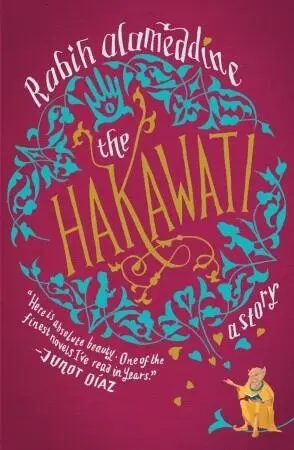
- Название:The Hakawati
- Автор:
- Издательство:Anchor
- Жанр:
- Год:2009
- ISBN:нет данных
- Рейтинг книги:4 / 5. Голосов: 1
-
Избранное:Добавить в избранное
- Отзывы:
-
Ваша оценка:
The Hakawati: краткое содержание, описание и аннотация
Предлагаем к чтению аннотацию, описание, краткое содержание или предисловие (зависит от того, что написал сам автор книги «The Hakawati»). Если вы не нашли необходимую информацию о книге — напишите в комментариях, мы постараемся отыскать её.
, or storyteller, and his bewitching tales are interwoven with classic stories of the Middle East. Here are Abraham and Isaac; Ishmael, father of the Arab tribes; the beautiful Fatima; Baybars, the slave prince who vanquished the Crusaders; and a host of mischievous imps. Through Osama, we also enter the world of the contemporary Lebanese men and women whose stories tell a larger, heartbreaking tale of seemingly endless war, conflicted identity, and survival. With
, Rabih Alameddine has given us an
for this century.
The Hakawati — читать онлайн бесплатно полную книгу (весь текст) целиком
Ниже представлен текст книги, разбитый по страницам. Система сохранения места последней прочитанной страницы, позволяет с удобством читать онлайн бесплатно книгу «The Hakawati», без необходимости каждый раз заново искать на чём Вы остановились. Поставьте закладку, и сможете в любой момент перейти на страницу, на которой закончили чтение.
Интервал:
Закладка:
And my father began to pant. He still had not urinated an hour later. His laborious inhalations gurgled. Shallow breaths. He cracked feeble jokes. He tried to move, but just getting his arm to behave was arduous. Breathe in. Breathe out. Wheeze. Gurgle. He wilted in his bedding, drooped before our eyes. Lina tried to appear composed, but she did not fool anyone.
Salwa held my elbow and walked me out of the room. “He doesn’t want you to see him in this condition.” I started to go back in, but she held my arm. “Just relax,” she said. “He’s having a fit of pique. He doesn’t want anyone but my mother to see him suffer. He doesn’t want me in there, either. He thinks my seeing him will distress the baby.”
From the doorway, I could see the lower half of his body, the tension in his legs below the hospital gown, the curling of his toes with each breath.

Fatima felt weak and moved gingerly. It did not take long for the light to dissipate. She realized she had no plan, no weapon, and no energy to speak of, but the one thing she lacked and needed most was a torch. The ground was uneven, but not dangerous, descending at a reasonable angle. She proceeded into the dark until she could see no more. Blind, she became more careful. One tiny step followed by another. The staff tested where her foot was to land. Quiet was the rule of the place. Quiet until, “I believe you might need this, madame,” and then there was light.
“It gets more treacherous from here on down,” the red imp said. He sat on a protruding burnt-orange rock, four or five times his size — he was no larger than a boy of three, a miniature jinni, with hooves dangling above the ground. He held out a tiny kettle-shaped oil lamp. “Come. Take it.” He grinned. “I will not hurt you.”
“I would not know how to carry it. I cannot walk without this staff, and I have only one hand. Look,” she said.
He jumped off the rock, pranced up to her with no little animation. She jerked her handless arm away. “I just want to see,” he said.
She extended her arm. “You can look, but do not touch.”
The little demon stared at her wound. “You need a healer. May I remove the bandage?”
She shook her head. “I need my hand.”
“Reattaching it might prove to be a problem,” he said, laughing. “But let us see if we can figure out a way for you to carry the lamp.”
“You can be my light,” she said.
“Oh, no. Not where you are going. You received the call.” He circled around her. The top of his bald head seemed to move up and down with each step. “We cannot tie it anywhere on your clothes. Oh, but I can slip the handle onto your finger, and you can hold both the lamp and the staff. Here, try this.”
“Why are you helping me?”
“Because you need help. Bring down your hand. I cannot reach that high.” And he slipped the lamp onto her forefinger. “With this ring, I thee wed.”
“It is the wrong finger, and you are the wrong species.”
“And you are dying.”
“I have not given up yet.” She looked ahead.
“I hope you will,” said the imp. “Now go. You do not have much time. I must wait here. And when you die, remember me in your prayers. Call me Ishmael.”
She marched, the lamp illuminating her descent, until the walls, ground, and ceiling converged on a circular gate. She approached, held up her staff to see the gate better, swept the back of her hand against it. It was black agate. She pushed against it, but it would not budge. “Open, Sesame,” she said. The gate did not respond, but there was movement in the shadows.
“My name is not Sesame.” The imp was the same size as Ishmael, and just as red. She noted that both had horns but no tail, which she took as a good sign. “It is Isaac,” the imp said. “Ishmael is my brother.”
“I seek entry,” she said.
“And I seek payment,” Isaac replied.
“I can pay.”
“I know that.” He flicked his hand, and the gate creaked open. “I am nobody’s fool. You are top-heavy with money. I will lighten your load. I will take fifty gold dinars.” He had the same silly gait as Ishmael.
“I will give you ten.” She walked through the gate. “You should have asked when you had a better bargaining position, before I came through. I will not overpay now.”
“Fifty.” He clenched his fists, tensed his stomach, and jumped twice. “Not one dinar less. I do not compromise. Everyone will make fun of me if I do. I was told you are carrying fifty. That is my price.”
“Whoever told you I had fifty gold dinars was lying.”
“Why do I get the troublemakers? You are dying, and with your last breath you haggle. You must be Egyptian.”
“From Alexandria.”
“Oy. I am being punished. Give me your money, madame. It is the law. You will not need it where you are going. Save us both the trouble.”
“I have forty-nine, one dinar less. I will give it for an answer to a question.”
“Ask.”
“How many have gotten out of here alive and human?”
“Wrong question. They always ask the wrong question. None. None have gotten out of here alive and human. Now give me the gold.” He climbed up her robe, stuck his hand in her bosom, and took the coins. Fatima wanted to admonish the imp, but held her tongue. “I shall help you,” Isaac said, counting the gold, “for I am fond of obstinate troublemakers. When you are asked to surrender a belonging, it behooves you to do so without bargaining. Surrender is the key.”
Fatima descended farther into the tunnel. The air turned moist, made her feel heavier with each step. She held up her staff and lamp, saw moss the color of emerald filling every crevice, yet her path remained barren. Various night insects roamed the moss, feeding, scurrying, creating a living, ever-changing Persian carpet. She wished she could touch; wished her lost hand could graze upon the surface. And she reached the second circular gate, carved of emerald. She pushed, shoved. “Open, Isaac.”
“My name is Ezra.” A little orange imp jumped out of a cloud of orange dust.
“I seek entry.”
“And I seek payment. I will have your robe.”
“But it is much too big for you. You could fit ten of your kind in this robe.”
“I have a large family. Give it.” He climbed up the robe, unfastened the clasp, shinnied up above her head, held on to the back of her collar, and jumped. Fatima teetered. Ezra dangled in midair, hanging on to the collar. “Let go,” he said. “It is my robe.”
“Wait, I am wounded. I lost a hand.”
Ezra jumped down, ran around. “May I see?” he asked. “Please?”
“You will have to help me with the robe first.” She patted the pocket of her dress to make sure the vial of potion was there, and not in her robe.
And the imp Ezra said, “Uncover your wound so I can see.”
“I cannot, for I do not have a free hand.”
“You need a healer.” Ezra bunched up the robe and lifted it above his head, almost disappearing under it. “Proceed with your journey,” her bundled robe seemed to say. “Your time is limited. And, for being kind to me, I will offer you help. In this realm, if someone asks you to uncover your wound, do so.”
Beyond the emerald gate, the air grew heavier still, reeking of an earthy stew. She came upon the mushrooms. Small at first, multihued, reds, sienna, ocher, browns, and greens. As she marched deeper, the numbers increased. Cuddled and coddled by the moist air, a metallic-blue mushroom grew as big as a shed. Next to it was one with velvet skin the color of avocado. Fatima felt hunger pains. The third gate was of lapis lazuli. “Let me guess,” she said to the dark beyond. “Your name is Abraham.”
Читать дальшеИнтервал:
Закладка:
Похожие книги на «The Hakawati»
Представляем Вашему вниманию похожие книги на «The Hakawati» списком для выбора. Мы отобрали схожую по названию и смыслу литературу в надежде предоставить читателям больше вариантов отыскать новые, интересные, ещё непрочитанные произведения.










Обсуждение, отзывы о книге «The Hakawati» и просто собственные мнения читателей. Оставьте ваши комментарии, напишите, что Вы думаете о произведении, его смысле или главных героях. Укажите что конкретно понравилось, а что нет, и почему Вы так считаете.