Rabih Alameddine - The Hakawati
Здесь есть возможность читать онлайн «Rabih Alameddine - The Hakawati» весь текст электронной книги совершенно бесплатно (целиком полную версию без сокращений). В некоторых случаях можно слушать аудио, скачать через торрент в формате fb2 и присутствует краткое содержание. Год выпуска: 2009, Издательство: Anchor, Жанр: Современная проза, на английском языке. Описание произведения, (предисловие) а так же отзывы посетителей доступны на портале библиотеки ЛибКат.
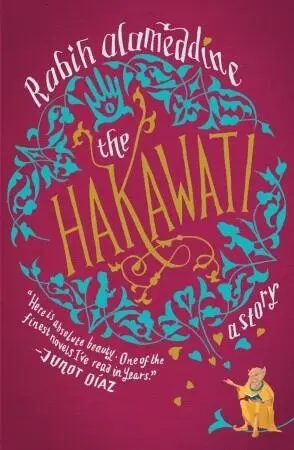
- Название:The Hakawati
- Автор:
- Издательство:Anchor
- Жанр:
- Год:2009
- ISBN:нет данных
- Рейтинг книги:4 / 5. Голосов: 1
-
Избранное:Добавить в избранное
- Отзывы:
-
Ваша оценка:
The Hakawati: краткое содержание, описание и аннотация
Предлагаем к чтению аннотацию, описание, краткое содержание или предисловие (зависит от того, что написал сам автор книги «The Hakawati»). Если вы не нашли необходимую информацию о книге — напишите в комментариях, мы постараемся отыскать её.
, or storyteller, and his bewitching tales are interwoven with classic stories of the Middle East. Here are Abraham and Isaac; Ishmael, father of the Arab tribes; the beautiful Fatima; Baybars, the slave prince who vanquished the Crusaders; and a host of mischievous imps. Through Osama, we also enter the world of the contemporary Lebanese men and women whose stories tell a larger, heartbreaking tale of seemingly endless war, conflicted identity, and survival. With
, Rabih Alameddine has given us an
for this century.
The Hakawati — читать онлайн бесплатно полную книгу (весь текст) целиком
Ниже представлен текст книги, разбитый по страницам. Система сохранения места последней прочитанной страницы, позволяет с удобством читать онлайн бесплатно книгу «The Hakawati», без необходимости каждый раз заново искать на чём Вы остановились. Поставьте закладку, и сможете в любой момент перейти на страницу, на которой закончили чтение.
Интервал:
Закладка:
“But of course. Didn’t you recognize the car? Who else but the valiant leader has such impeccable taste and magnificent manners as to offer such a wonderful gift to a lowly friend like me? I feel so overwhelmed whenever I think of him. May God show him the path to victory.”
“Oh, sir, do not speak of yourself as lowly,” the leader said. The other boys nodded in unison. They all stroked the car with their hands. “The valiant leader would never offer such a magnificent car to anyone who is not deserving. You’re a great man, sir. Your modesty is a lesson for all of us.”
“You’re very kind, my boy,” Uncle Jihad said. His bald head swayed as if he were being enchanted by a lovely melody. “I’m not deserving of adulation. But please give my regards to the valiant leader, and tell him — oh, I don’t know, tell him that the car is a treasure and I’m ever so grateful.” The boys cleared a path for us, and as we drove away, Uncle Jihad waved farewell to them like passing British royalty.
“My son,” my grandfather said. Uncle Jihad bowed his head slightly in acknowledgment.
“You bought the car in Tehran, didn’t you?” Lina said. “I remember. You had it driven here.” She leaned back on the headrest and laughed, tried to imitate our mother. “Do you even know their stupid leader?”
“Yes,” my uncle said, “that I do. He’s a jackass. Every year he buys a few cars for his toadies. I charge him triple, and he thinks he’s robbing me blind. Sad, really. Breaks my heart.”
“You’re wasting your talents, son,” my grandfather said. “In a different era, you could have been the greatest, probably better than your silly father.”
“You’re very kind,” Uncle Jihad said.
“Don’t patronize me,” my grandfather said.
“No, I mean it. But I’m not wasting the talent. I’m a car salesman, the modern storyteller. We’re doing really well, Father. In the last year, we’ve made more money than in all the previous years combined. It seems that this is what I was born to do.”
“Stop fooling yourself,” my grandfather said. “Stupidity is unbecoming.”
My father didn’t like old Arabic cafés. According to him, only gamblers, drunkards, and swindlers patronized them. I assumed that everyone around us fit the description, because the café looked like every other one Uncle Jihad had taken me to. White paint peeled off the walls in sheets; cigarette and hookah smoke fumed the dank air. The customers sat on cheap wooden chairs with twine seats. The square tables were either Formica or white plastic. Greaseproof wraps and balls of foil speckled a few of the tables. Two kids roamed the room: a tea boy carried glasses filled with the scalding amber liquid, and a coal boy carried a brazier to replenish the hookah’s embers. On a small wooden platform, a lonely chair was pushed back against the dirt-stained wall. This was where the hakawati would sit. This was where my grandfather’s goldfish eyes remained fixed.
“I’m sure he’ll use props,” my grandfather sneered.
“I want to see how fast you’ll get kicked out of here.” Lina smiled at him, and he laughed.
My glass was too hot to hold, so I moved my lips toward it and slurped a bit of tea. It was too sweet. Lina leaned forward, too, laid her head on her crossed arms on the table, and looked up at my grandfather. “Do you think he is good at accents?” she asked.
“You’re nothing but trouble,” he replied. “He is awful at accents. You knew I’d say that, because it’s true. He’s Egyptian. They wouldn’t know any accent other than theirs if it kicked them in the ass. But what’s horrible about him is that he doesn’t know how ghastly he is. Even his native accent is atrocious, and I don’t think he’s really Egyptian. He sounds like a foreigner in every accent.”
“Like Dalida,” I piped.
“But he must be good,” Lina said. “They brought him all the way here.”
“No one brought him here. He’s probably getting paid two cups of tea for this. He’s that bad. Just you wait. You’ll see. Ah, look. Here comes the dimwit.”
The hakawati, a man in his fifties or sixties, wearing a fez and an Egyptian jalabiya that was short and threadbare at the ankles, walked in from the boisterous kitchen. He carried a plastic sword in his right hand and a tattered book in his left. His gray mustache was waxed into glistening loops. My grandfather stared contemptuously, his nostrils flaring as if he smelled vomit. His tongue clucked. He muttered to himself. I heard only the word “book.”
The hakawati lifted the jalabiya slightly and stepped onto the dais. He walked to the front and bowed, even though no one had clapped.
“Look at the silly peacock,” my grandfather hissed.
“Don’t, Father,” Uncle Jihad said. “You’re working yourself up.”
“Good evening, ladies and gentlemen,” the man announced. Lina and I both covered our mouths to hide our laughter. He cultivated his vowels, elongated them, and reaped a pretentious inflection.
“All the tra-la-la,” my grandfather whispered. “Show-off.” He turned away, and his elbow knocked his tea glass, almost tipping it over.
“In the name of God, the most compassionate, the merciful,” the hakawati began.
“He’s going religious on us,” Grandfather snickered.
“Praise be to God, the Lord of justice, the Benefactor, the Faithful, and I state there is no god but God alone and He has no partners, a statement that saves whoever states it on the Day of Judgment, the Day of Religion, and I state that our master Muhammad is His slave and His prophet and His honest lover, may God pray on his soul, and on the souls of his honorable, decent, and virtuous relatives, and on the souls of his upright friends.”
“Pfflt,” Grandfather said to the table.
“And so,” the hakawati proceeded, “God in all His glory made the stories of the early heroes a model to the faithful, a guide to the ignorant, a warning to the infidels, and I heeded God’s wishes in choosing to tell this tale, for I saw that it contained the triumph of Islam and the humiliation of the mean infidels, and I looked up other stories but couldn’t find one that was more truthful or offered better proof or was wiser than the story of al-Zaher Baybars, the hero of heroes, to whom God promised eternal victories as a reward for his unwavering faith, and what glorious and enchanting details I shall relate to you were told to me by my teachers — Sofian, the grand hakawati of Algeria, and Nazir, the Damascene hakawati of the Hamidieh — as they heard from their illustrious teachers, may God have mercy upon all of them.”
And my grandfather stood up, his chair clank-clanking as it fell to the ground. Uncle Jihad quickly covered his face with both hands. My grandfather pointed a finger at his nemesis. “You,” he bellowed. Behind the glasses, the red lines in his eyes looked like mighty rivers on a map. “You’re a pretender. You’ve never met Nazir. You’re not worthy of eating his shit.”
The hakawati was speechless, his fez askew.

And my grandfather resumed his tale. “Just as the morning star outshines all others, Murat’s beauty surpassed any in the city of Urfa. His splendor was such as to make poets weep for not being able to describe it adequately or honorably. Yet this most obvious of traits was exceeded by his modesty. He was studious, honest, kind, and devout, which were amazing qualities for any man, but he was — what? — a boy of seventeen or so. Everyone wished him for a son, but the girls — the girls wished him for a husband. They prayed every night. They swore vows they could never keep, but in the end it didn’t matter, for few of Urfa’s girls could marry a dervish, and that was what he was.
Читать дальшеИнтервал:
Закладка:
Похожие книги на «The Hakawati»
Представляем Вашему вниманию похожие книги на «The Hakawati» списком для выбора. Мы отобрали схожую по названию и смыслу литературу в надежде предоставить читателям больше вариантов отыскать новые, интересные, ещё непрочитанные произведения.










Обсуждение, отзывы о книге «The Hakawati» и просто собственные мнения читателей. Оставьте ваши комментарии, напишите, что Вы думаете о произведении, его смысле или главных героях. Укажите что конкретно понравилось, а что нет, и почему Вы так считаете.