Rabih Alameddine - The Hakawati
Здесь есть возможность читать онлайн «Rabih Alameddine - The Hakawati» весь текст электронной книги совершенно бесплатно (целиком полную версию без сокращений). В некоторых случаях можно слушать аудио, скачать через торрент в формате fb2 и присутствует краткое содержание. Год выпуска: 2009, Издательство: Anchor, Жанр: Современная проза, на английском языке. Описание произведения, (предисловие) а так же отзывы посетителей доступны на портале библиотеки ЛибКат.
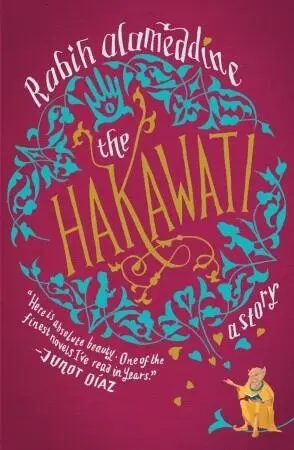
- Название:The Hakawati
- Автор:
- Издательство:Anchor
- Жанр:
- Год:2009
- ISBN:нет данных
- Рейтинг книги:4 / 5. Голосов: 1
-
Избранное:Добавить в избранное
- Отзывы:
-
Ваша оценка:
The Hakawati: краткое содержание, описание и аннотация
Предлагаем к чтению аннотацию, описание, краткое содержание или предисловие (зависит от того, что написал сам автор книги «The Hakawati»). Если вы не нашли необходимую информацию о книге — напишите в комментариях, мы постараемся отыскать её.
, or storyteller, and his bewitching tales are interwoven with classic stories of the Middle East. Here are Abraham and Isaac; Ishmael, father of the Arab tribes; the beautiful Fatima; Baybars, the slave prince who vanquished the Crusaders; and a host of mischievous imps. Through Osama, we also enter the world of the contemporary Lebanese men and women whose stories tell a larger, heartbreaking tale of seemingly endless war, conflicted identity, and survival. With
, Rabih Alameddine has given us an
for this century.
The Hakawati — читать онлайн бесплатно полную книгу (весь текст) целиком
Ниже представлен текст книги, разбитый по страницам. Система сохранения места последней прочитанной страницы, позволяет с удобством читать онлайн бесплатно книгу «The Hakawati», без необходимости каждый раз заново искать на чём Вы остановились. Поставьте закладку, и сможете в любой момент перейти на страницу, на которой закончили чтение.
Интервал:
Закладка:
Uncle Jihad grinned. “A girl after my own heart. My darling, you can’t control the entire world.”
“I’m not trying to control the world,” she said, still not moving her head. “Just him. I get enough stares from other people. I don’t need it from him, and he’ll stop if he knows what’s best for him.” She contemplated a Brueghel painting of a woman who descends into hell and fills her basket with goodies. Uncle Jihad loved Brueghel.
“Sweetheart, it’s because they’re new,” Uncle Jihad said. “In a couple of months, everyone will get used to them.”
“Why are we talking about the girl’s tits?” my grandfather yelled. “We were talking about me. I come down to the city to visit my children, but my children pay no attention to me.”
Lina looked like a colorful statuette, immobile, trying hard to stifle a laugh.
“Goddamn it, Father,” Uncle Jihad said. “Watch your mouth. Let’s stop talking about the café. You know that Farid will be furious if you go there, more so if you take his children with you. Why don’t we do something else? We can visit your in-laws. You haven’t done that in ages.”
“Damn my in-laws,” my grandfather replied. Lina’s lips curled into a full smile. “And damn Farid, too. Who’s the father of whom here? He should be worried about my getting angry, not the other way round. I want to go. I’m seventy-one years old, and I’m dying soon. This could be my last chance. Don’t you have any compassion?”
“What’s the point, Father? You know they’ll kick you out the minute they see you. They always do.”
“No, no. Not this time. That’s why you have to come with me. They’ll think we’re a family, and they won’t recognize me, because I’ll be going incognito.” From his vest he took out a white Druze skullcap and a large pair of eyeglasses that made his eyes balloon like the eyes of a goldfish in a tiny bowl. “See? I look like a peasant from the mountain.”
Lina and I doubled over laughing. As I tumbled on the sofa, my head banged hers. My grandfather looked at his hysterical audience and began dancing and twirling around for us so we could admire him in full regalia. One of my hands rubbed the bump on my head, and the other wiped the funny tears from my eyes.
“Come on. Let’s go,” my grandfather said. “Please take me.”
“I want to go,” I said. I sat back up on the sofa. Lina studied me from her prone position. “I want to see the storyteller.”
“That’s my boy.” My grandfather beamed.
“Oh, shit,” Uncle Jihad said. “Fuck, fuck, fuck.”
And on a clear April morning in Beirut, the four of us — my grandfather, Uncle Jihad, Lina, and I — drove to hear the hakawati.
“Time was much longer then,” my grandfather said, “in the old days.”
We drove in my uncle’s Oldsmobile convertible. My father called it the problem car, but he couldn’t convince Uncle Jihad to get rid of it. Since we owned the Middle East’s exclusive Datsun and Toyota dealership, my father expected everyone in the family to drive one or the other. The business had begun as a Renault dealership, but the family had sold those rights to be the exclusive retailers of the Japanese cars.
“You could tell a story for a whole month then, but now who’d listen? Everyone wants it quick, as if life itself was quick.”
My mother drove a Jaguar. My father overlooked it, because she’d always driven Jaguars. She complained that the Japanese cars were horrible, that the back ends slid sideways on mountain curves like a belly dancer’s fat butt. She drove incredibly fast and claimed she needed a car that handled well. My father insisted the Japanese were consistently improving their cars, which would soon become the most reliable cars around, not simply the cheapest.
“Mind you, it’s not that this hakawati isn’t a fool,” my grandfather said. “He’s an incompetent dimwit who wouldn’t be able to talk himself out of his execution, but we can’t blame him in this case, can we? We’re lost, I tell you.”
My father persuaded Uncle Jihad not to drive the Olds to work, which wasn’t a problem, since the dealership was a distance of four blocks from our apartment building. My father wasn’t able to persuade him to stop calling the car Hedy, after an American actress my uncle considered “the most divinely beautiful creature on this blessed earth.”
“And then there was radio,” my grandfather said. “A curse.”
“And television,” my uncle added.
“Double curse. But who watches those ugly French and English stories?”
“I do,” Lina said. Her condition for coming on this expedition was that she would get the front seat and the top would be down. My grandfather told her that princesses sat in the back, and she replied that princesses got assassinated if they did. Grandfather wasn’t pleased about being relegated to the back seat. He had tried the age-before-beauty tactic, but my sister’s stubbornness was famous. He got to glare at the back of my sister’s hair for the trip, and I sat behind Uncle Jihad, the nape of his neck my primary view. Lina turned on the radio, moved the dial from an Arabic music station to one playing a strange beat. “Get up,” the singer wailed. The second verse sounded French. The bass thump-thumped. The singer wanted to be a sex machine.
“Turn that off,” my grandfather said. Lina didn’t. Uncle Jihad did.
“What’s the point of riding in a convertible if we can’t have loud music?” Lina said. She had a red ribbon tied as a headband, and she moved away from the windshield so her hair would flow in the wind, but there wasn’t much wind at the speed we were driving. “We should be driving on the freeways of America.”
“The Autobahn is better,” Uncle Jihad claimed.
“Why don’t you just drive on the airport runway?” My grandfather imitated their tone of voice. “Just drive off and fly.”
We were in a neighborhood I had never been to before. The streets narrowed, as did their buildings, and cars were parked helter-skelter. Gaudily hued laundry dripped water from balconies. Earthen pots of red geraniums and green herbs covered windowsills. Layers of posters desecrated every wall. Some were partially torn, revealing the poster underneath; the left eye of a politician appeared beneath the right arm of a scantily clad redhead smoking a cigarette, with the slogan shouting, “Experience the lush life.”
Then the posters changed, became neater and less colorful. Pictures of Gamal Abd al-Nasser and Yasser Arafat, and pictures of others I didn’t recognize. Photographs of Palestinian martyrs. The phrase “This generation shall see the sea” covered a map of the occupied lands. Ahead, three teenagers in army fatigues, with Palestinian kaffiyehs stylishly draped on their shoulders, waved their rifles at us to stop. One of the teenagers stared wide-eyed at the car. Another gawked at my sister’s breasts. I wanted to warn him that she was sensitive. My grandfather moved forward in his seat and said firmly, “Look elsewhere, young man.” The boy mumbled something apologetically and stared at the tire of the Olds.
“Now, why are such fine young men as you stopping our car?” Uncle Jihad asked. “We’re not going anywhere near your camp.”
The oldest of the three, who looked no more than fifteen, stood straighter. “Our orders are to check suspicious cars in the neighborhood. The Israelis are going to try something sneaky.”
“True,” my uncle said. “You can’t be too careful. And I’m sure you boys are doing an exemplary job. You look like smart boys. Hold on. Are you the young lions? You’re part of my friend Hawatmeh’s Ashbal, aren’t you?”
All three boys fell back half a step. In a quiet voice, the eldest asked, “You know the valiant leader?”
Читать дальшеИнтервал:
Закладка:
Похожие книги на «The Hakawati»
Представляем Вашему вниманию похожие книги на «The Hakawati» списком для выбора. Мы отобрали схожую по названию и смыслу литературу в надежде предоставить читателям больше вариантов отыскать новые, интересные, ещё непрочитанные произведения.










Обсуждение, отзывы о книге «The Hakawati» и просто собственные мнения читателей. Оставьте ваши комментарии, напишите, что Вы думаете о произведении, его смысле или главных героях. Укажите что конкретно понравилось, а что нет, и почему Вы так считаете.