Rabih Alameddine - The Hakawati
Здесь есть возможность читать онлайн «Rabih Alameddine - The Hakawati» весь текст электронной книги совершенно бесплатно (целиком полную версию без сокращений). В некоторых случаях можно слушать аудио, скачать через торрент в формате fb2 и присутствует краткое содержание. Год выпуска: 2009, Издательство: Anchor, Жанр: Современная проза, на английском языке. Описание произведения, (предисловие) а так же отзывы посетителей доступны на портале библиотеки ЛибКат.
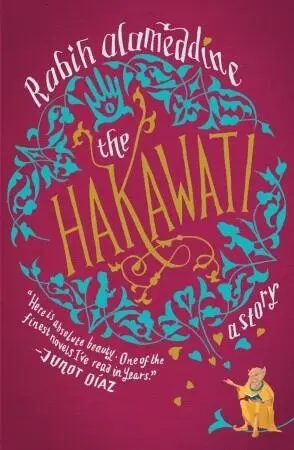
- Название:The Hakawati
- Автор:
- Издательство:Anchor
- Жанр:
- Год:2009
- ISBN:нет данных
- Рейтинг книги:4 / 5. Голосов: 1
-
Избранное:Добавить в избранное
- Отзывы:
-
Ваша оценка:
The Hakawati: краткое содержание, описание и аннотация
Предлагаем к чтению аннотацию, описание, краткое содержание или предисловие (зависит от того, что написал сам автор книги «The Hakawati»). Если вы не нашли необходимую информацию о книге — напишите в комментариях, мы постараемся отыскать её.
, or storyteller, and his bewitching tales are interwoven with classic stories of the Middle East. Here are Abraham and Isaac; Ishmael, father of the Arab tribes; the beautiful Fatima; Baybars, the slave prince who vanquished the Crusaders; and a host of mischievous imps. Through Osama, we also enter the world of the contemporary Lebanese men and women whose stories tell a larger, heartbreaking tale of seemingly endless war, conflicted identity, and survival. With
, Rabih Alameddine has given us an
for this century.
The Hakawati — читать онлайн бесплатно полную книгу (весь текст) целиком
Ниже представлен текст книги, разбитый по страницам. Система сохранения места последней прочитанной страницы, позволяет с удобством читать онлайн бесплатно книгу «The Hakawati», без необходимости каждый раз заново искать на чём Вы остановились. Поставьте закладку, и сможете в любой момент перейти на страницу, на которой закончили чтение.
Интервал:
Закладка:
“Like all dervish boys his age, Murat had to practice his religious rites and rituals relentlessly. But, unlike other boys, he took his duty of watching Abraham’s pool seriously. No Narcissus he. Wearing his religious dervish uniform — a fez hat, short white skirt atop white breeches — he stood guard ceremoniously, didn’t move, play, interact with the other boys or passersby. When not watched by an elder, the other boys broke loose, relaxed, and did what all boys do. Every dervish turned devilish. But Murat believed that God was always with him, and behaved accordingly. Like a statue sculpted by a master artist, the boy stood still before the pool, watched from atop his shoulder by God and from across the street by a gaggle of girls.
“Some of the girls were veiled, most were not. Muslims, Christians, Turks, Arabs, Armenians, Kurds, they came for a glimpse of heaven. But one kept coming back again and again. She knew his schedule. She wasn’t allowed to get close to him, so she began to talk to him from across the pool, across the street, making a fool of herself. She didn’t follow the well-worn laws of discretion. She arrived early and waited anxiously for him, standing as if her knees were unsure they could support her weight. And when Murat appeared, dressed in his glorious dervish outfit, she yelled, ‘Look at me!’ The boy was so devout he didn’t hear or see her. That is the greatest and deepest wound for a girl of fifteen, and that’s how old my half-sister was.
“My father was the shah of his realm, and, like most shahs, he had no inkling that the realm was imploding. Did he notice the simmering stew of war? Did he feel the tension in the world? Did he hear the dying gasps of empire? Did he realize that the city’s Turks had begun to regard him and his English family suspiciously? Obviously, he was on a mission. God had sent him to minister to the poor Christians in Urfa, and that was what he was doing. Did he notice that the people he was ministering to were getting poorer? The Armenians of the area were not being hired anymore. Did he notice that many more were having ‘accidents’? He was spreading the word of God. He was ministering to a people but didn’t realize how terrified they were growing. Did he feel the tension between the Turks and the Armenians?
“Did he feel the tensions at home? Did he see his daughters growing up? He didn’t realize his elder daughter, Joan, was of marriageable age until she turned sixteen and his wife had to point out that there were no eligible husbands for her daughter in Urfa. He suggested she could wait for another year, and if not, he could send her to his wife’s sister in Sussex. His wife didn’t know what to do. She tried to point out that the world they knew was disappearing, that the Urfa they knew was disappearing, that the daughters they knew were disappearing. But the doctor had a job to do, a job that meant something, a job that defined who he was.
“And he paid no mind to Barbara the troubled. Barbara hated me, just like her sister and her mother did. She was closer to me in age, only five years’ difference, so her insults were more humiliating. What still upsets me to this day is that every now and then a few Muslim boys would call her names — infidel, unbeliever — and she’d get melancholy, weep for days on end, but then she’d turn around and call me an orphan bastard. She wasn’t always melancholy. Often she’d get excited about one thing or another — a game she’d played, a new dress she wanted. She would jump like a bunny while talking. She talked faster than anyone I’ve known.
“Once, I got stuck in the mulberry tree. I was young, maybe five, maybe six. I had climbed the tree for some fruit and ended up on a branch with my rear end higher than my head. My legs dangled from either side of the branch. I got scared and froze in place. I was relieved when Barbara saw me, because I thought she would get help, but instead she got a cane. I don’t know why she did it. She whipped my bare feet and laughed. I couldn’t lift my legs for fear of falling, and she didn’t stop whipping my soles. I cried so hard that Zovik came out running. She tried to take the cane away, and Barbara turned on the maid. She caned Zovik. She hit Zovik over and over until she tired. She threw the cane at Zovik and went into the house.
“Of course, I avoided Barbara after that. I tried to be anywhere she was not. And once I began to work, that became less and less difficult. Before she finally turned to me for help, I probably hadn’t spoken to her in over two years, and that’s while living in the same pious house.
“She was in love, she told me, and I must help her. She said her heart was afire and she needed a go-between, a boy to inform her boy of the possibility of love. This wasn’t some lovely fairy tale. Do you think I’m crazy? In the middle of her confession, I turned around and bolted. But where could I go? She was my half-sister. She came after me the second day. ‘You must help me. I have no one else. I will die, and it will be your fault.’ I scampered away again. I spent one night at the Masal; the next night I slept on Mehmet’s roof. Poor Anahid was worried sick. She screamed at me when she saw me. Then Barbara screamed at me. I ran again and stayed away for about two weeks. But Barbara forgot about me the same way she remembered me. All of a sudden, I was no longer part of her grand scheme. I didn’t try to find out what her new plans were, but by the time I returned to sleeping at home, Poor Anahid and Zovik had heard about Barbara and Murat. Now, you have to remember that Barbara was still only stalking Murat, and the poor boy hadn’t yet acknowledged her existence. He must have known, I think, because the other boys must have told him. Whether it was so or not, he didn’t look at her. And everybody began to talk. One day, a Turkish boy approached Barbara. If she was willing to love Murat, why could she not love him? He might not be as beautiful as Murat, but he could reciprocate, and he certainly could please her. Horrified, she slapped the boy and bolted home. The next day, another boy approached, and another. She stopped running away and ignored her new suitors.
“The city of Urfa had nothing but Barbara to talk about. Mehmet asked me if I had slept with the crazy English maiden. Hagop wondered if it was true that she walked around naked in the house. The boys wanted to know if her father had his way with her every Wednesday. The English, her mother and father, were of course the last to know.
“Barbara finally did the unthinkable. She waited until Murat finished his duties, and, in full view of all the other boys, she walked up to him and declared her eternal love. And he listened. Now, Barbara was not the most attractive of girls, but she wasn’t ugly, either. It wasn’t about beauty for the boy. I assume he was flattered: not many boys are chosen. Being the honorable person he was, he informed her that there was no hope for love. He was a Muslim and she a foreigner. She said he didn’t have to do anything other than allow her to gaze at him. Even if she could not possess him, even if she only walked beside his shadow, she would die fulfilled.
“The following day, Barbara resumed her passion and her position. And now he paid attention. Soon they were seen walking together. Soon they were walking unseeing. They paid naught but each other any mind. Soon the tongues of Urfa walked as well, and the scandal of all scandals erupted. And so did our house. Her perplexed father tried to talk to her. When her mother found out, she caned Barbara and locked her in her room. Her mother left the rattan leaning outside the door to remind the household that Barbara was in for another round. But Barbara, crazy Barbara, wouldn’t bend. She yelled and wept in her room. Apparently, that was nothing compared with what happened to Murat. He began to turn up at watch with black eyes and was unable to stand erect for the duration of the sacred guard shift. He neglected his studies of the Koran. He no longer had time for friends. He stopped twirling.
Читать дальшеИнтервал:
Закладка:
Похожие книги на «The Hakawati»
Представляем Вашему вниманию похожие книги на «The Hakawati» списком для выбора. Мы отобрали схожую по названию и смыслу литературу в надежде предоставить читателям больше вариантов отыскать новые, интересные, ещё непрочитанные произведения.










Обсуждение, отзывы о книге «The Hakawati» и просто собственные мнения читателей. Оставьте ваши комментарии, напишите, что Вы думаете о произведении, его смысле или главных героях. Укажите что конкретно понравилось, а что нет, и почему Вы так считаете.