Rabih Alameddine - The Hakawati
Здесь есть возможность читать онлайн «Rabih Alameddine - The Hakawati» весь текст электронной книги совершенно бесплатно (целиком полную версию без сокращений). В некоторых случаях можно слушать аудио, скачать через торрент в формате fb2 и присутствует краткое содержание. Год выпуска: 2009, Издательство: Anchor, Жанр: Современная проза, на английском языке. Описание произведения, (предисловие) а так же отзывы посетителей доступны на портале библиотеки ЛибКат.
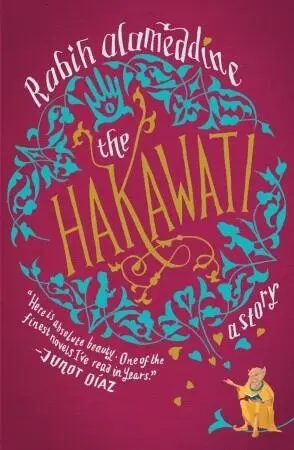
- Название:The Hakawati
- Автор:
- Издательство:Anchor
- Жанр:
- Год:2009
- ISBN:нет данных
- Рейтинг книги:4 / 5. Голосов: 1
-
Избранное:Добавить в избранное
- Отзывы:
-
Ваша оценка:
The Hakawati: краткое содержание, описание и аннотация
Предлагаем к чтению аннотацию, описание, краткое содержание или предисловие (зависит от того, что написал сам автор книги «The Hakawati»). Если вы не нашли необходимую информацию о книге — напишите в комментариях, мы постараемся отыскать её.
, or storyteller, and his bewitching tales are interwoven with classic stories of the Middle East. Here are Abraham and Isaac; Ishmael, father of the Arab tribes; the beautiful Fatima; Baybars, the slave prince who vanquished the Crusaders; and a host of mischievous imps. Through Osama, we also enter the world of the contemporary Lebanese men and women whose stories tell a larger, heartbreaking tale of seemingly endless war, conflicted identity, and survival. With
, Rabih Alameddine has given us an
for this century.
The Hakawati — читать онлайн бесплатно полную книгу (весь текст) целиком
Ниже представлен текст книги, разбитый по страницам. Система сохранения места последней прочитанной страницы, позволяет с удобством читать онлайн бесплатно книгу «The Hakawati», без необходимости каждый раз заново искать на чём Вы остановились. Поставьте закладку, и сможете в любой момент перейти на страницу, на которой закончили чтение.
Интервал:
Закладка:
I walked to the glass sliding door, saw a sliver of the sun perched atop a building across the street. The newer building looked colossal next to the little house with rotted shutters, two incompatible siblings with different genes.

The emir and his wife dragged Fatima into their private quarters to inquire about the cure. “The healer said it is about the stories,” Fatima said, “the tales you choose to tell. Your lordship likes romance, which is why you have twelve daughters. Girls like love stories, whereas boys love adventure stories. The next time you make love, make sure to tell an adventure story and not one of romance.”
“But I love stories of unrequited love,” the emir said, “of exalted suffering. I love desire and the obstacles lovers have to overcome. I do not like tales of killing, maiming, and trying to prove who is stronger than whom. Those can be devastatingly boring.”
“But adventure stories are the same as love stories,” his wife argued. “And no matter, you must tell me an adventure story tonight. It has been prescribed. This is so exciting. I will hear a new tale. Do not take offense, my dear, but your stories have been getting stale for a while, the buzzing of listless houseflies and not the bites of mosquitoes. I have cravings for adventure.”
That night, after coitus, the emir’s wife demanded her tale. “No romance,” she said. “No star-crossed lovers. I want a story that will engage a different organ, not my heart.”
“A sexual story, then,” the emir said.
“No, I want death and destruction. I want virile heroes who overcome evil. At least one city must be destroyed. I want a son and you want a son.”
“Virile heroes? How about faithful heroes? Wait. Wait. I know which story. I know now. Listen.” The emir began his story thus:
In the name of God, the most compassionate, the merciful.
Once, long before our age, the king of Egypt, ruler of the lands of Islam, was despondent because his realm was in disarray. The Crusaders thrived along the coast, behaved as if they owned the land. Corruption and perfidy dwelt in the hearts of the administrators of his realm. The foreigners were able to bribe, hoodwink, and deceive any official they chose. King Saleh wept in shame, for he knew that if he did not rule more wisely his great-grandfather Saladin, the great Kurdish hero who crushed the Crusaders and unified the lands, would not welcome him in paradise. King Saleh was watching that kingdom slowly crumble and putrefy.
One night, the honest king had a discomfiting dream. He called on the intelligentsia of the land, the philosophers, the judges, and the poets. “Hear me. I want to know whether last night was a propitious night for dreams.”
The wise men replied, “By all means, Your Majesty. Last night offered a clear vision. It was the seventeenth of the month. The moon was not blighted.”
“I was stranded in a desert, defenseless, surrounded by a thousand hyenas. But dust rose, and there appeared seventy-five magnificent lions. The lions attacked the hyenas, and, in a fierce battle, the grand ones annihilated their enemies and cleared the desert of the vermin. What can this dream mean?”
And the wise ones said, “Our lord, the hyenas are the nonbelievers and infidels who wish you harm. The lions are the righteous warriors who will protect you. It is imperative that you purchase seventy-five slaves to save the kingdom.”
The king informed the most honest slave-trader in the city that he required seventy-five Muslim boys fit for a king and palace life, twenty-five of them to be Circassians, twenty-five Georgians, and twenty-five Azeris. The slaver said, “But, Your Majesty, we have nothing like this in the city. One would have to visit the big slave-markets closer to their lands for an order of that size. I have a keen eye for good slaves and a keener ear for differing tongues, but I am no longer the man who can go on this quest. The past years have been hard for my trade, and I have run up much debt. I would surely be arrested by my debtors on my travels, and my belongings, slaves or money, would be confiscated. I was famous and successful once, but my fortune drowned in the Red Sea and was overwhelmed in a sandstorm in the Sahara.”
And the king’s astute vizier asked, “Master slaver, may I test your ear? From my tongue, can you gather my origin?”
“Surely, my lord. Your father is a Turk and your mother is Moroccan.”
The king knew he had the man for the job. He ordered his assistants to write a decree saying that the slaver worked for the king and should not be interfered with, and that any of his debts could be collected from the king’s treasury. He ordered his treasurer to pay the man the price of the slaves, and set aside compensation for the slaver’s labor to be paid upon delivery. He ordered his tailors to make the slaver a better outfit, and to bring forth seventy-six fancy slave-costumes. “For I have one more request,” the king said. “I want one more boy.” The king’s audience looked puzzled, for he seemed to be speaking mechanically, as if he were reciting a godly lesson. “The boy must be intelligent, strong, precocious, and witty. He must have memorized the Koran. A beautiful face he must have. A lion’s folds must appear between his eyes. A beauty mark, its color red, will be found on his left cheek. And he must answer to the name of Mahmoud. If you find him upon your travels, bring him to me, for he is the one.”
“My dear Salwa,” my father called as my niece entered the hospital room, “why are you here? It’s a holiday. Shouldn’t you be relaxing at home with your husband?”
“For heaven’s sake, where else will we be today?” Salwa said as her husband followed her in. My father’s face brightened at Hovik’s appearance. I wondered how long it would take my father to poke fun at his Armenianness. Not long. Hovik was fourth-generation Beiruti, and of the four languages he spoke he was least fluent in Armenian, but my father could never resist the temptation to mock his origins. My father always spoke to him in the grammatically incorrect Lebanese dialect the first immigrants were known for. And Hovik loved it.
After helping Salwa to the recliner, he kissed my father and replied to his questions in the bad dialect, mixing the gender of nouns and chuckling. He looked so young in contrast to my father, whose cross-hatched wrinkles, those not thrown into shadow by his enormous nose, multiplied as he laughed.
“Go home,” my father told him, using the feminine.
“I am home,” he replied.
The emir of Bursa heard there was a slaver in town in possession of a decree from King Saleh. The emir asked the slaver the reason for his arrival, and the slaver explained King Saleh’s request. The emir said, “You must be my guest for three days, to rest and recuperate. You can try the slave markets in the city, but I do not believe they will have all the boys you are looking for. After you have gathered your strength, you can try the markets farther north.” The slaver thanked the emir for his generosity.
Upon finishing the morning prayers on his second day, the slaver heard a seductive sound. Was it the buzzing of early bees or the cooing of mourning doves? The faint sound flooded his heart. He followed it until he reached one of the palace’s courtyards. Around a shimmering pool sat boys reading the Koran, and the sound bewitched the slaver. An Azeri boy called Aydmur broke the spell by asking, “What can we do for you, my lord?” And the slaver said he was the guest of the emir and wondered who they were. “We are slaves to the most honorable emir. We are Circassians, Georgians, and Azeris. We are all Muslims. Every one of the seventy-five of us is the scion of a king, a famous warrior, or an emir, but fate has determined to make us owned.”
Читать дальшеИнтервал:
Закладка:
Похожие книги на «The Hakawati»
Представляем Вашему вниманию похожие книги на «The Hakawati» списком для выбора. Мы отобрали схожую по названию и смыслу литературу в надежде предоставить читателям больше вариантов отыскать новые, интересные, ещё непрочитанные произведения.









Обсуждение, отзывы о книге «The Hakawati» и просто собственные мнения читателей. Оставьте ваши комментарии, напишите, что Вы думаете о произведении, его смысле или главных героях. Укажите что конкретно понравилось, а что нет, и почему Вы так считаете.