Rabih Alameddine - The Hakawati
Здесь есть возможность читать онлайн «Rabih Alameddine - The Hakawati» весь текст электронной книги совершенно бесплатно (целиком полную версию без сокращений). В некоторых случаях можно слушать аудио, скачать через торрент в формате fb2 и присутствует краткое содержание. Год выпуска: 2009, Издательство: Anchor, Жанр: Современная проза, на английском языке. Описание произведения, (предисловие) а так же отзывы посетителей доступны на портале библиотеки ЛибКат.
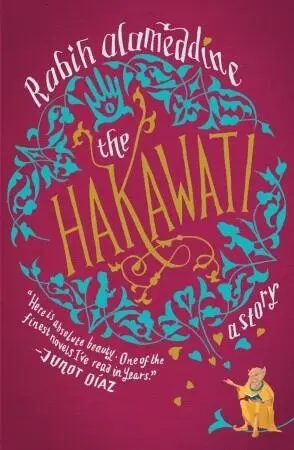
- Название:The Hakawati
- Автор:
- Издательство:Anchor
- Жанр:
- Год:2009
- ISBN:нет данных
- Рейтинг книги:4 / 5. Голосов: 1
-
Избранное:Добавить в избранное
- Отзывы:
-
Ваша оценка:
The Hakawati: краткое содержание, описание и аннотация
Предлагаем к чтению аннотацию, описание, краткое содержание или предисловие (зависит от того, что написал сам автор книги «The Hakawati»). Если вы не нашли необходимую информацию о книге — напишите в комментариях, мы постараемся отыскать её.
, or storyteller, and his bewitching tales are interwoven with classic stories of the Middle East. Here are Abraham and Isaac; Ishmael, father of the Arab tribes; the beautiful Fatima; Baybars, the slave prince who vanquished the Crusaders; and a host of mischievous imps. Through Osama, we also enter the world of the contemporary Lebanese men and women whose stories tell a larger, heartbreaking tale of seemingly endless war, conflicted identity, and survival. With
, Rabih Alameddine has given us an
for this century.
The Hakawati — читать онлайн бесплатно полную книгу (весь текст) целиком
Ниже представлен текст книги, разбитый по страницам. Система сохранения места последней прочитанной страницы, позволяет с удобством читать онлайн бесплатно книгу «The Hakawati», без необходимости каждый раз заново искать на чём Вы остановились. Поставьте закладку, и сможете в любой момент перейти на страницу, на которой закончили чтение.
Интервал:
Закладка:
At lunch, the slaver said to the emir, “My lord, when I told you yesterday that King Saleh wished to purchase a group of slaves, you replied that such a group could not be found in this city. Yet I found exactly what I was searching for in your courtyard.”
Light left the emir’s face, and dark settled in. “I said you could not find such a group for sale. Those boys belong to me, and I do not wish to part with them. They are to become my personal guards.”
The slaver felt his heart failing, for he could not argue.
That night, the emir was startled during a dream. He felt a hand touch his chest, and the face of fate appeared before him. The hand became a millstone, and his heart tightened. His breathing became labored. He could not muster the energy to twitch a muscle, and his soul wished to escape his body. And the face said, “Let my slaves go.” The millstone turned back into the hand, and the emir could breathe again. The face disintegrated, and as it disappeared it said, “Do not accept any payment less than seventy-five thousand dinars. Demand eighty-five thousand first, and settle for seventy-five.”
Before they could wear their new clothes, the boys were sent to the baths. While washing, the slave Aydmur noticed a sickly boy by himself in a corner, having trouble breathing the steam-laden air. Aydmur, the Azeri, asked, “Stranger, may I be of assistance?”
And the sickly boy said, “I am weak. My master is inside this room, and I must wait here even though the air is much too heavy.”
Aydmur’s heart ached as he watched the boy suffer, and he began to cry. When the slaver asked Aydmur why he was sad, the slave said, “The sight of this boy’s suffering wounds my soul.” The slaver asked the boy his name, and the boy said, “My name is Mahmoud.” The slaver asked, “Do you know the Book of God?” and the boy replied, “I have memorized the Koran.”
The boy had a beauty mark on his left cheek, but it was blue and not red. The slaver hesitated, then said, “You are a weak boy and not much use to anyone. Your owner must consider you a worthless burden.” And life rushed through Mahmoud’s face. “I am anything but worthless,” he said. The lion’s folds appeared at the bridge of his nose. “I am the son of kings.” The blue beauty mark turned red. “I am worth more than a rude man can afford.”
“Then I thank God, the merciful, that my king is not a rude man,” the slaver said, and begged Mahmoud’s forgiveness. The slaver asked to see Mahmoud’s owner, a Persian, and paid him for the boy. He turned Mahmoud over to Aydmur and said, “Take your brother and wash him. When he is clean, dress him in this remaining suit. Our mission here is done. We will begin our journey home after the baths.”

Aunt Nazek and her daughters arrived next. My father asked why they were not at home celebrating, but he couldn’t mask his glee. Aunt Nazek appeared surprised at his surprise. “We’re here to wish you a Happy Eid,” she told my father. “We’re all coming. I thought you knew that.”
“I’m not here to wish him a happy holiday.” Her daughter May bent down to kiss my father. “I’m here for my quarter.”
My father laughed. “If I had one, I would give it to no one but you.”
“Well, then, you must have one.” May opened her purse, took out some coins, and handed them to my father.
“By God. Where did you ever find them? I haven’t seen these in twenty years.”
Fatima swept into the room, all pomp and perfume, hugged me, and climbed on the bed next to my father. Having lost her father at an early age, she treated mine as hers, and he adored her like no other. She wiggled one arm under him, hugged him, and laid her head on his pillows, scrunching her coiffed hair. My sister joined them on the other side. She took one of the quarters, held it up to the light, and examined it as if it were a perfect diamond instead of a coin that had lost any value after the old currency’s collapse. “You used to be able to buy so much with it,” she told her daughter. “Not like today, when you can’t buy anything for thousands of pounds.”
“Don’t listen to your mother,” Fatima said. “Other people may have been able to buy things with a quarter, but it wasn’t your mother. She just likes to pretend.”
“In my time,” my father added, “I used to be so proud if I earned a quarter in one day.”
Aunt Samia knocked and walked in with her daughter, Little Mona.
Lina held the quarter up. “Look.”
“Oh my God.” Mona grinned. “Blessed Eid al-Adha. Look, Mother. A quarter. Do you remember those?”
“Of course,” responded Aunt Samia. “Do you think I’m brain-dead? Where are the boys?” She looked left and right, as if her sons could be hiding in the corners. “Listen,” she said to Lina. “I already talked to the guard, so I don’t want any problems from you. It’s Eid al-Adha, and we’re all going to be here. But where is everybody?”
At first, I didn’t know what she was talking about. I thought she was just being her usual odd self. Even my father, who understood her better than anyone, missed what she said.
“Your boys are at your home, where they should be, waiting for the meal,” my father said. “They’re with their families, my dear.”
“Don’t be stupid, brother. We can’t bring the kids here. This is a hospital. The in-laws are feeding them.” Tin Can’s wife came in and greeted everyone, then Mona’s husband. Hafez, his wife, and their eldest son followed. It was when Aunt Samia said, “I need to sit. I’m not going to eat standing up,” that my father understood. His face reddened. He looked ecstatic.
The convoy entered Damascus, where its ruler, Issa al-Nasser, saw the Circassians and told the slaver, “Those boys look more like women than men,” and when he saw the others added, “These are a little better,” and when he saw Mahmoud, “This one is too ill. Why did you not discard him along the way and save yourself the burden?”
In the morning, when they were leaving Damascus, one of the slaver’s debtors stopped him. “You owe me one hundred dinars,” the man said, “and I will not let you leave without payment.”
The slaver said, “Brother, let me pass this one time. I am on an urgent mission for the king. I have a royal decree. You will get paid, but let it not be now.”
“Then I will take this boy until I get paid.”
Mahmoud’s new owner took him to his wife, whose name was Wasila, and who was the meanest of women, as mean as seven hives of African wasps. She examined the sickly lad. “He is not much of a boy, but he will do,” and she began to assign him the difficult jobs: carrying the mortar from one room to the next, cleaning the outhouse, filing the corns and bunions on her feet. Mahmoud grew sicker, yet Wasila would not relent. “He is going to die soon anyway,” she was heard to say, “so why should I not make use of his brief stay in the world?”
And the boy ran away. He walked into the desert. That night, the twenty-seventh of Ramadan, the holy month, Mahmoud lay down on the sand to die. He had been ill for too long. He was hungry, thirsty, and alone. But the hours passed and he neither slept nor died. When the night was two-thirds spent, by God’s will the sky opened its doors and there appeared before Mahmoud’s young eyes a dome of light so pure. From the heavens the light shone upon the land. He saw everything before him for leagues and leagues. He heard no sound, no rooster crow, no dog bark, no tree rustle. This was the true Night of Fate. The boy stood on his feet with difficulty and announced upward, “Hear me, O Lord. I beg Your forgiveness and plead for Your mercy. I beseech Thee, Almighty, in honor of this sacred, propitious night, to grant me this wish. Make me a king. Let me rule Egypt and the Levant and the rest of the lands of Islam. Bless me with victories over Your enemies and mine. Between my shoulders, plant the resolve of forty men, and I will sow Your will upon this earth. Make me Your king. Make me Your servant. You are the grantor. You are the powerful. You are the merciful. There is no God but You.”
Читать дальшеИнтервал:
Закладка:
Похожие книги на «The Hakawati»
Представляем Вашему вниманию похожие книги на «The Hakawati» списком для выбора. Мы отобрали схожую по названию и смыслу литературу в надежде предоставить читателям больше вариантов отыскать новые, интересные, ещё непрочитанные произведения.









Обсуждение, отзывы о книге «The Hakawati» и просто собственные мнения читателей. Оставьте ваши комментарии, напишите, что Вы думаете о произведении, его смысле или главных героях. Укажите что конкретно понравилось, а что нет, и почему Вы так считаете.