Rabih Alameddine - The Hakawati
Здесь есть возможность читать онлайн «Rabih Alameddine - The Hakawati» весь текст электронной книги совершенно бесплатно (целиком полную версию без сокращений). В некоторых случаях можно слушать аудио, скачать через торрент в формате fb2 и присутствует краткое содержание. Год выпуска: 2009, Издательство: Anchor, Жанр: Современная проза, на английском языке. Описание произведения, (предисловие) а так же отзывы посетителей доступны на портале библиотеки ЛибКат.
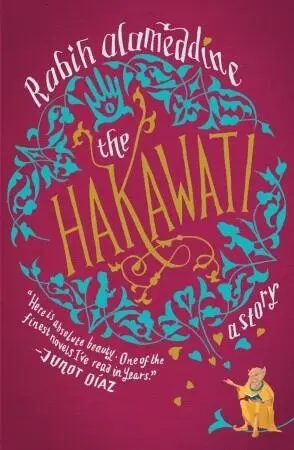
- Название:The Hakawati
- Автор:
- Издательство:Anchor
- Жанр:
- Год:2009
- ISBN:нет данных
- Рейтинг книги:4 / 5. Голосов: 1
-
Избранное:Добавить в избранное
- Отзывы:
-
Ваша оценка:
The Hakawati: краткое содержание, описание и аннотация
Предлагаем к чтению аннотацию, описание, краткое содержание или предисловие (зависит от того, что написал сам автор книги «The Hakawati»). Если вы не нашли необходимую информацию о книге — напишите в комментариях, мы постараемся отыскать её.
, or storyteller, and his bewitching tales are interwoven with classic stories of the Middle East. Here are Abraham and Isaac; Ishmael, father of the Arab tribes; the beautiful Fatima; Baybars, the slave prince who vanquished the Crusaders; and a host of mischievous imps. Through Osama, we also enter the world of the contemporary Lebanese men and women whose stories tell a larger, heartbreaking tale of seemingly endless war, conflicted identity, and survival. With
, Rabih Alameddine has given us an
for this century.
The Hakawati — читать онлайн бесплатно полную книгу (весь текст) целиком
Ниже представлен текст книги, разбитый по страницам. Система сохранения места последней прочитанной страницы, позволяет с удобством читать онлайн бесплатно книгу «The Hakawati», без необходимости каждый раз заново искать на чём Вы остановились. Поставьте закладку, и сможете в любой момент перейти на страницу, на которой закончили чтение.
Интервал:
Закладка:
Baybars saw the horse’s eyes follow every move of Sergeant Lou’ai. “This is your horse,” Baybars said. “You should not be separated, for you have been faithful to each other.” He asked the sergeant to wait. He went into the house and returned with fifty dinars. “I offer this for teaching me a lesson in loyalty. May your horse continue to be your honest companion for many years to come.”
“Your generosity claims no boundaries,” the sergeant said. “The doors of paradise will forever be open to you.”
On the second day, back in the barn, the servant boy lowered Baybars, who held an apple in his hand. Al-Awwar approached and smelled the apple. He snorted, retreated, and attacked. He hit Baybars in the exact same spot as on the previous day, and Baybars went swinging again. This time, Baybars did not call for help. On the third day, Baybars was dropped with two pears. Al-Awwar approached, smelled the pears, and ate them. Baybars was pleased. When the horse finished his meal, he snorted, retreated, and attacked. Baybars swung happily. On the fourth day, Baybars was dropped with a bunch of grapes. Al-Awwar had him swinging after finishing off the fruit. On the fifth day, Baybars had seven figs, and al-Awwar ate to his heart’s content and allowed the bearer to stay. But the horse would not let Baybars approach him. Whenever Baybars moved, the horse was sure to sidestep in the opposite direction. “Allow me on your back,” Baybars pleaded. “Let me see the rivers and the land between your shoulders, for I will rule these lands one day. Be my horse, be my friend.”
On the sixth day, Baybars descended with three sheets of amareddine, the dried-apricot paste. And this time, the horse loved the feast so much he licked Baybars’s face, but when Baybars bent to pick up the saddle, al-Awwar attacked again.
That night, Baybars complained to Sitt Latifah, and she said, “No one has been able to ride al-Awwar, because he is a war stallion. He can only be ridden by a great warrior.”
“But I will be a great warrior.”
“So will every boy,” Latifah said. “I cannot help you. I can, however, tell you a story about our great stallions. Listen, and hear me. Once, a long time ago, in an age long past, in a time of heroes and wars, there were three stallions. Heroes had ridden them during many battles, from one war to the next. The three horses grew old and weary. The heroes who had inherited them decided to set their steeds free as a reward for their years of faithful service. The horses were unbridled and unsaddled, unyoked into the wilds. The horses ran with the sand winds. Free at last. The heroes watched them gallop with an abandon that had not been seen in years. The horses ran toward a river to drink and wash themselves. Suddenly the sound of a bugle was heard, and the horses froze. The river lay before them, the bugle sound behind, and the great horses were torn. The heroes watched aghast as their stallions returned to them at a slow trot. A boy had amused himself by playing the bugle, and the horses returned for war. Those horses were the ancestors of all the great Arabians, which is why all warriors, from the far isles of Europe to the great mountains of China, have descendants of the three horses as their steeds.”
Baybars kissed the top of Latifah’s head and thanked her for the story. And on the seventh day, Baybars descended with three sheets of amareddine and a bugle. When al-Awwar finished eating, Baybars played “al-Khayal”: “I am the rider, let us ride.”
And Baybars rode al-Awwar out into the desert. He rode far from Damascus, rode until he reached the mountains west of the city, until both he and his horse were encapsuled in a sheen of sweat. Upon their return, as they neared the city, the sword shook. Baybars placed his hand upon it and felt it quiver once more. Al-Awwar stopped. Four men waited for Baybars to approach. He nudged his horse and rode slowly and warily forth.
“Greetings, traveler,” the leader said. He was Damascene, but his three slaves were as dark as oak bark. They were muscular and huge; their horses looked like ponies beneath them. They were mighty warriors from the land of the rivers on the far coast of the enigmatic continent.
“Greetings, but I am not a traveler,” Baybars said. “I am returning home.”
“No matter,” the man interrupted. “To continue on this road, you must pay a toll.”
“This is a public road to Damascus. Does the ruler of the city know about this?”
“Commander Issa is my cousin. He suggested I earn a living, and I have taken his advice. Consider your payment a kindness tax. It is my generosity that allows you to breathe. Pay tribute to my benevolence or my African slaves will cut you and set free your captive soul.”
Baybars bowed his head. “Then I fear I must repay your kindness,” he said. When Baybars lifted his head back up, al-Awwar charged the men. The sword unsheathed itself, its action moving faster than its master’s will. The leader quickly retreated behind his slaves and cowered. Al-Awwar understood which of the men was the target. The stallion squeezed between the slaves’ horses and attacked the leader’s stallion, causing its rider to fall off. Al-Awwar stomped the coward dead.
And then Baybars’s sword had to parry the attacks of the three powerful warriors. With each blow, Baybars felt his bones rattle, yet his weapon would not give or break. One warrior attacked from the right, one from the left, and the last tried to get to Baybars from the front. Al-Awwar shoved the first horse and drove the second to the ground. He frightened the third enough that it jerked back; Baybars’s sword thrust forward, past the warrior’s defenses, and stopped before his heart. A drop of blood appeared on the sword, but it did not pierce farther. The warrior looked down upon the weapon and saw his doom.
“A dishonorable cat plays with its prey before the kill. Finish this.”
“I choose not to,” Baybars said, “for I have no quarrel with you or your friends. I wish to return home. Leave me be and you are free to do as you please.”
“If the situation were reversed, you would not be alive.”
“Then I am happy it is not,” Baybars replied. “If you wish to die, so be it. I am providing an alternative.”
The warrior’s chest inflated; Baybars’s sword retreated but did not disengage. “If you do not kill us,” the African said, “then we will become your slaves.”
Baybars put his sword in its scabbard. “I cannot own you, for I myself am owned. Go,” the future slave-king said. “May God guide your path.”
“He has,” the mighty warrior said. “We choose to serve you till our dying days.”
The ruler of Damascus, Issa al-Nasser, called for Baybars and demanded information about his cousin. “He did not return to his house last night,” said the commander, “and yesterday you entered the city with his slaves.”
“The man sought to rob me,” Baybars replied. The commander was horrified to hear the news. He called on his vizier to imprison and try Baybars for murder. The vizier explained that no crime had been committed: Baybars acted in self-defense, and there were witnesses. They could not arrest Baybars in daylight. Syrian justice needed to be meted out surreptitiously.
That evening, as Baybars walked through the yard toward the outhouse, six soldiers jumped over the wall and attacked him from behind. They covered him with a large burlap sack soaked in an anesthetic potion. They carried him over the wall and took him outside the city gate. The soldiers rode into the desert until they arrived at a Bedouin camp. One of them told the chief of the tribe, “Here is the boy, and here is the promised bag of gold. The commander wishes never to see this ugly boy’s face again. Take him with you to the holy desert, and sell him to a ruthless owner. Or kill him. The commander does not care, as long as he gets rid of the troublemaker. The boy is wily. Do not let him escape.”
Читать дальшеИнтервал:
Закладка:
Похожие книги на «The Hakawati»
Представляем Вашему вниманию похожие книги на «The Hakawati» списком для выбора. Мы отобрали схожую по названию и смыслу литературу в надежде предоставить читателям больше вариантов отыскать новые, интересные, ещё непрочитанные произведения.









Обсуждение, отзывы о книге «The Hakawati» и просто собственные мнения читателей. Оставьте ваши комментарии, напишите, что Вы думаете о произведении, его смысле или главных героях. Укажите что конкретно понравилось, а что нет, и почему Вы так считаете.