Rabih Alameddine - The Hakawati
Здесь есть возможность читать онлайн «Rabih Alameddine - The Hakawati» весь текст электронной книги совершенно бесплатно (целиком полную версию без сокращений). В некоторых случаях можно слушать аудио, скачать через торрент в формате fb2 и присутствует краткое содержание. Год выпуска: 2009, Издательство: Anchor, Жанр: Современная проза, на английском языке. Описание произведения, (предисловие) а так же отзывы посетителей доступны на портале библиотеки ЛибКат.
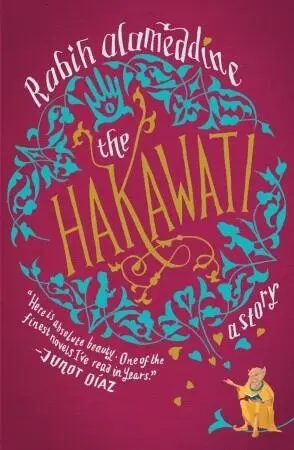
- Название:The Hakawati
- Автор:
- Издательство:Anchor
- Жанр:
- Год:2009
- ISBN:нет данных
- Рейтинг книги:4 / 5. Голосов: 1
-
Избранное:Добавить в избранное
- Отзывы:
-
Ваша оценка:
The Hakawati: краткое содержание, описание и аннотация
Предлагаем к чтению аннотацию, описание, краткое содержание или предисловие (зависит от того, что написал сам автор книги «The Hakawati»). Если вы не нашли необходимую информацию о книге — напишите в комментариях, мы постараемся отыскать её.
, or storyteller, and his bewitching tales are interwoven with classic stories of the Middle East. Here are Abraham and Isaac; Ishmael, father of the Arab tribes; the beautiful Fatima; Baybars, the slave prince who vanquished the Crusaders; and a host of mischievous imps. Through Osama, we also enter the world of the contemporary Lebanese men and women whose stories tell a larger, heartbreaking tale of seemingly endless war, conflicted identity, and survival. With
, Rabih Alameddine has given us an
for this century.
The Hakawati — читать онлайн бесплатно полную книгу (весь текст) целиком
Ниже представлен текст книги, разбитый по страницам. Система сохранения места последней прочитанной страницы, позволяет с удобством читать онлайн бесплатно книгу «The Hakawati», без необходимости каждый раз заново искать на чём Вы остановились. Поставьте закладку, и сможете в любой момент перейти на страницу, на которой закончили чтение.
Интервал:
Закладка:
“No,” said the imps, all eight of them in one voice. “We cannot.”
“Then I will go alone,” Fatima said. “You sit here and cower if you choose. I will fight the bastard myself.”
“There is no hope,” said Ishmael. “He wove a potent spell eons ago. Nothing from the underworld, living or not, can harm him. The most powerful jinn have tried to no avail. Creatures mightier than all of us combined have declared war upon him. The spell he wove cannot be undone. He cannot be conquered by anyone from the underworld.”
“But I am not from here,” announced Fatima. “I will defeat him.”
One by one, the little imps’ facial expressions changed, their demeanor transformed. Ishmael stood up first. “I may not be of any use at the great encounter, but I will make sure you get there.”
“And I will confound his armies,” Job said.
“I will get the carpet,” said Noah.
“Get a few,” said Elijah. “It is a long trip — why be cramped?”
“Come, my lovelies,” Jacob said. He raised his arms and created a yellow orb of mist above his head. The bats flew into it and disappeared. Elijah invited the crows into his sphere, and Adam brought the snakes, the scorpions, and the spiders.
“Let us be on our way,” commanded Fatima, sitting on one of the carpets.
“Upon thy head, King Kade,” said Isaac, “we declare war.”
“North,” said Ishmael. “We go to the land of fog and rain, the land of ice and snow, the land of infinite skies.”
“No, not yet,” said Fatima. “First, I go home.”

Once upon a time, the oud was my instrument, my companion, my lover. I played it between the two wars, started taking lessons during the Six-Day War and gave them up during the Yom Kippur War, a period of seven years.
My mother had wanted me to take piano lessons. “The lessons will be good for you,” she said one evening, when I was sitting on her lap out on the balcony of our apartment. The railing was a whorly arabesque of metal roses sprouting wherever the lines changed angles. My mother’s raised feet rested on one of the few unrosed spots. She attempted to tidy my hair while staring at the swirl of stars in the dark summer sky. “I think you’re talented. I hear you singing all the time.” She pulled my head to her bosom. I felt the softness of her silk housedress on my cheek, my eyes focusing on a print marigold as it heaved and contracted with each breath. The tireless scrapings of cicadas saturated the air. “Never once off-key. You’re my gifted baby.”
I squirmed, pushed myself off her chest with both hands. “I don’t like piano,” I said.
My sister, Lina, had been taking piano lessons for the past four years, ever since she was six, my age now. Her teacher was Mademoiselle Finkelstein, a white-haired, dowdy, bespectacled spinster who smelled of mothballs and vanilla. Whenever Lina slipped, made a mistake as she played the “Méthode Rose,” Mademoiselle Finkelstein would smack her knuckles with a wooden ruler that she used to tap a beat on the top of the piano. I asked Lina why she never complained about being hit. She said that the ruler wasn’t painful, that Mademoiselle Finkelstein only tapped her gently, that she loved her teacher. Her crimson knuckles told a different story. When I asked my father why Mademoiselle Finkelstein was such a cruel woman, he said it was because she was unmarried, which caused women to become bitter, harsh, and unforgiving after they reached the age of thirty. Of course, he explained, they made wonderful teachers, because they had the unfettered time to dedicate to their profession and they knew how to instill discipline. On the other hand, unmarried men, like his younger brother, Uncle Jihad, were simply eccentrics and did not suffer accordingly. The difference, he elaborated, was that men chose to be unmarried, whereas women had to live with never having been chosen.
For Fatima, the bogs of the Nile Delta were a welcoming sight, though the imps held their noses. She bade the carpets descend as they approached Bast’s cottage. “I beg you,” Bast said the instant she saw Fatima. “Do not talk to me of King Kade. I am not having a happy day. Cleopatra wants to mate, and I am in a foul mood. When I bleed, that so-called holy magician of light is not what I want to talk about.” The healer turned around and walked into her cottage.
Fatima and her entourage followed. “Stop being childish and churlish. You are needed.”
“Leave me,” Bast said, trying to stare Fatima down.
“No.” Fatima sat upon one of the barrels in the room, as she had once before.
“At least tell your companions to disappear. They are so colorful they sour my eyes.”
“Self-centered witch,” Elijah harrumphed, and he vanished, leaving a barely discernible indigo cloud that dissipated quickly.
“What is wrong with color?” Ezra asked. “Are you some big-city artist? Oh, never mind.” And he, too, disappeared into his orange cloud, followed by Jacob, Job, Noah, and Adam.
Isaac looked at Ishmael and shrugged. Ishmael grinned. They turned into cats. Isaac became a red Abyssinian and Ishmael an Egyptian Mau with dark eyes. And the Alexandrian healer laughed. “Still too red,” Bast said. Isaac wined his red and meowed.
Istez Camil, the oud teacher, was a widower. I met him at our concierge’s apartment, a small, sparsely furnished two-bedroom unit on the ground floor. I was visiting the concierge’s son, Elie, who was thirteen, seven years older than me. Everybody was gathered around the blue-gray transistor radio, listening to a scratchy news report. The beige waxed-paper shade of a small lamp sitting atop the radio vibrated each time the announcer pronounced an “s.” The concierge sat in the main chair of the living room, his wife next to him on the chair’s arm, Istez Camil in the other chair, and the five children, including Elie, huddled on the floor around the crackling radio.
The perfidious enemy attacked. The mighty Arab army. By the grace of God. We shall conquer. The evil imperialist forces will be crushed, spat the radio.
I noticed an oud leaning against the wall. I bent down, traced my fingers across the delectable wood, along the intricate designs of the mother-of-pearl encrustations, the delicately carved inlaid ivory. The instrument felt bigger than I was. For a moment, I felt lost in its magic.
“Do you like it?” asked Istez Camil, kneeling on one knee, his hand centered on my back.
“It’s beautiful,” I said.
“My father made it a long time ago.” Istez Camil lifted the oud gently, bringing the front close to my eyes. “Would you like to learn to play?”
“There’s a war going on,” snapped the concierge, looking up at the ceiling. “Can we concentrate a little?” He leaned over and pumped up the volume of the transistor.
We shall get rid of the occupying forces once and for all, liberate all of Jerusalem.
“Ask your parents if they’re willing to pay for lessons.” Istez Camil’s shirt buttons were fastened incorrectly, making his collar look oddly skewed. “And don’t worry about him,” he whispered, discreetly pointing at the concierge. “He’s just a crusty old man who thinks politics is important.”
Elie stood up, stretched languidly, and gestured with his head for me to follow. I heard the concierge mutter as we left the room. Elie didn’t speak, and I tried to keep pace with his long strides. His faded orange jumpsuit, a couple of sizes too big, billowed between his legs with each step. Slim and athletic, he moved with a cocky assurance. He descended the stairs to the garage, entered his father’s tool shed, and handed me a toolbox to carry for him. I almost dropped it, had to lift it with both hands. The toolbox made it difficult to walk. By the time he noticed I wasn’t behind him, he was already up the ramp and on the street. He came back down and took the toolbox with one hand; I followed him unencumbered. We entered the garage of a building around the corner from ours. He stopped in front of an old, rusty motorcycle, put the toolbox down. I broke the silence. “Is that yours?”
Читать дальшеИнтервал:
Закладка:
Похожие книги на «The Hakawati»
Представляем Вашему вниманию похожие книги на «The Hakawati» списком для выбора. Мы отобрали схожую по названию и смыслу литературу в надежде предоставить читателям больше вариантов отыскать новые, интересные, ещё непрочитанные произведения.








Обсуждение, отзывы о книге «The Hakawati» и просто собственные мнения читателей. Оставьте ваши комментарии, напишите, что Вы думаете о произведении, его смысле или главных героях. Укажите что конкретно понравилось, а что нет, и почему Вы так считаете.