Rabih Alameddine - The Hakawati
Здесь есть возможность читать онлайн «Rabih Alameddine - The Hakawati» весь текст электронной книги совершенно бесплатно (целиком полную версию без сокращений). В некоторых случаях можно слушать аудио, скачать через торрент в формате fb2 и присутствует краткое содержание. Год выпуска: 2009, Издательство: Anchor, Жанр: Современная проза, на английском языке. Описание произведения, (предисловие) а так же отзывы посетителей доступны на портале библиотеки ЛибКат.
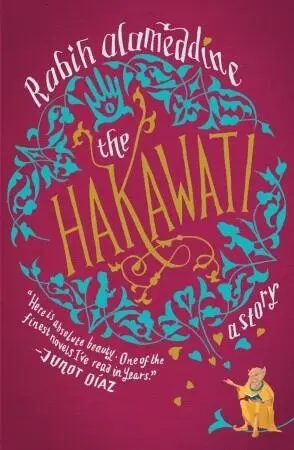
- Название:The Hakawati
- Автор:
- Издательство:Anchor
- Жанр:
- Год:2009
- ISBN:нет данных
- Рейтинг книги:4 / 5. Голосов: 1
-
Избранное:Добавить в избранное
- Отзывы:
-
Ваша оценка:
The Hakawati: краткое содержание, описание и аннотация
Предлагаем к чтению аннотацию, описание, краткое содержание или предисловие (зависит от того, что написал сам автор книги «The Hakawati»). Если вы не нашли необходимую информацию о книге — напишите в комментариях, мы постараемся отыскать её.
, or storyteller, and his bewitching tales are interwoven with classic stories of the Middle East. Here are Abraham and Isaac; Ishmael, father of the Arab tribes; the beautiful Fatima; Baybars, the slave prince who vanquished the Crusaders; and a host of mischievous imps. Through Osama, we also enter the world of the contemporary Lebanese men and women whose stories tell a larger, heartbreaking tale of seemingly endless war, conflicted identity, and survival. With
, Rabih Alameddine has given us an
for this century.
The Hakawati — читать онлайн бесплатно полную книгу (весь текст) целиком
Ниже представлен текст книги, разбитый по страницам. Система сохранения места последней прочитанной страницы, позволяет с удобством читать онлайн бесплатно книгу «The Hakawati», без необходимости каждый раз заново искать на чём Вы остановились. Поставьте закладку, и сможете в любой момент перейти на страницу, на которой закончили чтение.
Интервал:
Закладка:
And the boy was healed.
The next morning, Mahmoud returned to his mistress, Wasila, and begged her forgiveness for running away. “Forgiveness is not mine to give,” Wasila said, “and neither is mercy, so do not ask.” She pulled the boy by the ear, dragged him to the backyard, and tied him to a pole. First she slapped his face, then she hit him. But she decided that was not enough of a punishment. She built a fire and raised a burning stick to flog him with. And God sent her sister-in-law, Latifah, to knock on her door. When Latifah entered, Mahmoud yelled, “I am at your mercy, my lady, for I am your neighbor.”
Latifah saw the boy and pleaded with Wasila: “Forgive this boy, for my sake.” And Wasila said, “I do not forgive, nor do I wish to, and who are you to interfere with my affairs?”
Sitt Latifah grew angry. She untied the boy and walked him over to her house. And she called for a judge and for two notaries.
When her brother arrived to claim the boy, Sitt Latifah asked in front of witnesses, “Have you bought this boy?” and her brother replied, “No. He is mine as security. His owner owes me one hundred dinars, and I will not let go of him until I receive my payment.”
Sitt Latifah paid her brother one hundred dinars. “The boy is now mine.” She turned to the judge and the notaries. “Ask this man, my brother, whether I have anything of his that belonged to our mother or father.” They did, and her brother replied that nothing of hers was his. “Then note this down,” Sitt Latifah said, “for I do not wish him or his to claim anything at a future date. And note this, and make it binding. All my money and all that is mine, all that I own and all that my hand grasps, belongs to this boy once I depart this world. If God will have me, I will leave with only a piece of cloth, and the rest will remain with the boy, whom I will take as my son. I will call him Baybars, the name of my deceased son, for he looks like him. To all I have said, you are witnesses.”

Samia’s son Anwar and Tin Can rolled in a gurney topped with crates of food, forcing everyone to move closer together. The aroma of roast lamb instantly vanquished the medicinal smells. Lina was about to say something, but she held back, overcome and overwhelmed.
“No, no,” Aunt Samia said. “Take it outside. There’s not enough space in the room. There’s more family coming. We can serve ourselves.”
“So much food,” Aunt Nazek said.
“So much of us,” Aunt Samia replied. “And what about the other patients? Who’s going to bring them lamb on Eid al-Adha?”
“My lovely Samia,” my father said, “what have you done? You’re going to have Adha here? In a hospital room?”
Aunt Samia looked confused and unsure. “Of course she is,” Lina piped in. “Since we can’t take you to her house, she brings her house to you.”
“Exactly,” Aunt Samia said. “What did you think? I even brought my silverware and china. I’m not going to have my Adha meal on cheap plates. Do you know how long it took the boys to get everything up here? Two lambs I cooked. Not a smidgen of salt. You’re my brother. For you, I won’t put salt in my meal, but only for you. Now, where’s everybody else?”
Baybars became Sitt Latifah’s blessed son, and she doted on him. One day, as mother and son walked through the souk, Baybars admired a bow. The merchant asked if he liked it, and the boy told him it was magnificent. The merchant said the bow was made by a famous hero two hundred years earlier, had been used by none other than the great Saladin, and Baybars could have such a masterpiece for the measly sum of two dinars. Baybars said, “My dear man, that is a bargain. This is the most beautiful instrument I have seen.” Sitt Latifah giggled. Baybars blushed and asked, “Are you laughing at me, dear lady?”
And Sitt Latifah replied, “No, my son, I am laughing at fate.”
She removed her veil, and the merchant saw her face and bowed. “My lady,” he said. “Please accept my apologies. I did not know.”
Latifah ignored the seller and spoke to her son. “This is not a bow worthy of you. It is cheap, terribly crafted, and has a will of its own. No warrior has ever touched it or ever will. Come, allow me to show you your destiny.” When she reached their house, Sitt Latifah led Baybars through the courtyard. She stood before a door, took a key from her cleavage, and opened the door. Baybars saw a hall with hundreds of bows and thousands of arrows, enough for an entire army. He picked the closest bow and realized he had been naïve. The merchant had lied. And his mother said, “I am called Latifah the bowmaker, because my father was a bowmaker, and my grandfather was before him, and his father was before that. All the heroes of our world had to visit Damascus to purchase bows from our workshop. And you, my glorious Baybars, stumble upon its hearth.” Sitt Latifah gestured toward the entire room. “This is now yours. All of it belongs to you, but it may behoove you to pick one weapon and call it yours.”
At first, Baybars considered the bows, but then he looked around and saw daggers, spears, bows, and swords that shone with a heavenly brilliance and beauty. One Damascene sword looked common, did not call attention to itself. He picked it up and noticed the exquisite workmanship. He placed it under his belt, and the sword radiated warmth to his belly.
One morning, Baybars watched another boy carry a pail up a ladder leaning against the barn. The boy entered an upper door, and Baybars followed him. Baybars saw the boy tying a rope around the pail’s handle and asked him what he was doing. “I have to feed al-Awwar,” the boy replied. “He will not let anybody into the barn, so the only way we can feed him is to lower his food from up here.” Baybars looked over the edge and saw a great blue-black horse huffing and puffing, pawing at the ground. “Is he really one-eyed?” Baybars asked.
“No,” the boy answered. “His eyes are as keen as a falcon’s. He is called Awwar because he has a white patch over one eye only. Do you see it?”
“Yes, and he has a white mustache as well.”
“True,” the boy said, “but do not make fun or he will get very angry. He is terribly fond of his mustache. And do you see the curvy white lines between his shoulders? The mistress says these lines run exactly like the Euphrates and the Nile.”
“Then this is my horse,” Baybars said. “I will ride him.”
The boy informed Baybars that no one could ride the horse, but Baybars untied the rope from the pail and knotted it around his waist. “Let me down and you will see.” The boy held on to the rope, Baybars descended slowly, and al-Awwar stared. The horse snorted, retreated, and then attacked. Baybars began to climb the rope as it was being let down. Al-Awwar’s head struck Baybars’s buttocks, and he began to swing like the tongue of a church bell. He called for help. Al-Awwar watched with a bemused look. After Baybars was pulled back to the top, he leaned over the edge and spoke these words: “I shall return.”
An army sergeant by the name of Lou’ai arrived at the house that afternoon and asked if he could speak to Baybars. The sergeant said, “My lord, I understand you wish to ride a great horse, and I have one for sale. Please, let me show you.” And there, on the street, was a magnificent roan stallion. “You can have him for forty dinars only. He is worth a lot more, but I can no longer keep him. He has been my trustworthy companion, but I have not been paid for months. I cannot feed my children, let alone feed him. He deserves a good owner.”
Читать дальшеИнтервал:
Закладка:
Похожие книги на «The Hakawati»
Представляем Вашему вниманию похожие книги на «The Hakawati» списком для выбора. Мы отобрали схожую по названию и смыслу литературу в надежде предоставить читателям больше вариантов отыскать новые, интересные, ещё непрочитанные произведения.










Обсуждение, отзывы о книге «The Hakawati» и просто собственные мнения читателей. Оставьте ваши комментарии, напишите, что Вы думаете о произведении, его смысле или главных героях. Укажите что конкретно понравилось, а что нет, и почему Вы так считаете.