Christopher Hope - Kruger's Alp
Здесь есть возможность читать онлайн «Christopher Hope - Kruger's Alp» весь текст электронной книги совершенно бесплатно (целиком полную версию без сокращений). В некоторых случаях можно слушать аудио, скачать через торрент в формате fb2 и присутствует краткое содержание. Год выпуска: 2009, Издательство: Atlantic Books, Жанр: Современная проза, на английском языке. Описание произведения, (предисловие) а так же отзывы посетителей доступны на портале библиотеки ЛибКат.
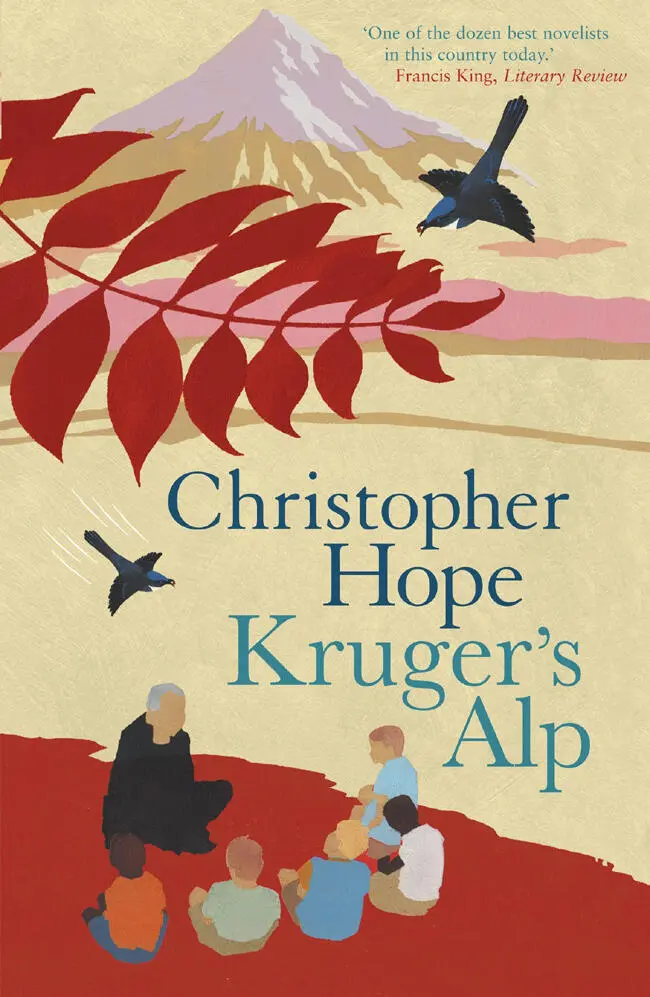
- Название:Kruger's Alp
- Автор:
- Издательство:Atlantic Books
- Жанр:
- Год:2009
- ISBN:нет данных
- Рейтинг книги:3 / 5. Голосов: 1
-
Избранное:Добавить в избранное
- Отзывы:
-
Ваша оценка:
Kruger's Alp: краткое содержание, описание и аннотация
Предлагаем к чтению аннотацию, описание, краткое содержание или предисловие (зависит от того, что написал сам автор книги «Kruger's Alp»). Если вы не нашли необходимую информацию о книге — напишите в комментариях, мы постараемся отыскать её.
Kruger's Alp — читать онлайн бесплатно полную книгу (весь текст) целиком
Ниже представлен текст книги, разбитый по страницам. Система сохранения места последней прочитанной страницы, позволяет с удобством читать онлайн бесплатно книгу «Kruger's Alp», без необходимости каждый раз заново искать на чём Вы остановились. Поставьте закладку, и сможете в любой момент перейти на страницу, на которой закончили чтение.
Интервал:
Закладка:
And then he was up in the Square. He saw the column with Nelson on top of it. He saw the fountains, he saw buildings which reminded him very much of the campus of the Christian National University with its predilection for the neo-Grecian temple style and then directly across the road he saw the sign of the golden springbuck. (You must note here, if you will, how typical were Blanchaille’s feelings of excitement and ignorance, the feelings of an innocent abroad. Had he known it, the dangers he imagined in the underground were as nothing compared with the perils which now faced him.) He gazed up at the large corner building, the Embassy squat and solid, that old box of ashes and bones as it was called by that celebrated dissident, the Methodist missionary Ernest Wickham (and he should have known, since he was widely credited with having burgled the Embassy and taken away sensitive papers which were later passed to the Azanian Liberation Front). A daring triumph, but shortlived, for a little while later Wickham received a parcel from a favourite Methodist mission in the Kalahari, where much of his fieldwork had taken place. Wickham made the mistake of opening the parcel and was blown into smaller bits than would fill a small plastic bag, given that hair, teeth, bones and odd gobbits of flesh were dutifully collected notwithstanding. The bomb, it was suggested, might have come from the Pen Pals Division of the Bureau which had long exploited the exiles’ weakness for welcoming parcels from home. (It should be noted here that the Regime had since commemorated the work of Pen Pals Division of the Bureau with the issue of a special stamp showing on an aquamarine background a large plain parcel wrapped in brown paper and neatly tied up with string. In the lefthand corner the keen-eyed observer will spot the tiny letters ‘PP’, which, he will now know, do not stand for postage paid.)
Sitting in a high window of the Embassy was Dirk Heiden, the so-called South African super-spy, a sobriquet well earned. This formidable man worked himself into the top job of the Students Advisory Bureau, a Swiss-based organisation promoting the aims of radical students abroad, particularly exiled students from the South African townships, a post which he held for some eighteen months in which time he took part in freedom marches in Lagos against the racism of the Regime and was photographed taking a sleigh ride in the Moscow snow. From his office in Geneva he monitored the activities of resistance groups, anti-war objectors and other dissidents abroad, tailing them, taping them, photocopying documents and insinuating himself into the clandestine councils of various radicals abroad who seemed as free with their secrets as they were with their brandy. As a result of his reports many at home were beaten, imprisoned, stripped, manacled and tortured. Heiden had returned home to the kind of triumphant reception normally accorded only to rugby teams or visiting pop-singers who had defied the international ban against appearances likely to benefit the Regime. But his hour of glory over, he fell prey to the boredom which so often affects those who have lived too long abroad. He grew fat and listless, developed a drink problem, was arrested for firing his pistol at passers-by, pined for his tie-maker and his old sophisticated life, and so his superiors returned him to an overseas post, a chair in the window of an upstairs room in the Embassy where he peered through the glass searching the Square for familiar faces.
Heiden sat in a chair by the window, so still he might have been dead. His weight had continued to increase, his facial skin was stretched tight and shining over the bones, it had the texture of rubber on a beach ball blown up to bursting point. He stared out of the window because it was his job to look at people who visit the Square below, look for faces he might recognise, for it is a well-known fact that South Africans abroad will come and stand silently outside their Embassy, prompted perhaps by the same impulses that bring early morning observers to wait outside the walls of a prison where a hanging is to take place, or crowds to stand outside the palace walls when the monarch is dying.
In another window on the same floor sat the Reverend Pabst, ‘the holy hit man’ they called him once, but a shambling wreck now, surrounded by empty cane spirit bottles and scraps of food. His career had been simple and brutal. God had instructed the Regime that His enemies should be identified and exterminated. Pabst went to work. A fine shot and a quick and efficient killer using his bare hands and no more than a length of fishing line, he had a considerable tally of victims to his credit. Sadly, unknown to himself, he had also killed, besides enemies of the Regime, certain members of the Regime, quite possibly tricked into doing so by other members of the Regime. He could no longer be allowed to roam loose. He sat in a chair with a small sub-machine gun in his lap. He would cradle it beneath his chin and sometimes even suck the snout-like barrel, pressing gently on the palm-release trigger. The gun was not loaded of course, and the door behind him was locked and bolted. Sometimes he would hurl himself at the window, mowing down imaginary hordes with his wicked little gun only to fall back in his chair with a streaming nose or broken tooth. The windows were thickly armour-plated. The old man would dribble and grin, dreaming of past assassinations.
Blanchaille passed by these dangers quite unknowing. It is not surprising. He was not known and would not have known the watchers in the windows. And besides, I saw in my dream that he had eyes for only one thing, a man on the other side of the busy street. He knew him instantly, despite the grey clerical suit, the dog-collar. His old clothes!
Blanchaille called his name, hopping from foot to foot on the edge of the Square while a steady stream of traffic surged between them. At first the man appeared not to hear. Blanchaille called again, and then, because the man appeared to be about to escape, without thinking he charged into the traffic. A large tourist bus narrowly missed him. He stumbled and almost fell beneath the wheels of a taxi, the driver squealing to a halt and cursing him. But he reached the other side and seized the coat of the man now hurrying down the Strand, seized him almost at the same instant as the watchers in the windows above saw him and positively identified his quarry (with what consequences I dread to think!) as Trevor Van Vuuren.
CHAPTER 13
Now that the absconding priest, Theodore Blanchaille, met and talked with the policeman, Trevor Van Vuuren, is not in doubt. Where opinions differ concerns the motives which brought Van Vuuren to London and the fate he suffered there. The official version put out by the Regime is well-known and straightforward. Van Vuuren visited London in pursuit of the renegade cleric, Blanchaille, because he believed the man had information which might throw light on the murder of Anthony Ferreira. His quarry, realising that the law was closing in, lured the policeman into a trap.
That is why there are still those who talk of Van Vuuren ‘The Martyr’.
I saw things differently in my dream. I saw Blanchaille and Van Vuuren, arm in arm, making their way down the Strand. An odd picture they were, closer than ever to Lynch’s predictions, for Blanchaille resembled a ruined Southern gambler in crumpled white suit and heavy stubble with his strange seal-like shuffle, the feet thrown out in a wide flipper shove, and Van Vuuren was the muscular priest beside him. They proceeded slowly down the street, the weightlifter and the punchbag. And so the short night passed.
They passed a bank which looked like a church and opposite it a station which looked to him like a palace and beside it a cinema showing a pornographic movie. Blanchaille had never seen a pornographic movie, he’d never seen a cinema advertise pornographic films. This one was called Convent Girls, and showed three naked blondes in nun’s wimples running across a green field. ‘Hellfire passions behind the convent walls!’ How he envied the potential of European Catholicism! No wonder Lynch had felt cheated in Africa. Blanchaille remembered the convent girls of his youth, shy creatures in sky-blue dresses, white panamas and short white ankle socks, shepherded by swathed and nimble-booted nuns patched in black and white, nipping at their heels like sheep-dogs. Van Vuuren was dressed in his friend’s old cast-off clerical suit, rather dirty charcoal with ash-grey V-necked vest and dog-collar far too large for him so that it hung below his adam’s apple like one of those loops one tosses over a coconut in a fairground. He had not shaved and the black stubble gleamed on his chin in the early light, that pale English dawn light which comes on rather like a wan bureaucrat to give notice that the day ahead will once again be one of low horizons and modest expectations.
Читать дальшеИнтервал:
Закладка:
Похожие книги на «Kruger's Alp»
Представляем Вашему вниманию похожие книги на «Kruger's Alp» списком для выбора. Мы отобрали схожую по названию и смыслу литературу в надежде предоставить читателям больше вариантов отыскать новые, интересные, ещё непрочитанные произведения.









Обсуждение, отзывы о книге «Kruger's Alp» и просто собственные мнения читателей. Оставьте ваши комментарии, напишите, что Вы думаете о произведении, его смысле или главных героях. Укажите что конкретно понравилось, а что нет, и почему Вы так считаете.