Christopher Hope - Kruger's Alp
Здесь есть возможность читать онлайн «Christopher Hope - Kruger's Alp» весь текст электронной книги совершенно бесплатно (целиком полную версию без сокращений). В некоторых случаях можно слушать аудио, скачать через торрент в формате fb2 и присутствует краткое содержание. Год выпуска: 2009, Издательство: Atlantic Books, Жанр: Современная проза, на английском языке. Описание произведения, (предисловие) а так же отзывы посетителей доступны на портале библиотеки ЛибКат.
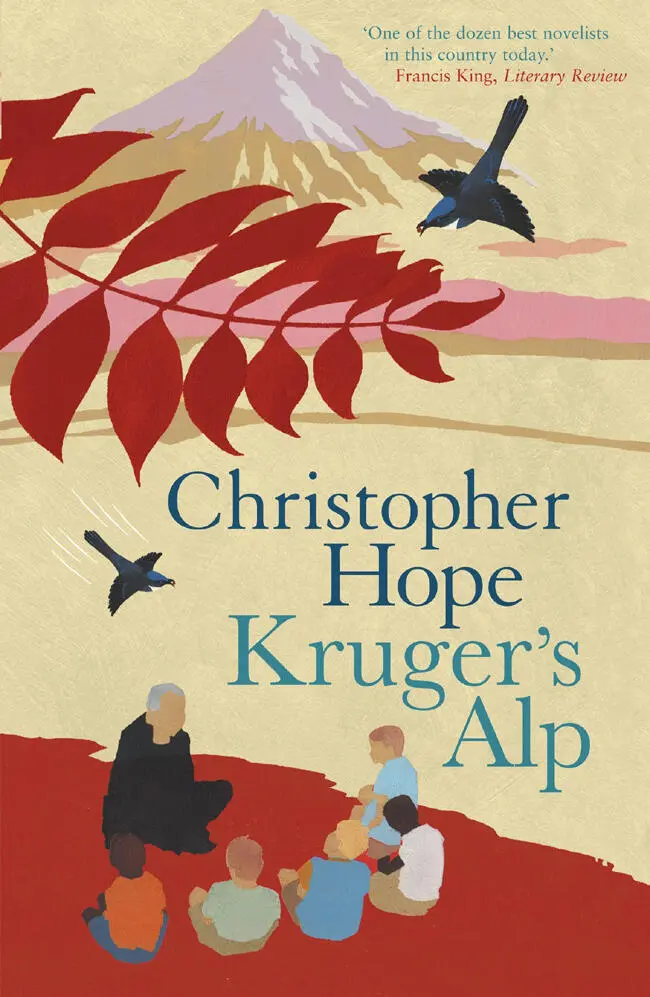
- Название:Kruger's Alp
- Автор:
- Издательство:Atlantic Books
- Жанр:
- Год:2009
- ISBN:нет данных
- Рейтинг книги:3 / 5. Голосов: 1
-
Избранное:Добавить в избранное
- Отзывы:
-
Ваша оценка:
Kruger's Alp: краткое содержание, описание и аннотация
Предлагаем к чтению аннотацию, описание, краткое содержание или предисловие (зависит от того, что написал сам автор книги «Kruger's Alp»). Если вы не нашли необходимую информацию о книге — напишите в комментариях, мы постараемся отыскать её.
Kruger's Alp — читать онлайн бесплатно полную книгу (весь текст) целиком
Ниже представлен текст книги, разбитый по страницам. Система сохранения места последней прочитанной страницы, позволяет с удобством читать онлайн бесплатно книгу «Kruger's Alp», без необходимости каждый раз заново искать на чём Вы остановились. Поставьте закладку, и сможете в любой момент перейти на страницу, на которой закончили чтение.
Интервал:
Закладка:
Obviously they could.
Magdalena had sized him up with a practised eye. Blanchaille thrust his hands into the pockets of his grey raincoat which he had worn, not against the weather, but simply because it hid the frightful khaki shorts all the hostel boys were made to wear. What happened next was a blur. She did not ask him to sit down (speed was always her strength), she crossed the room, kissed him hard, so hard she lifted him off his heels. In his confusion he thanked her but she did not seem to require thanks. Indeed, seeming to regard all conversational niceties as superfluous she pushed him down onto the sofa and attempted to spread him out. The fear of her parents returned. His own unpreparedness plus some foolish juvenile desire to preserve at least a vestige of the romantic formality made Blanchaille resist her advance, bracing his legs, refusing to straighten the knees. Magdalena left off pushing and went to the heart of the matter by loosening his belt, lifting his shirt, easing him, fingering him, making him ready. All this with the one hand while the other, on his chest, pinned him firmly to the sofa and then directing his hands beneath her skirt, obliging him to lower her pants, wriggling expertly as she sloughed them off and planted herself upon him. Blanchaille attempted to say something but his tongue had thickened in his mouth and all that came out was a low gurgle. He thought afterwards that perhaps what he’d meant to say was something like: ‘Shouldn’t we at least close the curtains?’ But the moment was gone, passed before he knew it. She moved once, twice, three times and Blanchaille was afloat in that warm sea he’d just entered.
And just as suddenly cast ashore. Someone who has invested so much reading time in such concepts as ‘ejaculation’ cannot but expect far more. But to have come and gone before one knew it! Brief and involuntary. Behind almost before it began. Like a hiccup. ‘We might have been shaking hands.’
‘Hell, Blanchie, you’re a born romantic,’ Kipsel said.
And then some time later, once again, in Blashford’s other, unofficial garden.
What could one say of Magdalena? Everybody’s girlfriend once, twice, and then she took off like a rocket into the political firmament, out of reach of mere altar servers, numbering among her lovers such heavy figures as Buffy Lestrade the Hegelian radical lecturer, and no more contact was made until Kipsel rediscovered her and carried her off to blow up pylons in the veld. Afterwards the trial, the betrayal, and the extraordinary escape. Magdalena, the saboteur turned demure nun in her audacious dash for freedom from beneath the very nose of the Regime, became a legend.
Once in London she came to be rated amongst the six most dangerous enemies beyond the borders. Connected with the Azanian Liberation Front, romantically linked for a time with one of its leaders, Kaiser Zulu, she was branded a convinced and radical believer in the violent overthrow of the Regime. Rumours and legends constantly appeared in the press. Red Magda they called her. He remembered Magdalena’s mother had made an attempt to save her. She announced that she would go abroad and talk to her daughter, call on her to repent. Various well-wishers raised money. Her local bowling club of course, a building society, and several newspapers ran the campaign to raise money to send this brave mother to save her daughter from the clutches of a terror movement, notorious for its cruel atrocities throughout the southern sub-continent. The usual photographs of flyblown and swollen corpses of murdered nuns, frozen in typically blind poses of hopeless entreaty, were shown, the pathetic stumps of what had been arms and legs pushing against the concrete air. Those shockingly familiar pictures the newspapers so loved, of decaying remains pictured against the dusty landscape of Africa which seemed in a strange way to lend a curiously gentle, eerily inoffensive aspect to the once-human husk, as if the horror melted away amid these vast indifferent surroundings and the bones, the hide, the carcass spread-eagled in the veld like a lion kill, or a drought victim, was another of the necessary sights of Africa. Except these were holy remains. The papers said so. Sacred clay. Relics. Powerful muti. As those who killed them and those who photographed them knew, in Africa the only good nun was a dead nun.
Magdalena’s mother’s visit of redemption went badly wrong. She got on famously with Kaiser Zulu, who, she said, reminded her of her old cookboy, and she was pictured singing choruses of ‘Down at the Old Bull and Bush’ in some tourist nightspot and told reporters, on her return, that her daughter wasn’t as black as she had been painted. Angry letters filled the newspapers from readers demanding their money back.
RED MAGDA’S MOTHER DUPED! the headlines yelled.
The sunshine lay shyly on the grey-green fields beside the motorway. Blanchaille’s first glimpse of England showed it to be small and tightly woven. The fields fenced everything within view. Nothing out of eyeshot, everywhere contained, ordered, bounded. The jumble of houses to left and right, three small factories, a smudge of development eating away the green and then the countryside spluttering out in a last fling of parks and trees as the houses began in earnest, but still, even to Blanchaille’s untrained eye, recognisably houses, double storeys, detached, heavily planted in muddy yards, in the strange green smallness of the countryside.
Magdalena drove well, fast, her small, pretty hands in speckled yellow gloves calm on the wheel. The road swept upwards and ran as an elevated motorway into the solid, metalled city with its row upon row of semi-detached dwellings. It struck the stranger, the sandy tongued foreigner, blinking with lack of sleep, this sudden mass of building. It asserted itself, this solid, glued immobility of London, everywhere packed, joined, touching, far fewer single houses now and these were bulge-fronted, pebble-dashed, red tiled roofs. And then blocks of them, stuck solid, identical, joined irretrievably and running on for streets seemingly without end. He shivered. Magdalena must have seen this for she smiled.
‘You thin-blooded African creatures, travelling north without coats. You could freeze to death here. Even in summer.’
‘I brought nothing, nothing except what I stand up in.’
‘You’re unprepared then, in many ways. I’m glad to see you, Blanchie. But I have to tell you I really don’t know what you’re doing here. Your clerical career was both wild and original. You upset the Church, your friends, the Regime and you did it damn well. We all depended on you, watching from here. You were useful there. I’m afraid you may be at a bit of a loss here.’ She lit a cigarette, the grey smoke blurred and clung to the furry coat she wore. She smiled, perhaps to soften the force of her remarks and showed sharp white teeth, but when he protested he had not come ‘here’ in any sense but was merely passing through he was cut short by a growl of displeasure.
‘This place is hell. I can’t tell you what I’ve been through. People told me I was lucky to have missed the balance of payments crisis. They say that was worse. The English are a strange race, obsessed with economics and they seldom bath. You’ve no idea how I suffered when I first arrived. When I came the country was governed by a series of pressure groups who went around shrieking at one another about incomprehensible causes. The daily obsession of the country was the value of the pound. “Pound up a penny” the headlines screamed, day after day. “Pound down a half penny!” Nothing else counted. Nowhere else featured. Wild rumours swept the land. I remember going to the opera when suddenly through the stalls and around the banks of boxes ran the whisper: “Pound lost three points against the dollar!” Pandemonium! Strong men tore their hair, women swooned. And given the lack of washing facilities, to which I’ve already referred, you can imagine what a malodorous demoralised crowd they were. Like an elderly woman with a guilty past they are beset by their desire to confess, on the one hand, and deny it all, on the other. They regret, repent and deplore all they’ve been, never realising that it’s only their past that makes them worth knowing.’
Читать дальшеИнтервал:
Закладка:
Похожие книги на «Kruger's Alp»
Представляем Вашему вниманию похожие книги на «Kruger's Alp» списком для выбора. Мы отобрали схожую по названию и смыслу литературу в надежде предоставить читателям больше вариантов отыскать новые, интересные, ещё непрочитанные произведения.










Обсуждение, отзывы о книге «Kruger's Alp» и просто собственные мнения читателей. Оставьте ваши комментарии, напишите, что Вы думаете о произведении, его смысле или главных героях. Укажите что конкретно понравилось, а что нет, и почему Вы так считаете.