Christopher Hope - Kruger's Alp
Здесь есть возможность читать онлайн «Christopher Hope - Kruger's Alp» весь текст электронной книги совершенно бесплатно (целиком полную версию без сокращений). В некоторых случаях можно слушать аудио, скачать через торрент в формате fb2 и присутствует краткое содержание. Год выпуска: 2009, Издательство: Atlantic Books, Жанр: Современная проза, на английском языке. Описание произведения, (предисловие) а так же отзывы посетителей доступны на портале библиотеки ЛибКат.
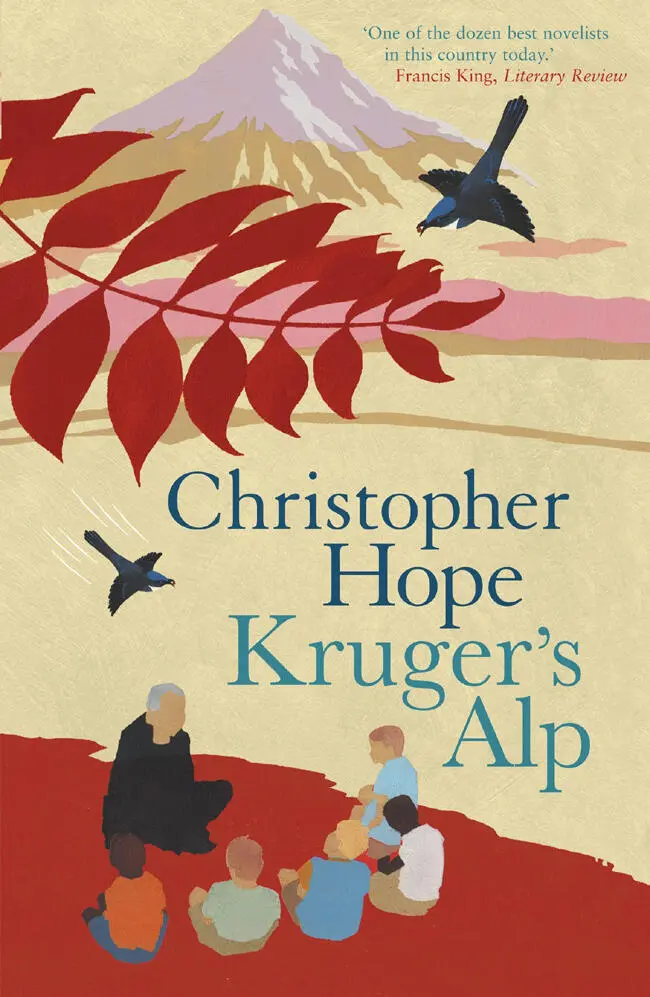
- Название:Kruger's Alp
- Автор:
- Издательство:Atlantic Books
- Жанр:
- Год:2009
- ISBN:нет данных
- Рейтинг книги:3 / 5. Голосов: 1
-
Избранное:Добавить в избранное
- Отзывы:
-
Ваша оценка:
Kruger's Alp: краткое содержание, описание и аннотация
Предлагаем к чтению аннотацию, описание, краткое содержание или предисловие (зависит от того, что написал сам автор книги «Kruger's Alp»). Если вы не нашли необходимую информацию о книге — напишите в комментариях, мы постараемся отыскать её.
Kruger's Alp — читать онлайн бесплатно полную книгу (весь текст) целиком
Ниже представлен текст книги, разбитый по страницам. Система сохранения места последней прочитанной страницы, позволяет с удобством читать онлайн бесплатно книгу «Kruger's Alp», без необходимости каждый раз заново искать на чём Вы остановились. Поставьте закладку, и сможете в любой момент перейти на страницу, на которой закончили чтение.
Интервал:
Закладка:
‘We dreamt of Dutch vrouws and silk beds. We saved every cent and when the big day came we kissed our wives goodbye and stepped onto the Boeing with hope in our hearts.’
‘And stiffening pricks.’
The little one looked up at Blanchaille, unabashed, shrugged his shoulders and gave a bitter smile. ‘Off to sleep with coloured girls.’
‘Off to smoke dagga.’
‘To go fishing on Sundays.’
‘Get drunk on religious holidays.’
‘Watch dirty movies and gamble into the small hours.’
The big one sighed wearily. ‘But what we got was duty. We’re stuck here, in the shadows.’
‘This is hell,’ said the little one. ‘I thought a Free State Sunday was hell, but this is hell.’
‘Who are you?’ Blanchaille demanded.
‘We’re called Apple Two,’ the big one explained, looking embarrassed, ‘so-called because it stands for both of us.’ He raised two fingers.
‘But who is Apple One?’
The watchers shrugged. ‘Don’t ask us.’
‘What sort of a name is that?’
‘It’s a code name. We can’t give you our real names. Our orders were to stand out here and watch the flat until further notice.’ The little one looked apologetic.
‘Who gave the order?’
‘Apple One. We were to watch the flat until you left,’ said the big man.
‘And then we were to tell you to go to the Embassy. Don’t be hard on us, we don’t like this job. We didn’t ask for it,’ said the little one, clutching Blanchaille’s sleeve. ‘We stepped off the plane in London and the Embassy car was waiting. We thought, Christ but this is odd! Why should our Government come and meet us? Anyway we took it as a gesture. We told ourselves they were just being hospitable. Little did we know. We were driven into town, chatting happily like any group of tourists in London the first time, lightheaded with that sense of freedom that comes to all South Africans who discover that the outside world really does exist, and we pulled up in Trafalgar Square at the sign of the golden springbuck and I remember turning before we were hustled through the swing doors, I remember seeing the fountains, the pigeons, the tourists mooning about, Nelson up on his column… my last glimpse of freedom.’
‘What happened?’ Blanchaille asked.
The two watchers in the shadows sighed and drew their coats around them. ‘We were commissioned, into the security forces. It was explained to us that we should put duty above pleasure. Our air tickets would be refunded, they said. Our families had been notified that we were heroically responding to the call of our country abroad. With manpower shortages in security, as in all other industries, we were to be given the chance of serving our motherland by helping in the surveillance of suspected persons abroad.’
‘Do you know what’s happened to Magdalena?’ Blanchaille asked.
‘She left some time ago,’ the large one said.
‘Better not ask where she was going,’ said the little one.
‘Where was she going?’ Blanchaille persisted doggedly.
‘To the Embassy.’
‘Where is the Embassy? How do I get there?’
‘Go to Trafalgar Square. Look for the sign of the golden springbuck,’ said the little one.
‘Blanchaille,’ said the large one, ‘don’t be a fool. Get out. Go back to our country. There’s nothing for you here. Believe us, we know. This is hell. It’s a small, rather dingy, gloomy northern country. Everything is dead, the only signs of life are to be detected in the police, the army and the monarchy. Go back to where there are real issues to fight for.’
‘I wasn’t thinking of staying here. I’m in transit.’ Blanchaille replied. ‘I’m only here for forty-eight hours, and believe me, that’s not my idea. I’m heading for Europe. There are certain mysteries I wish to solve.’
‘That’s worse,’ said the little one. ‘That is the dark continent, Europe. It’s littered with the bones of Africans searching for the answers to certain mysteries.’
‘Then I’ll follow the bones,’ said Blanchaille. ‘See what they tell me.’
The watchers shrugged. ‘Rather you than us,’ they said. ‘Don’t say we didn’t warn you.’
And I saw in my dream how Blanchaille, having exchanged some of his money into British currency with the watchers, who gave him a good rate ‘just for a feel of home’, and having been pointed to the nearest tube, made his way down into the earth.
He was not prepared for life below ground. The elevator taking him down was very old and shook and its revolving belts squealed and cried like a man in agony. A hot wind carried on it the smell of metallic dust that blew from the yawning black holes at each end of the platform. A few desultory late-night passengers moped disconsolately in the shadows. Advertisements lined the sides of the tunnel. Most seemed to be taken up with lingerie and the delights of early retirement.
Blanchaille heard a terrible noise, a shouting, a screaming and howling as if troops of banshees were approaching, their cries emphasised by the hollowness of the deep underground. The waiting passengers seemed to know what was happening because he saw them scurrying for the far dark corners of the platform. With a great burst of shouting, singing, clapping, a strange army of young men arrived. They wore scarves and big boots, waved rattles and flags. The posse of policemen guarding them had trouble keeping them under control. Red seemed to be their colour, red bobble caps and scarves and shirts and socks, streamers and pennants.
They were marched to the far end of the platform, laughing and threatening to push each other onto the rails and terrorising the passengers. No sooner were they in place when the second army was ushered on to the platform and marched down towards the opposite end of the station, also with whistles and klaxons, hooters, cheering and whistles. Their colour seemed to be yellow: yellow hats and yellow flags. When the Reds caught sight of the Yellows pandemonium broke loose. Individuals broke free from both sides and hurled themselves at each other, kicking and clawing at one another and police and dogs struggled to keep them apart. Clearly the Reds and the Yellows were sworn enemies. The Reds shouting out, ‘Niggers, niggers, niggers!’ and the Yellows replied, ‘Yids, yids, yids!’ Blanchaille was reminded of the tremendous battles which took place between Fascists and Jews on the anniversary of Hitler’s birthday on the pavement outside the beer cellars in the capital. The hatred they clearly felt for one another was so reminiscent of the life he had left, that for a moment he was overwhelmed with feelings of homesickness, even a kind of strange nostalgia. A train arrived and the Reds were allowed aboard. The Yellows were held back on the platform. No doubt they had their separate train.
As Blanchaille arrived at Trafalgar Square station I saw how a succession of young girls came up to him. ‘Business, business,’ they said repeatedly. This puzzled Blanchaille who could not imagine what girls so young could be doing in such a place, so late at night.
The crowds pressing around him as the escalator rose slowly towards the light wore ecclesiastical costumes as if got up to resemble old religious pictures. He saw a bishop, a scattering of cardinals, a bevy of virgins in blue veils. It was only when he peered closely that he saw their stubbled chins and realised they were all men. They clustered behind Blanchaille on the escalator whispering, perhaps to each other, perhaps to themselves, perhaps it wasn’t even they who spoke but only voices inside his head, but from wherever the words came they scandalised him. Their talk was of organs and orifices, of anal chic, of comings and goings, of tongues, testicles, of ruptures, lesions and sphincters, of AIDS, herpes and hepatitis, of pancake make-up and the versatility of latex, of leather and the ethics of climactic simulation and of the lover of some unfortunate creature who had lost her life, head smashed with a heavy hammer when it was discovered that she was not he pretending, coiffed and beguiling, but the very her she had been pretending to be. ‘Come over to our side ducks and get the feel of life!’ These ribald remarks caused a great deal of mirth among the knot of purpled cardinals whose faces, he saw, were painted dead white with large black eyes so that they looked like Japanese actors. The long staircase creaked its way upwards to the dirty patch of light above. Of course it was all too likely that these scenes took place only in his imagination and the crowds around him were perfectly ordinary people returning from walks in the country, and scout outings and the girls so desperate for business were collecting for charity. But that his imagination should run in these channels at such a time worried him deeply.
Читать дальшеИнтервал:
Закладка:
Похожие книги на «Kruger's Alp»
Представляем Вашему вниманию похожие книги на «Kruger's Alp» списком для выбора. Мы отобрали схожую по названию и смыслу литературу в надежде предоставить читателям больше вариантов отыскать новые, интересные, ещё непрочитанные произведения.










Обсуждение, отзывы о книге «Kruger's Alp» и просто собственные мнения читателей. Оставьте ваши комментарии, напишите, что Вы думаете о произведении, его смысле или главных героях. Укажите что конкретно понравилось, а что нет, и почему Вы так считаете.