S. Agnon - Shira
Здесь есть возможность читать онлайн «S. Agnon - Shira» весь текст электронной книги совершенно бесплатно (целиком полную версию без сокращений). В некоторых случаях можно слушать аудио, скачать через торрент в формате fb2 и присутствует краткое содержание. Год выпуска: 2014, Издательство: Toby Press, Жанр: Современная проза, на английском языке. Описание произведения, (предисловие) а так же отзывы посетителей доступны на портале библиотеки ЛибКат.
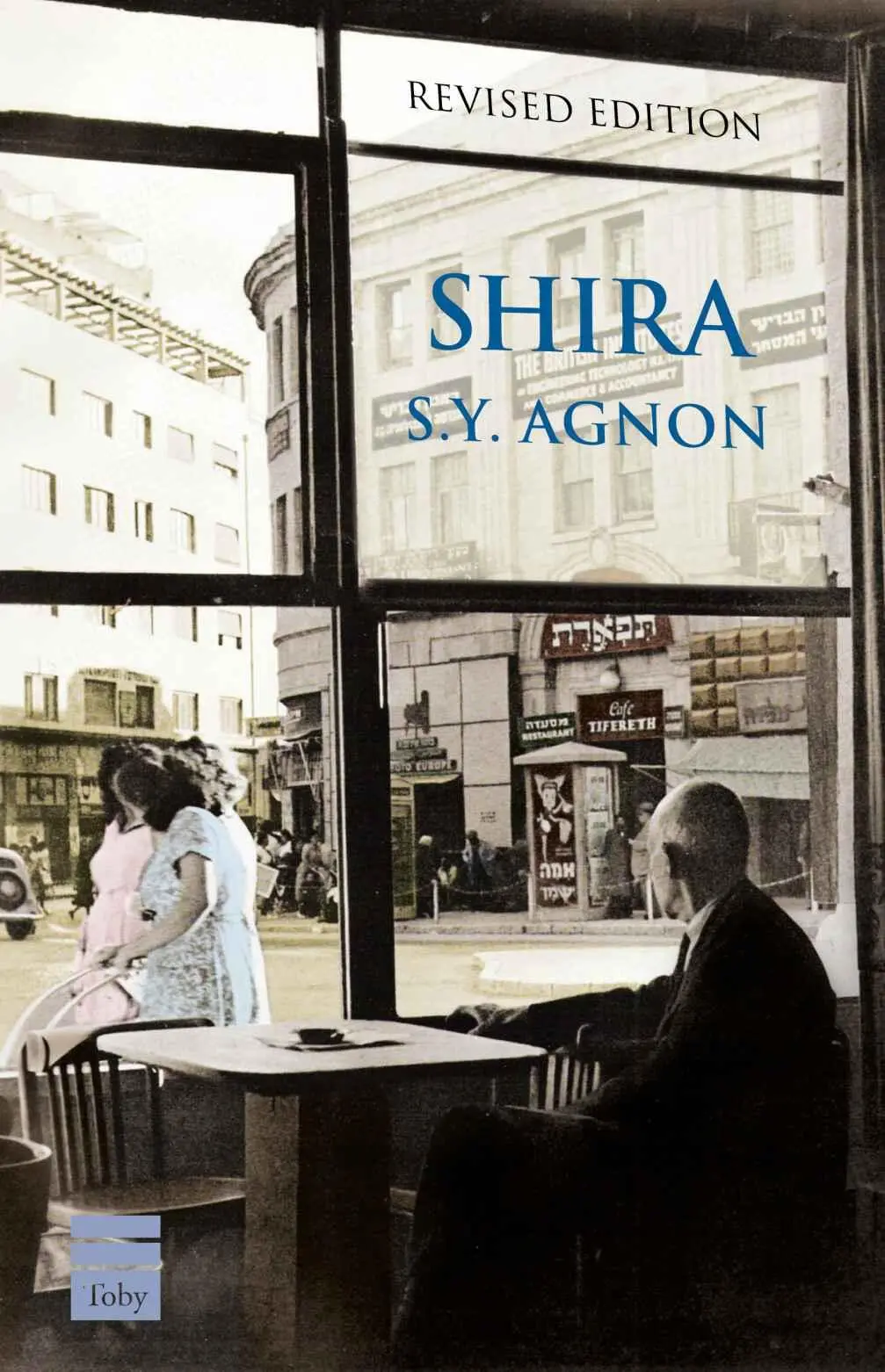
- Название:Shira
- Автор:
- Издательство:Toby Press
- Жанр:
- Год:2014
- ISBN:нет данных
- Рейтинг книги:5 / 5. Голосов: 1
-
Избранное:Добавить в избранное
- Отзывы:
-
Ваша оценка:
Shira: краткое содержание, описание и аннотация
Предлагаем к чтению аннотацию, описание, краткое содержание или предисловие (зависит от того, что написал сам автор книги «Shira»). Если вы не нашли необходимую информацию о книге — напишите в комментариях, мы постараемся отыскать её.
Shira — читать онлайн бесплатно полную книгу (весь текст) целиком
Ниже представлен текст книги, разбитый по страницам. Система сохранения места последней прочитанной страницы, позволяет с удобством читать онлайн бесплатно книгу «Shira», без необходимости каждый раз заново искать на чём Вы остановились. Поставьте закладку, и сможете в любой момент перейти на страницу, на которой закончили чтение.
Интервал:
Закладка:
Manfred continued, “Would you guess that this girl was actually pretty, in addition to her charming, youthful ways?” Henrietta said, “She’s still pretty.” Manfred said, “If you hadn’t said those words, I would have invited her to join us for a while.” Henrietta laughed and said, “You can invite her.” Manfred said, “You think it’s all right to ask her to sit with us?” Tamara said, “If anyone were listening, he would think you’re hammering out a program for the Zionist Congress. Comrade, come join us. This intellectual couple wishes to converse with you.” The young woman laughed and came over. Henrietta said, “Won’t you join us for a while, if you’re free.” Herbst was quick to offer her a chair, as if he were the host and she the guest, inviting her to sit down, moving his chair close to hers, asking questions for the sole purpose of making conversation — about the hotel and its guests, the British, the Australians. From there, he turned to questions about fortifications and road work the British were doing. Tamara sat there, inwardly scornful of these Zionists who see without knowing what they see and babble without understanding their own babble. Finally, she got up and left.
As soon as Tamara left, Herbst was relieved. He began asking questions and apologizing for each one. The young woman answered without hesitation and even volunteered information about herself and her family. The essence of her words was that her father had been rich and had provided her with excellent tutors. They taught her whatever one teaches the daughters of the rich, with the exception of Jewish subjects, which she was never taught. When disaster struck, German Jews didn’t believe Hitler would remain in power. Her mother and father stayed in Berlin and sent her to the Land of Israel. Though their hearts did not instruct them to save themselves, they did instruct them to save the girl. She knew nothing about this country except what she had heard in speeches. She would have been better off without those speeches, for she would have tried to find out the things one needs to know when going to a new place. She came here and didn’t know what to do. She worked as a waitress. When she lived in Berlin, she knew what to do. She wrote poems, some of which were published. In fact, one of her poems appeared in the Frankfurter Zeitung . Even here she continued to write, and she sent a story about a little girl in Jerusalem to the Jüdische Rundschau . Robert Weltsch sent the payment to her father.
She doesn’t write at all now. The heat and work exhaust her; also she’s not really inspired to write poems. If she knew Hebrew, the language might inspire her, and she would sing the songs of the land in its own language. It seems to her that a true poet can never make poems in a language alien to the land, but, being burdened with work, she hasn’t learned Hebrew. The people she knows don’t know Hebrew either. She has learned English, but not Hebrew. One doesn’t learn the language unless those who live in the country demand it. One thing sustains her soul: once every two weeks, she has a day off and goes to Jerusalem to be with her friends, young poets from Germany. Their lot is no better than hers, except for the young man who managed to put out a book of poems on a stencil machine. He didn’t cover his expenses and had to run around borrowing from one friend to pay the other. How does he live? Off his wife’s salary. She makes dolls, but people who value their beauty can’t afford to buy them, and those who have money have no taste, so the fate of the dolls is like that of the book. Along with all these misfortunes, there is also some good. She had two good days a couple of weeks back. How? That same couple has an adorable daughter, a child of about seven. They came with her, and the hotel owner allowed her to keep the child in her room, although waitresses are not usually permitted to have guests.
Tamara was back. She came and sat opposite the young woman, crossed her legs, and assumed the scornful manner we know so well. The young woman didn’t notice. Or perhaps she noticed, but she paid no attention and kept right on talking, as the daughters of the rich tend to do. Even when overwhelmed by disaster, they talk about themselves without complaining. And yet, from their accounts of their good fortune, one recognizes the sort of trouble they’re in.
Henrietta wiped her eyes and recalled various young girls she had known. Some of them, bringing regards from relatives, clung to her, coming again and again, hanging on even after they were settled. Others never returned. She took excessive pains on behalf of some and not enough on behalf of others. However much you delude yourself with the notion that you have done all you could, this is not the point; quite apart from you, a tender soul is involved, which exists and persists just as you do, and this is the point. Henrietta’s thoughts were blurred, and even before they had a chance to register, they faded away. Some of these thoughts had to do with a girl Manfred said was related to Neu. But she was displaced by Zahara and Tamara. From the start, she had been thinking about her daughters, but she dismissed these thoughts, rather than connect her daughters’ fate with theirs. Suddenly, her daughters came to mind again. Zahara belongs to a kvutza and, so far as one can see, she has settled down. But Tamara, Tamara…
Tamara sat there, ambivalent. One eye was on the young woman whose woeful tale played on her nerves; the other eye took in every detail and was eager for more. She turned her head to the left and scrutinized her, as if to ask: What do those stories mean? Finally, Tamara pinched her lips together and questioned her. “Tell me, comrade, why didn’t you go to a kvutza ?” The waitress answered, “I don’t know why, but, since I didn’t go to a kvutza when I first came, I didn’t go later either. Why don’t I go now? Because of a jaw injury. Though it isn’t visible, it requires attention, and I may have to go to the hospital. The doctor isn’t worried about infection; still, he warned me not to neglect it. Besides, I doubt if I could succeed on a kvutza. The only thing I can do is wait on tables, which I can barely do. And I can do that only because I’m used to it. Having worked in several restaurants and hotels, I’m used to the work, so I keep doing it.” Henrietta asked, “And what will you do in the summer? The hotel closes in the summer, doesn’t it?” The girl said, “I don’t know what I’ll do yet. I might work in a café in Jerusalem. New ones open every day. Even a waitress like me can find a job. If I don’t find one, I won’t worry. I’m tired, dead tired. And if you ask what I’ll eat, I’ve saved enough money to support myself for three or four months. I haven’t saved a lot, but my needs are few, and I can make do with very little. Food doesn’t count as much as sleep. I daydream about sleep. When I get out of the hospital in good health, I’ll rent a room and spend my days and nights sleeping. Here in this hotel at the Dead Sea, I don’t sleep. True, there are days in the winter when this entire area is like the Garden of Eden — a Garden of Eden for the guests, not for those who serve them. In any case, I’m doing better than most of my girlfriends, not to mention the men, who can barely keep themselves going. Some of them are poets who were widely published and translated in Germany. Here, they make the rounds of editors, and when an article is accepted and they get forty or fifty grush, they are grateful, though they often have to share their pay with a translator.”
In the midst of the conversation, the girl got up to wait on a guest. She returned, bringing tea and cakes, sat down again, and talked until it was time for them to go. Herbst took out his wallet to pay. The girl looked at him with imploring eyes and said: “If I may ask a favor, let me ask you to be my guests instead of paying for the drops of tea you drank.” Herbst saw the look in her eyes, put back his wallet, and patted her hand in thanks, while Henrietta invited her to visit them at home in Jerusalem.
Читать дальшеИнтервал:
Закладка:
Похожие книги на «Shira»
Представляем Вашему вниманию похожие книги на «Shira» списком для выбора. Мы отобрали схожую по названию и смыслу литературу в надежде предоставить читателям больше вариантов отыскать новые, интересные, ещё непрочитанные произведения.








Обсуждение, отзывы о книге «Shira» и просто собственные мнения читателей. Оставьте ваши комментарии, напишите, что Вы думаете о произведении, его смысле или главных героях. Укажите что конкретно понравилось, а что нет, и почему Вы так считаете.