S. Agnon - Shira
Здесь есть возможность читать онлайн «S. Agnon - Shira» весь текст электронной книги совершенно бесплатно (целиком полную версию без сокращений). В некоторых случаях можно слушать аудио, скачать через торрент в формате fb2 и присутствует краткое содержание. Год выпуска: 2014, Издательство: Toby Press, Жанр: Современная проза, на английском языке. Описание произведения, (предисловие) а так же отзывы посетителей доступны на портале библиотеки ЛибКат.
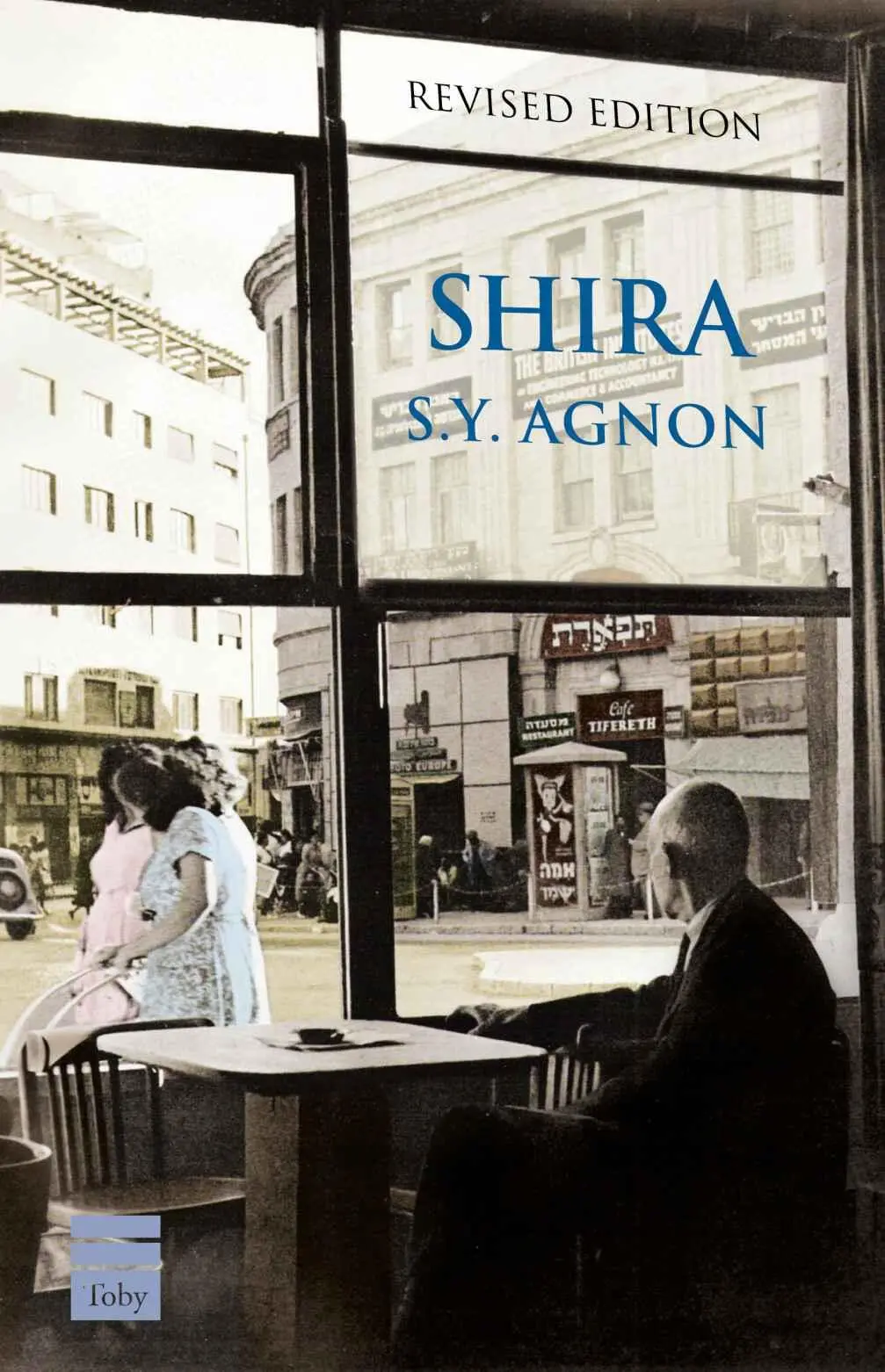
- Название:Shira
- Автор:
- Издательство:Toby Press
- Жанр:
- Год:2014
- ISBN:нет данных
- Рейтинг книги:5 / 5. Голосов: 1
-
Избранное:Добавить в избранное
- Отзывы:
-
Ваша оценка:
Shira: краткое содержание, описание и аннотация
Предлагаем к чтению аннотацию, описание, краткое содержание или предисловие (зависит от того, что написал сам автор книги «Shira»). Если вы не нашли необходимую информацию о книге — напишите в комментариях, мы постараемся отыскать её.
Shira — читать онлайн бесплатно полную книгу (весь текст) целиком
Ниже представлен текст книги, разбитый по страницам. Система сохранения места последней прочитанной страницы, позволяет с удобством читать онлайн бесплатно книгу «Shira», без необходимости каждый раз заново искать на чём Вы остановились. Поставьте закладку, и сможете в любой момент перейти на страницу, на которой закончили чтение.
Интервал:
Закладка:
It was only a few months before the journal arrived in Jerusalem. Believe it or not, even the scholars on Mount Scopus took note of Manfred Herbst’s chapter and said, “This makes sense.” Sometimes the world tires of its follies and begins to smile on its creatures. Everyone was certainly astonished: this Herbstlein, whom they tolerated because he was such a modest man and because he made no effort to advance himself, took everyone by surprise with this article. Herbst had already published a book of more than six hundred pages, so why the uproar over a single article? If you like, I will tell you. Whatever a scholar wrote in his youth is prehistoric. If you like, I will tell you more. Herbst had already cashed in on his book, having won his appointment because of it. Eminent faculty members now talk about him in favorable terms. Those who seldom speak positively about anyone have nothing negative to say about him. If one of them is forced to mention him, he is sure to add, “Too bad he didn’t show me his article before sending it out; I might have made some comments.” Saying this, he thinks to himself: If I read it again, I will surely have something to add. In short, suddenly, with very little warning, Herbst’s star began to rise.
Let me say a word about envy. A person who develops step by step gives his friends a chance to observe him and become envious, which is not the case when a person’s talents emerge suddenly, in full power. Friends, having had no time to observe him, have had no time to become envious. They don’t seem to mind that he has achieved a measure of happiness. They even seek his welfare on occasion, and, if he takes the world by surprise with a great book or an important article, they treat him as they always have, for habit goes a long way. As for those who didn’t know him before, they are obviously not susceptible to envy or hatred, envy being reserved for intimates or acquaintances.
Since Manfred Herbst didn’t arouse the envy of colleagues, what began as a somewhat favorable response to him escalated, becoming intensely favorable. When the board of governors, or the senate, met to consider his promotion, no one objected, except Professor Bachlam, who was always grudging, all the more so toward scholars from Germany, who tended to disparage him and disregard his scholarship, although he had produced books that were on a par with theirs. In brief, it was suddenly the consensus that Manfred Herbst deserved to be promoted — for the moment, to the level of associate professor, not full professor. Though there was no additional salary involved, there was added prestige. Sometimes a lecturer is promoted but makes do with a lecturer’s salary, since the university cannot afford to pay a professor’s salary to every instructor who is promoted; the university’s expenses are soaring rapidly, and its income doesn’t grow proportionately. Its employees no longer receive their monthly salary three days early; now they’re lucky to be paid three days late.
Back to Herbst. It was about to happen. Manfred Herbst was going to be appointed a professor, like Bachlam and Ernst Weltfremdt and Lemner and Wechsler and all the other professors at the Hebrew University in Jerusalem who achieved this high position because of their books or social connections. Were we to judge by the polished brass nameplates gleaming on their doors, this was a good thing; if we look to the heart, what’s so good about it?
There is a simple creature in this world, named Shira. Just when fortune begins to smile on Herbst, this creature, Shira, puts him off. On the face of it, she shows warmth; actually, she shows only the freckles on her face, which is to say that, when he comes to her, she shows only her face, that’s all. Unlike that night when he first knew her, when she was so affectionate that there could be no other woman as affectionate; unlike the three or four nights that followed, when she was not as affectionate as on the first night, but she did respond to him, though not as he wished, yet we can say she responded, and he was in another world because of her. Herbst sits wondering why that night was different. When he saw her for the first time, expecting nothing, she was very affectionate, whereas, now that he is obsessed by her, she doesn’t notice him. Has she found more adequate companions, lovers? Herbst isn’t jealous, nor does he wish to know who they are. Herbst’s mind is on Shira, who is above all women, whom none can match. Whether he sees or imagines her, that phrase “Flesh such as yours…” is fixed on his lips.
Herbst tries to extricate himself from this chaos of Shira thoughts, which are boundless and infinite, whose sole effect is to suspend all other enterprises. Herbst turns his mind back to his work, to his book, to the material he has compiled, collected, selected, copied, and invented. He begins to relate to his book as if it is already there, as if it exists, as if all the notes were gathered together in a single volume. What does Shira do? Surfacing from the dimness of his thoughts, she appears before him.
When it comes to self-deception, Herbst is cautious, and he examines his actions with total objectivity. He is aware that, even when his book is completed, his ultimate goal will not be realized. He regards the actions of others with the same objectivity. Even those who have published several books will not affect the heavenly bodies, nor will they change the course of our world. Though learning is a dominion in itself, it holds no golden scepter in its hand.
I’ll get back to Shira now. Shira is not the same Shira we knew two years ago. Her upper lip is wrinkled, and her hair is beginning to turn gray. She is still in her prime, but she’s becoming slovenly. Though her clothes are old, she doesn’t replace them. The walls of her room are peeling, but she doesn’t arrange to get them repainted. The print of the skull has yellowed frightfully, and it looks as if a real skull is staring at you. What Böcklin’s brush didn’t accomplish has been accomplished by Shira’s slovenliness; she has stopped dusting the picture. Only the bed has changed its place. It used to be in the southeast corner; it is now in the northwest. Was it Shira’s idea to move the bed or someone else’s? It doesn’t really matter, except that all these thoughts of Shira bring on other thoughts that relate to Shira. He tires of them — they never tire. They give him wings, and he takes off and flies to Shira. When he comes, she welcomes him, offers cigarettes, fruit, and tea. Herbst lights a cigarette, takes some fruit, drinks a glass of tea, and thinks to himself: The things she gives me are presents from lovers; just as she gives me the gifts her lovers give her, she gives her lovers the gifts I give her. None of this disturbs him. It does disturb him that, though her hair is graying, she doesn’t dye it; though her clothes are worn, she doesn’t replace them; though she has lost a tooth, she doesn’t get a false one. Is Shira so sure of herself, confident that she is still attractive? Herbst studies Shira and can only wonder: Why am I so drawn to her. If it’s habit, Henrietta is more of a habit. Also handsomer, and of superior character. If Henrietta were in trouble, I would be very upset; if this one were in trouble, I would be glad to be rid of her. Herbst studies Shira repeatedly, through investigation and visitation. Before he has a chance to observe very much, his heart begins to flutter longingly.
Shira continues to behave in her usual fashion. On the face of it, she is warm, allowing him not a hairbreadth closer. She is frank with him, concealing none of her activities. That woman’s activities are bizarre, and it is hard to come to terms with them. Doesn’t she realize how misguided they are? Her talk is not loose, but it is certainly stimulating. Does she even have to stimulate his desire? Is there any reality to her stories? She once told him about an English soldier who came to her one night. When did he come? He came after midnight. True, she threw him out. In any case, the question stands: What was an English soldier doing in the room of a Jewish nurse in the Land of Israel? What business did Shira have with soldiers anyway? I say “soldiers,” in the plural, because once she went to Netanya, and, since she had to leave early and didn’t know how she would get to the train station with her heavy luggage, the proprietress told her there was an Englishman there who would take her luggage to the station. That night, when she was in bed, the soldier came to her room. She said to him, “I’m old enough to be your mother; you want to make love to a woman your mother’s age.”
Читать дальшеИнтервал:
Закладка:
Похожие книги на «Shira»
Представляем Вашему вниманию похожие книги на «Shira» списком для выбора. Мы отобрали схожую по названию и смыслу литературу в надежде предоставить читателям больше вариантов отыскать новые, интересные, ещё непрочитанные произведения.










Обсуждение, отзывы о книге «Shira» и просто собственные мнения читателей. Оставьте ваши комментарии, напишите, что Вы думаете о произведении, его смысле или главных героях. Укажите что конкретно понравилось, а что нет, и почему Вы так считаете.