S. Agnon - Shira
Здесь есть возможность читать онлайн «S. Agnon - Shira» весь текст электронной книги совершенно бесплатно (целиком полную версию без сокращений). В некоторых случаях можно слушать аудио, скачать через торрент в формате fb2 и присутствует краткое содержание. Год выпуска: 2014, Издательство: Toby Press, Жанр: Современная проза, на английском языке. Описание произведения, (предисловие) а так же отзывы посетителей доступны на портале библиотеки ЛибКат.
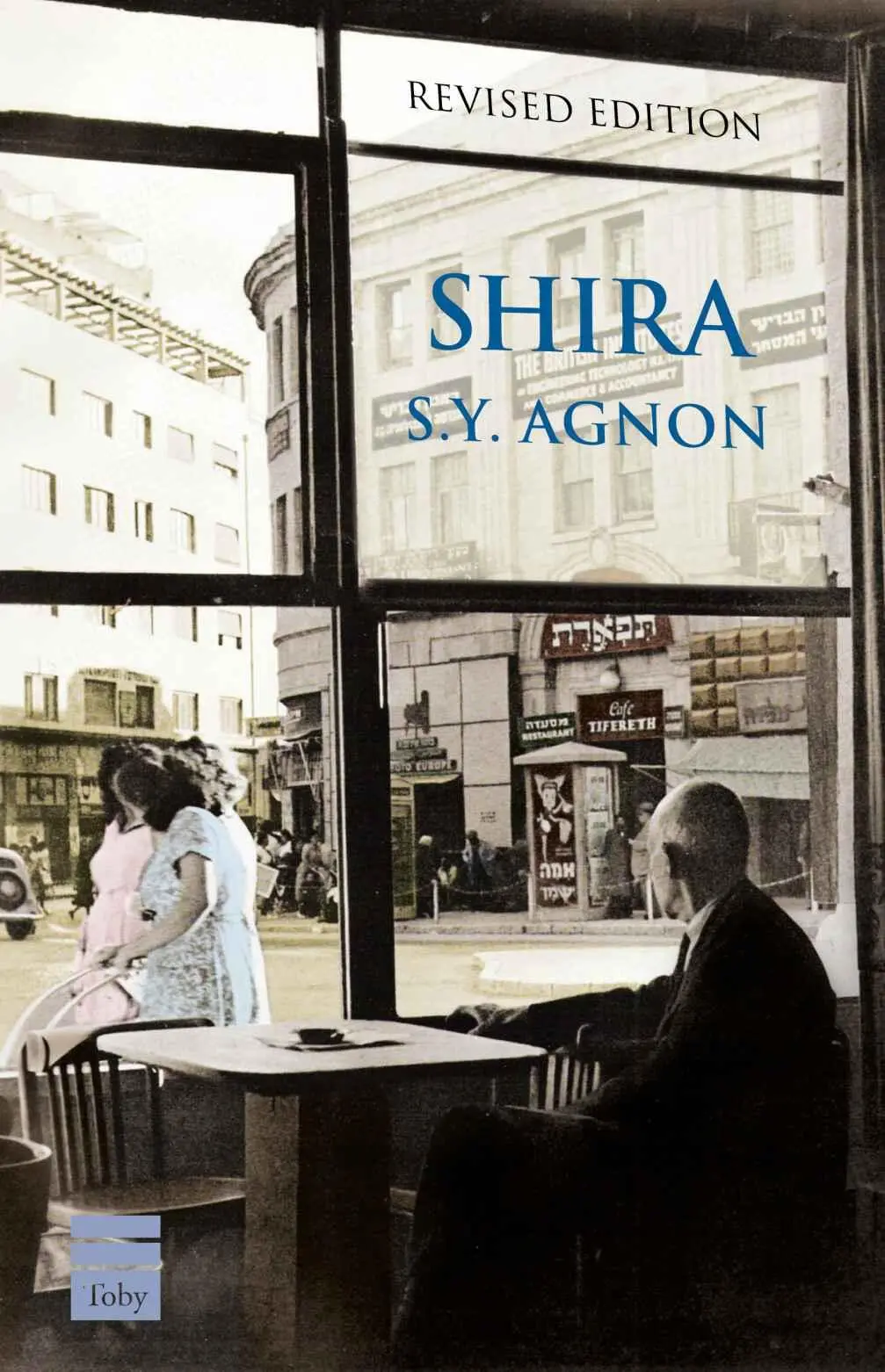
- Название:Shira
- Автор:
- Издательство:Toby Press
- Жанр:
- Год:2014
- ISBN:нет данных
- Рейтинг книги:5 / 5. Голосов: 1
-
Избранное:Добавить в избранное
- Отзывы:
-
Ваша оценка:
Shira: краткое содержание, описание и аннотация
Предлагаем к чтению аннотацию, описание, краткое содержание или предисловие (зависит от того, что написал сам автор книги «Shira»). Если вы не нашли необходимую информацию о книге — напишите в комментариях, мы постараемся отыскать её.
Shira — читать онлайн бесплатно полную книгу (весь текст) целиком
Ниже представлен текст книги, разбитый по страницам. Система сохранения места последней прочитанной страницы, позволяет с удобством читать онлайн бесплатно книгу «Shira», без необходимости каждый раз заново искать на чём Вы остановились. Поставьте закладку, и сможете в любой момент перейти на страницу, на которой закончили чтение.
Интервал:
Закладка:
What will the future bring? Herbst asks himself. This question pertains not to the events of the world, nor to the murder of six hundred Jews in a single year by the Arabs and the country’s continued policy of self-restraint, nor to the university or the concerns of his wife and daughters, but to Shira, whom he has begun to call Nadia again. He goes to her two or three times a month, and, whenever he happens to be in town, he tries to make time for Shira. When he comes in, she welcomes him, says, “Sit down,” and offers him cigarettes, fruit, a sweet, and tea. She discusses the news and whatever is going on at the hospital. Sometimes, to accommodate him, she tells about herself, about the past, which she prefers not to recall, on the theory that it no longer affects her; only for his sake, because he wants to hear, does she talk about it. When he tries to approach her, she makes a screen with her hands and says, “Please, don’t be childish.” Herbst sits there feeling scolded, praying to himself: If only she would reproach me, if only she would say, “Don’t come here.” He himself doesn’t want to stop, can’t stop, doesn’t stop; he continues to come. And she continues to welcome him, without allowing him a hairbreadth closer.
Just to please him, Shira returns to a subject she was in the middle of, something she doesn’t like to talk about but he likes to hear. She tells him about the past, before she was married; about the young man who saw himself as her protector, whom she rejected because, from early childhood, she disliked anyone who tried to dominate her. What was predicted for him in his youth was fulfilled. He had become prominent as an orator, a politician, first in whatever he undertook. He was featured in all the newspapers and praised, for, when someone becomes the head of an institution, many people depend on him, and the writers hired to provide publicity for the institution weave the name of its head into their text, sometimes even making him the subject of the entire article. If some of these writers, seeing their words in print, cursed whatever had moved them and cursed themselves for being moved, he was becoming famous anyhow, and already there was a body of literature about him. As soon as the Diaspora began to shrink, so that he couldn’t find anything to do there, he came here. He does the same things here that he did there. He is involved in everything, everywhere. He orates, speechifies, takes charge.
Herbst scorned public figures and orators because the country was so full of them. Still, he was surprised that Shira had plucked the fellow from her heart. Like all people who tend not to become much involved with others, Herbst considered everyone who ever crossed his path an essential part of his world. He was therefore surprised that it was so easy for her to pluck a childhood friend from her heart. He wondered about her, but he was even more curious about that man, beyond what she was willing to tell.
As minds wander, so did his mind wander once again to Lisbet Neu. There really wasn’t anything between them, nor was it possible that there ever would be anything between them. But thoughts are thoughts; they take their own course, and you can’t tell them, “Please, don’t be childish.”
Lisbet Neu is still working in the same place, which she sometimes calls a store, sometimes an office. In either case, her salary is meager and hardly adequate to provide for her and her sick mother. How do they manage? They manage because the Torah instructs them to live. Lisbet Neu has tried to find a job in a government office, but a young woman’s prospects are limited there. Her monthly salary would be ten lirot, with no possibility of advancement. One would think that ten lirot a month is a decent salary for a young woman who now earns only six lirot. But, as was already noted, government offices offer a young woman no opportunity for advancement, whereas here, in this store, the owner is considerate and allows her to earn money on the side. What does this mean? There are certain products he is not allowed to handle, because he is the agent for other companies. He is reluctant to forgo the profit, so he orders these products in Lisbet Neu’s name, giving her two percent of the profit. Two other young women work for him, but he doesn’t treat them as he does Lisbet Neu, who is his right hand. Herbst doesn’t know Lisbet Neu’s employer and has no reason to know him. He is aware of one thing: the man is an elderly bachelor. Why doesn’t he marry Lisbet? She is lovely, of good family, gracious, and skilled in business. He probably doesn’t need a wife. Some women are available to men without the marriage ceremony.
The gentleman is rich. Surely he has an elegant apartment with fine furnishings, and, when he invites a girl to his home, it goes to her head. The first time, she comes feeling honored to have been invited; the second time, hoping he finds her appealing and may even want to marry her. The third time — the devil knows her thoughts. It goes without saying that none of the above applies to Lisbet Neu. I doubt that she was ever in any man’s home without her mother or her elderly uncle, Professor Neu.
Having mentioned young girls here, let me say something further about them. There are young girls in Jerusalem who used to live with their families in other countries, where they wore silk and ate fine food. They lived in splendid houses surrounded by maids who waited on them and gallant young men — intelligent, loving, and eager to please — as well as the finest teachers and educators, whose job it was to develop their sensibilities. Now these girls are up at dawn to earn the price of a crust of bread and a patch of roof. Some of them work in cafés, putting in an eleven hour day, for which they are paid eight lirot a month. Some work in army canteens, where drink, revelry, and lewdness are the rule. There are other young women who came to Jerusalem to study at the Hebrew University with their parents’ support, but, now that their parents are locked in ghettoes, the daughters spend half the day studying and the other half working for meager wages, barely able to support themselves and pay tuition. More than two years ago, the day Sarah was born, Dr. Herbst went to a restaurant for dinner, where he met a lovely and charming waitress, who gave him paper and envelopes so he could write to his daughters and inform them that their sister was born. Some time later he went there again, and, when he asked about her, he was told she had gone elsewhere and was working in a café frequented by Australian soldiers. The Australians are a good lot, easy with money and generous. They’re not pompous like the English. They’re friendly to us, so it’s nice to work in the places they frequent.
As things happen, Herbst happened to see that waitress again. Much later, Herbst went on a trip to the Dead Sea with his wife and Tamara. They stopped at the main hotel for tea. Herbst saw a waitress whom he recognized, though she didn’t recognize him. She saw so many people each day that new faces displaced the old ones. She came over and asked, “What would you like?” Her face was burned, her skin parched; her eyes had lost their luster. But she was gracious to the guests, like all waitresses in big hotels. Herbst identified himself to her, and she was pleased, as a lonely child who finds someone she knows in a crowd of strangers. For those who came to the hotel were strangers to her, while she knew him from the good days. What was better about those days? In those days, she was still endowed with the freshness of youth.
Manfred said to Henrietta, “Remember, Henrietta, the day Sarah was born I brought you a bottle of perfume with a scent you admired. I didn’t tell you how I found that delicate perfume, but now I’ll tell you. This woman gave me paper so I could write letters to our daughters, and the scent of the paper was so pleasant that I went to the pharmacy and asked for a bottle of perfume with that same scent. See, Henriett, I have secrets too. Secrets with young women. But in time every secret is discovered.”
Читать дальшеИнтервал:
Закладка:
Похожие книги на «Shira»
Представляем Вашему вниманию похожие книги на «Shira» списком для выбора. Мы отобрали схожую по названию и смыслу литературу в надежде предоставить читателям больше вариантов отыскать новые, интересные, ещё непрочитанные произведения.










Обсуждение, отзывы о книге «Shira» и просто собственные мнения читателей. Оставьте ваши комментарии, напишите, что Вы думаете о произведении, его смысле или главных героях. Укажите что конкретно понравилось, а что нет, и почему Вы так считаете.