S. Agnon - Shira
Здесь есть возможность читать онлайн «S. Agnon - Shira» весь текст электронной книги совершенно бесплатно (целиком полную версию без сокращений). В некоторых случаях можно слушать аудио, скачать через торрент в формате fb2 и присутствует краткое содержание. Год выпуска: 2014, Издательство: Toby Press, Жанр: Современная проза, на английском языке. Описание произведения, (предисловие) а так же отзывы посетителей доступны на портале библиотеки ЛибКат.
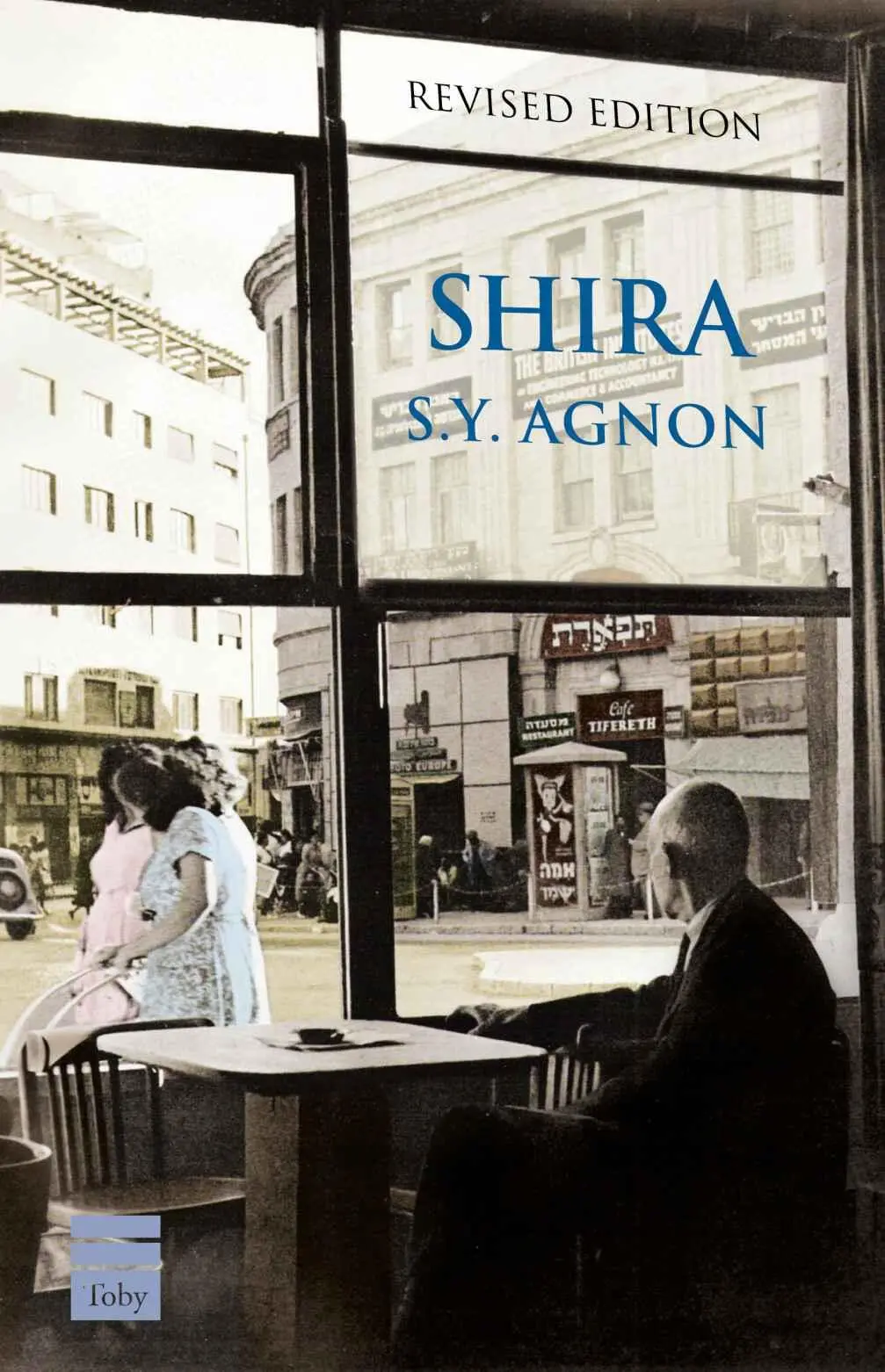
- Название:Shira
- Автор:
- Издательство:Toby Press
- Жанр:
- Год:2014
- ISBN:нет данных
- Рейтинг книги:5 / 5. Голосов: 1
-
Избранное:Добавить в избранное
- Отзывы:
-
Ваша оценка:
Shira: краткое содержание, описание и аннотация
Предлагаем к чтению аннотацию, описание, краткое содержание или предисловие (зависит от того, что написал сам автор книги «Shira»). Если вы не нашли необходимую информацию о книге — напишите в комментариях, мы постараемся отыскать её.
Shira — читать онлайн бесплатно полную книгу (весь текст) целиком
Ниже представлен текст книги, разбитый по страницам. Система сохранения места последней прочитанной страницы, позволяет с удобством читать онлайн бесплатно книгу «Shira», без необходимости каждый раз заново искать на чём Вы остановились. Поставьте закладку, и сможете в любой момент перейти на страницу, на которой закончили чтение.
Интервал:
Закладка:
The universe cast off its shape and assumed it again, at first rapidly, then with restraint; with restraint, then rapidly. In between, it was permeated with brown, yellow, blue, and something more, which the eye couldn’t grasp. Its margins were filled with silence that sounded like something audible and looked like something visible. If the eye managed to grasp a bit of that something, it was lost instantly in the endless multitude of colors, shifting in the twinkling of an eye, yet leaving their wondrous trace in the memory of those who saw them. Henrietta sat in a hush, marveling at everything she heard and everything she saw. It was clear to her that whatever she saw, she heard, and whatever she heard, she saw. Manfred was still talking. He told legends about the Dead Sea and the palms of Jericho that added substance to what she saw. Henrietta listened, stroking her husband’s hand; Tamara listened and marveled; the other passengers listened and welcomed this family and this scholar, who imparted facts in a manner that was both informative and pleasurable. Before they knew it, they were in Jerusalem.
Tamara leaped off the bus, followed by Manfred, who helped Henrietta down. Henrietta was astonished to see her husband jump so easily, like a youngster. He was astonished too, feeling taller and lighter than usual, the weight of his pack having firmed up his bones, straightened his spine, and stretched his body to its full height. He thought to himself: If I didn’t have to take my wife and daughter home, I would go into town and stop at Shira’s to show her how lithe I am. Shira would be amazed. Even though she pretends not to notice that sort of thing, her eyes are sharp, and she notes every change. He glanced at his wife, who was standing with him, waiting for the bus to Baka. Their eyes met, and he saw a serene smile on her lips. He was stirred by this smile and smiled back, knowing that he had to go with his wife, thinking in his heart: Too bad Shira can’t see me now, lithe, erect, tall. Never in all the time she’s known me has she seen me like this.
Waiting for the bus, they were overcome with the fatigue that often follows a trip. In Manfred’s case, it was accompanied by fatigue of another sort, the fatigue that takes over when you are in one place but your thoughts have drifted elsewhere. Where had they drifted, and why did they taunt him? He was tired and in no position to follow them. Even if he were to go to Shira’s, she probably wouldn’t be in, as she often worked at night. While he searched for a reason not to go to Shira’s, the bus appeared. Tamara leaped onto the bus and gave her mother a hand. Tamara helped her from above, Manfred from below. He boarded and sat beside her.
The bus began to move, unlike Manfred’s thoughts. Fused and confused, they nestled like a cloud within a cloud, like layer within layer of desert, with Manfred in their midst. He wasn’t really there with his wife. He was far away; and far, far away was Shira’s house. She was at home. She was wearing a sleeveless shirt and shorts; her arms and knees were bare. She said, “Manfred, dear,” and a sweet quiver spread through his body. He sat across from her, counting her freckles.
Tamara asked, “Why are you staring at me, Father?” Manfred said, “Am I staring at you?” Tamara said, “You’ve been gaping at me for an hour now.” Manfred said, “Why would I stare at you?” Tamara said, “That’s just what I was asking.” Henrietta said, “Let him be, Tamara. His mind is on his books.” Tamara said, “Why don’t you write novels, Manfred?” “Novels?” Tamara said, “If you wrote novels, I would read them, and I’d get to know you.” Her father said, “And why don’t you write novels?” Tamara said, “I leave that to the waitresses who write poems and fairy tales. This is such a long trip. It takes less time to get from Jericho to Jerusalem than from the bus station to Baka. Comrade,” she said, addressing the driver, “I see you enjoy my company.” The driver asked in surprise, “How is that?” Tamara said, “You’re taking so long. Would you give me a cigarette? My father doesn’t give me cigarettes. He thinks it’s unbecoming for his daughter to smoke in public.” Henrietta said, “Are you mad? Do you intend to smoke in the bus? Besides, didn’t the doctor forbid you to smoke?” Tamara said, “Hush, Henrietta, hush. Don’t mention the doctor. That could ruin the match.” Henrietta laughed and said, “What does one do with such a bizarre creature?” Tamara said, “Look, everyone, the bus is beginning to move! One, two, three, four / Who is it that walks on four? / Four, five, six, seven / A natural law set up in heaven. / A boy and a girl walk on four / When they walk as one with however-many more.”
Herbst tried to sort out his thoughts. He remembered forgotten things, and, remembering them, they became central to his thoughts. He suddenly recalled a pleasant fragrance and saw sheets of paper before his eyes. Not his notebooks, which gave off the smell of ink and tobacco, but the paper that waitress had given him, the one who wrote poems and fairy tales. He remembered the day Sarah was born and remembered all of that day’s events. He reflected: I doubt if anything that happened that day was as pleasurable to me as being in the restaurant and talking to that girl. Still, Herbst was annoyed at his wife for having invited her. He was annoyed for two reasons. First, because sometimes, when there was a guest, his wife wasn’t free to pay attention to him, and, when such a girl visits strangers, she is sure to require special attention. And second, when Henrietta is busy, she expects him to deal with guests, although he is involved with his work and his mind isn’t free for company. He hasn’t even found time to call Lisbet Neu, although her uncle has done him several favors. And when he was about to call her, he didn’t, because of Shira.
On another subject: Has Lisbet Neu left her job with that old bachelor? But why do I call him old, when he is no older than I am and, no doubt, looks younger, since he isn’t married. I will now put the world out of my mind and devote myself to my book. But will I be permitted to devote myself to it? As soon as people sense you are busy, they come and interrupt you. Since I published my chapter on the four rulings of Leo the Heretic, editors of all the quarterlies have been asking for articles. Even the National Library has sent me a book to review.
Herbst took out his notebook to see when the review was due and realized he hadn’t been given much time. Tomorrow he would probably be tired from the trip, and after that is Shabbat, when guests usually come. When do religious people have time to write their books? On Shabbat, they waste the day walking to a synagogue. “Personally, I don’t like religious people,” Shira said when we were walking on the new road to Beit Yisrael. “Fred,” Henrietta was saying, “get your things. This is our stop.”
Chapter four
When Herbst was in bed that night, he took out the book the National Library had asked him to review. After getting an overview of the book he read the jacket and noted: This book is right up my alley. It’s about Theodora, the empress described by Procopius as the whore who ruled Byzantium.
Herbst moved the lamp closer to his bed, adjusted the wick, and began reading. He found nothing new, but still he was interested. Because there was no new material, the task was not demanding. But something about it irritated him. He didn’t know what, which was all the more irritating. He mused: The author is certainly an expert and knows how to present his views convincingly. But…But…I’ll sleep on it, and tomorrow I’ll read more and find out.
The “but” that he couldn’t identify kept him from sleeping. Herbst was not short on imagination; he was not one to get stuck on details, unable to see the whole. Nor was he one of those who drown the truth in some hypothesis, who appear to be reviving forgotten times, whose words have the aura of poetry, but, since they are not poets, their books are neither poetry nor truth. In addition to these negative virtues, Herbst knew how to clarify the material he dealt with and how to make a concrete picture for himself, certainly in the field of Byzantine history, to which he had devoted considerable thought.
Читать дальшеИнтервал:
Закладка:
Похожие книги на «Shira»
Представляем Вашему вниманию похожие книги на «Shira» списком для выбора. Мы отобрали схожую по названию и смыслу литературу в надежде предоставить читателям больше вариантов отыскать новые, интересные, ещё непрочитанные произведения.










Обсуждение, отзывы о книге «Shira» и просто собственные мнения читателей. Оставьте ваши комментарии, напишите, что Вы думаете о произведении, его смысле или главных героях. Укажите что конкретно понравилось, а что нет, и почему Вы так считаете.