S. Agnon - Shira
Здесь есть возможность читать онлайн «S. Agnon - Shira» весь текст электронной книги совершенно бесплатно (целиком полную версию без сокращений). В некоторых случаях можно слушать аудио, скачать через торрент в формате fb2 и присутствует краткое содержание. Год выпуска: 2014, Издательство: Toby Press, Жанр: Современная проза, на английском языке. Описание произведения, (предисловие) а так же отзывы посетителей доступны на портале библиотеки ЛибКат.
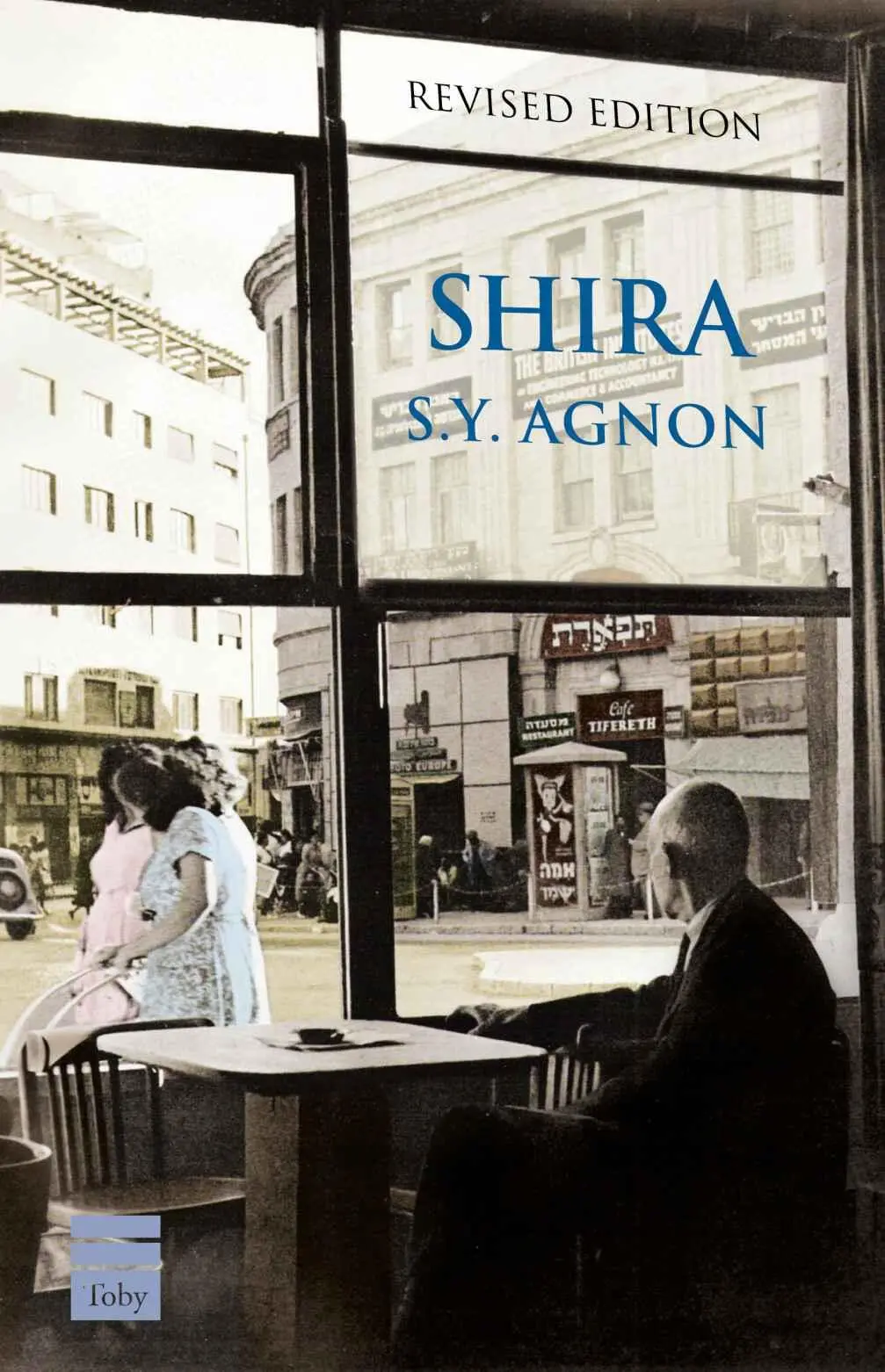
- Название:Shira
- Автор:
- Издательство:Toby Press
- Жанр:
- Год:2014
- ISBN:нет данных
- Рейтинг книги:5 / 5. Голосов: 1
-
Избранное:Добавить в избранное
- Отзывы:
-
Ваша оценка:
Shira: краткое содержание, описание и аннотация
Предлагаем к чтению аннотацию, описание, краткое содержание или предисловие (зависит от того, что написал сам автор книги «Shira»). Если вы не нашли необходимую информацию о книге — напишите в комментариях, мы постараемся отыскать её.
Shira — читать онлайн бесплатно полную книгу (весь текст) целиком
Ниже представлен текст книги, разбитый по страницам. Система сохранения места последней прочитанной страницы, позволяет с удобством читать онлайн бесплатно книгу «Shira», без необходимости каждый раз заново искать на чём Вы остановились. Поставьте закладку, и сможете в любой момент перейти на страницу, на которой закончили чтение.
Интервал:
Закладка:
Chapter three
The day was spent in rest and pleasure; then the night began to emerge from various corners, visible and invisible. It was still not fully nighttime, yet there were clear signs of night. The world was ringed by hushed dimness and filled with it. Within the hushed dimness, a light twinkled, darkened, glowed, and darkened again, so that the whole world was darkness within darkness. The sort of warmth that causes no discomfort wrapped itself around the small band of travelers waiting for the Jerusalem bus. Suddenly a clear speck split the sky, followed by a second speck and a third, from which stars were created. Some remained stuck in the sky; others ignited higher stars; still others ignited low stars in the Dead Sea. The travelers waited silently. Soon the bus came. They boarded, took seats, and looked back at the salty stillness, watching it revert to solitude. As the driver put his hand on the steering wheel, the bus began to roll across the silent roads, where there was no sound or echo.
Manfred and Henrietta sat together, with Tamara across from them. Their minds were at rest, filled with joy and tranquility, which occurs when a day is spent peacefully and appropriately. Two or three times, Herbst reached into his pocket for a cigarette but didn’t take one. He suddenly seized Henrietta’s hand, pressed it fondly, and said in a whisper, “Weren’t we smart to come here?” Henrietta nodded and said, “You were smart, Fred.” Tamara heard and remarked to herself: I’ve been here many times, but I never enjoyed the trip as much as I did today with these two old folks.
The road provided Herbst with a respite from memories of Shira. When he became aware of this fact, he thought to himself: Then there are ways to put her out of my mind. He clutched his wife’s hand again and said, “We should go on a trip such as this every month.” Henrietta nodded and said, “Yes, dear, every month.” Manfred added, “Then you agree, Henriett?” Henrietta answered, “By all means.” Manfred knew these were empty words, that once he was back in Jerusalem he would sink into his space, go back to his desk — to his note box, pads, notebooks, and outlines — and who knows when he would travel again; in a few months, or a few years. But he recognized that one should get out of the house at regular intervals, that getting out of the house fortifies one’s body, settles one’s mind, relieves all sorts of stress. Once again he looked at his wife: Henrietta, mate and companion, who shared his fate, sustained him, was concerned with his welfare since long ago, before he was in the army, throughout the war, and in the days that followed, in Berlin as in Jerusalem.
Henrietta carried herself like a woman who has thrived and been successful most of her life, who knows through whom she has achieved this success and that she deserves whatever she has achieved. For she has labored over him, looked after him, made it possible for him to concentrate on his work, and protected him from other business. Even when she was involved with matters it was hard for her to handle alone, she didn’t intrude on his work.
Considering his age, he was healthy and sound, young and vigorous. She gazed at him with pride and pleasure. Compared to his friends, he was a youth. True, she had lost her own spark along the way, but Manfred made it worthwhile. Besides, all she required or wanted was some peace of mind, her daughters’ happiness, and Fred’s success.
Henrietta sat curled up, as she used to sit sometimes when she was young, in the old days. When something pleasurable came her way, her shoulders contracted with pleasure and contentment. In those days, she would stretch out gracefully, whereas now she didn’t have the strength to straighten up, so her shoulders simply sagged. Her mind began to wander and rove in many directions — what was, as well as what she had hoped for that never came to be. How wonderful everything was, even now, after so many years, undisturbed by time. Henrietta extricated herself from a tangled thicket, like the night’s brightness shining through its murky darkness. She saw herself and Manfred as they were in Berlin.
Manfred is standing at the clock in front of the train station at the zoo. Countless men and women come and go, but he doesn’t notice, as if none of them exist. Henrietta is the one he wants to see, and he doesn’t see her. But he yearns to see her. His patience gives out, and his eyes, eager for her, begin to speak, to shout: Come, Henrietta, come. She is there, but he doesn’t see her. There are so many people separating them. He closes his eyes for an instant, so that when he opens them he’ll see her standing before him or at his side. Henrietta observes all his moves and knows how to interpret them. Henrietta smiles. And she’s right to smile, for, just when she is close enough so he could see her, he turns away to look at his watch. What does she do? She puts her hand on the watch. He looks up and sees her. He grabs her hand and wants to say something to her but can’t find the words. He leads the way, walking with her in silence. They find their train and go together to one of those lovely spots outside of Berlin where woods, streams, lakes, and rivers exist side by side, and, in these streams, rivers and lakes, boats of all sizes skim the water, carrying men and women, boys and girls, the sun shining down on them from above and love shining from their hearts. The two of them, Henriett and Fred, are doubly warmed — by sunshine and by love. At last, they get out of the boat and hike through the woods. They come to a river, and, since there is no one else there, they take off their clothes and jump in, floating and frolicking like fish. Later on, later on they rent a boat and row down the river. They are alone on the water, far from anyone else and closer to each other than ever before.
These events were at the edge of Henrietta’s memory. God in heaven, when did such things happen? Unless we say that we had an existence before this one, it’s not possible to imagine that such things happened to us. A salty tear fell from her weary eyes onto her wrinkled face. She brushed it away with her little finger, gazing out at the ravines gleaming in the darkness of the salty desert. Manfred’s heart was stirred, and he directed his eyes to the landscape Henrietta was gazing at. He took her hand again and clasped the finger with which she had brushed away her tear.
They sat without saying a word; they sat in silence. After a while he lifted her hand, put it down, lifted it again, and put it down with a smile, saying, “So, Henrietta, we saw the Dead Sea today, and now we are traveling though the Jericho Valley.” Henrietta nodded. Her shoulders contracted as she whispered, “Yes, Fred. Yes, Fred.” He began explaining how the Dead Sea was created, how the Jericho Valley was formed, where the palm trees come from. Henrietta sat listening as Manfred continued his discourse. “And now,” Manfred said, “now, Henriett, I’ll tell you something worth knowing. I was hiking in the Dead Sea Valley with a group that included heads of institutions and various scholars, among them Warburg. When we approached Masada, I wanted to climb up, but Warburg said to me, ‘You’ve already been to Masada, and you’ll have other opportunities to go there. Now come and help me collect some local plants.’ I didn’t turn the old man down. I went with him. While we were collecting grasses, he straightened up and, pointing his finger, said, ‘This little country has twice as many plants as Germany. In Germany we can identify thirty thousand plants, and in this country we can identify sixty thousand, though we still haven’t explored it all and there are undoubtedly more varieties to be discovered.’ Warburg also told me that the palm tree originated here. Warburg never mentioned this in his books. He was always careful not to write anything until it was thoroughly researched and well documented. Since he didn’t get around to validating this hypothesis, he never wrote about it. But he believed that the Jericho Valley was the birthplace of the palm tree, and I may be the only one to have heard this from him.”
Читать дальшеИнтервал:
Закладка:
Похожие книги на «Shira»
Представляем Вашему вниманию похожие книги на «Shira» списком для выбора. Мы отобрали схожую по названию и смыслу литературу в надежде предоставить читателям больше вариантов отыскать новые, интересные, ещё непрочитанные произведения.









Обсуждение, отзывы о книге «Shira» и просто собственные мнения читателей. Оставьте ваши комментарии, напишите, что Вы думаете о произведении, его смысле или главных героях. Укажите что конкретно понравилось, а что нет, и почему Вы так считаете.