S. Agnon - Shira
Здесь есть возможность читать онлайн «S. Agnon - Shira» весь текст электронной книги совершенно бесплатно (целиком полную версию без сокращений). В некоторых случаях можно слушать аудио, скачать через торрент в формате fb2 и присутствует краткое содержание. Год выпуска: 2014, Издательство: Toby Press, Жанр: Современная проза, на английском языке. Описание произведения, (предисловие) а так же отзывы посетителей доступны на портале библиотеки ЛибКат.
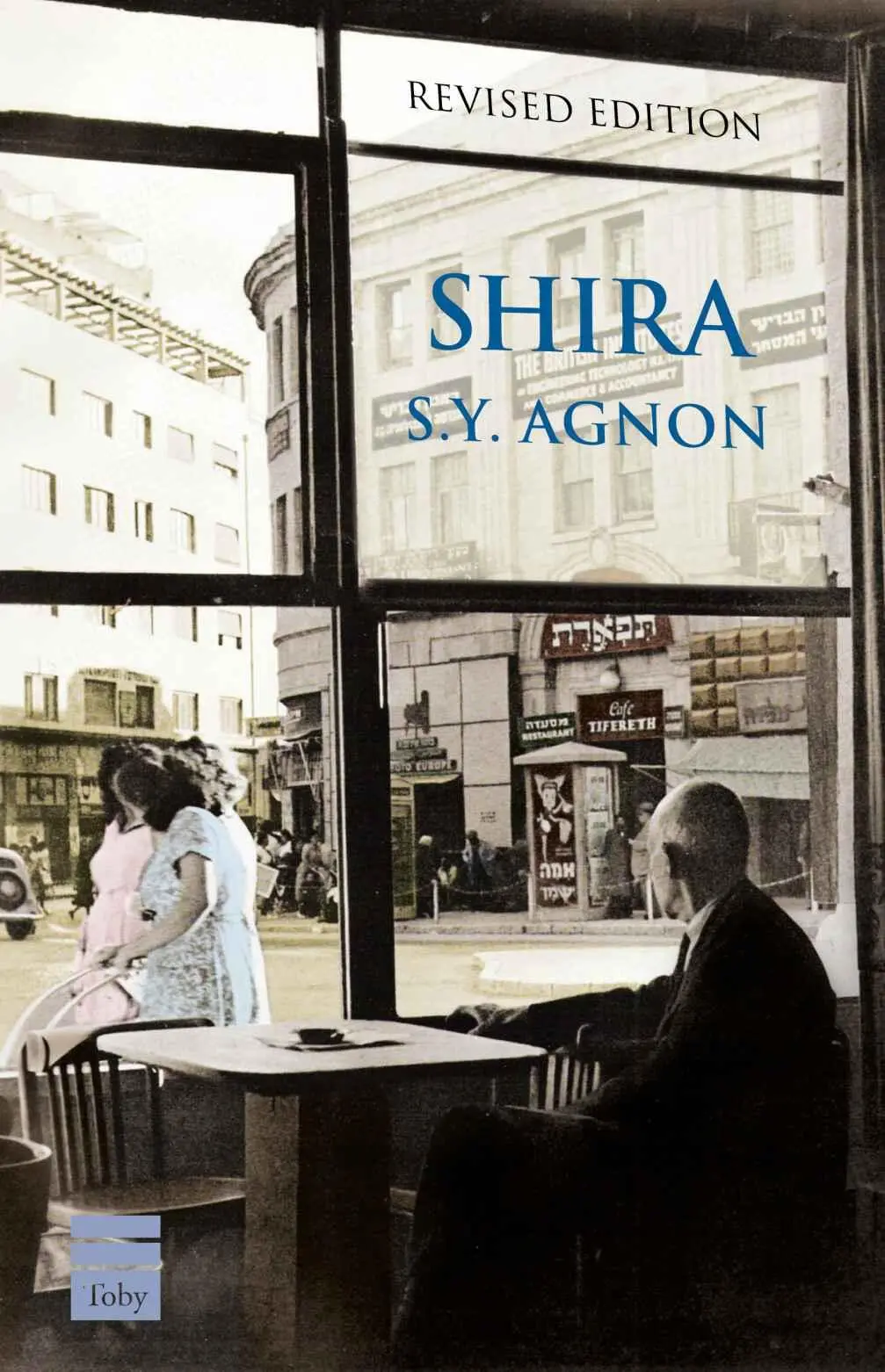
- Название:Shira
- Автор:
- Издательство:Toby Press
- Жанр:
- Год:2014
- ISBN:нет данных
- Рейтинг книги:5 / 5. Голосов: 1
-
Избранное:Добавить в избранное
- Отзывы:
-
Ваша оценка:
Shira: краткое содержание, описание и аннотация
Предлагаем к чтению аннотацию, описание, краткое содержание или предисловие (зависит от того, что написал сам автор книги «Shira»). Если вы не нашли необходимую информацию о книге — напишите в комментариях, мы постараемся отыскать её.
Shira — читать онлайн бесплатно полную книгу (весь текст) целиком
Ниже представлен текст книги, разбитый по страницам. Система сохранения места последней прочитанной страницы, позволяет с удобством читать онлайн бесплатно книгу «Shira», без необходимости каждый раз заново искать на чём Вы остановились. Поставьте закладку, и сможете в любой момент перейти на страницу, на которой закончили чтение.
Интервал:
Закладка:
All of a sudden, Manfred put his hand on her shoulder, lowered his eyes, and said to her, his words measured, his voice a singsong, “Listen and you shall know. Bend an ear to my words. My heart, so full of wisdom, brims with counsel like a mountain stream. Let us fly together on wisdom’s wings to the dwelling place of Bachlam the Great, for, if he finds me worthy, you will become a professoress and I a professor. Now, Mother, I will explicate my poem for you. I want to call on Professor Bachlam. Not that I expect to endear myself to him, but, if I seem friendly, he may keep his mouth shut rather than denigrate me when my promotion is considered.” Henrietta stared at him and swallowed the words she was about to say. Manfred took her hand and said, “I know, Henriett, that you disapprove. Were you to ask me, I would say that I disapprove too. But it’s better to act out of character this once and thereby avoid anger, irritation, gossip, and slander.” Henrietta said, “Anger and irritation I can understand, gossip and slander I can’t understand.” Manfred took her hand and said, “You know I don’t enjoy making light of others or maligning them, nor do I understand the pleasure people take in making fun of friends in their absence. But, when it comes to Bachlam, even I join in. After visiting him, I’ll have good reason to refrain from such talk. Understand, Mother?” Henrietta said, “If you understand, that’s enough.” Manfred said, “Does that mean you approve?” Henrietta said, “Whether or not I approve, I’m not holding you back. If you want to call on Bachlam, I’m not about to say, ‘Don’t go.’“ Manfred said, “Not so, Mother.” Henrietta said, “What do you mean?” Manfred said, “It’s not a proper call unless the husband and wife both come.” Henrietta said, “If it’s essential that I come along, I’ll come along, but don’t ask me to put on the charm and stuff my mouth with polite chatter.” Manfred said, “Calm down, Mother. Who expects you to put on the charm and chatter politely? I’ll be content if you come with me and we sit there together for an hour.” Henrietta shrieked and said, “God in heaven, are you out of your mind, Manfred?” Manfred said, “Then half an hour will do. You’ll see, Mother, it won’t be so awful.” Henrietta said, “Awful or not, I’ve already told you I’m willing to go.” Manfred said, “I thank you, Mother. Now what was I going to ask of you?” Henrietta said, “Don’t ask anything more of me.” Manfred said, “First listen. I may be asking exactly what you would ask.” Henrietta said, “So?” Manfred said, “So, if other guests come and detain us there, they can go to hell. We have to be practical, especially now, when I have to produce something to secure my professorship. Why are you silent, Mother? Am I wrong?” Henrietta said, “You’re right, Fred. You’re right. If only we had always behaved this way.” Manfred said, “But you’re to blame for that. You’re always inviting young women to our house.” “Which young women do you have in mind?” “For example, the one we met in the hotel at the Dead Sea. The one who treated us to tea and cakes.” Henrietta sighed and said, “Poor thing. If only she would come visit, I could repay her.” Manfred said, “Poor thing is right. But there are so many young women in this country; we don’t have time for them all. We invite one today, another tomorrow. Between the two of them, time slips away and my work remains undone. Forgive me, Mother. Forgive me for talking like this. It’s not me talking, it’s the burden of work.” Henrietta said, “Do you mean to tell me, my dear, that, after she took so much trouble on our account and showed so much affection, there’s any question about inviting her? Think how much money she saved us. Six glasses of tea — that comes to twelve grush — and the cakes she served us would cost more than twelve grush.” Manfred said, “Then you invited her as a practical matter?” Henrietta stared at him and said, “Please tell me what you mean by the word practical?” Manfred said, “In any case, you can’t relate to people in terms of what you get from them.” Henrietta said, “Was that my only reason for inviting her? I invited her because I was touched by her problems.” Manfred said, “There are young women in this country whose situation is worse than hers.” Henrietta said, “Since I’m not acquainted with them, I don’t have to worry about them.” Manfred said, “It’s good that you’re not acquainted with life’s adversities. I, for example, know a particular young girl, of good family, an aristocrat, the one who was brought here by her uncle, Professor Neu. Surely you remember her? You even said — “ Henrietta interrupted, “You’re dreaming, Fred. I don’t know any such girl, and I can’t imagine Neu bringing a girl to our house.” Manfred said, “What if I told you she was the girl we talked about for Taglicht? Remember?” Henrietta said, “If I tell you we had no such conversation, will you let me be?” Manfred said, “We didn’t talk about her?”
Henrietta stood like a victim, as if she had been abused, as if words she had never said were being attributed to her, as if these words were vile and despicable. She looked gloomy, and one of her blonde curls, which had begun to turn gray, slipped down to her forehead, trailing across her handsome eyebrows. She barely managed to keep from speaking sharply to her husband. She didn’t know what was bothering her, but it seemed that every word Manfred uttered was designed to provoke her. Her peace of mind was disrupted by this anger, as were her thoughts of work, of all the things she had to do. Suddenly her face became youthful, and she took on the indignant look of a young woman whose words are being distorted. Manfred’s love was aroused by her face and by her rage, but she remained remote because of what he had said, his fragmented conversation, and his plaintive tone, which was particularly grotesque in this light, on this morning, in this land, on this day when a blazing sun ruled the world and she had to stand in the heat of the kitchen preparing food for Shabbat. At that moment Manfred was thinking to himself: Who would imagine that this woman has borne me three daughters, that this woman and I were intimate, physically and spiritually? He studied her clothes and her face, and said, “Mother, why are you so angry? Did I say something to make you angry? If so, was it my intention to make you angry?” Henrietta said, “You didn’t make me angry. I’m not angry.” Manfred said, “Then let’s change the subject. What does Madame Herbst intend to wear when we visit Professor Bachlam?” Henrietta said, “Leave that to me. You can be sure my clothes won’t disgrace you.” Manfred said, “Mother, did anyone say any such thing? Still, I’m annoyed with you for not taking care of yourself. I don’t expect you to paint your face like Mrs. Lemner. But there’s nothing wrong with lending nature a hand. There are women who grow old and don’t merely neglect themselves but go so far as to emphasize their wrinkles.” Henrietta laughed and said, “As for age, I’m old. As for wrinkles, even if I camouflage them, they show.” Manfred said, “Mother, if I tell you I wasn’t referring to you, will you believe me?” Henrietta said, “Why not? Have I ever questioned anything you told me?” Manfred said, “That’s true. I’ve never said anything you saw fit to doubt. I used to think you accepted whatever I said because you didn’t care whether I said one thing or another. Now I know that the faith you have in me has to do with what I say. Let’s get back to our subject. Not to Bachlam, but to women who have wrinkles and ignore them. Do you remember that nurse, the nurse who brought you flowers the day our Sarah was born? If I’m not mistaken, her name is Shura.” Henrietta said, “It’s not Shura, it’s Shira. I’m surprised she’s never come to visit. When I was in the hospital, she took so much trouble with me. She was especially affectionate and promised to visit. What were you going to say about her?” Manfred asked in alarm, “What was I going to say about whom?” Henrietta said, “Fred, you make me laugh. If I say I don’t know anything about a young girl brought here by Professor Neu, you insist I know her and I’ve seen her. If I say you were about to tell me something about the nurse Shira, you look bewildered.” Manfred said, “Actually, I was going to tell you about her. I saw that nurse walking down the street, wearing old clothes, her hair half-white, looking altogether like an old hag. Couldn’t she dye her hair? There are dyes that restore the original color.” Henrietta said, “She’s a natural woman who doesn’t want to dye her hair. You didn’t avoid her, my darling? You asked how she was? She did so much for me, showed such kindness, I wish she would come over, so I could reciprocate.” Manfred said, “If not for me, you would open your house to all the women in the world. Let’s talk about something else. What sort of lunch do you have simmering in your pot?” Henrietta laughed and said, “You want to know everything. Relax, Fred. It’s a meal worthy of Shabbat.” Fred said, “If I hadn’t written my review today, I would have forgotten all about Shabbat. Mother, we ought to make special plans for Shabbat. It’s not right that every day is the same for us.” Henrietta said, “How could we make it special?” Manfred said, “I haven’t studied the question, but we should honor the day. I had an old uncle who was born in Rawicz. All week he smoked cigarettes; in honor of Shabbat, he smoked a cigar.” Henrietta asked her husband, “Are you allowed to smoke cigars on Shabbat?” Manfred laughed and said, “For that matter, are you allowed to smoke cigarettes on Shabbat? My uncle wasn’t observant, but he enjoyed tradition. Before making his fortune as a manufacturer, he taught religion in the local school. He was unique. In the end, though he detested rabbis, he left half his wealth to a rabbinical seminary. I’m glad I remembered him. Now I have something to talk about with Professor Bachlam.” Henrietta said, “You’re an optimist, my friend, if you think Bachlam will give you a chance to talk. Before you can say anything, Bachlam will drown you in a flood of words.” Manfred said, “Then I won’t have to make any effort. I just mean to pay my respects.
Читать дальшеИнтервал:
Закладка:
Похожие книги на «Shira»
Представляем Вашему вниманию похожие книги на «Shira» списком для выбора. Мы отобрали схожую по названию и смыслу литературу в надежде предоставить читателям больше вариантов отыскать новые, интересные, ещё непрочитанные произведения.










Обсуждение, отзывы о книге «Shira» и просто собственные мнения читателей. Оставьте ваши комментарии, напишите, что Вы думаете о произведении, его смысле или главных героях. Укажите что конкретно понравилось, а что нет, и почему Вы так считаете.