S. Agnon - Shira
Здесь есть возможность читать онлайн «S. Agnon - Shira» весь текст электронной книги совершенно бесплатно (целиком полную версию без сокращений). В некоторых случаях можно слушать аудио, скачать через торрент в формате fb2 и присутствует краткое содержание. Год выпуска: 2014, Издательство: Toby Press, Жанр: Современная проза, на английском языке. Описание произведения, (предисловие) а так же отзывы посетителей доступны на портале библиотеки ЛибКат.
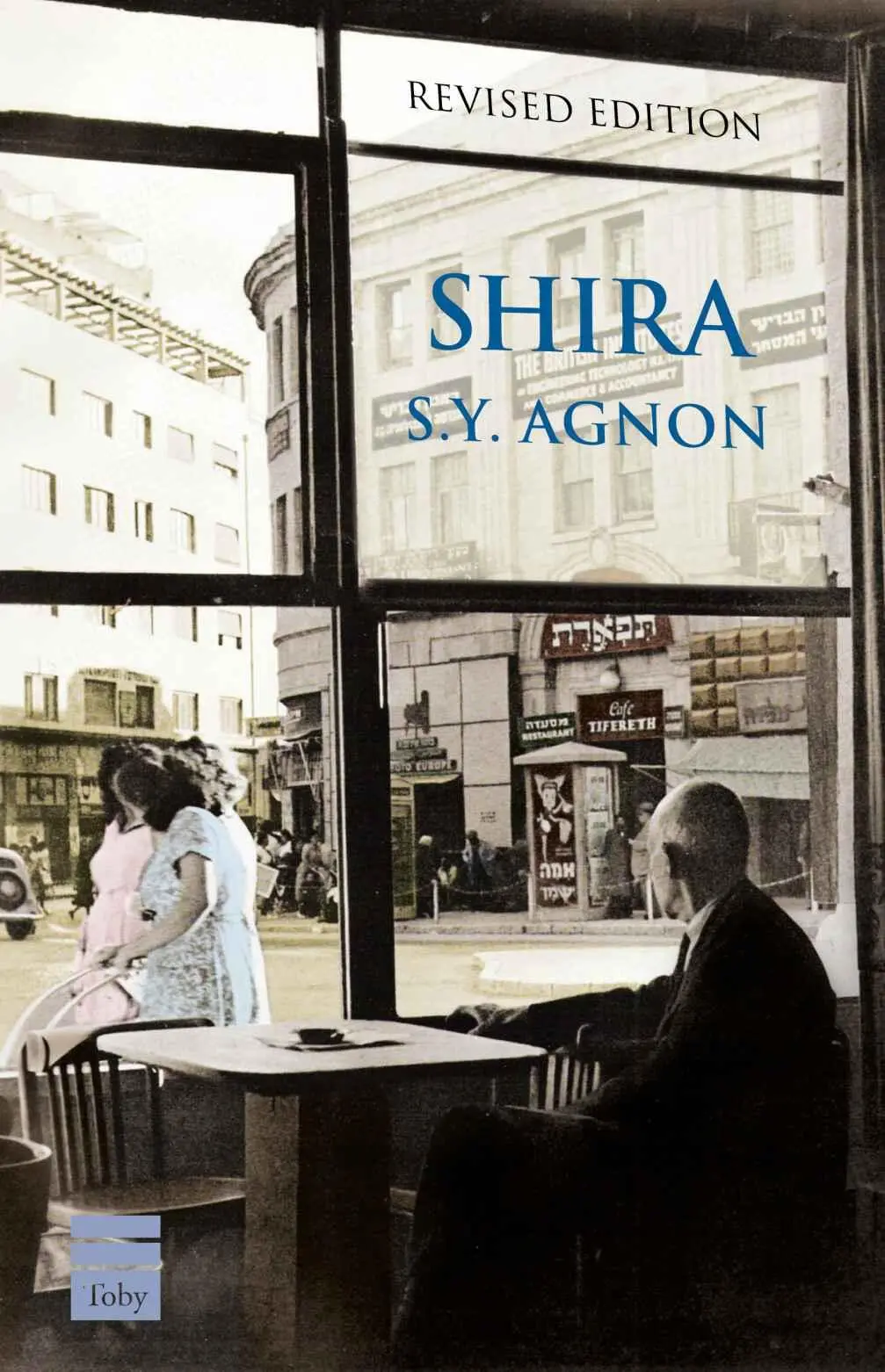
- Название:Shira
- Автор:
- Издательство:Toby Press
- Жанр:
- Год:2014
- ISBN:нет данных
- Рейтинг книги:5 / 5. Голосов: 1
-
Избранное:Добавить в избранное
- Отзывы:
-
Ваша оценка:
Shira: краткое содержание, описание и аннотация
Предлагаем к чтению аннотацию, описание, краткое содержание или предисловие (зависит от того, что написал сам автор книги «Shira»). Если вы не нашли необходимую информацию о книге — напишите в комментариях, мы постараемся отыскать её.
Shira — читать онлайн бесплатно полную книгу (весь текст) целиком
Ниже представлен текст книги, разбитый по страницам. Система сохранения места последней прочитанной страницы, позволяет с удобством читать онлайн бесплатно книгу «Shira», без необходимости каждый раз заново искать на чём Вы остановились. Поставьте закладку, и сможете в любой момент перейти на страницу, на которой закончили чтение.
Интервал:
Закладка:
At this time, Tamara had an opportunity to visit Greece. How? A group of university students was going on a scholarly expedition. When Tamara heard about it, she wanted to travel too, to breathe the air of other places, never having been out of the Land of Israel except once, when she toured the cities of Lebanon, which she considered part of her own country. Tamara wasn’t a student and couldn’t qualify as a scholar. Her knowledge of Greek culture could be inscribed on the tip of a lipstick without making a dent. But she was lucky. One of the women backed out, and there was room for Tamara. The cost was minimal, since both governments offered large discounts for students. Also, Mother Henrietta managed to skimp on household expenses to make it possible for Tamara to go.
Tamara “spoiled” her parents with picture postcards. Whenever she found a post office, she sent a card. To spoil them further, she adorned her cards with rhymes about her companions, about the food, the drink, the person who dipped his cheese in wine, and so on. Henrietta reads them and remarks, astonished, “Tamara is no poet, but look, Fred, the rhymes seem to roll right off her tongue.” Manfred laughs. “Your good taste has vanished, Henriett. You read Stefan George, and you’re enthralled; you read some jingles, and you’re equally enthralled.” Henrietta says, “Still, it’s a miracle to have such control of a language that you can make rhymes.” Manfred says, “Rhymes without meter are lower than the lowest prose. Tamara reminds me of Professor Lemner. When he utters a Greek or Latin proverb, he drowns it in a sneeze so his mistakes won’t be noticed.”
One day a letter came from Tamara with an amusing story. In Athens, a wealthy young man wanted to marry her and had approached the professor in charge of the group to ask for her hand, because Athenian Jews follow patriarchal practices and wouldn’t dare ask a girl for her hand without her guardian’s permission. Henrietta laughed, as if it were a joke. Manfred didn’t laugh. Manfred almost fainted. Until that moment, Manfred had never noticed that Tamara was old enough to marry. Manfred didn’t think his daughter Tamara was different from her peers; but, like most parents, he forgot what it’s like to be young. Herbst was pleased that his daughter was superior in one respect: she wasn’t involved with those who want both sides of the Jordan as a Jewish state. The subject of Tamara has come up again, and again I am ambivalent about telling her story. Since it is too long to write with one drop of ink, I will leave it for now and get back to where I was.
When he was done with the offprints, Herbst felt listless. He barely made it back to his desk. As usual on such days, he did a lot of sitting and a lot of smoking. The tobacco smell neutralized the book smell, and he himself was neutralized by the clouds of smoke. When Henrietta came into the room, she had to clear a trail with her hands. When she went to open a window to let in air, she found it was open, but a pillar of cigarette smoke trapped at the window prevented the air from flowing in or out.
The air suited his thoughts, which were first and foremost about Shira. He himself — which is to say, his work, from which he still considered himself inseparable — came second. Third was Henrietta. His thoughts about Henrietta were roughly these: In any case, Henrietta’s lot is better than that of her relatives in Germany. She doesn’t live in fear — of police, of informers, of her husband being suddenly taken away and returned as ashes in a sealed box. She even has a garden with vegetables and flowers, as well as a chicken coop, all of which Henrietta had dreamed of in Germany when they were preparing to leave. She used to say, “I’ll go to Palestine, find some land there, and plant a garden, like the pioneers.” Someone else occupied Herbst’s thoughts: his eldest daughter, Zahara. But she wasn’t as persistent a presence as Shira, his work, or his wife, though she was perhaps closer to his heart than the others. His thoughts about Zahara were entwined with thoughts about Tamara that remained somewhat amorphous.
The cigarette smoke was occasionally invaded by the fragrance of the garden, the rooster’s cry, a chirping bird, Henrietta’s footsteps, little Sarah, or a student or colleague. Herbst deals with each one of his callers in terms of his nature and business, then sees him out and returns to the box of notecards, saying, “Here’s another note, and yet another.” The notes extended in several directions without coming together. The author of these notes is drawn in several directions too, but he doesn’t pull himself together either.
Herbst was like the poet who lost his baggage on a trip and was asked if his shadow was lost too, a question that inspired him to write a wondrous tale about a lost shadow. So it was with Herbst. Having lost the desire to deal with his notes, he became interested in something that, for him, was like a wondrous tale. That poet was privileged to write Peter Schlemihl , whereas Herbst wasn’t privileged to fulfill his wishes. I will nonetheless relate his wish. I will also relate the chain of events that led him to fix his attention on a subject other than his academic work.
In the realm of thought, this is how Herbst functions. He takes on a subject, considers it from various angles, moves on to another subject, and finally goes back to the beginning. Now that he had lost the desire to deal with his papers, he pondered his book, which was not being written. He thought about the delays and obstacles, about Zahara, who was living in the country, and about Henrietta. In the end, his mind was on himself again. He pictured himself leaving the city, leaving his home, going to a place where he was unknown, with no one to distract him from the work he was about to undertake. For he meant to do something new. He meant to write a play about Antonia, a woman of the court, and Yohanan, a nobleman in the capital. Several days earlier, he had intended to engage in research, as usual, but it had suddenly occurred to him that this was beyond what the researcher could handle, that the material itself yearned to fall into hands other than a researcher’s.
Despite their weight and value, the data peered at him with eyes that were crafty, shrewd, and clever; resistant, hesitant, fearful. If they had had words, they would have said roughly this: What do you gain by making an article out of us? Another article and yet another. You’ve already produced enough articles. He watched, listened, understood. Suddenly his heart felt pinched with painful sweetness, the kind a poet feels when he comes upon something that asks to be put in a poem. Dr. Manfred Herbst was resolved to write a play about the woman of the court and Yohanan the nobleman. Henceforth, nothing was as dear to Dr. Herbst as this play. If not for Shira, the project would have dominated his heart, and he would have written the play.
Thus far, his work had been nourished by what others provided, data from documents and the like. Now he would be nourished by his own spirit and creative imagination. Needless to say, he would no longer have to refer to books or copy notes to store in a box. He would no longer need to amass references and would have no use for scholarly apparatus. He barely managed to repress his sense of superiority, for he already viewed his academic friends as exploiters who eat fruit planted by others.
Herbst envisioned himself sitting and writing the play. Scene after scene unfolds, and the leading characters — Antonia, a woman of the court, and Yohanan, a nobleman — are engaged in conversation, which he overhears and records on paper.
It took a while for Herbst to be persuaded to write the play. I’m not a playwright, he thought. That’s not my profession, he told himself. At the same time, he was aching to try his hand at it. Aware that most people, unless they are poets, fail in this sort of endeavor — that, when they try to tell a love story, they become sentimental — Herbst was discouraged. But he was determined to write the play. And what would become of his notes? They would help him make the play authentic. So far, all he had was the story as conveyed by the writers of the time, but he was counting on precedent. Anyone who devotes himself totally to a task will not come away empty-handed.
Читать дальшеИнтервал:
Закладка:
Похожие книги на «Shira»
Представляем Вашему вниманию похожие книги на «Shira» списком для выбора. Мы отобрали схожую по названию и смыслу литературу в надежде предоставить читателям больше вариантов отыскать новые, интересные, ещё непрочитанные произведения.






Обсуждение, отзывы о книге «Shira» и просто собственные мнения читателей. Оставьте ваши комментарии, напишите, что Вы думаете о произведении, его смысле или главных героях. Укажите что конкретно понравилось, а что нет, и почему Вы так считаете.