S. Agnon - Shira
Здесь есть возможность читать онлайн «S. Agnon - Shira» весь текст электронной книги совершенно бесплатно (целиком полную версию без сокращений). В некоторых случаях можно слушать аудио, скачать через торрент в формате fb2 и присутствует краткое содержание. Год выпуска: 2014, Издательство: Toby Press, Жанр: Современная проза, на английском языке. Описание произведения, (предисловие) а так же отзывы посетителей доступны на портале библиотеки ЛибКат.
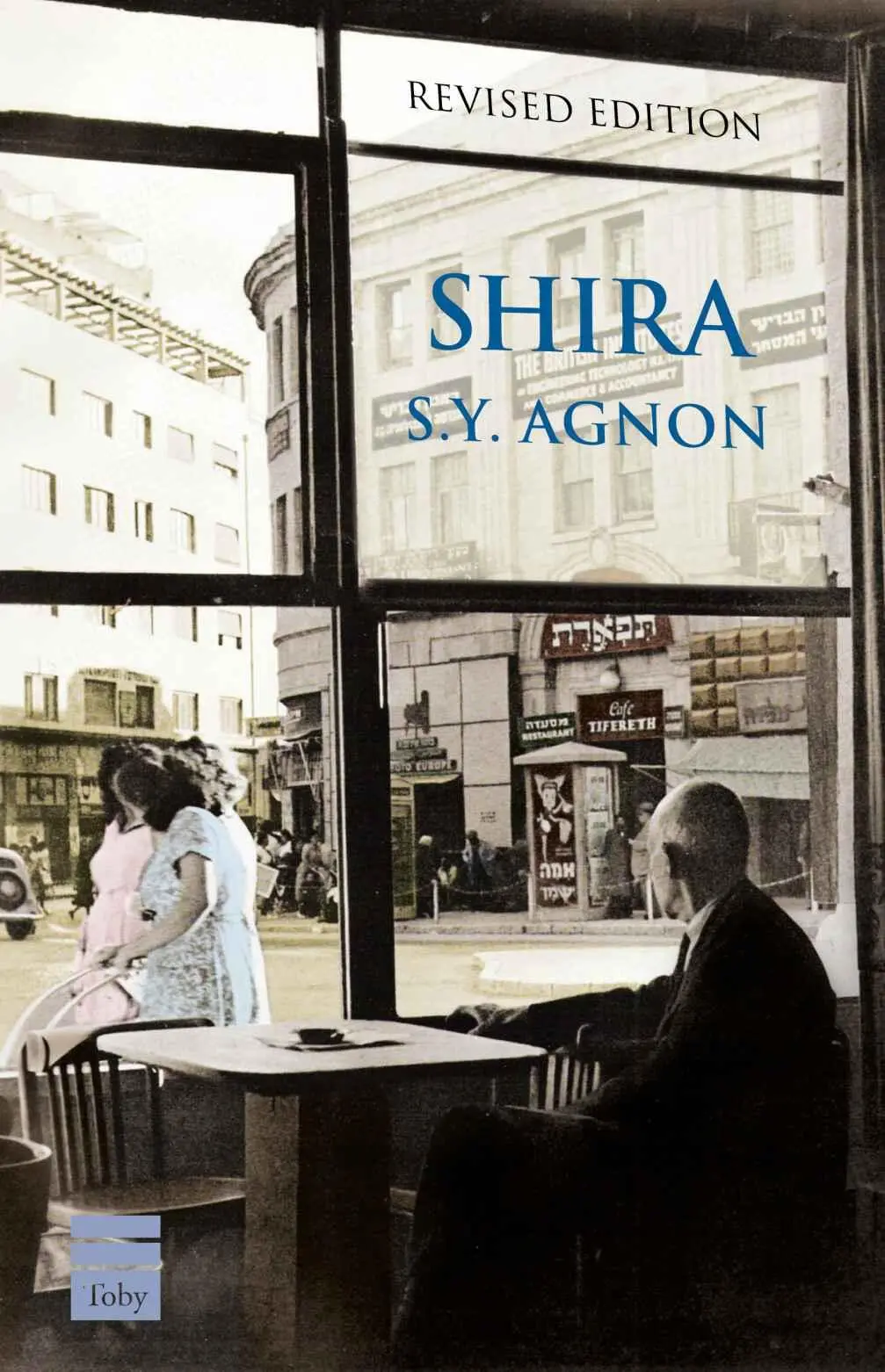
- Название:Shira
- Автор:
- Издательство:Toby Press
- Жанр:
- Год:2014
- ISBN:нет данных
- Рейтинг книги:5 / 5. Голосов: 1
-
Избранное:Добавить в избранное
- Отзывы:
-
Ваша оценка:
Shira: краткое содержание, описание и аннотация
Предлагаем к чтению аннотацию, описание, краткое содержание или предисловие (зависит от того, что написал сам автор книги «Shira»). Если вы не нашли необходимую информацию о книге — напишите в комментариях, мы постараемся отыскать её.
Shira — читать онлайн бесплатно полную книгу (весь текст) целиком
Ниже представлен текст книги, разбитый по страницам. Система сохранения места последней прочитанной страницы, позволяет с удобством читать онлайн бесплатно книгу «Shira», без необходимости каждый раз заново искать на чём Вы остановились. Поставьте закладку, и сможете в любой момент перейти на страницу, на которой закончили чтение.
Интервал:
Закладка:
Manfred Herbst did not behave in any of the aforementioned ways. One could say that he and his work were clean. So he ought to have been pleased with himself, but he was not. When he confronted his box of notations, his piles of cards, his collection of notebooks, bundles of papers and pads, and heaps of writings, he would sometimes pound the table and cry out, “May flames leap up and consume you.” But, as long as they existed, it was his duty to rework, amend, and update them. He went back to his work, continuing to do today what he did yesterday and all the other days. He worked without joy, for there is no joy in amassing papers, even if the papers are full of fine quotations. When Herbst first thought of writing his book, he was inspired by an idea. As he began to support it with facts, the facts took over, and the idea dwindled. Finally, his box was full of facts but short on substance.
Herbst left his desk and notes, lit a cigarette, and went to the west window, which was curtained in a colorful woven fabric. Under it was a bookcase that used to be filled with fine china from the era of Frederick iI, made in the royal factory. The pieces were passed on to Henrietta by her parents and grandparents, for the king, known as Frederick the Great, required every Jew in his kingdom who wished to marry to buy dishes produced in his factory. In time, these dishes were broken since the local help in the Land of Israel was unaccustomed to handling such fragile objects. What wasn’t broken, Henrietta sold to buy reproductions for Manfred or traded for books, and what they neither sold nor traded, they gave as a gift to the Bezalel Museum. When there was no china left on the shelves, Henrietta began putting volumes of poetry, stories, and novels there. Occasionally, when she was done with her work, she would come in and take a book to read. Manfred, too, when he was despondent and wanted to regain his composure, would reach for a book.
These books lie there, small volumes that don’t attract attention or catch the eye because of their form or content. They were written by individuals who, for the most part, never saw the inside of a university and never studied with the scholars of their day. They wrote in the recesses of their rooms, tormented by hunger and other trials. Their wisdom was gleaned in the marketplace and on the streets, from every man, woman, and child; from animals, beasts and birds; from dusty roads and chilly winds; from the sun, the moon, and the stars; from trees in the wood and streaming river waters. These are books about people of no consequence, yet, if one examines the plots, one finds insight as well as basic wisdom of the sort one has to struggle to extract from other sources, heavy tomes written in profound language and complex terminology.
Not all the books the Herbsts brought from Germany were still in the bookcase. Some had been borrowed and never returned. Zahara took some of them with her to the kvutza . Though the settlers in Ahinoam have truly turned their backs on Germany, Austria, or Czechoslovakia to make a new life in the Land of Israel, when it comes to books, they behave as they did in their birthplace. What they used to read there, they read here. Even Tamara, who can barely read German, began taking books off these shelves. When she had finished her courses and received a teachers’ certificate, she discarded all the books about yeshiva students, old men with earlocks, beggars, and eccentrics of all kinds — all those types celebrated by Hebrew literature — and turned to books in other languages that told about real people, the kind whose thoughts and actions a civilized person is interested in. After reading everything that had been translated into Hebrew, she began reading English and even German. It’s an odd thing: visitors who come from Germany say that, since the Nazi rise to power, they have begun to value a single line of Hebrew more than all of Goethe and Kant; yet this girl, conceived, born, and educated in the Land of Israel, whose friends were all born there, who speaks Hebrew fluently — she replaces Hebrew books with gentile books and, what is more, she calls the Hebrew books “drivel.” When Herbst’s supply of poetry, novels, and stories began to dwindle, he filled the space with biographies. Everyone should study the lives of famous men, as a source of strength and an antidote to despair, evidence that even the finest human beings were human and they too were subject to the wheel of fortune and often discouraged — although this is not stated explicitly, either because no one reveals everything or because biographers, wishing to glorify the lives of exemplary people, suppress whatever is not praiseworthy about them. Still, whoever can read between the lines is rewarded. Now that Herbst’s task seemed lighter to him, he reached into the bookcase and took out a book.
As soon as he began reading, he forgot why he was reading and found himself reading for pleasure. He read on, smiling every so often and shaking his head at the book, as if to say: How innocent this author is! Doesn’t he know that even the greatest human being sometimes hits bottom and is flung from soaring heights to earth’s deepest abyss? I am not a great man, nor do I have the arrogance of the great; I am, furthermore, grateful to those powers that didn’t endow me with a sense of my own greatness. But I would guess that even the great men of the world were not always so wise, that their actions were not always a credit to them, that they were careful to conceal unbecoming actions and not to make them public except, perhaps, when their very faults were praiseworthy.
Very slowly, his rational processes were suspended, and his critical faculties were replaced by a sense of pleasure. He read with utter pleasure and with a yearning that added a physical dimension to his sensual pleasure. His soul was transported from one realm to another, and he began to feel as if he were the character he was reading about. This crossing of souls and spirits was accompanied by envy, the envy scholars indulge in. Tears filled his eyes as he considered his empty, wasted life. But his envy was fruitless, his tears futile, for neither led to action. His notebooks, lists, notations, and manuscript were like an abandoned egg that would never hatch. Herbst put down the biography of some great man and returned to his box of notes, putting one in, taking one out. If Henrietta were watching, she would assume he was busy with his book. Actually, only his hands were busy, like a card player who keeps shuffling the deck even when he is alone, out of sheer habit.
Chapter two
As it happened Herbst was at his desk, occupied with his notes, not thinking about anything. He looked at the notes and discovered that the material seemed to fit together to form a discrete chapter. What was not the case with Homer’s poems — which, as one scholar has noted, are not mere letters arranged at random — was the case with the book about burial customs of the poor in Byzantium. All of a sudden, at random and inadvertently, an entire chapter had put itself together. Herbst had worked on it for many years; suddenly, it took care of itself. What needs to be done now? It needs to be edited, erasing what should be erased, adding what should be added, correcting the language, explaining abbreviations and the like, until the chapter stands on its own — since, to a great extent, it is a subject in itself.
How is it a subject in itself? In their legal code, a husband cannot divorce his wife, nor can a woman divorce her husband, since the Torah declares, “They became one flesh.” Their lawmakers took this to mean that what the Creator has combined into one flesh, no man may put asunder, adding that in some cases a man is allowed to divorce his wife, but a woman may never divorce her husband. The Byzantine emperor, Leo the Isaurian, however, introduced four situations in which a woman could rid herself of her husband; should he get leprosy, for example, the woman could rid herself of him. This ruling, along with related material, formed a chapter in itself for Manfred Herbst. As he looked it over, he decided to copy it out; as he copied it out, he corrected and rewrote. Once it was edited, written, and rewritten, he sent it abroad to the editor of the journal of research in Byzantine antiquities in which all the great Byzantine scholars are published. Believe it or not, although anti-Semitism was intense, and most gentile scholars lent support to our enemies, they welcomed this article by Dr. Herbst of the Hebrew University in Jerusalem. Scholarship has its own dominion, which villainous hands fail to rock.
Читать дальшеИнтервал:
Закладка:
Похожие книги на «Shira»
Представляем Вашему вниманию похожие книги на «Shira» списком для выбора. Мы отобрали схожую по названию и смыслу литературу в надежде предоставить читателям больше вариантов отыскать новые, интересные, ещё непрочитанные произведения.







Обсуждение, отзывы о книге «Shira» и просто собственные мнения читателей. Оставьте ваши комментарии, напишите, что Вы думаете о произведении, его смысле или главных героях. Укажите что конкретно понравилось, а что нет, и почему Вы так считаете.