S. Agnon - Shira
Здесь есть возможность читать онлайн «S. Agnon - Shira» весь текст электронной книги совершенно бесплатно (целиком полную версию без сокращений). В некоторых случаях можно слушать аудио, скачать через торрент в формате fb2 и присутствует краткое содержание. Год выпуска: 2014, Издательство: Toby Press, Жанр: Современная проза, на английском языке. Описание произведения, (предисловие) а так же отзывы посетителей доступны на портале библиотеки ЛибКат.
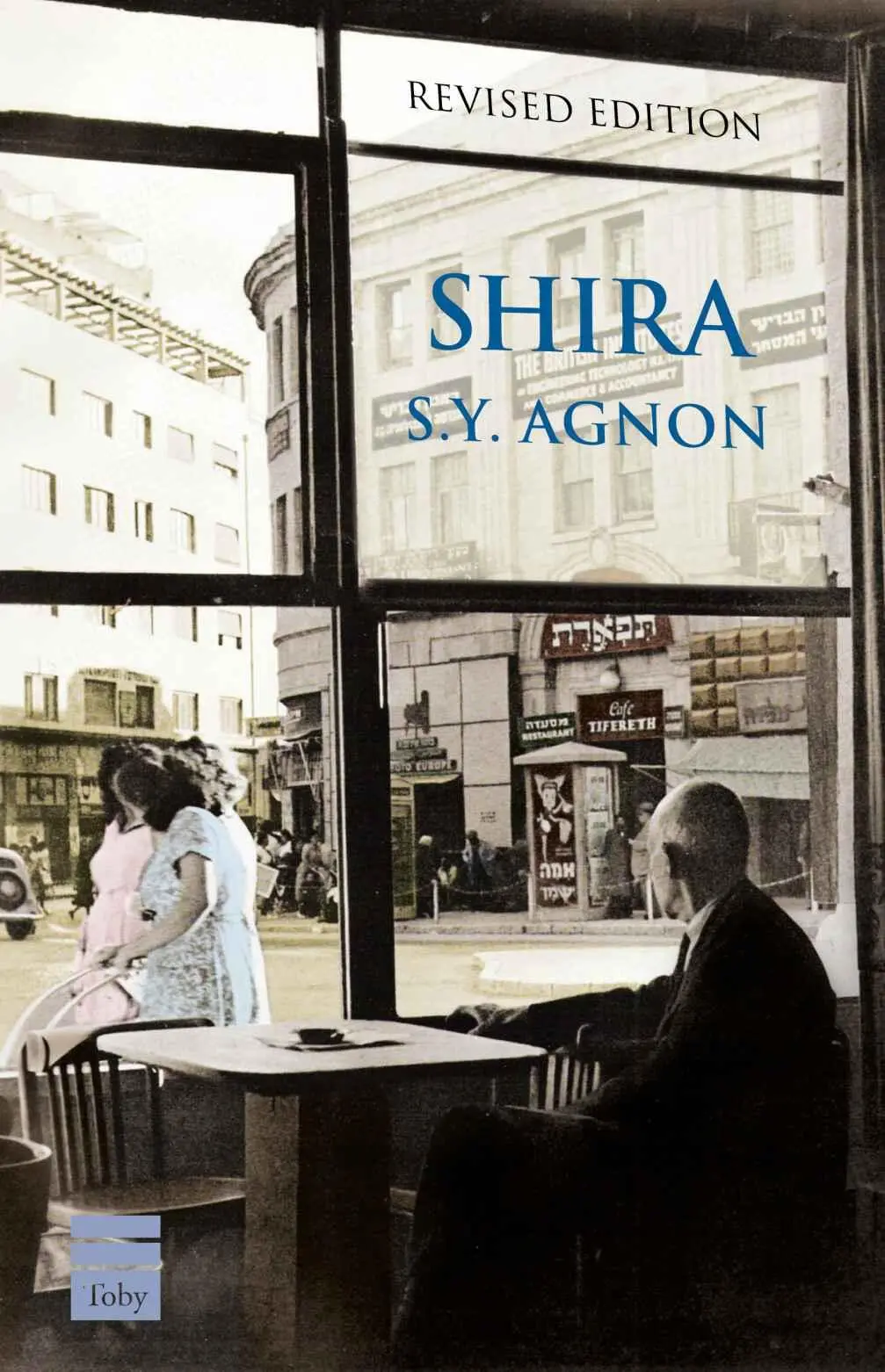
- Название:Shira
- Автор:
- Издательство:Toby Press
- Жанр:
- Год:2014
- ISBN:нет данных
- Рейтинг книги:5 / 5. Голосов: 1
-
Избранное:Добавить в избранное
- Отзывы:
-
Ваша оценка:
Shira: краткое содержание, описание и аннотация
Предлагаем к чтению аннотацию, описание, краткое содержание или предисловие (зависит от того, что написал сам автор книги «Shira»). Если вы не нашли необходимую информацию о книге — напишите в комментариях, мы постараемся отыскать её.
Shira — читать онлайн бесплатно полную книгу (весь текст) целиком
Ниже представлен текст книги, разбитый по страницам. Система сохранения места последней прочитанной страницы, позволяет с удобством читать онлайн бесплатно книгу «Shira», без необходимости каждый раз заново искать на чём Вы остановились. Поставьте закладку, и сможете в любой момент перейти на страницу, на которой закончили чтение.
Интервал:
Закладка:
By now, the instruments had fallen silent and the wedding guests were beginning to leave the two hotels. Some of them came to the bus stop, intending to ride home. They found a driver, but not a bus. Having celebrated, danced, and feasted, they were tired. They could barely stand on their feet. And the bus was not there. They began quarreling with the driver. He said to them, “What do you want — should I carry you? You heard what happened to the bus. There’s a hole in the tire, and it won’t budge. If you’re not too lazy, you can carry it on your shoulders.” They said, “Then what should we do? It’s dangerous to walk, and we can’t stand outside — if a curfew is announced, the police will arrest us for violating it.” After some further argument, the driver went to call the office and ask that another bus be sent. He couldn’t find a public telephone that was in working order, so he took the risk of going into one of those dens of iniquity frequented by English soldiers, who would probably be drunk at this hour and up to no good. After a while, the driver returned and informed those waiting for the bus that the office had promised to send a replacement; unless it suffered a fate similar to that of its predecessor, it would almost certainly arrive soon. Had the bus come immediately, Herbst would have taken it and gone home. But, since there was a delay, he grew impatient and went to Shira’s.
The blinds were drawn, and a faint light filtered through. Most likely Shira was already in bed, reading a book or, perhaps, that vile magazine. If he didn’t hurry, she might turn out the light and close her eyes, in which case he wouldn’t have the heart to deprive her of sleep. She had once told him that, when she falls asleep, as soon as her eyes are closed she is asleep for the night. But, if she is awakened, she can’t fall back to sleep.
He bent down and picked up a handful of dirt to throw at the window. He decided not to throw it. Were he to throw it, she would open the window and ask who was there. He would have to say his name, which the passersby would hear and note. He discarded the dirt, then brushed his hand, entered the yard, approached her door, and knocked. While he was waiting, he realized she wasn’t alone.
Rage, fury, envy burned in his heart like fire. None of the vengeful acts he was considering diminished the intensity of that fire, vengeful acts he had heard of or read about but not believed possible. None of those acts could satisfy his impulses toward that woman who was in bed, the devil knew with whom, while he was on the other side of the door, his heart about to break. He held on to himself by his coat, by his buttons, grinding his teeth. Would she or would she not open the door? His heart was in turmoil. He gasped, “No, she won’t.”
The door opened and Shira stood before him, surprised that he had come back after having been there the night before. He hadn’t shown his face for a month and a half, and now here he was, night after night. Though she wasn’t exactly unfriendly, dismay was apparent in every aspect of her being. She offered her hand, greeted him, and said, “You frightened us.” As he held on to her hand, she withdrew it, tossed her head back toward the bed, and said, “Let me introduce you.”
A woman got up from Shira’s bed, greeted him, and said, “Temima Kutchinsky is the name.” Shira gestured toward him and said, “This is Professor Herbst.” She then gestured toward Temima Kutchinsky and said, “She was my shipmate, and do you know why she is in Jerusalem? She’s here for a great event.” Herbst said, “I imagine she’s here for the workshops.“ Shira said, “That’s right, but how do you know that?” Temima Kutchinsky said, “I, too, am wondering how Professor Herbst knows I’ve come for the workshops.” Herbst said, “It’s enough that I know. As for calling me Professor, I must inform you that I am not a professor.” Shira said, “If you’re not a professor now, you soon will be.” Temima asked Herbst, “Are you lecturing at the workshops?” Herbst said, “I wasn’t invited, but my daughter is attending them.” Temima cried out in amazement, “A grown daughter? I assumed you were a bachelor.” Shira laughed and said, “You assume he’s a bachelor because he calls on a single woman?” Temima Kutchinsky said, “Is that a sin?” Herbst said, “If you are well received, then it’s no sin.” Shira said, “Nonsense, didn’t we receive you warmly?” Herbst said, “We shall see. Isn’t that so, Lady Kutchinsky?” Temima Kutchinsky said, “I’m no lady.” Herbst said, “Any woman can be called a lady.” Temima Kutchinsky said, “I see you like to be correct.” Shira said, “Not merely correct, but most highly correct. A German from the land of the Germans.” Herbst said, “I see you are ready for bed, and I am keeping you from your sleep.” Temima said, “The night is young. Besides, I don’t usually get into bed until past midnight. I was in bed only because Shira insisted. I’m getting right up to help her make tea.” Herbst said, “If you’re thinking of me, I’m not thirsty.” Temima said, “Tea makes people sociable, especially at night. A musician once passed through our town singing, ‘Tea is a social brew / And a cure for any bruise.’“ Shira said, “You should know, Herbst, that Temima is a nurse, which is why she mentioned that chant. If you want to hear the whole thing, this is how it goes: ‘A fish on your line / And tea the social brew / Make every wound fine / And cure every bruise.’ Is that right, Temima?” Temima said, “Honestly, I heard him sing it, and you heard it from me. In the end, I only remember half of it, and you remember it all. Now I’ll get up and make tea.” Shira scolded her, “Stay where you are, Temima. I can boil water without any help.” Temima said, “I’m afraid Dr. Herbst won’t enjoy sitting with me.” Shira said, “Nonsense. What’s new in the world?” Herbst said, “I didn’t see the evening paper.” Shira said, “I wasn’t referring to the news in the paper. How is the baby? You should know, Temima, that our friendship is the same age as his little one.”
Shira went to boil water, and Herbst was left with Temima Kutchinsky, thinking: If I had asked Lisbet, would she have given up the Mozart, and would she and I now be walking among the rocks? He turned to Temima. “What did Her Ladyship say?” Temima answered, “That Germans remain German. I’ve already said I’m no lady.” Herbst said, “Forgive me.” Temima said, “Since there’s been no transgression, there’s nothing to forgive. So, your daughter has come for the workshops. Then I’ll see her tomorrow.”
His soul was alarmed, but he recovered quickly. Zahara had already left Jerusalem and was not known by her family name. There were two factors in his favor: first, that they wouldn’t run into each other at the lectures, and, second, that he hadn’t mentioned Zahara’s name. His apprehensions were groundless.
Shira returned with a kettle and glasses. Temina jumped out of bed, fully dressed, leaped toward her bag, and pulled out a yellow tin filled with baked goods, saying, “They’re from our village, homemade with our own flour and butter. Dr. Herbst, try some and tell me if they’re not better than all the cakes and pastries in town. I know that scholars don’t tend to have opinions on food, drink, and the like. Still, you ought to know the difference between our baked goods and what one gets in the city. Here, one dough takes many forms. While we don’t bother about the form, we fuss over the contents, and each cake has a different flavor.
Herbst took one of the cakes, thinking: If I hadn’t given Lisbet Neu the chocolate, I could have added it to this feast. He reached for a glass of tea. Temima said, “So your daughter came for the workshops.” Herbst nodded, thinking to himself: What will Zahara say when she hears where this nurse met her father? Shira peered at him and said, “You look as if you’re pondering the seven wonders of the world.” Temima said, “We can list more than seven wonders. What does the doctor think about our cakes? They say no one can cook or bake on the kvutza , which is outright slander. Try another. No, take this kind. It’s even better than the first.” Herbst said, “It’s time for me to go.” Shira said, “Even before you came, it was time for you to go, but since you are here, sit down.” Temima said, “So, my friends, you live in Jerusalem. I admit that our Jerusalem is a truly glorious city. The view from Mount Scopus can’t be matched anywhere in the valley. Altogether, I must say that…But what can I say, when you already know?”
Читать дальшеИнтервал:
Закладка:
Похожие книги на «Shira»
Представляем Вашему вниманию похожие книги на «Shira» списком для выбора. Мы отобрали схожую по названию и смыслу литературу в надежде предоставить читателям больше вариантов отыскать новые, интересные, ещё непрочитанные произведения.









Обсуждение, отзывы о книге «Shira» и просто собственные мнения читателей. Оставьте ваши комментарии, напишите, что Вы думаете о произведении, его смысле или главных героях. Укажите что конкретно понравилось, а что нет, и почему Вы так считаете.