S. Agnon - Shira
Здесь есть возможность читать онлайн «S. Agnon - Shira» весь текст электронной книги совершенно бесплатно (целиком полную версию без сокращений). В некоторых случаях можно слушать аудио, скачать через торрент в формате fb2 и присутствует краткое содержание. Год выпуска: 2014, Издательство: Toby Press, Жанр: Современная проза, на английском языке. Описание произведения, (предисловие) а так же отзывы посетителей доступны на портале библиотеки ЛибКат.
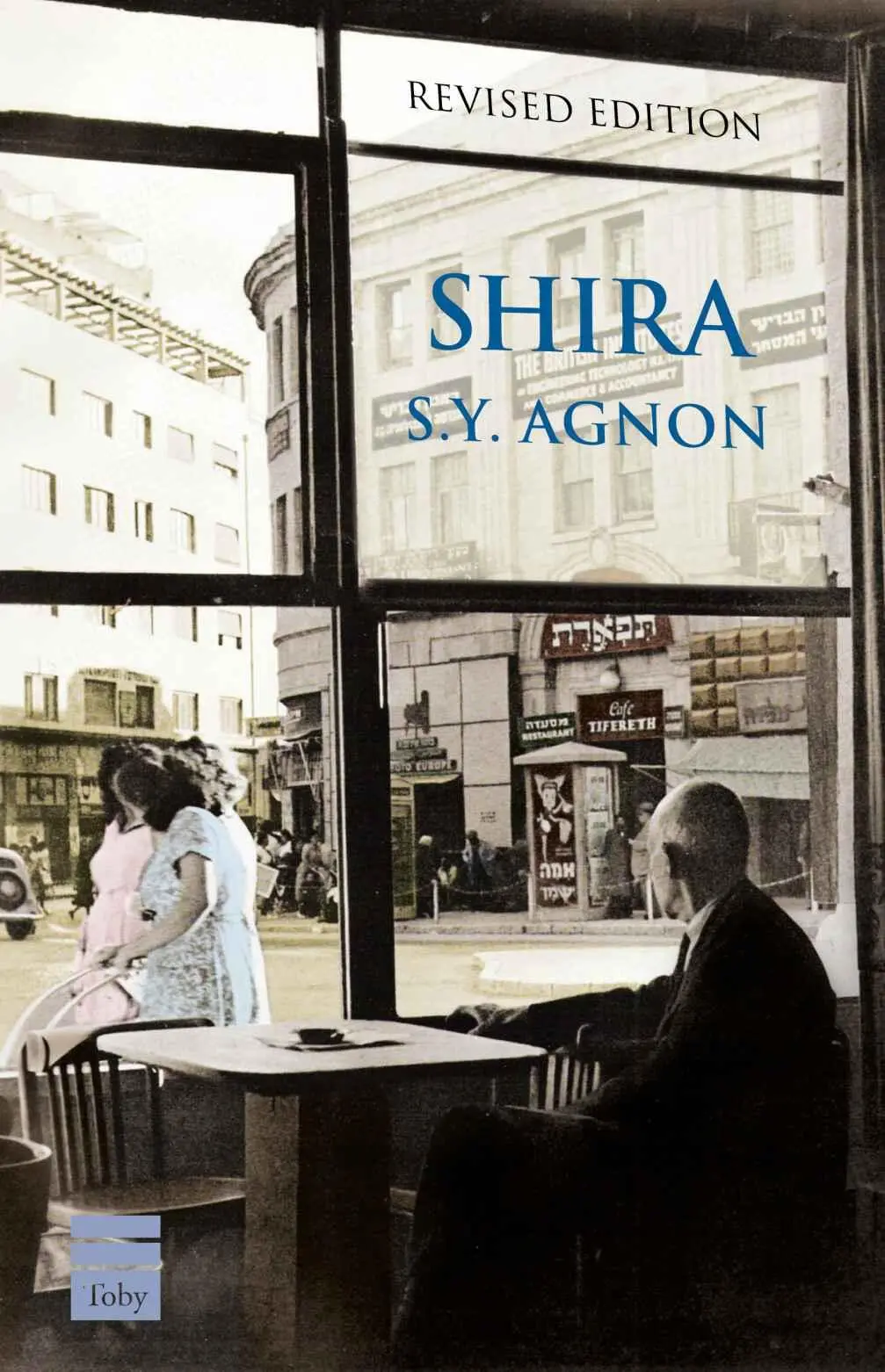
- Название:Shira
- Автор:
- Издательство:Toby Press
- Жанр:
- Год:2014
- ISBN:нет данных
- Рейтинг книги:5 / 5. Голосов: 1
-
Избранное:Добавить в избранное
- Отзывы:
-
Ваша оценка:
Shira: краткое содержание, описание и аннотация
Предлагаем к чтению аннотацию, описание, краткое содержание или предисловие (зависит от того, что написал сам автор книги «Shira»). Если вы не нашли необходимую информацию о книге — напишите в комментариях, мы постараемся отыскать её.
Shira — читать онлайн бесплатно полную книгу (весь текст) целиком
Ниже представлен текст книги, разбитый по страницам. Система сохранения места последней прочитанной страницы, позволяет с удобством читать онлайн бесплатно книгу «Shira», без необходимости каждый раз заново искать на чём Вы остановились. Поставьте закладку, и сможете в любой момент перейти на страницу, на которой закончили чтение.
Интервал:
Закладка:
After having his shoes shined, Herbst went to a candy shop and bought some bittersweet chocolate. He didn’t know what type of chocolate Shira preferred, but the package was attractive and the price was high, so he chose that one.
Herbst left the store pleased with himself, since he knew where he was going and he had succeeded in buying chocolate. Sometimes, when he had in mind to buy something for Shira, he restrained himself, out of fear of being seen. He imagined everyone was watching him and knew just what he was up to. Now, having entered and emerged, unscathed, he directed his feet toward the streets that lead to Shira’s.
He met Lisbet Neu. He greeted her, and she returned his greeting, saying, “You still remember me?” He offered her the chocolate. “This is evidence that I was thinking of you. Look and you’ll see. I wrote your telephone number on the wrapper. I was about to call you.” Lisbet looked at the wrapper and saw no sign of a number. Herbst said, “Oh my goodness, the salesperson switched packages. If you have room in your purse, please take it.” Lisbet said, “To waste one’s money on such things!” Herbst said, “I bought it for my daughter, but she left.” Lisbet said, “Then keep it until she comes back.” Herbst said, “When she comes, I’ll buy her another. Meanwhile, my dear, eat the chocolate and remember me.” Lisbet said, “I remember you even without it.” He looked at her fondly, wondering why he didn’t feel as he used to feel and respond as he used to respond. Whenever he saw her, he used to be refreshed by a breath of innocence. Now his soul was unmoved and his spirits were low.
Has there been a change in me or in her? Herbst asked himself. It’s not that, but…I’ll watch and see.
The street was buzzing. The pastimes that occupied the passersby were passed back to them by the street. But he withdrew from the tumult into which he had been propelled and eyed Lisbet obliquely to determine if the change was in her. His eyes lighted on the bag slung over her shoulder with the chocolate in it. Your present was taken away, Shira, and given to Lisbet Neu, Herbst remarked to himself.
Lisbet Neu interrupted his conversation with himself and said, “If you would like, Dr. Herbst, you could walk a little way with me. Only a little way. I know you are busy and have no time to waste.” Herbst said, “I’d be glad to walk all the way home with you.” Lisbet Neu said, “That’s more than I asked, and not what I intended.” Herbst said, “Intentions don’t preclude action.” Lisbet Neu looked up at him, struggling to fathom his words.
When they had walked a few paces, his mouth was empty, and he could find nothing to say. He thought: Will we walk in silence, like those couples who are weary of each other? He lit a cigarette and said, “If the lady agrees, we can stop for coffee.” Lisbet Neu said, “With your permission, I’d rather walk. I’ve been sitting in the office all day, and I don’t get a chance to stretch my legs. That’s why you found me on the street. If it’s all right with you, Dr. Herbst, let’s walk a bit.” Herbst said, “Let’s walk.”
They left Ben Yehuda Street and were on a road that had no name yet but is now called Shammai Street. They were suddenly encircled by the quiet that sweetens the summer nights of Jerusalem in those few remaining spots that have not been ruined by this perplexed generation. When they reached such a place, Lisbet Neu began telling about herself, things that astonished Herbst. Lisbet Neu said, “All my energy is wasted selling furniture and dealing with customers.” After talking about furniture and customers, she began to discuss how girls were educated, the fact that they were not taught a trade. What were they taught? To hope for husbands. And husbands didn’t appear, since most husbands were looking for a dowry and most girls didn’t have a dowry. Even back in Germany, where life was orderly and conventional, it was hard to find matches for daughters. Here in the Land of Israel, where there was so little order and few conventions, these young women hoped in vain. From these young women and their plight, she turned to tales of travel in Africa which she had been reading. One can hardly say there is a connection between the education of women and tales of Africa. Still, she saw some connections; but Herbst wasn’t listening.
They were already beyond the quiet streets, entering an area filled with houses, stores, pedestrians. When Herbst first came to Jerusalem, this entire territory was desolate. Now it was bustling, mostly with Jews, but with a few Arabs and a few Englishmen as well — Jews because they lived here; Arabs because, if the Jews thought that building houses and opening stores gave them the land, that’s not how it was going to be. For the time being, they were simply here; but, in time, they would have a chance to deal with the Jews. And why were the English here? They were here to bestow peace on the land. But, from the day they arrived, they have promoted hatred, envy, and contention, which will end in murder and bloodshed.
Herbst and Lisbet Neu didn’t talk about the usual subjects — Lisbet Neu, because she wanted to speak of her own affairs; Herbst, because he wanted to hear what she had to say. But Lisbet didn’t get around to her own concerns, because whatever she thought of seemed too trivial to say to this learned man, whose name she first heard from her uncle when he went to visit him. Whether or not her concerns were important, Herbst enjoyed her verbal contortions.
By now they had reached the little neighborhood adjacent to Orhot Hayim, where Lisbet Neu and her mother lived. This neighborhood, too, was sometimes called Orhot Hayim, after its elder sister, which was built first, and sometimes it was called by another name in honor of one of its settlers; there was still no consensus as to its name. How long did Lisbet Neu walk with Herbst? Whether she walked a lot or a little, she was tired, because she had been slaving all day in the store or the office, because she hadn’t had a hot meal all day, and because she had walked so far. For all these reasons, she was tired. And, for this reason, she linked arms with Herbst, which she had never done before with a man.
As sometimes happens, a man happened to pass. He stared at her. Perhaps he knew her, perhaps he didn’t. But he was surprised, since it was not the custom in Orhot Hayim for a woman to link arms with a man. Because I don’t intend to dwell on him — in fact, I doubt that I will refer to him again — I will ignore him and get back to Herbst and Lisbet Neu. Herbst was also surprised, not for the same reason, but for his own reasons, being so aware of her innocence.
Herbst and Lisbet were walking as one in Orhot Hayim, the neighborhood in which Lisbet Neu and her mother found an apartment when they came to the country. They had gone to Jerusalem the day they arrived, since, of all the places in the Land of Israel, Jerusalem was the one place they knew — not only through the prayerbook, but through fundraising letters sent out by charitable institutions in Jerusalem to everyone everywhere. In those days, when the Jewish community of Germany was tranquil and Lisbet’s father, Mr. Neu, was alive, an emissary arrived from the Land of Israel. He had been sent by an organization with plans to set up a school near Jerusalem, where Torah would be taught, as well as trades. The school day would be divided equally between Torah studies and vocational training, so the boys would be able to support themselves when they grew up. Mr. Neu was impressed with this project and made a sizable contribution. When he heard the school was to be built in Orhot Hayim, adjacent to several poor neighborhoods with many abandoned children, he began sending a portion of his annual tithe to the treasurer of this institution. He enclosed his daughter’s tithe as well, having trained her to set aside for worthy causes a portion of the monthly allowance she received from him. Mr. Neu used to combine the two sums and send them both together. I don’t know where that school is; even if it no longer exists, the neighborhood exists, and Mrs. Neu and her daughter, Lisbet, chose to live there.
Читать дальшеИнтервал:
Закладка:
Похожие книги на «Shira»
Представляем Вашему вниманию похожие книги на «Shira» списком для выбора. Мы отобрали схожую по названию и смыслу литературу в надежде предоставить читателям больше вариантов отыскать новые, интересные, ещё непрочитанные произведения.







Обсуждение, отзывы о книге «Shira» и просто собственные мнения читателей. Оставьте ваши комментарии, напишите, что Вы думаете о произведении, его смысле или главных героях. Укажите что конкретно понравилось, а что нет, и почему Вы так считаете.