S. Agnon - Shira
Здесь есть возможность читать онлайн «S. Agnon - Shira» весь текст электронной книги совершенно бесплатно (целиком полную версию без сокращений). В некоторых случаях можно слушать аудио, скачать через торрент в формате fb2 и присутствует краткое содержание. Год выпуска: 2014, Издательство: Toby Press, Жанр: Современная проза, на английском языке. Описание произведения, (предисловие) а так же отзывы посетителей доступны на портале библиотеки ЛибКат.
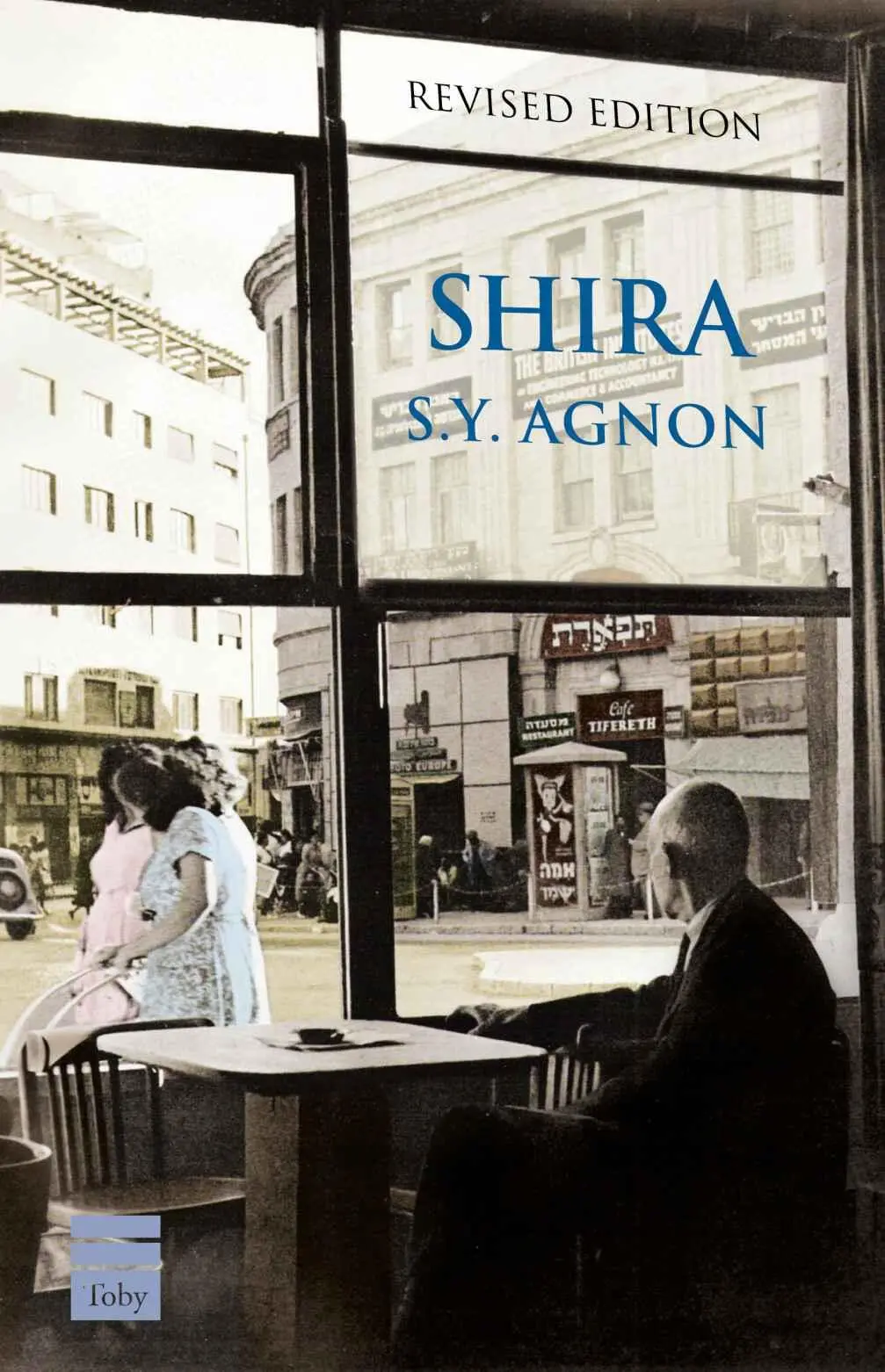
- Название:Shira
- Автор:
- Издательство:Toby Press
- Жанр:
- Год:2014
- ISBN:нет данных
- Рейтинг книги:5 / 5. Голосов: 1
-
Избранное:Добавить в избранное
- Отзывы:
-
Ваша оценка:
Shira: краткое содержание, описание и аннотация
Предлагаем к чтению аннотацию, описание, краткое содержание или предисловие (зависит от того, что написал сам автор книги «Shira»). Если вы не нашли необходимую информацию о книге — напишите в комментариях, мы постараемся отыскать её.
Shira — читать онлайн бесплатно полную книгу (весь текст) целиком
Ниже представлен текст книги, разбитый по страницам. Система сохранения места последней прочитанной страницы, позволяет с удобством читать онлайн бесплатно книгу «Shira», без необходимости каждый раз заново искать на чём Вы остановились. Поставьте закладку, и сможете в любой момент перейти на страницу, на которой закончили чтение.
Интервал:
Закладка:
Mrs. Herbst shook her finger menacingly and said, “Because a scholar makes a mistake, his entire field isn’t invalidated.” Herbst laughed and said, “Bravo. But I’m surprised, Henrietta, to hear you champion something you usually scorn.” Henrietta said, “Fred, do you want to argue? I don’t.” Manfred said, “I don’t mean to argue, but, tell me, Henrietta, where did you hide the cognac?” Henrietta said, “Now I’ll be the one to argue. Tell me, what do you see in that drink that consumes the palate, deadens the mind, and confounds the senses?” Herbst said to Taglicht, “You try. Describe the taste of cognac to her. Come on, Henriett, let’s drink to peace.” Henrietta said, “If you want to drink, drink. But I’m not drinking.” Manfred said, “I am given to understand that I have your permission.” Henrietta said, “And without my permission, you won’t drink?” Manfred said, “Tell me, Mother, do I ever make a move without your permission?” Mrs. Herbst said to Taglicht, “After such a speech, particularly when you look at his face, would anyone suspect he might make a move without my permission? Sit down, Taglicht. Sit down. There won’t be any scenes out of Strindberg. I’m bringing the cognac, and you can drink with Fred.” Herbst said, “Taglicht, I renounce all the other women in the world. I love only Henrietta.” Henrietta laughed and said, “Listening to you, one would think you’re involved with other women.” Herbst said, “Taglicht, what’s the hurry?”
Taglicht sat down again and stayed another half-hour. At ten o’clock, he left. Herbst didn’t detain him; even though he hadn’t mentioned the events of the previous night, there was no way of knowing what might still come up. The fact that it hadn’t come up yet didn’t mean it couldn’t.
After accompanying Taglicht to the bus stop and waiting for the bus with him, Herbst went back to Henrietta. He found her tired from the effort of having company, from the day’s work, and from lack of sleep. As usual, just when the lady of the house needed help, there was none at hand. Of all times, on the day when Zahara came with Avraham-and-a-half for the workshops organized by Berl Katznelson, hoping to find some rest at home, just then the Kurdish woman asked for the day off, because she was invited to an important event. What sort of event? It was in this connection, I believe, that Sarini referred to the university, to fingers dipped in fat, to a donkey, to drinks.
Manfred went back to Henrietta. Even before his thoughts were organized, he began talking. About Zahara and Avraham-and-a-half, who were together, alone in the car, with no one else there, such a long distance — all the way from Ahinoam to Jerusalem and from Jerusalem to Ahinoam. Manfred said to Henrietta, “You and I, Henriett, are of the old school, and our road never deviated, so we can’t fathom this new generation, whose emotional discipline is lax. Tell me, Henriett, what did Zahara say to you? I myself am out of step with this world, with this generation, with these daughters. But you, Henriett — you as a woman, a mother — are entirely of this world, and you sense what this generation is after.” Henrietta looked at him fondly and said, “If I weren’t an old woman, I would kiss you for your innocence. What should Zahara have told me? In any case, you can sleep peacefully. It’s past eleven, and here we are, chattering away like a pair of youngsters. Go to your room, my dearest. Get into bed and get some sleep. Last night you came in after midnight. Incidentally, where were you last night? What did you do?” “Where was I? What did I do?” Manfred cried in dismay. “Taglicht already told you.” “Taglicht told me? Not a word, not even half a word.” “What are you talking about? He distinctly said…” “What did he say? I didn’t hear a thing.” Manfred answered her, “You’re teasing me, Henriett. He certainly did tell you, and, if you don’t remember, I’ll remind you. Take a chair and sit down. I don’t like to see you standing when you should be lying in your crib. Taglicht came tonight because of last night’s events; he was here because of last night, Henriett.” “What happened last night?” “Last night? I didn’t really want to tell you about last night, but do we keep secrets? Is there anything in the world that I hide from you? You know the meaning of the riots only too well, and all about those young men who refuse…refuse to be slaughtered like the Jews of Hebron and Safed. You know all this, and about the Haganah too. But you don’t know that even Taglicht, even Taglicht is a member of the Haganah, and, like most Haganah members, he spends most of his evenings training. Tell me, Henriett, would you ever dream that such a fellow holds a rifle? Well, last night he dragged me to their training site. This is a forbidden subject, but we don’t have secrets between us. I said ‘training,’ but actually they were military drills. Real military drills. Please, Henriett, bury this information in your heart and don’t mention it to anyone in the world, not so much as a hint, especially not in front of Taglicht. I’m amazed that he revealed all this to me. It’s top secret. True, some of the English know what we’re up to, but they don’t want us to know that they know. Do you see, Henriett? On the one hand, they instigate the Arabs to fight us, and, on the other hand, they’re pleased that we create a counterforce. Who can grasp the English mentality? It may all be one scheme: the English want the Arabs to riot against us, and they want us to retaliate. Understand, Henriett?” Henrietta said, “I understand one thing: I understand that what Taglicht is doing is right, and I don’t understand why you and your friends stand by with folded arms. If I weren’t a woman, I would learn to use all those weapons.” “You? You, Henriett?” “Yes, Fred. Or would we do better to wait for the Arabs to come and slaughter us?” Manfred said, “Then I’ll confess in a whisper that there are not only young men in the Haganah, but young women as well. In a separate section.”
What he had feared the day before had come to pass today. But he emerged unscathed. True, he had given Henrietta an earful of lies. He may or may not have regretted these lies. In any case, he was astonished at his ability to heap lie upon lie without stammering.
He held Henrietta’s head in his hands and said, “Now, let’s say good night. But first, I want to seal our conversation with a kiss on the forehead — a modest kiss, with no ulterior motives.” Henrietta said, “Remember, no ulterior motives. You, my dear, need rest, and I, as you well know, am deadwood. I hope Zahara comes home soon. Liar, I allow one kiss and you pucker your lips for another. Scram. You woke the baby. Let me go to her. Be quiet, little one. Be quiet. Mama’s coming.”
Chapter twenty-nine
Herbst lay in bed on the verge of sleep. He put down the book he was meaning to read and turned out the light, in order to yield to sleep. His fatigue should have brought on sleep, but it was dispelled by his thoughts. He got up, turned on the light, and picked up the book. If he had only the book to deal with, he would have either read and enjoyed it or read and fallen asleep. But, apart from the book, he had his thoughts. He stared at the page, only to be diverted by his thoughts; yielded to them, only to have them abandon him and vanish. He turned back to the book, only to have his thoughts return; when he returned to his thoughts, they abandoned him and vanished. After several hours, he put down the book, turned off the light, turned it on again, and picked up the book. Finally, he was overcome by uneasy sleep, the sort of sleep that brings the body little pleasure.
Nevertheless, he was up at the regular time and got right to work. He wrote, erased, rewrote what he had erased. What did he write, what did he erase? What did he add, what did he delete? Between one thing and another, half a day passed, and it was time for lunch. When he heard Zahara calling, he put down his work, got up, and went to the dining room, as Henrietta made a point of promptness, insisting that everything be done on time, and Manfred made a point of not disrupting her routine. In his haste, he forgot to put the stones on his papers, so, when he got back from lunch, he found they had been scattered by the wind. The meal had been prolonged because of Zahara and because it was unusually good. Since he was tired because of his sleepless night, he ignored the scattered papers on the floor and stretched out on his bed. The papers started to fly. He got up and began collecting them. He soon gave up, and went back to bed. All of a sudden, he started, looked at his wristwatch, and saw that he had been sleeping for more than an hour. The house was quiet. Not a sound was heard. Not the baby’s voice, not any other voice. The window was open, and the sun shone in. The papers lay scattered but unharmed by the wind. Herbst unbuckled his watch, took it off, and picked up a book, meaning to read for a while. The book slipped out of his hand, and he dozed off again, then fell into a deep sleep.
Читать дальшеИнтервал:
Закладка:
Похожие книги на «Shira»
Представляем Вашему вниманию похожие книги на «Shira» списком для выбора. Мы отобрали схожую по названию и смыслу литературу в надежде предоставить читателям больше вариантов отыскать новые, интересные, ещё непрочитанные произведения.









Обсуждение, отзывы о книге «Shira» и просто собственные мнения читателей. Оставьте ваши комментарии, напишите, что Вы думаете о произведении, его смысле или главных героях. Укажите что конкретно понравилось, а что нет, и почему Вы так считаете.