S. Agnon - Shira
Здесь есть возможность читать онлайн «S. Agnon - Shira» весь текст электронной книги совершенно бесплатно (целиком полную версию без сокращений). В некоторых случаях можно слушать аудио, скачать через торрент в формате fb2 и присутствует краткое содержание. Год выпуска: 2014, Издательство: Toby Press, Жанр: Современная проза, на английском языке. Описание произведения, (предисловие) а так же отзывы посетителей доступны на портале библиотеки ЛибКат.
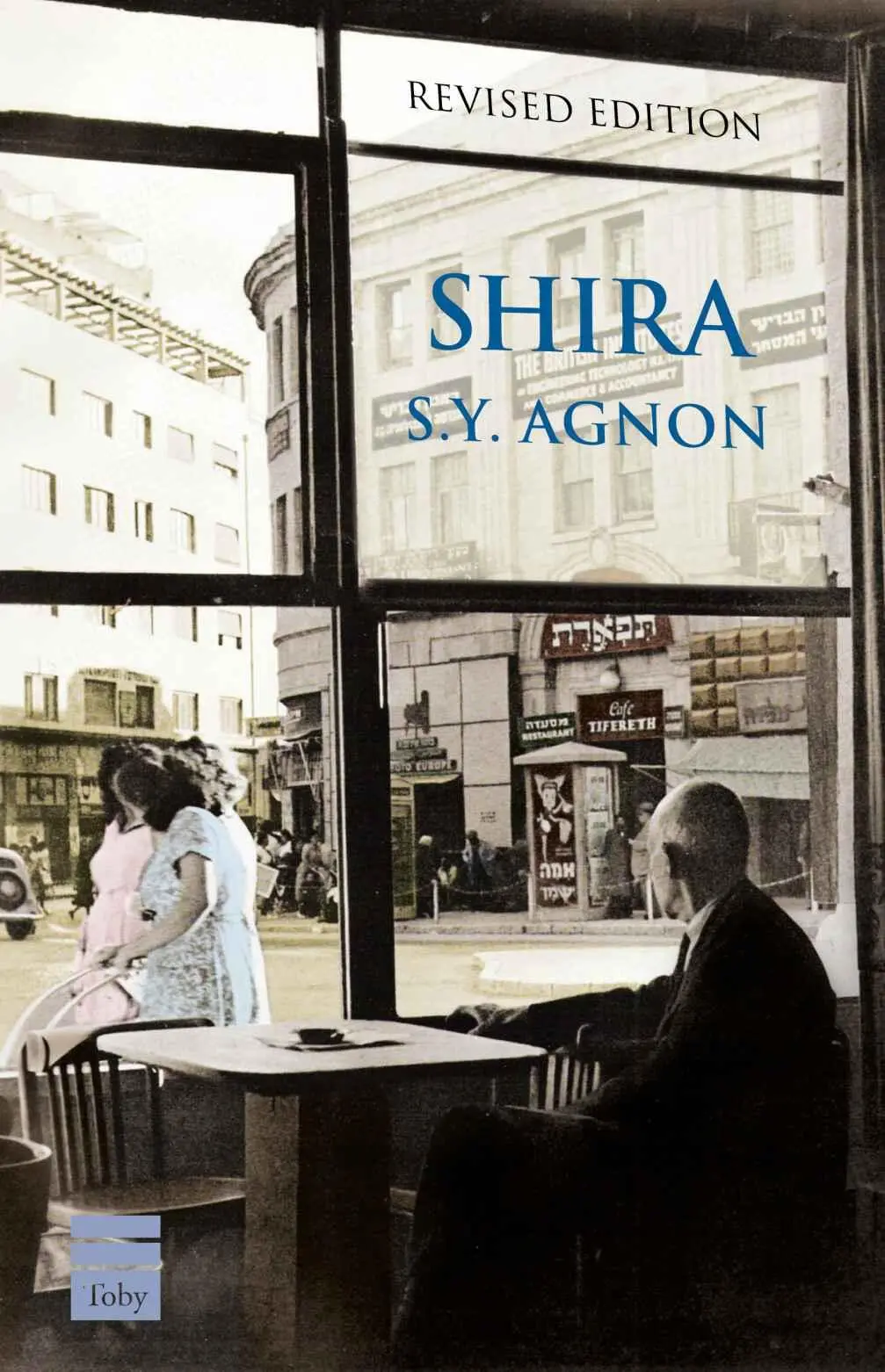
- Название:Shira
- Автор:
- Издательство:Toby Press
- Жанр:
- Год:2014
- ISBN:нет данных
- Рейтинг книги:5 / 5. Голосов: 1
-
Избранное:Добавить в избранное
- Отзывы:
-
Ваша оценка:
Shira: краткое содержание, описание и аннотация
Предлагаем к чтению аннотацию, описание, краткое содержание или предисловие (зависит от того, что написал сам автор книги «Shira»). Если вы не нашли необходимую информацию о книге — напишите в комментариях, мы постараемся отыскать её.
Shira — читать онлайн бесплатно полную книгу (весь текст) целиком
Ниже представлен текст книги, разбитый по страницам. Система сохранения места последней прочитанной страницы, позволяет с удобством читать онлайн бесплатно книгу «Shira», без необходимости каждый раз заново искать на чём Вы остановились. Поставьте закладку, и сможете в любой момент перейти на страницу, на которой закончили чтение.
Интервал:
Закладка:
“The woods were covered with snow, and the trees were totally still. The snow vibrated underfoot in the stillness. I ran through the snow, not knowing whether I was cold or warm. A hand gripped me, and in an instant I was in that man’s arms. He ran with me, yelling, ‘If I hadn’t found you immediately, you would have frozen to death. A babe in the woods on a freezing night, without clothes, without shoes.’ He brought me to the room I had escaped from and stood me on my feet, sighing and whispering, ‘Oh, my darling, my darling, I didn’t know how much I love you. Kill me, but let me have one hour with you.’
“The old woman came with a hot drink, put me to bed, covered me with several blankets, and brought a hot brick wrapped in towels, which she placed at my feet. She sat beside me, singing sad and lovely songs about water creatures, wood sprites, and other sprites that assume human form and cohabit with the sprites, all of whom give birth to male children they hide in trees, where they grow up, unbeknownst to anyone. In springtime, when young girls go to the woods, these boys pop out, snatch the ones who are virgins, whisk them away, and marry them. When their babies are born, they deposit them in trees, unbeknownst to anyone. And when they grow up, the cycle is repeated. That’s how it is, that’s how it was, and that’s how it will be until the end of time.
“Night passed and day came. That man appeared and began to coax me, to promise me everything if only I would relent. I sobbed, I cried, I begged. ‘Take me back to my father. I don’t want to stay here even a minute.’ He no longer kissed and hugged me. He spoke to me gently, then harshly. When he spoke gently, I asked myself why he was not harsh; when he spoke harshly, I asked myself why he was not gentle. In either case, my heart was bitter and hard. While he was trying to win me with words, he was told guests had come to congratulate him. His manner changed, and he went to greet his guests. When he left, the old woman he had provided to serve me appeared. This happened several times in the course of the day.
“The old woman was the mother of the girl he had made pregnant, who was beaten to death by the duchess. The old woman used to sit and talk with me. ‘He’s a real man,’ she would say. ‘A real man. No girl can resist him. And you, my dove, are trying to run away. How will you do it? None of the farmers will give you a ride, for fear of your husband. If you walk, your little feet will sink into the snow. These darling feet were out on a snowy night; it’s a miracle the skin didn’t peel right off. Your dead mother probably came and put her good hands under the soles of your feet. The dead know the sorrows of the living and share them, though we are sometimes too stingy to light a candle in their memory. Give me one of your feet, my dove, and I’ll kiss it. My daughter didn’t have feet like yours, though she was lovely and good. Alas, she wasn’t favored by the Mother of God, who could have saved her from our mistress, the duchess. Probably because my daughter was born Christian and our lord, your husband, is a Jewish man. You, my dove, are Jewish too, so why resist your husband? You won’t find another man as powerful as he is. Be still, my dove, be still. Don’t look so enraged. The rage of the Lord God is enough, why add to it? You are, after all, a woman, and a woman’s heart is soft and good. Why be defiant? You are an orphan with no mother, and I am a mother with no daughter. Let’s live in peace, rather than upset each other. The Lord God and all those with him make enough trouble. Wouldn’t it be better if my daughter had lived and I had died, like your good mother who died, leaving you alive? She left you a kind father, too. Listen, my dove, listen: I hear the sound of a sleigh. Your kind father is coming. He will make peace between you and your husband.’
“The door opened, and Father came in. I fell on his neck and sobbed, ‘Father, Father.’ He pushed me away and said, ‘You’ve brought us shame, you’ve brought us shame.’ I was stunned. My tears dried up. I stopped crying and didn’t say a word. Father began to praise the man he called my husband, to describe all the good things he would be able to give me. I didn’t answer. I was as mute as a tree in the snow, but for the fact that a tree is alive on the inside though covered with snow, whereas I was like snow through and through. At night, that man gave a big party for Father, who had one drink too many and began muttering, ‘It will work out, it will work out.’ He kissed me and kissed the one they called my groom.
“It didn’t work out. On the contrary, it became more complex. At first, I had nothing against the man, but, in the end, my heart was filled with seething hatred. When he came near me, I shouted, ‘Get away from me, you wretch!’ I called him every vile name, and he loved me all the more. I was a captive in his house, seeking escape. Because of the snow, it was impossible to escape. Once, while he was drinking with friends who came to congratulate him on his marriage, I sneaked out of the house, hid in a sleigh belonging to a gentleman from my town, and rode off. Father was not happy to see me. Having married off his only daughter, he had his eye on a wife. Whom did he have in mind? The mother of the young man I had rejected. Knowing this, she hated me doubly — once for her son, once for herself — for I was interfering with the pleasure she sought from my father. Fate is a clown, and when he clowns, he doubles the laughs.
“Father hardly spoke to me. By day he was busy at the bank, and in the evening he was with the widow. I was on my own. I invited friends. They didn’t come. When I went to meetings, they avoided me, and those who didn’t avoid me spoke with feigned respect and addressed me as Madame So-and-so, wife of that man. When I was first betrothed, my friends began to keep some distance. Now they treated me as a stranger. I went home humiliated and swore I would never go back, nor would I forgive them. I stayed at home, without father or friends, without joy, without anything.
“One day the old woman appeared. She came in and said, ‘You don’t come to us, so I am coming to you.’ She sat with me, singing the praises of her master, my husband, who had always been a good man but, since I ran away, had become evil. ‘You must, therefore, go back to him, if not for my sake, then for the sake of others. Considering how little goodness there is, every good soul should promote goodness with his own body, all the more so women, who were created solely for the pleasure and benefit of men.’ This is how the old woman spoke. She mentioned the Son of God, who died for mankind and doesn’t harm even those who sin against him. He is generous even with the sinful duchess, so much so that her children, who were assumed to have been killed by the Bolsheviks, were, in fact, alive. Then the old woman praised my husband again and said, ‘What a pity to see this powerful man declining, all because my mistress, his wife, has left him.’
“A little later, that man came himself and talked to me like a merchant discussing business. He said roughly this: ‘Come back to me and stay; I won’t ask anything of you. I want only to be able to see you.’ He sent relatives, men and women, to urge me to go back to him. All this occurred again and again. Sometimes the old woman came, sometimes he came, sometimes all sorts of relatives came. In all this time, Father showed no sympathy. I’m not angry, I’m not complaining. He, of course, had my good in mind, as would any father with an only daughter. Scorning his efforts, I not only caused him pain and torment but prevented him from pursuing his own interests, for, as long as I was at home, the woman was unwilling to move in. And living with her would have been difficult for both of them, because of her son.
Читать дальшеИнтервал:
Закладка:
Похожие книги на «Shira»
Представляем Вашему вниманию похожие книги на «Shira» списком для выбора. Мы отобрали схожую по названию и смыслу литературу в надежде предоставить читателям больше вариантов отыскать новые, интересные, ещё непрочитанные произведения.





Обсуждение, отзывы о книге «Shira» и просто собственные мнения читателей. Оставьте ваши комментарии, напишите, что Вы думаете о произведении, его смысле или главных героях. Укажите что конкретно понравилось, а что нет, и почему Вы так считаете.