S. Agnon - Shira
Здесь есть возможность читать онлайн «S. Agnon - Shira» весь текст электронной книги совершенно бесплатно (целиком полную версию без сокращений). В некоторых случаях можно слушать аудио, скачать через торрент в формате fb2 и присутствует краткое содержание. Год выпуска: 2014, Издательство: Toby Press, Жанр: Современная проза, на английском языке. Описание произведения, (предисловие) а так же отзывы посетителей доступны на портале библиотеки ЛибКат.
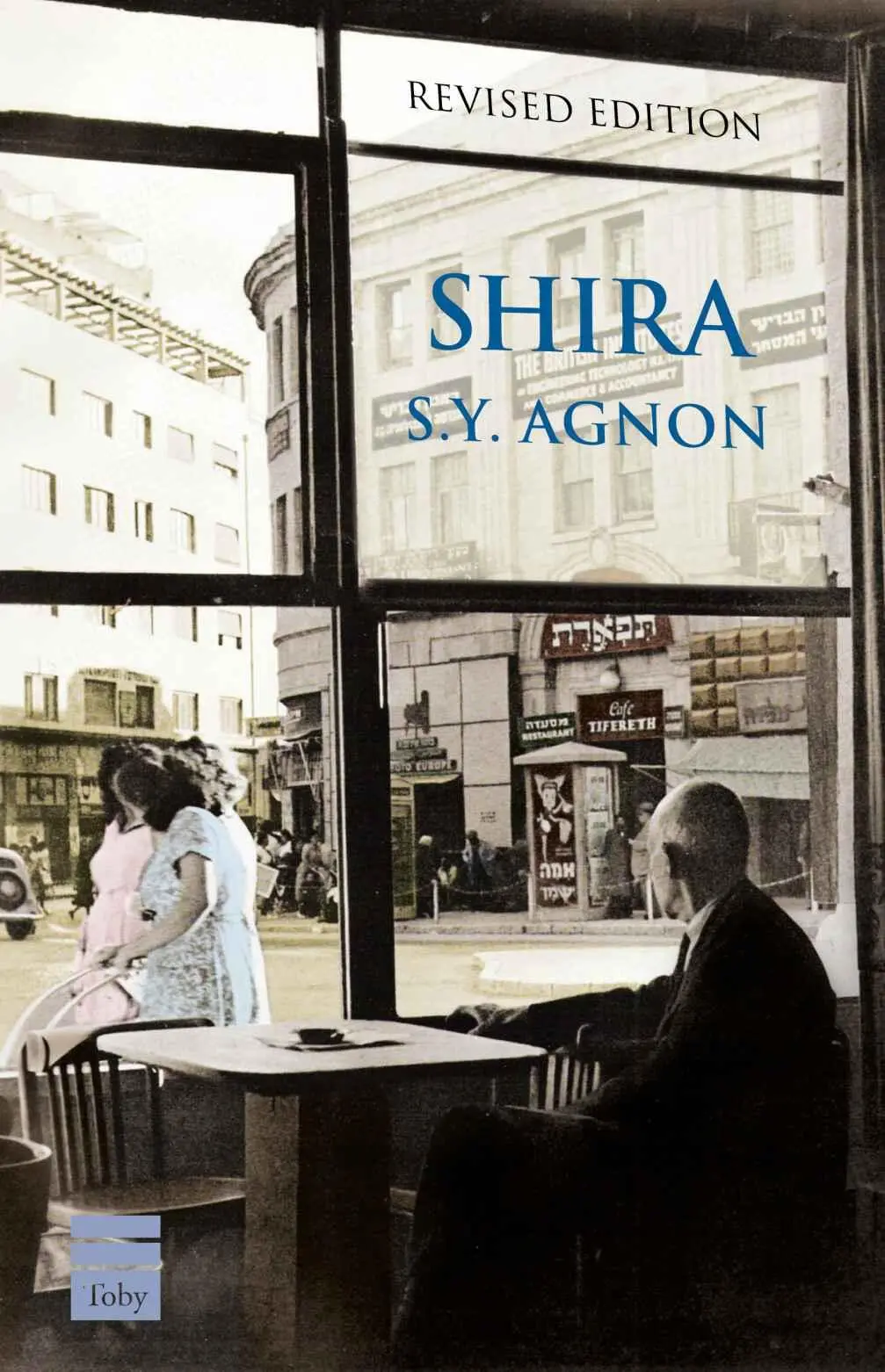
- Название:Shira
- Автор:
- Издательство:Toby Press
- Жанр:
- Год:2014
- ISBN:нет данных
- Рейтинг книги:5 / 5. Голосов: 1
-
Избранное:Добавить в избранное
- Отзывы:
-
Ваша оценка:
Shira: краткое содержание, описание и аннотация
Предлагаем к чтению аннотацию, описание, краткое содержание или предисловие (зависит от того, что написал сам автор книги «Shira»). Если вы не нашли необходимую информацию о книге — напишите в комментариях, мы постараемся отыскать её.
Shira — читать онлайн бесплатно полную книгу (весь текст) целиком
Ниже представлен текст книги, разбитый по страницам. Система сохранения места последней прочитанной страницы, позволяет с удобством читать онлайн бесплатно книгу «Shira», без необходимости каждый раз заново искать на чём Вы остановились. Поставьте закладку, и сможете в любой момент перейти на страницу, на которой закончили чтение.
Интервал:
Закладка:
Herbst rolled his lip into his mouth, pressing one lip over the other. He walked quickly, but his heart was in a state of suspense. What was Shira saying, and what did he want to hear? Shira was totally distracted. She walked in silence. The houses were all dim by now. Mounds of lime and piles of cement peeked out from among the unfinished buildings, and the road in between glittered like a silver chain. Shira lifted the hem of her dress, took a few steps, smoothed her eyelashes with her hands, and spoke. “What was I going to say?” Herbst lowered his eyes, so she wouldn’t see how eager he was to hear. Renewed passion stuck in his eyes like thorns. His heart was stiff, and his teeth began to chatter. He lowered his eyes further, to avoid looking at her, now that they were alone. He saw her small feet in the slippers she had waved at him the night before. He remembered the night’s events, how he had slipped them off and exposed her feet, how she had put the slippers back on and he had slipped them off again, how her feet had wriggled, stockingless, bare, lovelier than any feet in the world. Now those same feet walked a few steps, then stopped, then walked on along the dim road, and she seemed unaware of him. It may be that not even twenty-four hours have elapsed since those events occurred. In terms of time, it can’t be determined; in terms of truth, what is true cannot be denied. He came to a standstill, like someone confronting a riddle for which he finds no solution. She stopped too and said, “What was I going to tell you?” And then she began to talk.
Chapter eleven
“Ishould begin when I was a baby, but the impact of the war that engulfed us in the interim minimized the importance of early events. I will, therefore, begin after the war, when I was on my own and began observing my actions — becoming so much the observer that they unfold before me and I can recount them as if reading from a book.
“My father taught Hebrew and was highly involved in culture and Zionism. After the war, Father wanted to take me to the Land of Israel. But we were not allowed to leave Russia. Father was able to prove that he was born in Poland, and the emigration laws did not apply to natives of Poland. After considerable efforts, we left for Poland, intending to go to Israel from there. We were joined by others, who made Father into a sort of patron of emigration, then appointed him to administer a savings fund called the Emigrants’ Bank. We remained in Poland. I enrolled in the Hebrew high school and joined the Hehalutz movement.
“Once you’re involved in community work, you don’t get out so fast. At first, Father was upset when his departure was delayed. By and by, he began to take comfort in the fact that I belonged to Hehalutz and would leave with my pioneering friends, leading the way for him. Father had picked out a companion for me. He was the son of a widow — a pampered young man, active, ambitious, well spoken. His promise was already being fulfilled, for he held an important post in the Zionist movement, and a prominent position awaited him in the Land of Israel. He was especially appealing to Father, who had been a tutor in the home of this young man’s mother in his youth. Father took pride in the fact that the young man was now a regular caller at our house and had his eye on me. I didn’t like him, nor did I hate him. How is it possible to hate or like anyone? When he started treating me possessively, I began to put him off. I don’t think this was the only reason. There were surely others. He once asked, ‘What do you have against me?’ I answered, ‘I don’t know.’ He said, ‘Please think about it.’ I said, ‘There’s nothing to think about.’ I assumed he would leave me alone. But he seemed to cherish me all the more.
“At about this time, a group of our friends went to the country for agricultural training. He didn’t go, because he said he had work to do in town. I didn’t go, because my father wanted me to stay in school another year and make up what I had missed during the war.
“The village they went to was ruled by an old duchess. Before the war, she had several Russian villages under her jurisdiction. But, after the Revolution, she was left with only one, which was annexed to Poland. The village had a Jewish overseer, who had stood by her during the Revolution and managed to save some of her property. It was rumored that there was something more to their relationship. Was this true or half-true? She was jealous of his relationships with women. They say that, when she discovered that one of the servants was pregnant by him, she stripped the girl naked and beat her to death. This took place much earlier, long before the war, when nobles could do as they pleased. After the war, their power diminished, especially in the case of this duchess, who was half-paralyzed and depended on the overseer to conduct the affairs of the village, which was part of her estate and was where the halutzim were lodged. Father boasted that it was through the efforts of our Sokolow that this duchess was granted authority over the village. When lands were being distributed and boundaries set, Sokolow convinced the League of Nations that this was Polish territory, citing evidence from an old book that referred to it as Poland. And so it became Poland.
“One day, I went to see my friends in the village, and my protector was there to deliver a lecture. He saw me and was pleased, assuming I would hear his lecture and then return to town with him. I had no desire to hear his lecture or to be with him. When he was on the platform, about to begin his speech, I got up and left.
“The road was in disrepair, full of obstructions. It was piled high with dirt. Leaves, both green and wilted, covered the dirt and were covered by it. I left the road and entered the forest. I didn’t know the way. One didn’t normally venture into the forest, certainly not alone, because of the deserters who roamed there. I followed the sound of the church bells and was beginning to enjoy being among trees and bushes that smelled of the wild berries we often ate without knowing where they grew. As long as it was light, I relished every single step and every single breath. When dusk began to fall and the trees took on another aspect, my joy was mixed, and I began to be afraid of army deserters who might be hiding in the woods. I heard hoofbeats and thought: This is the end.
“A tall man dressed in leather appeared on horseback. My terror dissolved instantly, and I asked, ‘Which is the way to town?’ He said, ‘Do you ride?’ ‘No.’ ‘Then we’ll walk.’ He got off the horse and walked to town with me. In bed that night, I reviewed what had happened and was astonished. Had I not seen him later on, I would have believed he was from a fairy tale. But fairy-tale characters were dead before we were born, and if they still exist, they exist to deny their reality. Dr. Herbst has something to say? No? Then I’ll get back to my story.
“A few days later, he rode past our house. He tied up his horse and came in. He gave me his hand and said, ‘I was passing your house, and I stopped in to ask where it is nicer, in the woods or at home.’ At this point, I saw no trace of what I had seen in him before, yet there was a special quality I could not define, and his image was not diminished. Meanwhile, the horse was neighing. He said to me, ‘If you could ride, I would put you on my horse and race to the end of the world with you.’ I said to him, ‘Since I don’t ride, you will have to race alone.’ He pursed his lips and said, ‘Touché. You win.’ A few days later, he returned. Father took out the Carmel wine. I spread out a cloth and brought cakes. I noticed that he looked at me with pleasure, that Father was pleased too. We sat together. Father spoke about the Balfour Declaration, rebuilding the land, and the like. When our conversation turned to the halutzim , Father told about Sokolow’s influence, as a result of which the duchess had been granted jurisdiction over the village. When he left, Father said, ‘He is a real man. Too bad we can’t interest him in Zionism.’ I laughed inwardly. A real man, romantic whims and all.
Читать дальшеИнтервал:
Закладка:
Похожие книги на «Shira»
Представляем Вашему вниманию похожие книги на «Shira» списком для выбора. Мы отобрали схожую по названию и смыслу литературу в надежде предоставить читателям больше вариантов отыскать новые, интересные, ещё непрочитанные произведения.



Обсуждение, отзывы о книге «Shira» и просто собственные мнения читателей. Оставьте ваши комментарии, напишите, что Вы думаете о произведении, его смысле или главных героях. Укажите что конкретно понравилось, а что нет, и почему Вы так считаете.