S. Agnon - Shira
Здесь есть возможность читать онлайн «S. Agnon - Shira» весь текст электронной книги совершенно бесплатно (целиком полную версию без сокращений). В некоторых случаях можно слушать аудио, скачать через торрент в формате fb2 и присутствует краткое содержание. Год выпуска: 2014, Издательство: Toby Press, Жанр: Современная проза, на английском языке. Описание произведения, (предисловие) а так же отзывы посетителей доступны на портале библиотеки ЛибКат.
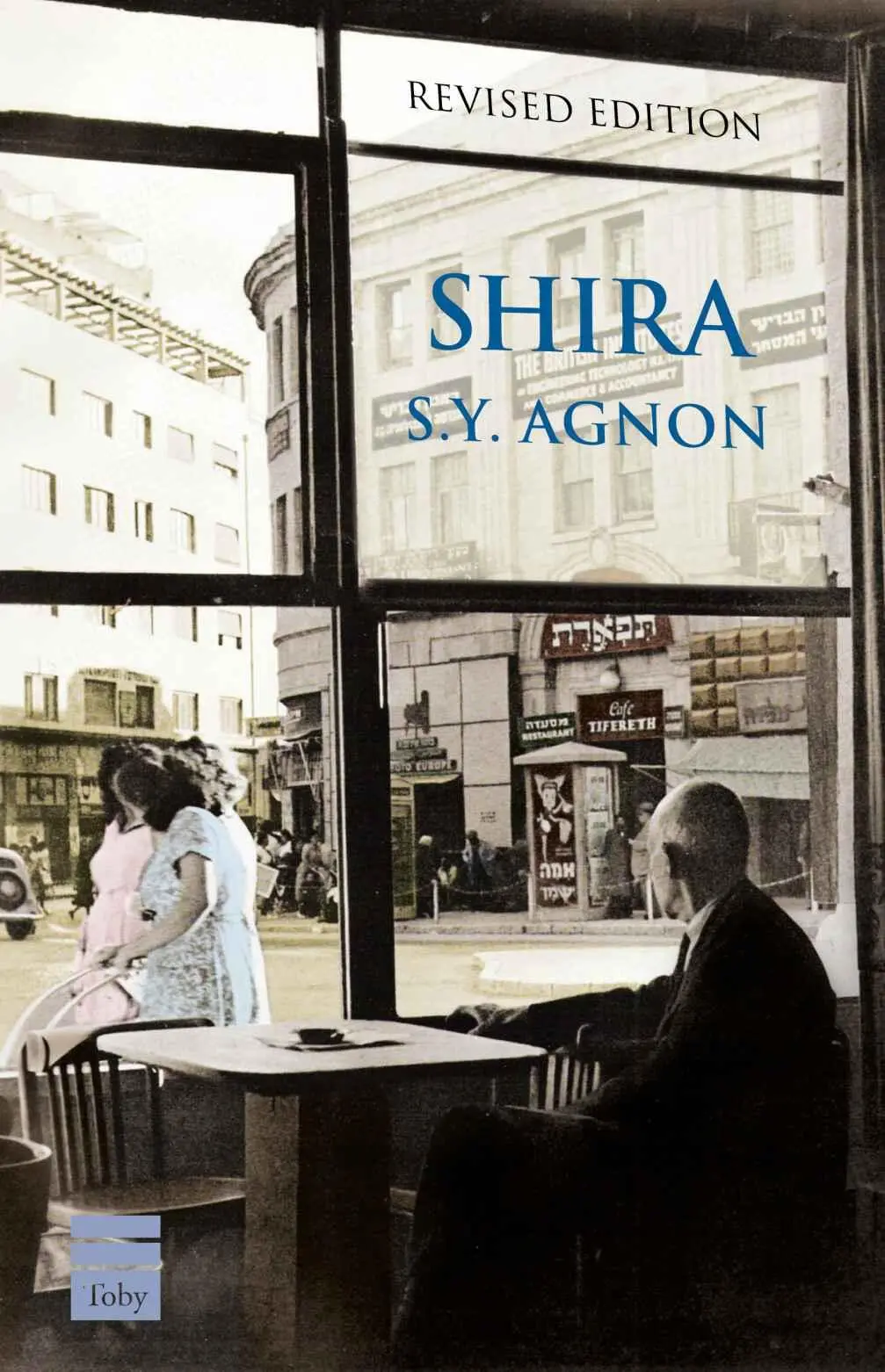
- Название:Shira
- Автор:
- Издательство:Toby Press
- Жанр:
- Год:2014
- ISBN:нет данных
- Рейтинг книги:5 / 5. Голосов: 1
-
Избранное:Добавить в избранное
- Отзывы:
-
Ваша оценка:
Shira: краткое содержание, описание и аннотация
Предлагаем к чтению аннотацию, описание, краткое содержание или предисловие (зависит от того, что написал сам автор книги «Shira»). Если вы не нашли необходимую информацию о книге — напишите в комментариях, мы постараемся отыскать её.
Shira — читать онлайн бесплатно полную книгу (весь текст) целиком
Ниже представлен текст книги, разбитый по страницам. Система сохранения места последней прочитанной страницы, позволяет с удобством читать онлайн бесплатно книгу «Shira», без необходимости каждый раз заново искать на чём Вы остановились. Поставьте закладку, и сможете в любой момент перейти на страницу, на которой закончили чтение.
Интервал:
Закладка:
This is how Herbst spent those of his nights that seemed to be seeking Shira. When a night passed and he hadn’t gone to Shira, he felt he was in control.
A contradiction: If it was Shira he was seeking, why didn’t he go to her? But Herbst had a wife; he was the husband of an intelligent, attractive woman. He was the father of three daughters and a lecturer at the Hebrew University in Jerusalem. Whether or not the Hebrew University is required to uphold the teachings of the prophets and the Jewish moral code, whether or not it is a university like all others, university faculty should not behave frivolously. And, needless to say, they should not waste time indulging the body at the expense of the soul. There was a further reason: Herbst was a reticent man, attached to his wife. She was his first love, and it was with her that his love matured, which is to say that, until he knew Henrietta, he didn’t know a woman’s love.
So, if the night passed and he hadn’t gone to Shira, he considered himself in control. Even more so on a night when he knew she was at home. There were nights when he knew she wasn’t working and would be at home; when she told him this, it was quite deliberate, so he would know when he could find her in.
Herbst stayed away from Shira’s house. Shira didn’t stay away from Herbst’s house. She showed herself in seventy forms: her little feet escaping to the forest on a snowy night, the wolf pelt her husband flung over her on their wedding night when he took her to the house in the woods, the blanket wrapped around her in her husband’s room, the feet the old servant woman wanted to kiss, the slippers he slid off her feet and she replaced. When she appeared to him, her voice sounded as it did that night when they walked as one in the new neighborhood. And he was engulfed in the same stillness, not finding the courage to reach out and caress her. When, after a few weeks, the same face continued to impel him to run to her, he began summoning up her other face, the one he had seen the day the entire city was mourning a young Jerusalem boy who was killed and Shira appeared with that defiant cigarette in her mouth. When that face began to blur, he pictured her sitting with the women in the waiting room of the maternity section, her limbs expanding, encircling the blind Turk and reaching to embrace him. These things are certainly ugly, so reason would cause him to pluck her from his heart and avert his eyes from her. He did just this, pressing his eyes into their sockets so he wouldn’t see her. What did that Turk do? Believe it or not, he sneered from his blind eyes into Herbst’s tightly clenched eyes, chirping, “Flesh such as yours / Will not soon be forgotten.”
Chapter fifteen
Manfred was having a hard morning. His head was heavy, and his shoulders were as inert as rocks. He was utterly debilitated. His bed annoyed him so, he couldn’t lie in it. He got up, settled his feet in his slippers, and began shuffling back and forth from one end of the room to the other.
Henrietta bathed and oiled Sarah, and put her on the scale to check her weight. The baby wriggled her round feet and raised them high, upsetting the scale, so no one could tell how much she had gained. Henrietta laughed and spoke as if to an adult, “I don’t have time for your mischief, Sarah. Father is awake, and I haven’t made his coffee yet.” Even if the child had understood Henrietta, it would have been impossible to find out her weight, as the scale wasn’t working because of a missing screw. When Henrietta realized this, she began searching the house. She remembered that a neighbor had come to weigh her son, and all his brothers had come along; they had played with the scale and, undoubtedly, broken it. Henrietta was irritated with herself. Why did I have to teach the Arab women what they and all their sisters never knew? Now that I need to weigh my daughter, the scale is broken.
Henrietta heard Manfred’s footsteps. They didn’t sound right to her. She handed the baby to Sarini and went to Manfred. His face looked strange. She assumed he had been awake all night with his books. She looked at the lamp and noted that it was still full of kerosene. It occurred to her that his stomach might be upset. Since she knew there were no spoiled ingredients in her cooking, she attributed this to some vegetarian dish, such as a radish he might have pulled up and eaten. Manfred tended to fill up on fruits and vegetables, on the misguided premise that live vegetation gives life. She looked at him again and saw that his eyes were red, his face somber. His shoulders drooped, and his entire body was dejected. Feeling sorry for him, she said, “Fred, I’m taking a chair out to the garden for you. I’ll bring out your coffee. Waste one day in the garden rather than several days in bed. If we were in Germany, wouldn’t we spend two or three months in a summer house? It’s about four years since you took a vacation. You surely deserve a day off.” Henrietta had forgotten that he once went abroad to a conference of Byzantine scholars and spent a few days at the seashore.
Manfred went out to the garden, and Henrietta brought him a lounge chair. She went to bring him coffee and milk, toast, butter, and honey, and to tell Sarini she could go home early, since it was a holiday for her — her brother Ovadiah was being released from jail for the fifth time. Not because of any crime, God forbid, but because he had no luck with women. When Sarini’s father and mother and their entire clan came to the holy city of Jerusalem, they brought Ovadiah along. He was like a brother, having nursed at her mother’s breast. On the way, Ovadiah went to the well for a drink. There was a large rock there in the shape of a wicked woman. She stared at him, and he forgot to come back. They went on to Jerusalem without him. There was a man in Jerusalem, strong as an ox, who said, “I’ll bring him back.” He went and brought him back. Seeing that he was a good boy, he gave him his daughter as a wife. Ovadiah was fifteen years old, and the girl they gave him for a wife was thirty-five. Ovadiah stayed with her a year and half and gave her two children. He lost interest in her and left. Some women’s organization came and said, “You are required to give her ten lirot a month.” Ovadiah went to a rabbinical court and proved to the wise men that the woman couldn’t become pregnant again, while he wanted more children. The wise men said, “Give her a get , and take another wife.” He threw a get at her and took a young wife. The first woman came to grief and died. Ovadiah had no life with the child-wife because he had no luck with women. So he left her. There was an outcry from the women’s organization: “If you don’t want her, you don’t want her, but you must give her ten lirot a month.” Ovadiah said, “Ten lashes, yes, but not ten lirot. In the name of Moses, I myself never had ten lirot.” The women’s organization maligned and slandered him. They sent a policeman to arrest him. This happened once, twice, three times — again and again, making five. His prison term was now up. Sarini was eager to see him, so Mrs. Herbst gave her permission to leave early.
As soon as Sarini left, Mrs. Herbst took a chair out to join Manfred. She brought Sarah out in her cradle and sat down, although there was much work and little time. Manfred looked at Henrietta, and he saw how concerned she was. He wept inwardly for her and for himself, that they had arrived at such a pass.
Manfred sat, Henrietta sat, and Sarah lay in her cradle, a rubber doll with a black face at her side, brought to her by Dr. Taglicht. Amid sun and shade, the garden shrubs sent forth their fragrance. Not a sound was heard from the neighbors. Even Sacharson, who could usually be found where he wasn’t wanted, was not in sight. The day was neither hot nor cold. The sun had lost its intensity, as the month of Av was over and it was now Elul, which often shows an autumnal aspect. Such a day and such an hour are a delight to anyone, all the more to a man and woman touched by the hand of God, which the faithless call the hand of destiny. Henrietta was not yet aware of that hand upon her, but Manfred was aware of it, and he was aware more of sin than of punishment.
Читать дальшеИнтервал:
Закладка:
Похожие книги на «Shira»
Представляем Вашему вниманию похожие книги на «Shira» списком для выбора. Мы отобрали схожую по названию и смыслу литературу в надежде предоставить читателям больше вариантов отыскать новые, интересные, ещё непрочитанные произведения.










Обсуждение, отзывы о книге «Shira» и просто собственные мнения читателей. Оставьте ваши комментарии, напишите, что Вы думаете о произведении, его смысле или главных героях. Укажите что конкретно понравилось, а что нет, и почему Вы так считаете.