Haruki Murakami - The Wind-Up Bird Chronicle
Здесь есть возможность читать онлайн «Haruki Murakami - The Wind-Up Bird Chronicle» весь текст электронной книги совершенно бесплатно (целиком полную версию без сокращений). В некоторых случаях можно слушать аудио, скачать через торрент в формате fb2 и присутствует краткое содержание. Год выпуска: 1998, ISBN: 1998, Издательство: Shinchosha, Жанр: Современная проза, на английском языке. Описание произведения, (предисловие) а так же отзывы посетителей доступны на портале библиотеки ЛибКат.
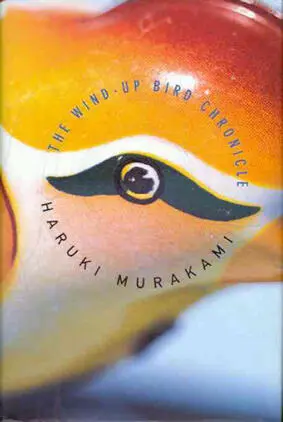
- Название:The Wind-Up Bird Chronicle
- Автор:
- Издательство:Shinchosha
- Жанр:
- Год:1998
- ISBN:0-679-77543-9
- Рейтинг книги:4 / 5. Голосов: 2
-
Избранное:Добавить в избранное
- Отзывы:
-
Ваша оценка:
The Wind-Up Bird Chronicle: краткое содержание, описание и аннотация
Предлагаем к чтению аннотацию, описание, краткое содержание или предисловие (зависит от того, что написал сам автор книги «The Wind-Up Bird Chronicle»). Если вы не нашли необходимую информацию о книге — напишите в комментариях, мы постараемся отыскать её.
In a Tokyo suburb a young man named Toru Okada searches for his wife's missing cat. Soon he finds himself looking for his wife as well in a netherworld that lies beneath the placid surface of Tokyo. As these searches intersect, Okada encounters a bizarre group of allies and antagonists: a psychic prostitute; a malevolent yet mediagenic politician; a cheerfully morbid sixteen-year-old-girl; and an aging war veteran who has been permanently changed by the hideous things he witnessed during Japan's forgotten campaign in Manchuria.
Gripping, prophetic, suffused with comedy and menace,
is a tour de force equal in scope to the masterpieces of Mishima and Pynchon.
The Wind-Up Bird Chronicle — читать онлайн бесплатно полную книгу (весь текст) целиком
Ниже представлен текст книги, разбитый по страницам. Система сохранения места последней прочитанной страницы, позволяет с удобством читать онлайн бесплатно книгу «The Wind-Up Bird Chronicle», без необходимости каждый раз заново искать на чём Вы остановились. Поставьте закладку, и сможете в любой момент перейти на страницу, на которой закончили чтение.
Интервал:
Закладка:
I'm just guessing, of course, Hamano went on. That Mongol we saw could be some anti-Soviet officer with the Outer Mongolian Army, trying to make secret contact with the Japanese Army.
Could be, I said. But you'd better watch what you say. They'll have your head.
Come on, Lieutenant. I'm not that stupid. This is just between us. He flashed me a big smile, then turned serious. But if any of this is true, its risky business. It could mean war.
I nodded in agreement. Outer Mongolia was supposedly an independent country, but it was actually more of a satellite state under the thumb of the Soviet Union. In other words, it wasn't much different from Manchukuo, where Japan held the reins of power. It did have an anti-Soviet faction, though, as everyone knew, and through secret contacts with the Japanese Army in Manchukuo, members of that faction had fomented a number of uprisings. The nucleus of the insurgent element consisted of Mongolian Army men who resented the high- handedness of the Soviet military, members of the landowning class opposed to the forced centralization of the farming industry, and priests of the Lama sect, who numbered over one hundred thousand. The only external power that the anti-Soviet faction could turn to for help was the Japanese Army stationed in Manchukuo. And they apparently felt closer to us Japanese, as fellow Asians, than they did to the Russians. Plans for a large-scale uprising had come to light in the capital city of Ulan Bator the previous year, 1937, and there had been a major purge carried out. Thousands of military men and Lamaist priests had been executed as counterrevolutionary elements in secret touch with the Japanese Army, but still anti-Soviet feeling continued to smolder in one place or another. So there would have been nothing strange about a Japanese intelligence officer crossing the Khalkha River and making secret contact with an anti-Soviet officer of the Outer Mongolian Army. To prevent such activities, the Outer Mongolian Army had guard units making constant rounds and had declared the entire band of territory ten to twenty kilometers in from the Manchukuo border to be off- limits, but this was a huge area to patrol, and they could not keep watch on every bit of it.
Even if their rebellion should succeed, it was obvious that the Soviet Army would intervene at once to crush their counterrevolutionary activity, and if that happened the insurgents would request the help of the Japanese Army, which would then give Japans Kwantung Army an excuse to intervene. Taking Outer Mongolia would amount to sticking a knife in the guts of the Soviets development of Siberia. Imperial Headquarters back in Tokyo might be trying to put the brakes on, but this was not an opportunity that the ambitious Kwantung Army General Staff was about to let slip from their fingers. The result would be no mere border dispute but a full-scale war between the Soviet Union and Japan. If such a war broke out on the Manchurian-Soviet border, Hitler might respond by invading Poland or Czechoslovakia. This was the situation that Sergeant Hamano had been referring to in his remark on the potential for war.
The sun rose the next morning, and still Yamamoto had not returned. I was the last one to stand sentry. I borrowed Sergeant Hamano's rifle, sat atop a somewhat higher sand dune, and watched the eastern sky. Dawn in Mongolia was an amazing thing. In one instant, the horizon became a faint line suspended in the darkness, and then the line was drawn upward, higher and higher. It was as if a giant hand had stretched down from the sky and slowly lifted the curtain of night from the face of the earth. It was a magnificent sight, far greater in scale, as I said earlier, than anything that I, with my limited human faculties, could fully comprehend. As I sat and watched, the feeling overtook me that my very life was slowly dwindling into nothingness. There was no trace here of anything as insignificant as human undertakings. This same event had been occurring hundreds of millions-hundreds of billions-of times, from an age long before there had been anything resembling life on earth. Forgetting that I was there to stand guard, I watched the dawning of the day, entranced.
After the sun rose fully above the horizon, I lit a cigarette, took a sip of water from my canteen, and urinated. Then I thought about Japan. I pictured my hometown in early May-the fragrance of the flowers, the babbling of the river, the clouds in the sky. Friends from long ago. Family. The chewy sweetness of a warm rice puff wrapped in oak leaf. I'm not that fond of sweets, as a rule, but I can still remember how badly I wanted a mochi puff that morning. I would have given half a years pay for one just then. And when I thought about Japan, I began to feel as if I had been abandoned at the edge of the world. Why did we have to risk our lives to fight for this barren piece of earth devoid of military or industrial value, this vast land where nothing lived but wisps of grass and biting insects? To protect my homeland, I too would fight and die. But it made no sense to me at all to sacrifice my one and only life for the sake of this desolate patch of soil from which no shaft of grain would ever spring.
Yamamoto came back at dawn the following day. I stood final watch that morning too. With the river at my back, I was staring toward the west when I heard what sounded like a horses whinny behind me. I spun around but saw nothing. I stared toward where I had heard the sound, gun at the ready. I swallowed, and the sound from my own throat was loud enough to frighten me. My trigger finger was trembling. I had never once shot a gun at anyone.
But then, some seconds later, staggering over the crest of a sand dune, came a horse bearing Yamamoto. I surveyed the area, finger still on the trigger, but no one else appeared- neither the Mongol who had come for him nor enemy soldiers. A large white moon hung in the eastern sky like some ill-omened megalith. Yamamoto's left arm seemed to have been wounded. The handkerchief he had wrapped around it was stained with blood. I woke Corporal Honda to see to the horse. Heavily lathered and breathing hard, it had obviously come a long way at high speed. Hamano stood sentry in my place, and I got the first-aid kit to treat Yamamoto's wound.
The bullet passed through, and the bleeding stopped, said Yamamoto. He was right: the bullet had missed the bone and gone all the way through, tearing only the flesh in its path. I removed the handkerchief, disinfected the openings of the wound with alcohol, and tied on a new bandage. He never flinched the whole time, though his upper lip wore a thin film of sweat. He drank deeply from a canteen, lit a cigarette, and inhaled with obvious relish. Then he took out his Browning, wedged it under his arm, removed the clip, and with one hand deftly loaded three rounds into it. We leave here right away, Lieutenant Mamiya, he said. Cross the Khalkha and head for the Manchukuo Army observation post. We broke camp quickly, with hardly a word among us, mounted the horses, and headed for the ford. I asked Yamamoto nothing about how he had been shot or by whom. I was not in a position to do so, and even if I had been, he probably wouldn't have told me. The only thought in my mind at the time was to get out of this enemy territory as quickly as possible, cross the Khalkha River, and reach the relative safety of the opposite bank.
We rode in silence, urging our horses across the grassy plain. No one spoke, but all were thinking the same thing: could we make it across that river? If an Outer Mongolian patrol reached the bridge before we did, it would be the end for us. There was no way we could win in a fight. I remember the sweat streaming under my arms. It never once dried.
Tell me, Lieutenant Mamiya, have you ever been shot? Yamamoto asked me after a long silence atop his horse.
Читать дальшеИнтервал:
Закладка:
Похожие книги на «The Wind-Up Bird Chronicle»
Представляем Вашему вниманию похожие книги на «The Wind-Up Bird Chronicle» списком для выбора. Мы отобрали схожую по названию и смыслу литературу в надежде предоставить читателям больше вариантов отыскать новые, интересные, ещё непрочитанные произведения.




Обсуждение, отзывы о книге «The Wind-Up Bird Chronicle» и просто собственные мнения читателей. Оставьте ваши комментарии, напишите, что Вы думаете о произведении, его смысле или главных героях. Укажите что конкретно понравилось, а что нет, и почему Вы так считаете.