Haruki Murakami - The Wind-Up Bird Chronicle
Здесь есть возможность читать онлайн «Haruki Murakami - The Wind-Up Bird Chronicle» весь текст электронной книги совершенно бесплатно (целиком полную версию без сокращений). В некоторых случаях можно слушать аудио, скачать через торрент в формате fb2 и присутствует краткое содержание. Год выпуска: 1998, ISBN: 1998, Издательство: Shinchosha, Жанр: Современная проза, на английском языке. Описание произведения, (предисловие) а так же отзывы посетителей доступны на портале библиотеки ЛибКат.
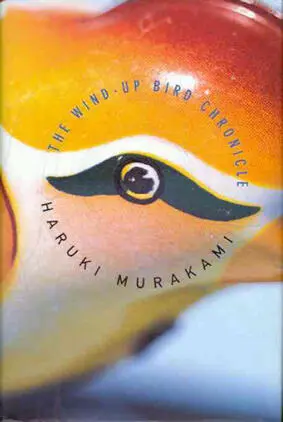
- Название:The Wind-Up Bird Chronicle
- Автор:
- Издательство:Shinchosha
- Жанр:
- Год:1998
- ISBN:0-679-77543-9
- Рейтинг книги:4 / 5. Голосов: 2
-
Избранное:Добавить в избранное
- Отзывы:
-
Ваша оценка:
The Wind-Up Bird Chronicle: краткое содержание, описание и аннотация
Предлагаем к чтению аннотацию, описание, краткое содержание или предисловие (зависит от того, что написал сам автор книги «The Wind-Up Bird Chronicle»). Если вы не нашли необходимую информацию о книге — напишите в комментариях, мы постараемся отыскать её.
In a Tokyo suburb a young man named Toru Okada searches for his wife's missing cat. Soon he finds himself looking for his wife as well in a netherworld that lies beneath the placid surface of Tokyo. As these searches intersect, Okada encounters a bizarre group of allies and antagonists: a psychic prostitute; a malevolent yet mediagenic politician; a cheerfully morbid sixteen-year-old-girl; and an aging war veteran who has been permanently changed by the hideous things he witnessed during Japan's forgotten campaign in Manchuria.
Gripping, prophetic, suffused with comedy and menace,
is a tour de force equal in scope to the masterpieces of Mishima and Pynchon.
The Wind-Up Bird Chronicle — читать онлайн бесплатно полную книгу (весь текст) целиком
Ниже представлен текст книги, разбитый по страницам. Система сохранения места последней прочитанной страницы, позволяет с удобством читать онлайн бесплатно книгу «The Wind-Up Bird Chronicle», без необходимости каждый раз заново искать на чём Вы остановились. Поставьте закладку, и сможете в любой момент перейти на страницу, на которой закончили чтение.
Интервал:
Закладка:
These had to be the men of the patrol we had seen earlier at the ford. They were few in number, and they were equipped with a light machine gun and rifles. In command was a ruggedly built noncom, the only one of the bunch to be wearing proper military boots. He was the man who had kicked me. He bent over and picked up the leather valise that Yamamoto had had by his head. Opening it, he looked inside, then he turned it upside down and shook it. All that fell to the ground was a pack of cigarettes. I could hardly believe it. With my own eyes, I had seen Yamamoto putting the document into that bag. He had taken it from a saddlebag, put it in this valise, and placed the valise by his pillow. Yamamoto struggled to maintain his cool, but I saw his expression momentarily begin to change. He obviously had no idea what had happened to the document. But whatever the explanation might be, its disappearance must have been a great relief to him. As he had said to me earlier, our number one priority was seeing to it that the document never fell into enemy hands.
The soldiers dumped all our belongings on the ground and inspected them in detail, but they found nothing important. Next they stripped us and went through our pockets. They bayoneted our clothing and packs, but they found no documents. They took our cigarettes and pens, our wallets and notebooks and watches, and pocketed them. By turns, they tried on our shoes, and anyone they fit took them. The mens arguments over who got what became pretty intense, but the noncom ignored them. I suppose it was normal among the Mongols to take booty from prisoners of war and enemy dead. The noncom took only Yamamoto's watch, leaving the other items for his men to fight over. The rest of our equipment-our pistols and ammunition and maps and compasses and binoculars-went into a cloth bag, no doubt for sending to Ulan Bator headquarters.
Next they tied us up, naked, with strong, thin rope. At close range, the Mongol soldiers smelled like a stable that had not been cleaned for a long, long time. Their uniforms were shabby, filthy with mud and dust and food stains to the point where it was all but impossible to tell what the original color had been. Their shoes were full of holes and falling off their feet-quite literally. No wonder they wanted ours. They had brutish faces for the most part, their teeth a mess, their hair long and wild. They looked more like mounted bandits or highwaymen than soldiers, but their Soviet-made weapons and their starred insignia indicated that they were regular troops of the Mongolian Peoples Republic. To me, of course, their discipline as a fighting unit and their military esprit seemed rather poor. Mongols make for tough, long-suffering soldiers, but they're not much suited to modern group warfare.
The night was freezing cold. Watching the white clouds of the Mongolian soldiers breath bloom and vanish in the darkness, I felt as if a strange error had brought me into the landscape of someone else's nightmare. I couldn't grasp that this was actually happening. It was indeed a nightmare, but only later did I come to realize that it was just the beginning of a nightmare of enormous proportions.
A short time later, one of the Mongolian soldiers came out of the darkness, dragging something heavy. With a big smile, he threw the object on the ground next to us. It was Hamano's corpse. The feet were bare: someone had already taken his boots. They proceeded to strip his clothes off, examining everything they could find in his pockets. Hands reached out for his watch, his wallet, and his cigarettes. They divided up the cigarettes and smoked them while looking through the wallet. This yielded a few pieces of Manchukuo paper money and a photo of a woman who was probably Hamano's mother. The officer in charge said something and took the money. The photo was flung to the ground.
One of the Mongolian soldiers must have sneaked up behind Hamano and slit his throat while he was standing guard. They had done to us first what we had been planning to do to them. Bright-red blood was flowing from the body's gaping wound, but for such a big wound there was not much blood; most of it had probably been lost by then. One of the soldiers pulled a knife from the scabbard on his belt, its curved blade some six inches long. He waved it in my face. I had never seen such an oddly shaped knife. It seemed to have been designed for some special purpose. The soldier made a throat-slashing motion with the knife and whistled through his teeth. Some of the others laughed. Rather than government issue, the knife seemed to be the mans personal property. Everyone had a long bayonet at his waist, but this man was the only one carrying a curved knife, and he had apparently used it to slit Hamano's throat. After a few deft swirls of the blade, he returned it to its scabbard.
Without a word, and moving only his eyes, Yamamoto sent a glance in my direction. It lasted just an instant, but I knew immediately what he was trying to say: Do you think Corporal Honda managed to get away? Through all the confusion and terror, I had been thinking the same thing: Where is Corporal Honda? If Honda escaped this sudden attack of the Outer Mongolian troops, there might be some chance for us-a slim chance, perhaps, and the question of what Honda could do out there alone was depressing, but some chance was better than no chance at all. They kept us tied up all night, lying on the sand. Two soldiers were left to watch over us: one with the light machine gun, the other with a rifle. The rest sat some distance away, smoking, talking, and laughing, seemingly relaxed now that they had captured us. Neither Yamamoto nor I said a word. The dawn temperature dropped to freezing in that place, even in May. I thought we might freeze to death, lying there naked. But the cold itself was nothing in comparison with the terror I felt. I had no idea what we were in for. These men were a simple patrol unit: they probably did not have the authority to decide what to do with us. They had to wait for orders. Which meant that we would probably not be killed right away. After that, however, there was no way to tell what would happen. Yamamoto was more than likely a spy, and I had been caught with him, so naturally I would be seen as an accomplice. In any case, we would not get off easily.
Some time after dawn broke, a sound like the drone of an airplane engine came out of the distant sky. Eventually, the silver-colored fuselage entered my field of vision. It was a Soviet- made reconnaissance plane, bearing the insignia of Outer Mongolia. The plane circled above us several times. The soldiers all waved, and the plane dipped its wing in return. Then it landed in a nearby open area, sending up clouds of sand. The earth was hard here, and there were no obstructions, which made it relatively easy to take off and land without a runway. For all I knew, they might have used the same spot for this purpose any number of times. One of the soldiers mounted a horse and galloped off toward the plane with two saddled horses in tow.
When they returned, the two horses carried men who appeared to be high-ranking officers. One was Russian, the other Mongolian. I assumed that the patrol had radioed headquarters about our capture and that the two officers had made the trip from Ulan Bator to interrogate us. They were intelligence officers, no doubt. I had heard that the GPU was at work behind the scenes in the previous years mass arrest and purge of antigovernment activists.
Both officers wore immaculate uniforms and were clean-shaven. The Russian wore a kind of trench coat with a belt. His boots shone with an unblemished luster. He was a thin man, but not very tall for a Russian, and perhaps in his early thirties. He had a wide forehead, a narrow nose, and skin almost pale pink in color, and he wore wire-rim glasses. Overall, though, this was a face that made no impression to speak of. Standing next to him, the short, stout, dark Mongolian officer looked like a little bear.
Читать дальшеИнтервал:
Закладка:
Похожие книги на «The Wind-Up Bird Chronicle»
Представляем Вашему вниманию похожие книги на «The Wind-Up Bird Chronicle» списком для выбора. Мы отобрали схожую по названию и смыслу литературу в надежде предоставить читателям больше вариантов отыскать новые, интересные, ещё непрочитанные произведения.




Обсуждение, отзывы о книге «The Wind-Up Bird Chronicle» и просто собственные мнения читателей. Оставьте ваши комментарии, напишите, что Вы думаете о произведении, его смысле или главных героях. Укажите что конкретно понравилось, а что нет, и почему Вы так считаете.