Haruki Murakami - The Wind-Up Bird Chronicle
Здесь есть возможность читать онлайн «Haruki Murakami - The Wind-Up Bird Chronicle» весь текст электронной книги совершенно бесплатно (целиком полную версию без сокращений). В некоторых случаях можно слушать аудио, скачать через торрент в формате fb2 и присутствует краткое содержание. Год выпуска: 1998, ISBN: 1998, Издательство: Shinchosha, Жанр: Современная проза, на английском языке. Описание произведения, (предисловие) а так же отзывы посетителей доступны на портале библиотеки ЛибКат.
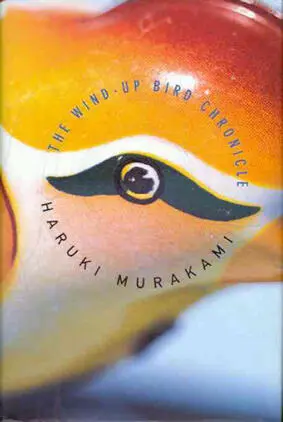
- Название:The Wind-Up Bird Chronicle
- Автор:
- Издательство:Shinchosha
- Жанр:
- Год:1998
- ISBN:0-679-77543-9
- Рейтинг книги:4 / 5. Голосов: 2
-
Избранное:Добавить в избранное
- Отзывы:
-
Ваша оценка:
The Wind-Up Bird Chronicle: краткое содержание, описание и аннотация
Предлагаем к чтению аннотацию, описание, краткое содержание или предисловие (зависит от того, что написал сам автор книги «The Wind-Up Bird Chronicle»). Если вы не нашли необходимую информацию о книге — напишите в комментариях, мы постараемся отыскать её.
In a Tokyo suburb a young man named Toru Okada searches for his wife's missing cat. Soon he finds himself looking for his wife as well in a netherworld that lies beneath the placid surface of Tokyo. As these searches intersect, Okada encounters a bizarre group of allies and antagonists: a psychic prostitute; a malevolent yet mediagenic politician; a cheerfully morbid sixteen-year-old-girl; and an aging war veteran who has been permanently changed by the hideous things he witnessed during Japan's forgotten campaign in Manchuria.
Gripping, prophetic, suffused with comedy and menace,
is a tour de force equal in scope to the masterpieces of Mishima and Pynchon.
The Wind-Up Bird Chronicle — читать онлайн бесплатно полную книгу (весь текст) целиком
Ниже представлен текст книги, разбитый по страницам. Система сохранения места последней прочитанной страницы, позволяет с удобством читать онлайн бесплатно книгу «The Wind-Up Bird Chronicle», без необходимости каждый раз заново искать на чём Вы остановились. Поставьте закладку, и сможете в любой момент перейти на страницу, на которой закончили чтение.
Интервал:
Закладка:
The Mongolian called the noncom aside, and the three men talked for a while. I guessed that the officers were asking for a detailed report. The noncom brought over a bag containing the things they had confiscated from us and showed them to the others. The Russian studied each object with great care, then put them all back into the bag. He said something to the Mongolian, who in turn spoke to the noncom. Then the Russian took a cigarette case from his breast pocket and opened it for the other two. They went on talking and smoking together. Several times, as he spoke, the Russian slammed his right fist into his left palm. He looked somewhat annoyed. The Mongolian officer kept his arms folded and his face grim, while the noncom shook his head now and then.
Eventually, the Russian officer ambled over to where we lay on the ground. Would you like a smoke? he asked in Russian. As I said earlier, I had studied Russian in college and could follow a conversation pretty well, but I pretended not to understand, so as to avoid any difficulties. Thanks, but no thanks, said Yamamoto in Russian. He was good.
Excellent, said the Soviet Army officer. Things will go more quickly if we can speak in Russian.
He removed his gloves and put them in his coat pocket. A small gold ring shone on his left hand. As you are no doubt aware, we are looking for a certain something. Looking very hard for it. And we know you have it. Don't ask how we know; we just know. But you do not have it on you now. Which means that, logically speaking, you must have hidden it before you were captured. You haven't transported it over there. He motioned toward the Khalkha River. None of you has crossed the river. The letter must be on this side, hidden somewhere. Do you understand what I have said to you so far?
Yamamoto nodded. I understand, he said, but we know nothing about a letter.
Fine, said the Russian, expressionless. In that case, I have one little question to ask you. What were you men doing over here? As you know, this territory belongs to the Mongolian Peoples Republic. What was your purpose in entering land that belongs to others? I want to hear your reason for this.
Mapmaking, Yamamoto explained. I am a civilian employee of a map company, and this man and the one they killed were with me for protection. We knew that this side of the river was your territory, and we are sorry for having crossed the border, but we did not think of ourselves as having made a territorial violation. We simply wanted to observe the topography from the vantage point of the plateau on this side.
Far from amused, the Russian officer curled his lips into a smile. We are sorry? he said slowly. Yes, of course. You wanted to see the topography from the plateau. Yes, of course. The view is always better from high ground. It makes perfect sense.
For a time he said nothing, but stared at the clouds in the sky. Then he returned his gaze to Yamamoto, shook his head slowly, and sighed.
If only I could believe what you are telling me! How much better it would be for all of us! If only I could pat you on the shoulder and say, Yes, yes, I see, now run along home across the river, and be more careful in the future. I truly wish I could do this. But unfortunately, I cannot. Because I know who you are. And I know what you are doing here. We have friends in Hailar, just as you have friends in Ulan Bator.
He took the gloves from his pocket, refolded them, and put them back. Quite honestly, I have no personal interest in hurting you or killing you. If you would simply give me the letter, then I would have no further business with you. You would be released from this place immediately at my discretion. You could cross the river and go home. I promise you that, on my honor. Anything else that happened would be an internal matter for us. It would have nothing to do with you.
The light of the sun from the east was finally beginning to warm my skin. There was no wind, and a few hard white clouds floated in the sky. A long, long silence followed. No one said a word. The Russian officer, the Mongolian officer, the men of the patrol, and Yamamoto: each preserved his own sphere of silence. Yamamoto had seemed resigned to death from the moment of our capture; his face never showed the slightest hint of expression.
The two of you ... will... almost certainly ... die here, the Russian went on slowly, a phrase at a time, as if speaking to children. And it will be a terrible death. They ... And here the Russian glanced toward the Mongolian soldiers. The big one, holding the machine gun, looked at me with a snaggletoothed grin. They love to kill people in ways that involve great difficulty and imagination. They are, shall we say, aficionados. Since the days of Genghis Khan, the Mongols have enjoyed devising particularly cruel ways to kill people. We Russians are painfully aware of this. It is part of our history lessons in school. We study what the Mon- gols did when they invaded Russia. They killed millions. For no reason at all. They captured hundreds of Russian aristocrats in Kiev and killed them all together. Do you know that story? They cut huge, thick planks, laid the Russians beneath them, and held a banquet on top of the planks, crushing them to death beneath their weight. Ordinary human beings would never think of such a thing, don't you agree? It took time and a tremendous amount of preparation. Who else would have gone to the trouble? But they did it. And why? Because it was a form of amusement to them. And they still enjoy doing such things. I saw them in action once. I thought I had seen some terrible things in my day, but that night, as you can imagine, I lost my appetite. Do you understand what I am saying to you? Am I speaking too quickly?
Yamamoto shook his head.
Excellent, said the Russian. He paused, clearing his throat. Of course, this will be the second time for me. Perhaps my appetite will have returned by dinnertime. If possible, however, I would prefer to avoid unnecessary killing.
Hands clasped together behind his back, he looked up at the sky for a time. Then he took his gloves out and glanced toward the plane. Beautiful weather, he said. Spring. Still a little cold, but just about right. Any hotter, and there would be mosquitoes. Terrible mosquitoes. Yes, spring is much better than summer. He took out his cigarette case again, put a cigarette between his lips, and lit it with a match. Slowly, he drew the smoke into his lungs, and slowly he let it out again. I'm going to ask you once more: Do you insist that you really know nothing about the letter?
Yamamoto said only one word: Nyet.
Fine, said the Russian. Fine. Then he said something in Mongolian to the Mongolian officer. The man nodded and barked an order to the soldiers. They carried over some rough logs and began to sharpen them with their bayonets, quickly turning them into four stakes. Pacing off the distance between the stakes, they pounded them into the ground with rocks at the four corners of a square. All these preparations took some twenty minutes to complete, I guessed, but I had absolutely no idea what they were for.
The Russian said, To them, an excellent slaughter is like an excellent meal. The longer they take with their preparations, the more enjoyment they derive from the act. Simply killing a man is no problem: one pistol shot and its all over. But that would not be-and here he ran his fingertip slowly over his smooth chin-very interesting.
They untied Yamamoto and led him to the staked-off area. There they tied his arms and legs to the four stakes. Stretched out on the ground, stark naked, Yamamoto had several raw wounds on his body.
As you know, these people are shepherds, said the Russian officer. And shepherds use their sheep in many ways: they eat their flesh, they shear their wool, they take their hides. To them, sheep are the perfect animal. They spend their days with sheep-their whole lives with sheep. They know how to skin them with amazing skill. The hides they use for tents and clothing. Have you ever seen them skin a sheep?
Читать дальшеИнтервал:
Закладка:
Похожие книги на «The Wind-Up Bird Chronicle»
Представляем Вашему вниманию похожие книги на «The Wind-Up Bird Chronicle» списком для выбора. Мы отобрали схожую по названию и смыслу литературу в надежде предоставить читателям больше вариантов отыскать новые, интересные, ещё непрочитанные произведения.







Обсуждение, отзывы о книге «The Wind-Up Bird Chronicle» и просто собственные мнения читателей. Оставьте ваши комментарии, напишите, что Вы думаете о произведении, его смысле или главных героях. Укажите что конкретно понравилось, а что нет, и почему Вы так считаете.