Haruki Murakami - The Wind-Up Bird Chronicle
Здесь есть возможность читать онлайн «Haruki Murakami - The Wind-Up Bird Chronicle» весь текст электронной книги совершенно бесплатно (целиком полную версию без сокращений). В некоторых случаях можно слушать аудио, скачать через торрент в формате fb2 и присутствует краткое содержание. Год выпуска: 1998, ISBN: 1998, Издательство: Shinchosha, Жанр: Современная проза, на английском языке. Описание произведения, (предисловие) а так же отзывы посетителей доступны на портале библиотеки ЛибКат.
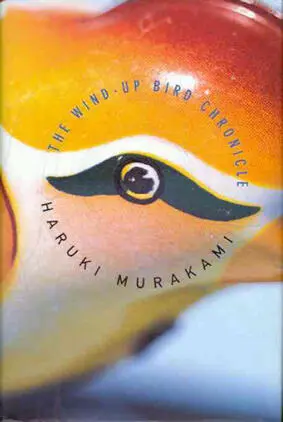
- Название:The Wind-Up Bird Chronicle
- Автор:
- Издательство:Shinchosha
- Жанр:
- Год:1998
- ISBN:0-679-77543-9
- Рейтинг книги:4 / 5. Голосов: 2
-
Избранное:Добавить в избранное
- Отзывы:
-
Ваша оценка:
The Wind-Up Bird Chronicle: краткое содержание, описание и аннотация
Предлагаем к чтению аннотацию, описание, краткое содержание или предисловие (зависит от того, что написал сам автор книги «The Wind-Up Bird Chronicle»). Если вы не нашли необходимую информацию о книге — напишите в комментариях, мы постараемся отыскать её.
In a Tokyo suburb a young man named Toru Okada searches for his wife's missing cat. Soon he finds himself looking for his wife as well in a netherworld that lies beneath the placid surface of Tokyo. As these searches intersect, Okada encounters a bizarre group of allies and antagonists: a psychic prostitute; a malevolent yet mediagenic politician; a cheerfully morbid sixteen-year-old-girl; and an aging war veteran who has been permanently changed by the hideous things he witnessed during Japan's forgotten campaign in Manchuria.
Gripping, prophetic, suffused with comedy and menace,
is a tour de force equal in scope to the masterpieces of Mishima and Pynchon.
The Wind-Up Bird Chronicle — читать онлайн бесплатно полную книгу (весь текст) целиком
Ниже представлен текст книги, разбитый по страницам. Система сохранения места последней прочитанной страницы, позволяет с удобством читать онлайн бесплатно книгу «The Wind-Up Bird Chronicle», без необходимости каждый раз заново искать на чём Вы остановились. Поставьте закладку, и сможете в любой момент перейти на страницу, на которой закончили чтение.
Интервал:
Закладка:
We were setting up camp that evening when a man approached us from the distance, riding alone. He was a Mongol. The Mongols use an unusually high saddle, which makes it easy to distinguish them from afar. Sergeant Hamano snapped up his rifle when he saw the figure approaching, but Yamamoto told him not to shoot. Hamano slowly lowered his rifle without a word. The four of us stood there, waiting for the man to draw closer. He had a Soviet-made rifle strapped to his back and a Mauser at his waist. Whiskers covered his face, and he wore a hat with earflaps. His filthy robes were the same kind as the nomads, but you could tell from the way he handled himself that he was a professional soldier.
Dismounting, the man spoke to Yamamoto in what I assumed was Mongolian. I had some knowledge of both Russian and Chinese, and what he spoke was neither of those, so it must have been Mongolian. Yamamoto answered in the mans own language. This made me surer than ever that Yamamoto was an intelligence officer.
Yamamoto said to me, Lieutenant Mamiya, I will be leaving with this man. I don't know how long I will be away, but I want you to wait here- posting a sentry at all times, of course. If I am not back in thirty-six hours, you are to report that fact to headquarters. Send one man back across the river to the Manchukuo Army observation post. He mounted his horse and rode off with the Mongol, heading west.
The three of us finished setting up camp and ate a simple dinner. We couldn't cook or build a campfire. On that vast steppe, with nothing but low sand dunes to shield our presence as far as the eye could see, the least puff of smoke would have led to our immediate capture. We pitched our tents low in the shelter of the dunes, and for supper we ate dry crackers and cold canned meat. Darkness swiftly covered us when the sun sank beneath the horizon, and the sky was filled with an incredible number of stars. Mixed in with the roar of the Khalkha River, the sound of wolves howling came to us as we lay atop the sand, recovering from the days exertions.
Sergeant Hamano said to me, Looks like a tough spot we've got ourselves in, and I had to agree with him. By then, the three of us- Sergeant Hamano, Corporal Honda, and I-had gotten to know each other pretty well. Ordinarily, a fresh young officer like me would be kept at arms length and laughed at by a seasoned noncommissioned officer like Sergeant Hamano, but our case was different. He respected the education I had received in a nonmilitary college, and I took care to acknowledge his combat experience and practical judgment without letting rank get in the way. We also found it easy to talk to each other because he was from Yamaguchi and I was from an area of Hiroshima close to Yamaguchi. He told me about the war in China. He was a soldier all the way, with only grammar school behind him, but he had his own reservations about this messy war on the continent, which looked as if it would never end, and he expressed these feelings honestly to me. I don't mind fighting, he said. I'm a soldier. And I don't mind dying in battle for my country, because thats my job. But this war were fighting now, Lieutenant-well, its just not right. Its not a real war, with a battle line where you face the enemy and fight to the finish. We advance, and the enemy runs away without fighting. Then the Chinese soldiers take their uniforms off and mix with the civilian population, and we don't even know who the enemy is. So then we kill a lot of innocent people in the name of flushing out renegades or remnant troops, and we commandeer provisions. We have to steal their food, because the line moves forward so fast our supplies cant catch up with us. And we have to kill our prisoners, because we don't have anyplace to keep them or any food to feed them. Its wrong, Lieutenant. We did some terrible things in Nanking. My own unit did. We threw dozens of people into a well and dropped hand grenades in after them. Some of the things we did I couldn't bring myself to talk about. I'm telling you, Lieutenant, this is one war that doesn't have any Righteous Cause. Its just two sides killing each other. And the ones who get stepped on are the poor farmers, the ones without politics or ideology. For them, theres no Nationalist Party, no Young Marshal Zhang, no Eighth Route Army. If they can eat, they're happy. I know how these people feel: I'm the son of a poor fisherman myself. The little people slave away from morning to night, and the best they can do is keep themselves alive-just barely. I cant believe that killing these people for no reason at all is going to do Japan one bit of good.
In contrast to Sergeant Hamano, Corporal Honda had very little to say about himself. He was a quiet fellow, in any case. He'd mostly listen to us talk, without injecting his own comments. But while I say he was quiet, I don't mean to imply there was anything dark or melancholy about him. Its just that he rarely took the initiative in a conversation. True, that often made me wonder what was on his mind, but there was nothing unpleasant about him. If anything, there was something in his quiet manner that softened peoples hearts. He was utterly serene. He wore the same look on his face no matter what happened. I gathered he was from Asahikawa, where his father ran a small print shop. He was two years younger than I, and from the time he left middle school he had joined his brothers, working for his father. He was the youngest of three boys, the eldest of whom had been killed in China two years earlier. He loved to read, and whenever we had a spare moment, you'd see him curled up somewhere, reading a book on some kind of Buddhist topic.
As I said earlier, Honda had absolutely no combat experience, but with only one year of training behind him, he was an outstanding soldier. There are always one or two such men in any platoon, who, patient and enduring, carry out their duties to the letter without a word of complaint. Physically strong, with good intuition, they instantly grasp what you tell them and get the job done right. Honda was one of those. And because he had had cavalry training, he was the one who knew the most about horses; he took care of the six we had with us. And he did this in an extraordinary way. It sometimes seemed to us that he understood every little thing the horses were feeling. Sergeant Hamano acknowledged Corporal Honda's abilities immediately and let him take charge of many things without the slightest hesitation.
So, then, for such an oddly patched-together unit, we attained an extraordinarily high degree of mutual understanding. And precisely because we were not a regular unit, we had none of that by-the-book military formality. We were so at ease with one another, it was almost as if Karma had brought us together. Which is why Sergeant Hamano was able to say openly to me things that lay far beyond the fixed framework of officer and noncom.
Tell me, Lieutenant, he once asked, what do you think of this fellow Yamamoto?
Secret service, I'm willing to bet, I said. Anybody who can speak Mongol like that has got to be a pro. And he knows this area like the back of his hand.
That's what I think. At first I thought he might be one of those mounted bandits connected with top brass, but that cant be it. I know those guys. They'll talk your ear off and make up half of what they tell you. And they're quick on the trigger. But this Yamamoto guys no lightweight. Hes got guts. He is brass-and way up there. I can smell em a mile away. I heard something about some kind of secret tactical unit the army's trying to put together with Mongols from Soviet-trained troops, and that they brought over a few of our pros to run the operation. He could be connected with that.
Corporal Honda was standing sentry a little ways away from us, holding his rifle. I had my Browning lying close by, where I could grab it at any time. Sergeant Hamano had taken his gaiters off and was massaging his feet.
Читать дальшеИнтервал:
Закладка:
Похожие книги на «The Wind-Up Bird Chronicle»
Представляем Вашему вниманию похожие книги на «The Wind-Up Bird Chronicle» списком для выбора. Мы отобрали схожую по названию и смыслу литературу в надежде предоставить читателям больше вариантов отыскать новые, интересные, ещё непрочитанные произведения.






Обсуждение, отзывы о книге «The Wind-Up Bird Chronicle» и просто собственные мнения читателей. Оставьте ваши комментарии, напишите, что Вы думаете о произведении, его смысле или главных героях. Укажите что конкретно понравилось, а что нет, и почему Вы так считаете.