Haruki Murakami - The Wind-Up Bird Chronicle
Здесь есть возможность читать онлайн «Haruki Murakami - The Wind-Up Bird Chronicle» весь текст электронной книги совершенно бесплатно (целиком полную версию без сокращений). В некоторых случаях можно слушать аудио, скачать через торрент в формате fb2 и присутствует краткое содержание. Год выпуска: 1998, ISBN: 1998, Издательство: Shinchosha, Жанр: Современная проза, на английском языке. Описание произведения, (предисловие) а так же отзывы посетителей доступны на портале библиотеки ЛибКат.
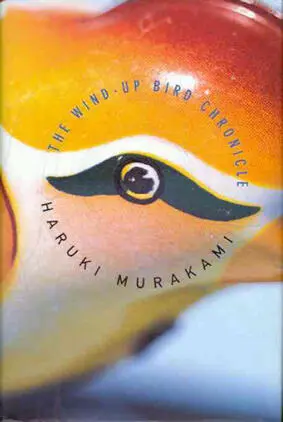
- Название:The Wind-Up Bird Chronicle
- Автор:
- Издательство:Shinchosha
- Жанр:
- Год:1998
- ISBN:0-679-77543-9
- Рейтинг книги:4 / 5. Голосов: 2
-
Избранное:Добавить в избранное
- Отзывы:
-
Ваша оценка:
The Wind-Up Bird Chronicle: краткое содержание, описание и аннотация
Предлагаем к чтению аннотацию, описание, краткое содержание или предисловие (зависит от того, что написал сам автор книги «The Wind-Up Bird Chronicle»). Если вы не нашли необходимую информацию о книге — напишите в комментариях, мы постараемся отыскать её.
In a Tokyo suburb a young man named Toru Okada searches for his wife's missing cat. Soon he finds himself looking for his wife as well in a netherworld that lies beneath the placid surface of Tokyo. As these searches intersect, Okada encounters a bizarre group of allies and antagonists: a psychic prostitute; a malevolent yet mediagenic politician; a cheerfully morbid sixteen-year-old-girl; and an aging war veteran who has been permanently changed by the hideous things he witnessed during Japan's forgotten campaign in Manchuria.
Gripping, prophetic, suffused with comedy and menace,
is a tour de force equal in scope to the masterpieces of Mishima and Pynchon.
The Wind-Up Bird Chronicle — читать онлайн бесплатно полную книгу (весь текст) целиком
Ниже представлен текст книги, разбитый по страницам. Система сохранения места последней прочитанной страницы, позволяет с удобством читать онлайн бесплатно книгу «The Wind-Up Bird Chronicle», без необходимости каждый раз заново искать на чём Вы остановились. Поставьте закладку, и сможете в любой момент перейти на страницу, на которой закончили чтение.
Интервал:
Закладка:
As peaceful as things supposedly were, it was still war, after all, so there were constant maneuvers. I didn't have to participate in those, either, fortunately. They took place under terrible conditions. The temperature would drop to forty or fifty degrees below zero. One false step in maneuvers like that, and you could end up dead. Every single time they held such maneuvers, there would be hundreds of men in the hospital with frostbite or sent to a hot spring for treatment. Hsinching was no big city, but it was certainly an exotic foreign place, and if you wanted to have fun there, it provided plenty of opportunities. New single officers like me lived together in a kind of rooming house rather than in barracks. It was more like an extension of student life. I took it easy, thinking that I would have nothing to complain about if my military service ended like this, just one peaceful day after another.
It was, of course, a make-believe peace. Just beyond the edges of our little circle of sunshine, a ferocious war was going on. Most Japanese realized that the war with China would turn into a muddy swamp from which we could never extricate ourselves, I believe-or at least any Japanese with a brain in his head realized this. It didn't matter how many local battles we won: there was no way Japan could continue to occupy and rule over such a huge country. It was obvious if you thought about it. And sure enough, as the fighting continued, the number of dead and wounded began to multiply. Relations with America went from bad to worse. Even at home, the shadows of war grew darker with every passing day. Those were dark years then: 1937, 1938. But living the easy life of an officer in Hsinching, you almost wanted to ask, War? What war? Wed go out drinking and carousing every night, and we'd visit the cafes that had the White Russian girls.
Then, one day late in April 1938, a senior officer of the general staff called me in and introduced me to a fellow in mufti named Yamamoto. He wore his hair short and had a mustache. He was not a very tall man. As for his age, Id say he was in his mid-thirties. He had a scar on the back of his neck that looked as if it might have been made by a blade of some kind. The officer said to me: Mr. Yamamoto is a civilian. Hes been hired by the army to investigate the life and customs of the Mongolians who live in Manchukuo. He will next be going to the Hulunbuir Steppe, near the Outer Mongolian border, and we are going to supply him with an armed escort. You will be a member of that detachment. I didn't believe a thing he was telling me. This Yamamoto fellow might have been wearing civilian clothes, but anybody could tell at a glance that he was a professional soldier. The look in his eyes, the way he spoke, his posture: it was obvious. I figured he was a high-ranking officer or had something to do with intelligence and was on a mission that required him to conceal his military identity. There was something ominous about the whole thing.
Three of us were assigned to accompany Yamamoto-too few for an effective armed escort, though a larger group would have attracted the attention of the Outer Mongolian troops deployed along the border. One might have chosen to view this as a case of entrusting a sensitive mission to a few handpicked men, but the truth was far from that. I was the only officer, and I had zero battlefield experience. The only one we could count on for fighting power was a sergeant by the name of Hamano. I knew him well, as a soldier who had been assigned to assist the general staff. He was a tough fellow who had worked his way up through the ranks to become a noncommissioned officer, and he had distinguished himself in battle in China. He was big and fearless, and I was sure we could count on him in a. pinch. Why they had also included Corporal Honda in our party I had no idea. Like me, he had just arrived from home, and of course he had no experience on the battlefield. He was a gentle, quiet soul who looked as if he would be no help at all in a fight. Whats more, he belonged to the Seventh Division, which meant that the general staff had gone out of their way to have him sent over to us specifically for this assignment. That's how valuable a soldier he was, though not until much later did the reason for this become clear.
I was chosen to be the commanding officer of the escort because my primary responsibility was the topography of the western border of Manchukuo in the area of the Khalkha River. My job was to make sure that our maps of the district were as complete as possible. I had even been over the area several times in a plane. My presence was meant to help the mission go smoothly. My second assignment was to gather more detailed topographical information on the district and so increase the precision of our maps. Two birds with one stone, as it were. To be quite honest, the maps we had in those days of the Hulunbuir Steppe border region with Outer Mongolia were crude things-hardly an improvement over the old Manchu dynasty maps. The Kwantung Army had done several surveys following the establishment of Manchukuo. They wanted to make more accurate maps, but the area they had to cover was huge, and western Manchuria is just an endless desert. National borders don't mean very much in such a vast wilderness. The Mongolian nomads had lived there for thousands of years without the need-or even the concept-of borders.
The political situation had also delayed the making of more accurate maps. Which is to say that if we had gone ahead and unilaterally made an official map showing our idea of the border, it could have caused a full-scale international incident. Both the Soviet Union and Outer Mongolia, which shared borders with Manchukuo, were extremely sensitive about border violations, and there had been several instances of bloody combat over just such matters. In our day, the army was in no mood for war with the Soviet Union. All our force was invested in the war with China, with none to spare for a large-scale clash with the Soviets. We didn't have the divisions or the tanks or the artillery or the planes. The first priority was to secure the stability of Manchukuo, which was still a relatively new political entity. Establishment of the northern and northwestern borders could wait, as far as the army was concerned. They wanted to stall for time by keeping things indefinite. Even the mighty Kwantung Army deferred to this view and adopted a wait-and-see attitude. As a result, everything had been allowed to drift in a sea of vagueness.
If, however, their best-laid plans notwithstanding, some unforeseen event should lead to war (which is exactly what did happen the following year at Nomonhan), we would need maps to fight. And not just ordinary civilian maps, but real combat maps. To fight a war you need maps that show you where to establish encampments, the most effective place to set up your artillery, how many days it will take your infantry to march there, where to secure water, how much feed you need for your horses: a great deal of detailed information. You simply couldn't fight a modern war without such maps. Which is why much of our work overlapped with the work of the intelligence division, and we were constantly exchanging information with the Kwantung Army's intelligence section or the military secret service in Hailar. Everyone knew everyone else, but this Yamamoto fellow was someone I had never seen before.
After five days of preparation, we left Hsinching for Hailar by train. We took a truck from there, drove it through the area of the Khandurbyo Lamaist temple, and arrived at the Manchukuo Army's border observation post near the Khalkha River. I don't remember the exact distance, but it was something like two hundred miles. The region was an empty wilderness, with literally nothing as far as the eye could see. My work required me to keep checking my map against the actual landforms, but there was nothing out there for me to check against, nothing that one could call a landmark. All I could see were shaggy, grass- covered mounds stretching on and on, the unbroken horizon, and clouds floating in the sky. There was no way I could have any precise idea where on the map we were. All I could do was guess according to the amount of time we had been driving.
Читать дальшеИнтервал:
Закладка:
Похожие книги на «The Wind-Up Bird Chronicle»
Представляем Вашему вниманию похожие книги на «The Wind-Up Bird Chronicle» списком для выбора. Мы отобрали схожую по названию и смыслу литературу в надежде предоставить читателям больше вариантов отыскать новые, интересные, ещё непрочитанные произведения.





Обсуждение, отзывы о книге «The Wind-Up Bird Chronicle» и просто собственные мнения читателей. Оставьте ваши комментарии, напишите, что Вы думаете о произведении, его смысле или главных героях. Укажите что конкретно понравилось, а что нет, и почему Вы так считаете.