Haruki Murakami - The Wind-Up Bird Chronicle
Здесь есть возможность читать онлайн «Haruki Murakami - The Wind-Up Bird Chronicle» весь текст электронной книги совершенно бесплатно (целиком полную версию без сокращений). В некоторых случаях можно слушать аудио, скачать через торрент в формате fb2 и присутствует краткое содержание. Год выпуска: 1998, ISBN: 1998, Издательство: Shinchosha, Жанр: Современная проза, на английском языке. Описание произведения, (предисловие) а так же отзывы посетителей доступны на портале библиотеки ЛибКат.
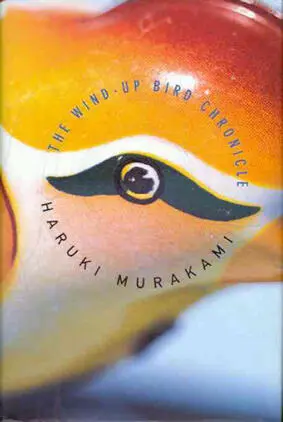
- Название:The Wind-Up Bird Chronicle
- Автор:
- Издательство:Shinchosha
- Жанр:
- Год:1998
- ISBN:0-679-77543-9
- Рейтинг книги:4 / 5. Голосов: 2
-
Избранное:Добавить в избранное
- Отзывы:
-
Ваша оценка:
The Wind-Up Bird Chronicle: краткое содержание, описание и аннотация
Предлагаем к чтению аннотацию, описание, краткое содержание или предисловие (зависит от того, что написал сам автор книги «The Wind-Up Bird Chronicle»). Если вы не нашли необходимую информацию о книге — напишите в комментариях, мы постараемся отыскать её.
In a Tokyo suburb a young man named Toru Okada searches for his wife's missing cat. Soon he finds himself looking for his wife as well in a netherworld that lies beneath the placid surface of Tokyo. As these searches intersect, Okada encounters a bizarre group of allies and antagonists: a psychic prostitute; a malevolent yet mediagenic politician; a cheerfully morbid sixteen-year-old-girl; and an aging war veteran who has been permanently changed by the hideous things he witnessed during Japan's forgotten campaign in Manchuria.
Gripping, prophetic, suffused with comedy and menace,
is a tour de force equal in scope to the masterpieces of Mishima and Pynchon.
The Wind-Up Bird Chronicle — читать онлайн бесплатно полную книгу (весь текст) целиком
Ниже представлен текст книги, разбитый по страницам. Система сохранения места последней прочитанной страницы, позволяет с удобством читать онлайн бесплатно книгу «The Wind-Up Bird Chronicle», без необходимости каждый раз заново искать на чём Вы остановились. Поставьте закладку, и сможете в любой момент перейти на страницу, на которой закончили чтение.
Интервал:
Закладка:
Sometimes, when one is moving silently through such an utterly desolate landscape, an overwhelming hallucination can make one feel that oneself, as an individual human being, is slowly coming unraveled. The surrounding space is so vast that it becomes increasingly difficult to keep a balanced grip on ones own being. I wonder if I am making myself clear. The mind swells out to fill the entire landscape, becoming so diffuse in the process that one loses the ability to keep it fastened to the physical self. That is what I experienced in the midst of the Mongolian steppe. How vast it was! It felt more like an ocean than a desert landscape. The sun would rise from the eastern horizon, cut its way across the empty sky, and sink below the western horizon. This was the only perceptible change in our surroundings. And in the movement of the sun, I felt something I hardly know how to name: some huge, cosmic love.
At the border post of the Manchukuo Army, we transferred from truck to horseback. They had everything ready for us there: four horses to ride, plus two packhorses loaded with food, water, and weapons. We were lightly armed. I and the man called Yamamoto carried only pistols. Hamano and Honda carried Model 38 regulation infantry rifles and two hand grenades each, in addition to their pistols.
The de facto commander of our group was Yamamoto. He made all the decisions and gave us instructions. Since he was supposedly a civilian, military rules required that I act as commanding officer, but no one doubted that he was the one in charge. He was simply that kind of man, for one thing, and although I held the rank of second lieutenant, I was nothing but a pencil pusher without battle experience. Military men can see who holds actual power, and that is the one they obey. Besides, my superiors had ordered me to follow Yamamoto's instructions without question. My obedience to him was to be something that transcended the usual laws and regulations.
We proceeded to the Khalkha River and followed it to the south. The river was swollen with snowmelt. We could see large fish in the water. Sometimes, in the distance, we spotted wolves. They might have been part wild dog rather than purebred wolves, but in any case they were dangerous. We had to post a sentry each night to guard the horses from them. We also saw a lot of birds, most of them migratory fowl on their way back to Siberia. Yamamoto and I discussed features of the topography. Checking our route against the map, we kept detailed notes on every bit of information that came to our notice. Aside from these technical ex- changes, however, Yamamoto hardly ever spoke to me. He spurred his horse on in silence, ate away from the rest of us, and went to sleep without a word. I had the impression that this was not his first trip to the area. He had amazingly precise knowledge of the landforms, directions, and so forth.
After we had proceeded southward for two days without incident, Yamamoto called me aside and told me that we would be fording the Khalkha before dawn the next morning. This came as a tremendous shock to me. The opposite shore was Outer Mongolian territory. Even the bank on which we stood was a dangerous area of border disputes. The Outer Mongolians laid claim to it, and Manchukuo asserted its own claims to the territory, which had led to continual armed clashes. If we were ever taken prisoner by Outer Mongolian troops on this side, the differing views of the two countries gave us some excuse for being there, though in fact there was little danger of encountering them in this season, when snowmelt made fording so difficult. The far bank was a different story altogether. Mongolian patrols were over there for certain. If we were captured there, we would have no excuse whatever. It would be a clear case of border violation, which could stir up all kinds of political problems. We could be shot on the spot, and our government would be unable to protest. In addition, my superior officer had given me no indication that it would be all right for us to cross the border. I had, of course, been told to follow Yamamoto's orders, but I had no way of knowing if this included such a grave offense as a border violation. Secondly, as I said earlier, the Khalkha was quite swollen, and the current was far too strong to make a crossing, in addition to which the water must have been freezing cold. Not even the nomadic tribes wanted to ford the river at this time of year. They usually restricted their crossings to winter, when the river was frozen, or summer, when the flow was down and the water temperature up.
When I said all this to him, Yamamoto stared at me for a moment. Then he nodded several times. I understand your concern about the violation of international borders, he said to me, with a somewhat patronizing air. It is entirely natural for you, as an officer with men under your command, to consider the locus of responsibility in such a matter. You would never want to put the lives of your men in danger without good cause. But I want you to leave such questions to me. I will assume all responsibility in this instance. I am not in a position to explain a great deal to you, but this matter has been cleared with the highest levels of the army. As regards the fording of the river, we have no technical obstacles. There is a hidden point at which it is possible to cross. The Outer Mongolian Army has constructed and secured several such points. I suspect that you are fully aware of this as well. I myself have crossed the river a number of times at this point. I entered Outer Mongolia last year at this time at this same place. There is nothing for you to worry about.
He was right about one thing. The Outer Mongolian Army, which knew this area in detail, had sent combat units-though just a few of them-across to this side of the river during the season of melting snow. They had made sure they could send whole units across at will. And if they could cross, then this man called Yamamoto could cross, and it would not be impossible for the rest of us to cross too.
We stood now at one of those secret fords that had most likely been built by the Outer Mongolian Army. Carefully camouflaged, it would not have been obvious to the casual observer. A plank bridge, held in place by ropes against the swift current, connected the shallows on either side beneath the surface of the water. A slight drop in the water level would make for an easy crossing by troop transport vehicles, armored cars, and such. Reconnaissance planes could never spot it underwater. We made our way across the rivers strong flow by clinging to the ropes. Yamamoto went first, to be certain there were no Outer Mongolian patrols in the area, and we followed. Our feet went numb in the cold water, but we and our horses struggled across to the far shore of the Khalkha River. The land rose up much higher on the far side, and standing there, we could see for miles across the desert expanse from which we had come. This was one reason the Soviet Army would always be in the more advantageous position when the battle for Nomonhan eventually broke out. The difference in elevation would also make for a huge difference in the accuracy of artillery fire. In any case, I remember being struck by how different the view was on either side of the river. I remember, too, how long it took to regain feeling in limbs that had been soaked in the icy water. I couldn't even get my voice to work for a while. But to be quite honest, the sheer tension that came from knowing I was in enemy territory was enough to make me forget about the cold. We followed the river southward. Like an undulating snake, the Khalkha flowed on below us to the left. Shortly after the crossing, Yamamoto advised us to remove all insignia of rank, and we did as we were told. Such things could only cause trouble if we were captured by the enemy, I assumed. For this reason, I also removed my officers boots and changed into gaiters.
Читать дальшеИнтервал:
Закладка:
Похожие книги на «The Wind-Up Bird Chronicle»
Представляем Вашему вниманию похожие книги на «The Wind-Up Bird Chronicle» списком для выбора. Мы отобрали схожую по названию и смыслу литературу в надежде предоставить читателям больше вариантов отыскать новые, интересные, ещё непрочитанные произведения.






Обсуждение, отзывы о книге «The Wind-Up Bird Chronicle» и просто собственные мнения читателей. Оставьте ваши комментарии, напишите, что Вы думаете о произведении, его смысле или главных героях. Укажите что конкретно понравилось, а что нет, и почему Вы так считаете.