Haruki Murakami - The Wind-Up Bird Chronicle
Здесь есть возможность читать онлайн «Haruki Murakami - The Wind-Up Bird Chronicle» весь текст электронной книги совершенно бесплатно (целиком полную версию без сокращений). В некоторых случаях можно слушать аудио, скачать через торрент в формате fb2 и присутствует краткое содержание. Год выпуска: 1998, ISBN: 1998, Издательство: Shinchosha, Жанр: Современная проза, на английском языке. Описание произведения, (предисловие) а так же отзывы посетителей доступны на портале библиотеки ЛибКат.
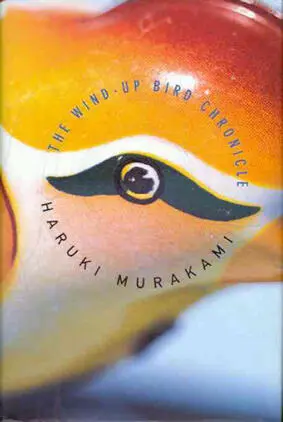
- Название:The Wind-Up Bird Chronicle
- Автор:
- Издательство:Shinchosha
- Жанр:
- Год:1998
- ISBN:0-679-77543-9
- Рейтинг книги:4 / 5. Голосов: 2
-
Избранное:Добавить в избранное
- Отзывы:
-
Ваша оценка:
The Wind-Up Bird Chronicle: краткое содержание, описание и аннотация
Предлагаем к чтению аннотацию, описание, краткое содержание или предисловие (зависит от того, что написал сам автор книги «The Wind-Up Bird Chronicle»). Если вы не нашли необходимую информацию о книге — напишите в комментариях, мы постараемся отыскать её.
In a Tokyo suburb a young man named Toru Okada searches for his wife's missing cat. Soon he finds himself looking for his wife as well in a netherworld that lies beneath the placid surface of Tokyo. As these searches intersect, Okada encounters a bizarre group of allies and antagonists: a psychic prostitute; a malevolent yet mediagenic politician; a cheerfully morbid sixteen-year-old-girl; and an aging war veteran who has been permanently changed by the hideous things he witnessed during Japan's forgotten campaign in Manchuria.
Gripping, prophetic, suffused with comedy and menace,
is a tour de force equal in scope to the masterpieces of Mishima and Pynchon.
The Wind-Up Bird Chronicle — читать онлайн бесплатно полную книгу (весь текст) целиком
Ниже представлен текст книги, разбитый по страницам. Система сохранения места последней прочитанной страницы, позволяет с удобством читать онлайн бесплатно книгу «The Wind-Up Bird Chronicle», без необходимости каждый раз заново искать на чём Вы остановились. Поставьте закладку, и сможете в любой момент перейти на страницу, на которой закончили чтение.
Интервал:
Закладка:
I have been in Tokyo two weeks altogether on this trip, said Lieutenant Mamiya, and you are the very last person to whom I am distributing a keepsake. Now I feel I can go back to Hiroshima.
I was hoping I could visit Mr. Honda's home and perhaps burn a stick of incense in his memory, I said.
That is a most laudable intention, but Mr. Honda's home-and now his grave-are in Asahikawa, Hokkaido. The family came from Asahikawa to sort out the things he left in his house in Meguro, and now they have gone back. There is nothing left.
I see, I said. So Mr. Honda was living alone in Tokyo, then, far away from his family.
That is correct. The eldest son, who lives in Asahikawa, was concerned about leaving his old father to live by himself in the big city, and he knew that it did not look very good. Apparently, he tried to persuade his father to come and live with him, but Mr. Honda simply refused.
He had a son? I asked, somewhat taken aback. I had always thought of Mr. Honda as utterly alone in the world. Then I assume Mr. Honda's wife must have passed away some time ago.
Well, that is a rather complicated story. Mrs. Honda committed a lovers suicide with another man after the war. In 1950 or 1951,1 believe. The details of that event are not something that I would know about. Mr. Honda never said too much about it, and of course I was in no position to ask.
I nodded.
After that, Mr. Honda raised his children alone-one son and one daughter. When they became independent, he moved to Tokyo by himself and began his work as a diviner, which is how you knew him.
What sort of work did he do in Asahikawa?
He was partners with his brother in a printing business. I tried to imagine Mr. Honda standing in front of a printing press in coveralls, checking proof, but to me Mr. Honda was a slightly grimy old man in a grimy old kimono with a sash more suited to a sleeping robe, who sat, winter and summer, with his legs in the sunken hearth, playing with his divining sticks atop his low table.
With deft movements, Lieutenant Mamiya used his good hand to untie the cloth bundle he had brought with him. A package emerged, shaped like a small box of candy. It was wrapped in kraft paper and tightly tied in several loops of string. The lieutenant placed it on the table and slid it toward me.
This is the keepsake that Mr. Honda left with me to give to you, he said. I picked it up. It weighed practically nothing. I couldn't begin to imagine what was inside. Shall I just go ahead and open it? I asked. Lieutenant Mamiya shook his head. I am sorry, but Mr. Honda indicated that he wished you to open it when you were alone. I nodded and returned the package to the table. In fact, said Lieutenant Mamiya, I received the letter from Mr. Honda exactly one day before he died. It said something like this: I am going to die very soon. I am not the least bit afraid of dying. This is the span of life that has been allotted to me by the will of Heaven, Where the will of Heaven is concerned, all one can do is submit to it. There is, however, something that I have left undone. In my closet there are various objects-things that I have wanted to pass on to certain people. Now it appears that I will not be able to accomplish that task. Which is why I would be most grateful if you would help me by distributing the keepsakes on the attached list. I fully realize how presumptuous this is of me, but I do hope that you will be so kind as to think of it as my dying wish and exert yourself this one last time for my sake.
I must say, I was utterly shocked to receive such a letter from Mr. Honda. I had been out of touch with him for years-perhaps six or seven years without a word. I wrote back to him immediately, but my reply crossed in the mails with the notice from his son that Mr. Honda had died. He took a sip of his green tea.
Mr. Honda knew exactly when he was going to die, Lieutenant Mamiya continued. He must have attained a state of mind that someone like me could never hope to reach. As you said in your postcard, there was something about him that moved people deeply. I felt that from the time I first met him, in the summer of 1938.
Oh, were you in the same unit with Mr. Honda at the time of the Nomonhan Incident?
No, I wasn't, said Lieutenant Mamiya, biting his lip. We were in different units- different divisions, even. We worked together in a small-scale military operation that preceded the Nomonhan battle. Corporal Honda was later wounded at Nomonhan and sent back to Japan. I didn't go to Nomonhan. I lost this hand of mine-and here Lieutenant Mamiya held up his gloved left hand-in the Soviet advance of August 1945, the month the war ended. I caught a slug in the shoulder from a heavy machine gun during a battle against a tank unit. I was on the ground, unconscious, when a Soviet tank ran over my hand. I was taken prisoner, treated in a hospital in Chita, and sent to an internment camp in Siberia. They kept me there until 1949.1 was on the continent for twelve years altogether from the time they sent me over in 1937, never set foot on Japanese soil the whole time. My family thought I had been killed fighting the Soviets. They made a grave for me in the village cemetery. I had a kind of understanding with a girl there before I left Japan, but by the time I got back she was already married to another man. Twelve years is a long time.
I nodded.
I'm sorry, Mr. Okada, he said. This talk about the old days must be boring to a young fellow like you. I would like to add one more thing, though. And that is that we were just ordinary young men, the same as you. I never once thought I wanted to be a soldier. I wanted to be a teacher. As soon as I left college, though, they sent me my draft notice, stuck me in officers training, and I ended up on the continent for twelve years. My life went by like a dream. Lieutenant Mamiya clamped his mouth shut.
If you wouldn't mind, I said, after some time had passed, I would very much like to hear the story of how you and Mr. Honda came to know each other. I genuinely wanted to know what kind of man Mr. Honda had been before I met him.
Hands placed precisely on his knees, Lieutenant Mamiya sat thinking about something. Not that he was uncertain as to what he should do. He was just thinking.
That story might be a long one, he said. I don't mind, I said. I've never told it to anyone. And I'm quite certain that Mr. Honda never told it to anyone, either. The reason I say that is that we ... made a pact... to keep this one thing secret. But Mr. Honda is dead now. I'm the only one left. It wouldn't hurt anyone if I told.
And so Lieutenant Mamiya began to tell me his story.
12 Lieutenant Mamiya's Long Story: Part I
I was shipped to Manchuria at the beginning of 1937, Lieutenant Mamiya began. I was a brand-new second lieutenant then, and they assigned me to the Kwantung Army General Staff in Hsinching. Geography had been my major in college, so I ended up in the Military Survey Corps, which specialized in mapmaking. This was ideal for me because, to be quite honest, the duties I was ordered to perform were among the easiest that anyone could hope for in the army.
In addition to this, conditions in Manchuria were relatively peaceful- or at least stable.
The recent outbreak of the China Incident had moved the theater of military operations from Manchuria into China proper. The China Expeditionary Forces were the ones doing the actual righting now, while the Kwantung Army had an easy time of it. True, mopping-up operations were still going on against anti-Japanese guerrilla units, but they were confined to the interior, and in general the worst was over. All that the powerful Kwantung Army had to do was police our newly independent puppet state of Manchukuo while keeping an eye on the north.
Читать дальшеИнтервал:
Закладка:
Похожие книги на «The Wind-Up Bird Chronicle»
Представляем Вашему вниманию похожие книги на «The Wind-Up Bird Chronicle» списком для выбора. Мы отобрали схожую по названию и смыслу литературу в надежде предоставить читателям больше вариантов отыскать новые, интересные, ещё непрочитанные произведения.


Обсуждение, отзывы о книге «The Wind-Up Bird Chronicle» и просто собственные мнения читателей. Оставьте ваши комментарии, напишите, что Вы думаете о произведении, его смысле или главных героях. Укажите что конкретно понравилось, а что нет, и почему Вы так считаете.