Jonathan Galassi - Muse
Здесь есть возможность читать онлайн «Jonathan Galassi - Muse» весь текст электронной книги совершенно бесплатно (целиком полную версию без сокращений). В некоторых случаях можно слушать аудио, скачать через торрент в формате fb2 и присутствует краткое содержание. Год выпуска: 2015, Издательство: Knopf, Жанр: Современная проза, на английском языке. Описание произведения, (предисловие) а так же отзывы посетителей доступны на портале библиотеки ЛибКат.
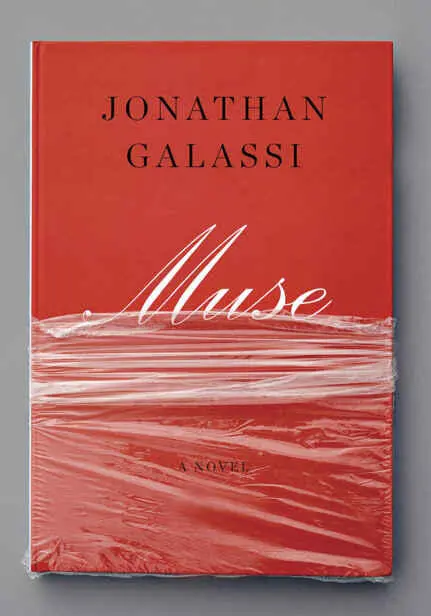
- Название:Muse
- Автор:
- Издательство:Knopf
- Жанр:
- Год:2015
- ISBN:нет данных
- Рейтинг книги:4 / 5. Голосов: 1
-
Избранное:Добавить в избранное
- Отзывы:
-
Ваша оценка:
Muse: краткое содержание, описание и аннотация
Предлагаем к чтению аннотацию, описание, краткое содержание или предисловие (зависит от того, что написал сам автор книги «Muse»). Если вы не нашли необходимую информацию о книге — напишите в комментариях, мы постараемся отыскать её.
Paul Dukach is heir apparent at Purcell & Stern, one of the last independent publishing houses in New York, whose shabby offices on Union Square belie the treasures on its list. Working with his boss, the flamboyant Homer Stern, Paul learns the ins and outs of the book trade — how to work an agent over lunch; how to swim with the literary sharks at the Frankfurt Book Fair; and, most important, how to nurse the fragile egos of the dazzling, volatile authors he adores.
But Paul's deepest admiration has always been reserved for one writer: poet Ida Perkins, whose audacious verse and notorious private life have shaped America's contemporary literary landscape, and whose longtime publisher — also her cousin and erstwhile lover — happens to be Homer’s biggest rival. And when Paul at last has the chance to meet Ida at her Venetian palazzo, she entrusts him with her greatest secret — one that will change all of their lives forever.
Studded with juicy details only a quintessential insider could know, written with both satiric verve and openhearted nostalgia,
is a brilliant, haunting book about the beguiling interplay between life and art, and the eternal romance of literature.
Muse — читать онлайн бесплатно полную книгу (весь текст) целиком
Ниже представлен текст книги, разбитый по страницам. Система сохранения места последней прочитанной страницы, позволяет с удобством читать онлайн бесплатно книгу «Muse», без необходимости каждый раз заново искать на чём Вы остановились. Поставьте закладку, и сможете в любой момент перейти на страницу, на которой закончили чтение.
Интервал:
Закладка:
In excoriating the self-congratulatory liberal clerisy, Pepita had refused with remarkable success to be labeled a black or a woman writer, or a left-winger, or a sexual renegade. She was also an indefatigable culture vulture, hoovering up every civilizing tidbit she could get her hands on — poetry, literary theory, dance, music, theater, film. She was an insatiable maw of desire and need to know, to experience, to opine. And her insatiability extended to the creators themselves, for Pepita had boundary issues. Approbation, in someone as constitutionally critical as she, often got confused with passion, and her affairs with the writers, dancers, and artists she looked up to were widely known. Paul referred to them as her “seminars”—private sessions with the masters in their fields, held at their feet and sometimes in their beds. Men or women, it made no difference to Pepita, as long as her chosen objects could give her a run for her formidable mental money and momentarily assuage her need for recognition and response. She was literally enamored with art — arguably less so with the individuals who created it, who often turned out to have inconvenient needs and egos of their own, which on occasion dwarfed even hers.
Homer always referred to Pepita as Pootie. He had nicknames for many of his current favorite — or unfavorite — allies or antagonists. (Sometimes it was hard to tell the difference.) The Nympho, the Dauphin, the Dwarf, and the Slightly Used Canadian, whatever that meant, were only some of the characters in the eternal soap opera that was publishing for him.
One day Paul got up the courage to ask him, “Why do you call Pepita Pootie, Homer?” To which he answered matter-of-factly, “Because she’s such a sweet little pootie-tat.”
Right. Of the attributes that could be assigned to Pepita — brilliance, originality, courage, stridency, arrogance, neediness, narcissism — sweetness was not first among them. Indeed, her nickname around the office, “the Purring P,” told you everything you needed to know about her relations with the staff. Homer’s moniker showed that he had been on the receiving end of Pepita’s cat’s — or bear’s — paw often enough; indeed, it was clear to one and all that she had him in her thrall.
After all, it was Pepita’ s voice — insolent, belabored with Germanic Seriousness, lightened and enlivened by a dash of jive, and insistent on its own unimpeachability — that had become the hallmark of P & S style. At a critical point in its history, Pepita’s intellectual reach and tropism for controversy had lent the house an aura of urgent cultural significance that it had never lost. Pepita Erskine, the scourge of white liberalism, had become white liberalism’s dangerous darling — and the quintessential P & S author. She certainly thought so, and Homer concurred, and they had a correspondingly intense relationship — part father-daughter, part professional, part flirtatious (Paul had heard they’d been lovers; he couldn’t be sure, but he knew that for Homer no complicated relationship with a woman could fail to be sexual in some sense) — and 100 percent transactional.
Paul remembered how, long before he’d worked for Homer, he’d run into him lunching with Pepita in the old restaurant at One Fifth Avenue. They were sitting side by side, wearing matching leather jackets and exuding a bonhomie that felt faintly postcoital to Paul. Glamorous Meredith Gethers, the agent who was Paul’s date that day, brought him over to their banquette to say hello. Homer was civil, just barely, but when Meredith started to commiserate about the Daily Blade ’s scathing review of her client Earl Burns’s new novel, he cut her off. “It’s a fart in the wind,” he sneered with a dismissive wave, before turning back to the real object of his interest.
One of Pepita’s most notable seminars had been with Dmitry Chavchavadze, the émigré Georgian poet. The fact that he lived in Atlanta, where he held an endowed chair at Emory University, confused matters, for people were often unsure which kind of Georgian he was. On his arrival in New York in 1982 after being expelled from Brezhnev’s Soviet Union, Dmitry had been lionized by Manhattan’s glitterati, until they bumped up against his hard-line rightist politics, by which time it was too late. Before you could say Bozhe moi, Pepita and Dmitry had become inseparable.
Pepita, who had a gorgeous ebony complexion set off with cherry-red lipstick and a high-teased Afro, dressed like a Seven Sisters coed of yesteryear in flared corduroy skirts and penny loafers, while Dmitry, with his soul patch and filled-out figure, looked like what he was, an aging émigré intellectual on the dole in America’s groves of academe. Their seminar lasted only a few months, for in Dmitry, Pepita’s ego had more than met its steely match. Paul used to say that you didn’t get to be Dmitry Chavchavadze or Pepita Erskine by being nice (her war with Susan Sontag over the black characters in Jean Genet’s dramas had gone practically nuclear). But Dmitry, with his unmovable detestation of Communism, his intransigent commitment to poetic formalism, and his bludgeoning disdain for his intellectual inferiors, took the cake.
Dmitry’s hatred of his Soviet tormentors meant that he approved of all anti-Communists, first among them Ronald Reagan, and considered left-leaners “dangerous fools”—and it was during their short-lived liaison that Pepita’s notorious rightward shift had begun. From the hammer-and-tongs opponent of midcult conformism of her early essays, she reemerged in her later years as a defender of the much-maligned and soon-to-disappear literary canon, the ultimate Great Books girl she’d once been in Black Bottom, where, as a bucktoothed teenager, she’d inhaled volume after volume of the Modern Library.
Dmitry was considered the most important Georgian poet of the century, and the Swedish Academy had concurred, enNobeling him unprecedentedly early, at the age of thirty-eight. His poems in Russian were said to be at once hypnotically lyrical and cynically disaffected, but some saw the English-language versions, which he insisted on creating himself, as an unintentional pastiche that relied on an insufficient understanding of his target language. Still, his status as a freedom fighter combined with his brilliance and take-no-prisoners implacability conferred impregnable authority on Dmitry. “Is sheet!” he’d shout, about the work of a writer he didn’t rate, which was most of them. “Sheet! Sheet! Sheet!!” This turned out to be a surefire argumentative technique, since few had the temerity to disagree — except, on occasion, the fearless Pepita. And their relationship came a cropper over … who else but Ida Perkins?
Dmitry had met Ida and A.O. in Venice soon after he’d been expelled from the Soviet Union. Needless to say, he had nothing but contempt for Outerbridge, whom he derided as an apologist for the worst criminal in modern history. So their encounter, as one might have expected, had not gone well. Homer’s cousin Celine Mannheim, the modernist collector, who was Arnold’s landlady in Venice — he and Ida lived in a flat that looked over Celine’s luxuriant garden on Dorsoduro — had given a reception in honor of Dmitry’s arrival and had been shocked to come upon her glamorous new social trophy making a scene, insulting her tenant in her own salon. Ida, needless to say, had been outraged, and she’d gone on the record about it. “Georgian Honor,” her scathing takedown of Dmitry’s Stalinist anti-Stalinism, had occasioned the longest-running exchange of letters in the history of The Protagonist, the savage old-left review. Pepita, to the surprise of many, had taken Arnold’s (and Ida’s) part, and this had proven intolerable for Dmitry.
Читать дальшеИнтервал:
Закладка:
Похожие книги на «Muse»
Представляем Вашему вниманию похожие книги на «Muse» списком для выбора. Мы отобрали схожую по названию и смыслу литературу в надежде предоставить читателям больше вариантов отыскать новые, интересные, ещё непрочитанные произведения.







Обсуждение, отзывы о книге «Muse» и просто собственные мнения читателей. Оставьте ваши комментарии, напишите, что Вы думаете о произведении, его смысле или главных героях. Укажите что конкретно понравилось, а что нет, и почему Вы так считаете.