Jonathan Galassi - Muse
Здесь есть возможность читать онлайн «Jonathan Galassi - Muse» весь текст электронной книги совершенно бесплатно (целиком полную версию без сокращений). В некоторых случаях можно слушать аудио, скачать через торрент в формате fb2 и присутствует краткое содержание. Год выпуска: 2015, Издательство: Knopf, Жанр: Современная проза, на английском языке. Описание произведения, (предисловие) а так же отзывы посетителей доступны на портале библиотеки ЛибКат.
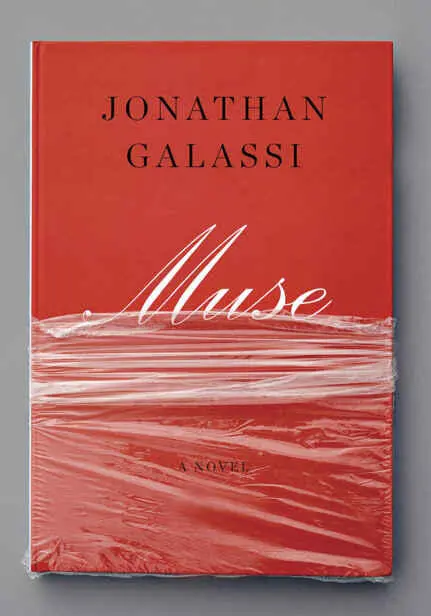
- Название:Muse
- Автор:
- Издательство:Knopf
- Жанр:
- Год:2015
- ISBN:нет данных
- Рейтинг книги:4 / 5. Голосов: 1
-
Избранное:Добавить в избранное
- Отзывы:
-
Ваша оценка:
Muse: краткое содержание, описание и аннотация
Предлагаем к чтению аннотацию, описание, краткое содержание или предисловие (зависит от того, что написал сам автор книги «Muse»). Если вы не нашли необходимую информацию о книге — напишите в комментариях, мы постараемся отыскать её.
Paul Dukach is heir apparent at Purcell & Stern, one of the last independent publishing houses in New York, whose shabby offices on Union Square belie the treasures on its list. Working with his boss, the flamboyant Homer Stern, Paul learns the ins and outs of the book trade — how to work an agent over lunch; how to swim with the literary sharks at the Frankfurt Book Fair; and, most important, how to nurse the fragile egos of the dazzling, volatile authors he adores.
But Paul's deepest admiration has always been reserved for one writer: poet Ida Perkins, whose audacious verse and notorious private life have shaped America's contemporary literary landscape, and whose longtime publisher — also her cousin and erstwhile lover — happens to be Homer’s biggest rival. And when Paul at last has the chance to meet Ida at her Venetian palazzo, she entrusts him with her greatest secret — one that will change all of their lives forever.
Studded with juicy details only a quintessential insider could know, written with both satiric verve and openhearted nostalgia,
is a brilliant, haunting book about the beguiling interplay between life and art, and the eternal romance of literature.
Muse — читать онлайн бесплатно полную книгу (весь текст) целиком
Ниже представлен текст книги, разбитый по страницам. Система сохранения места последней прочитанной страницы, позволяет с удобством читать онлайн бесплатно книгу «Muse», без необходимости каждый раз заново искать на чём Вы остановились. Поставьте закладку, и сможете в любой момент перейти на страницу, на которой закончили чтение.
Интервал:
Закладка:
What Paul loved best was working with the authors on their texts. Some manuscripts — the ultimate rarities — showed up on his desk virtually letter-perfect and simply needed to be printed, but most called for pruning, or even sometimes having an extra limb or two lopped off. Some writers wanted their hand held as their book developed year after year — though over and over he had watched them learn to write their books by … writing them; by the time they’d got to the end, they recognized that what had to be done was to go back to the beginning and recast the first half in the light of what had come together in the second. And some simply wanted to bask in the sunlight of his approval. What the great Pepita Erskine really loved was sitting at the long table in Paul’s office and going over her manuscript with him, word by word. She radiated joy at his undivided but critical attention, and Paul himself never felt more wanted or appreciated than during their chaste lovefests. The fact that she could walk past him in the square the next day without recognizing him hardly mattered.
Over the decade, book by book, season by season, Paul and Daisy Kenneally and Maureen and Seth et al. had managed to extend the company’s literary franchise for a new generation. Paul would call Morgan every now and then and tell her about the incredible manuscripts he’d read and sometimes even acquired, or the bullets he’d dodged, or the masterpieces that had heartbreakingly gotten away — and about his boss’s day-in-day-out outrageousness.
“You won’t believe what Homer did last night!” he’d dish. “He called Tim Tudow”—a top-notch if not exactly top-flight Hollywood-style literary agent with an unwavering Cheshire cat smile—“a ‘toothpaste salesman.’ To his face!”
Morgan would listen with the requisite beguilement or outrage when he recounted the internecine squabbles, the gossip, the good old low-down fun that made P & S — and publishing — so enjoyable. She’d snort at the amorous entanglements of Paul’s fellow workers, or the underhanded tactics of their competitors and the outrageous advances they had been willing to pay — as high as $100,000 for a first novel! — or the outlandish fights Homer would pick with other publishers, whom he was only too happy to sound off about publicly to anyone who would listen, especially if he or she happened to work for a major newspaper.
“Music to my ears,” she’d croon in her blue-sky Iowa accent, taking another late-night sip of Chardonnay during their phoned-in drinks date. “The human comedy! It’s keeping me young.”
For Paul, like many of his fellows, the company had turned out to be a haven in a heartless world. His work was his life, apart from an occasional fling that went nowhere. Many of the writers he’d idolized as a student were house authors, and some of them had now become “his,” their previous editors having retired or moved on to higher-paying jobs elsewhere. Everyone understood that any author with any kind of profile was automatically the personal property of Homer. Nevertheless, Pepita Erskine and Orin Roden and all the women’s heartthrob, the divine Padraic Snell, took Paul’s calls and had errands for him to run, and he’d been thrilled to run them. Until, in the eyes of many in the tight-knit community of agents and writers and journalists and other editors, Paul and P & S had become more or less synonymous. Recognizing which, as he lay awake on his sagging daybed wedged in between the stacks of books and galleys and manuscripts in his West Nineteenth Street walk-up, he would sometimes shake his head in grateful wonder.
Still, the writer Paul cared most about, the ever-incandescent Ida Perkins—“the bitch that got away,” Homer would mutter when he was feeling competitive and resentful, which he did whenever he wasn’t feeling triumphant — was nowhere near Union Square. Paul looked on in envy while she racked up prizes all over the world, appeared on Charlie Rose and Bill Moyers’s shows and even, one unforgettable January afternoon, for a full hour on Oprah, gave sell-out readings at the biggest venues, appeared in the gossip columns with her fancy acquaintances, and sold an outlandish number of books for a poet. And as he watched it all, book after book, year after year, he felt the unassuageable ache of unrequited passion transmute into bittersweet longing. He and Ida were like an old couple by now; they’d been through a lot together, and they would always be each other’s — if only in his head.
He’d experienced a more immediate kind of pain around Elspeth Adams when he’d been a student in her poetry workshop at NYU, so overwhelmed with love and insufficiency he’d been virtually speechless. Being in her presence, when he’d gotten to know her, had been so much what he wanted that he couldn’t enjoy it; he was literally sick with reverence. He’d get a stomach ache when he was invited to Miss Adams’s apartment for dinner. She was a grandmotherly figure, richly if soberly dressed, without pretension but with the quiet dignity of someone who knew her worth. She insisted on calling her students by their last names; to her, he was “Mr. Dukach” and she was “Miss Adams”—no ersatz “Ms.” for her. Paul loved this, like everything else about her. He was enchanted by the purr of her smoke-enriched voice, her lowball rapier irony, her politely expressed disdain for everything noisy and showy about her contemporaries. Poets like Audrey Dienstfrey, who performed for rapt audiences with a rock band for backup, moaning incantations about the vicissitudes of her genitalia, were anathema to Miss Adams, though it was a nearly open secret that she’d had a series of rocky affairs with younger women. She had one of the steeliest intelligences he had ever encountered. Her sense of herself, of her womanhood, was multilayered, not easy to parse.
He’d last seen her when he was still at HW, at the Modern Language Association convention in New York. John Adams (no relation) had premiered his “Starlight” song cycle based on a group of wonderful poems from her Pulitzer Prize — winning collection, Intergalactica, sung by the ethereal Viridiana Bruck. A few months later, aged sixty-six, she’d had a heart attack and died alone in her apartment overlooking the Brooklyn Heights Promenade.
Her suddenly expanded circle of intimates referred to Elspeth by her given name now that she was gone, but Paul hesitated before saying it when, to his amazement, he’d become the editor responsible for her work, once Georges Savoy had finally retired. He felt an intense loyalty and responsibility to Miss Adams and her work, though he had always considered Ida a more ambitious and more adventurous writer. He cherished Miss Adams’s letters to him, which he kept in his copy of her Collected Poems, the binding of which was in danger of giving out, and he’d hung her photograph next to Ida’s above the desk in his apartment.
As he grew into his life at work, though, Paul found he had gradually lost a degree of the awe for the writers he worked with. They no longer left him tongue-tied, though their talent often still amazed him. Eventually, Miss Adams had had to become Elspeth to Paul, too. You couldn’t work with someone for too long, even if she was gone, without somehow ending up on a first-name basis. He’d come to appreciate that writers were just like everyone else, except when they were more so. It sometimes seemed that they’d been able to develop their gifts thanks to a lack of inhibition, an inner permission to feel and react, that made them seem self-absorbed and insensitive to the existence of anyone else.
Pepita Erskine was a prime example. She’d grown up black and dirt-poor in Detroit, but by dint of her brilliance and courage and strength of personality, she’d made herself into an intellectual and moral force to be reckoned with, even as a very young woman. She’d driven cross-country to New York after a noisy career at Berkeley, where she’d been a thorn in the side of radical student leader Ronnie Morrone, whom she’d accurately called out as both racist and sexist, and had gone on to make her mark nationally as a counterculture columnist at The Daily Blade.
Читать дальшеИнтервал:
Закладка:
Похожие книги на «Muse»
Представляем Вашему вниманию похожие книги на «Muse» списком для выбора. Мы отобрали схожую по названию и смыслу литературу в надежде предоставить читателям больше вариантов отыскать новые, интересные, ещё непрочитанные произведения.









Обсуждение, отзывы о книге «Muse» и просто собственные мнения читателей. Оставьте ваши комментарии, напишите, что Вы думаете о произведении, его смысле или главных героях. Укажите что конкретно понравилось, а что нет, и почему Вы так считаете.