Jonathan Galassi - Muse
Здесь есть возможность читать онлайн «Jonathan Galassi - Muse» весь текст электронной книги совершенно бесплатно (целиком полную версию без сокращений). В некоторых случаях можно слушать аудио, скачать через торрент в формате fb2 и присутствует краткое содержание. Год выпуска: 2015, Издательство: Knopf, Жанр: Современная проза, на английском языке. Описание произведения, (предисловие) а так же отзывы посетителей доступны на портале библиотеки ЛибКат.
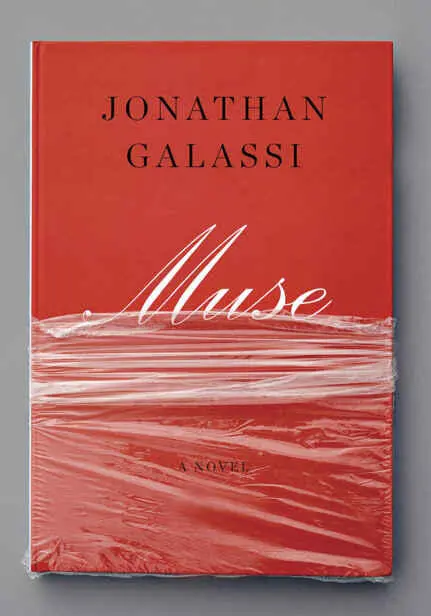
- Название:Muse
- Автор:
- Издательство:Knopf
- Жанр:
- Год:2015
- ISBN:нет данных
- Рейтинг книги:4 / 5. Голосов: 1
-
Избранное:Добавить в избранное
- Отзывы:
-
Ваша оценка:
Muse: краткое содержание, описание и аннотация
Предлагаем к чтению аннотацию, описание, краткое содержание или предисловие (зависит от того, что написал сам автор книги «Muse»). Если вы не нашли необходимую информацию о книге — напишите в комментариях, мы постараемся отыскать её.
Paul Dukach is heir apparent at Purcell & Stern, one of the last independent publishing houses in New York, whose shabby offices on Union Square belie the treasures on its list. Working with his boss, the flamboyant Homer Stern, Paul learns the ins and outs of the book trade — how to work an agent over lunch; how to swim with the literary sharks at the Frankfurt Book Fair; and, most important, how to nurse the fragile egos of the dazzling, volatile authors he adores.
But Paul's deepest admiration has always been reserved for one writer: poet Ida Perkins, whose audacious verse and notorious private life have shaped America's contemporary literary landscape, and whose longtime publisher — also her cousin and erstwhile lover — happens to be Homer’s biggest rival. And when Paul at last has the chance to meet Ida at her Venetian palazzo, she entrusts him with her greatest secret — one that will change all of their lives forever.
Studded with juicy details only a quintessential insider could know, written with both satiric verve and openhearted nostalgia,
is a brilliant, haunting book about the beguiling interplay between life and art, and the eternal romance of literature.
Muse — читать онлайн бесплатно полную книгу (весь текст) целиком
Ниже представлен текст книги, разбитый по страницам. Система сохранения места последней прочитанной страницы, позволяет с удобством читать онлайн бесплатно книгу «Muse», без необходимости каждый раз заново искать на чём Вы остановились. Поставьте закладку, и сможете в любой момент перейти на страницу, на которой закончили чтение.
Интервал:
Закладка:
Her occasional stealth appearances in New York and San Francisco in those years were widely reported on — and, as Paul discovered, occasionally invented. When Janis Joplin sang “Marginal Discharge” at Woodstock, Ida was reputedly sighted in the audience, though this may have been a desperate fan’s acid-stoked fantasy. Carly Simon and Carole King recorded a duet version of “Broken Man,” Ida’s sexiest, most unforgettable song, which went platinum in 1970 (that’s Ida shaking the tambourine in the background):
Broken man,
you’re just skin and bone,
broken-down man,
like I’m skin and bone.
Broken man,
why can’t I leave you alone?
Take my heart
and you torture me.
Break my heart,
I’m in misery.
Broken man,
will we ever be free?
Paul, though, preferred the version on Turnbull’s Grammy-winning album The Ida Sessions, on which she recites a dozen of her best-loved lyrics, filigreed with Trey’s smoking riffs on tenor saxophone.
In the seventies, during her short-lived flirtation with Maoism, when her work turned strident in the eyes of many, Ida was the only person ever to appear simultaneously on the covers of Rolling Stone, Tel Quel, and Interview. By then, though, she’d reunited with the leonine Outerbridge, now a virtual outcast as an unrepentant Stalinist, whom she’d met in London a decade earlier. Soon she more or less disappeared into the nimbus of A.O.’s Venetian silence (he’d long since stopped publishing). Ida kept writing, but her work, too, turned inward, though her crossover popularity with baby boomers had undeniable staying power over the next three decades. A new book would emerge every two or three years as if dropped from the heavens, and Sterling would gather it up and publish it at Impetus to general stupefaction and acclaim. Ida slowly became an off-site legend, a great hovering absent presence. Which only whetted the appetite of her fan base, who remained passionately loyal even as they themselves turned middle-aged.
Paul knew it all, from Ida’s first tentative poems in the Chestnut Hill Herbivore, already pregnant with intimations of future significance, to the most exquisite Swiss plaquettes of the fifties and sixties, published in gilt-edged, snakeskin-bound editions of no more than twenty or thirty. While still in Hattersville he quietly became a — no, the —leading connoisseur of Perkinsiana; it was his secret hoard of adoration, the way model cars or baseball cards are for other kids. Paul let his classmates deify Magic Johnson and Kurt Cobain; his obsession with Ida Perkins made her his and his alone in a way no one who was flesh and blood ever could be. And he guarded his heroine jealously — though he couldn’t help crowing about some of his discoveries to Morgan, who was mind-boggled by his maniacal fixation on his one-and-only poet.
“What did I start here? There are other writers, Paul,” she’d admonish him, rolling her eyes. “There’s Eliot, or Faulkner, or Stevens, or even the misunderstood Emily D. Hell, there’s even Arnold Outerbridge.”
Paul would just shake his head. Every word of Ida’s was pure gold. No one else could come anywhere near her.
Word slowly got out in scholarly circles that an oddball boy in Hattersville, New York, was the go- to guy about the elusive Ida, and over time Paul was inundated by bibliographical and biographical, even interpretive, queries from graduate students and eventually from established scholars of modernism. “What is all this strange mail you’re getting, Paul?” Grace Dukach would ask her son suspiciously, shrugging with incomprehension when he showed her the letters from English departments at Purdue and Baylor and Yale.
He’d even had a less-than-pleasant exchange with Elliott Blossom, critical poobah and self-styled kingmaker among contemporary poets. Blossom had written in The Covering Cherub that the “cyclamen stains” in “Attis,” the central text in Ida’s incendiary 1970 collection, Remove from the Right, referred to blood spilled in the Vietnam War. Paul, though, had pointed out, in a letter to the editor of the Cherub that has since become cherished academic lore, that the phrase occurs twice elsewhere in her work: in the little-known early poem “Verga,” of 1943, and in “Nice Weather,” an uncollected prose text from the late fifties, where it describes a pool of dried semen on her sleeping lover’s thigh (reputedly Harry Mathews’s). Blossom had withdrawn in high dudgeon and Paul understood that his chances for a university career had dwindled to almost nothing.
Which was fine with him, because what he wanted, he’d come to understand, was to be involved with the writers of his own generation who were going to be Ida’s heirs, even if he couldn’t imagine being one of them himself. At Morgan’s urging, he’d gotten himself south to NYU (and NYC!) for college, where he unimaginatively majored in English, edited the literary magazine, and more or less lived in the Bobst Library on Washington Square. He landed a student job in the manuscript collection after classes and during summer vacations, and on his lunch breaks he haunted the Strand and the other used-book stores on Fourth Avenue, most of them soon to be killed off by the Internet.
He’d also fallen under the spell of the rail-thin poet/critic Evan Halpern, whose view of Ida was more tempered than Paul’s, and who enjoyed winding him up about his obsession.
“I’m afraid Ida Perkins doesn’t come within striking distance of Elspeth Adams, Paul,” Evan would attack, pitting Paul’s most beloved NYU teacher against his deepest admiration, and preparing for the barrage he knew would be forthcoming from his young disciple. “She has none of her finesse, none of her historical ballast.”
“You’re just trying to get me riled,” Paul would volley back. “You know how I feel about Miss Adams. She’s the best teacher I’ll ever have”—he’d grin defiantly at Evan as he said this—“and an unforgettable poet. But she just doesn’t have Ida’s daring and reach and joie de vivre. She’s so careful and depressive … and … and closeted. She never has any fun — at least not on paper. She’s always the unloved lover, the loser, the waif. Ida is so up front and open about everything. And she knows how to enjoy herself, too.”
“Precisely. No implication, no tragic subtext. She’s a flat, declarative open book, always engaged and engorged. She’s a monotone ecstatic bore.”
Paul secretly enjoyed the way his teacher teased him about his attachment, but he was nowhere near ready to admit to anyone, least of all to Evan, that Ida was less than perfection. He was far too invested in his investment to submit it to any kind of test. He did, however, take Evan’s advice and write his undergraduate thesis on someone else: he’d chosen Arnold Outerbridge, concentrating on the influence of his postwar work on Ida.
At NYU Paul had also slowly, painfully, begun to accept that he liked boys better than girls, and had lived through a series of infatuations that brought him moments of intense joy but more often a misery he experienced as a low-grade fever he couldn’t kick. Ted Curtis, a fellow student in Evan’s symbolist poetry class, had been Paul’s first serious crush. A taciturn blond from Reading, Pennsylvania, Ted was certifiably heterosexual yet desperately in need of positive reinforcement. Paul’s not truly returned yet never fully rejected attraction consumed them both through college, until Ted went off to law school at Berkeley and they lost touch.
Love in the flesh remained elusive. It drew yet frightened him. This was the late eighties, after all, the most terrifying days of the plague. Surrounded everywhere by insolent youth and beauty, Paul looked and lusted but didn’t dare touch.
Читать дальшеИнтервал:
Закладка:
Похожие книги на «Muse»
Представляем Вашему вниманию похожие книги на «Muse» списком для выбора. Мы отобрали схожую по названию и смыслу литературу в надежде предоставить читателям больше вариантов отыскать новые, интересные, ещё непрочитанные произведения.








Обсуждение, отзывы о книге «Muse» и просто собственные мнения читателей. Оставьте ваши комментарии, напишите, что Вы думаете о произведении, его смысле или главных героях. Укажите что конкретно понравилось, а что нет, и почему Вы так считаете.