Jonathan Galassi - Muse
Здесь есть возможность читать онлайн «Jonathan Galassi - Muse» весь текст электронной книги совершенно бесплатно (целиком полную версию без сокращений). В некоторых случаях можно слушать аудио, скачать через торрент в формате fb2 и присутствует краткое содержание. Год выпуска: 2015, Издательство: Knopf, Жанр: Современная проза, на английском языке. Описание произведения, (предисловие) а так же отзывы посетителей доступны на портале библиотеки ЛибКат.
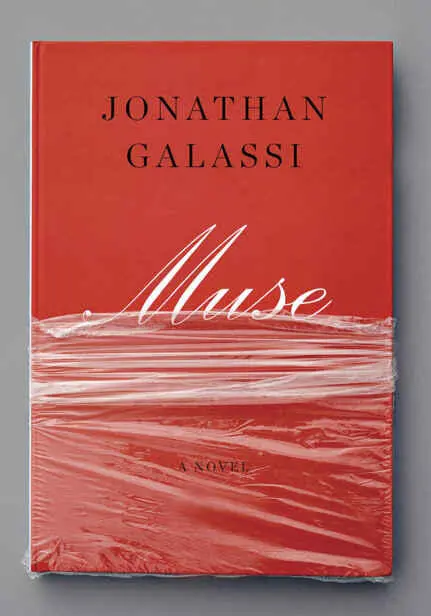
- Название:Muse
- Автор:
- Издательство:Knopf
- Жанр:
- Год:2015
- ISBN:нет данных
- Рейтинг книги:4 / 5. Голосов: 1
-
Избранное:Добавить в избранное
- Отзывы:
-
Ваша оценка:
Muse: краткое содержание, описание и аннотация
Предлагаем к чтению аннотацию, описание, краткое содержание или предисловие (зависит от того, что написал сам автор книги «Muse»). Если вы не нашли необходимую информацию о книге — напишите в комментариях, мы постараемся отыскать её.
Paul Dukach is heir apparent at Purcell & Stern, one of the last independent publishing houses in New York, whose shabby offices on Union Square belie the treasures on its list. Working with his boss, the flamboyant Homer Stern, Paul learns the ins and outs of the book trade — how to work an agent over lunch; how to swim with the literary sharks at the Frankfurt Book Fair; and, most important, how to nurse the fragile egos of the dazzling, volatile authors he adores.
But Paul's deepest admiration has always been reserved for one writer: poet Ida Perkins, whose audacious verse and notorious private life have shaped America's contemporary literary landscape, and whose longtime publisher — also her cousin and erstwhile lover — happens to be Homer’s biggest rival. And when Paul at last has the chance to meet Ida at her Venetian palazzo, she entrusts him with her greatest secret — one that will change all of their lives forever.
Studded with juicy details only a quintessential insider could know, written with both satiric verve and openhearted nostalgia,
is a brilliant, haunting book about the beguiling interplay between life and art, and the eternal romance of literature.
Muse — читать онлайн бесплатно полную книгу (весь текст) целиком
Ниже представлен текст книги, разбитый по страницам. Система сохранения места последней прочитанной страницы, позволяет с удобством читать онлайн бесплатно книгу «Muse», без необходимости каждый раз заново искать на чём Вы остановились. Поставьте закладку, и сможете в любой момент перейти на страницу, на которой закончили чтение.
Интервал:
Закладка:
As graduation neared, he became more and more worried about what he was going to do with his life. Terror gripped him that he’d have to go back to his family in Hattersville, a living death. After a series of panicked consultations with Morgan, he decided he’d give publishing a try, since it had to do with books and writers, the only things he’d ever cared about. Morgan, who, Paul had come to understand, was one of the most respected booksellers in the country, arranged an interview with her friend Homer Stern, the premier literary publisher of his generation, as she described him to Paul. “He’s an outrageous cad,” she told him, with a knowing glint in her eye. “But he’ll teach you more about publishing in one day than you’ll ever learn anywhere else.”
Homer had been all bluster and grand gesture when Paul paid him a visit, but, alas, he had no openings. It happened, though, that he knew about a position in the rights department at Howland, Wolff, and before long Paul found himself a member of the workforce, pulling down $300 a week and as many free books as he could haul home to his rabbit hutch of a studio in Chelsea.
His generally sunny demeanor, largely adopted in imitation of Morgan, which he managed to project even when he didn’t feel sunny, along with his judgment, which turned out to be usually sound thanks to Evan’s training and his voluminous reading, earned him Dan Wolff’s and Larry Friedman’s confidence, and after a couple of years he’d been elevated to junior editor at HW. But P & S remained his ideal.
True, they had legendarily disgusting quarters on Union Square, the city’s major needle park, and rock-bottom wages; but the quasi-religious fealty Homer inspired in his crew was a siren call to Paul. That and the authors! Not just scary Pepita Erskine, perfectionist Iain Spofford, and hypercool Thor Foxx, but the haunting young E. C. Benton, who’d sprung like Athena from the mountains of Carolina; or Grenada Brooks, the hope of Caribbean literature; or Dmitry Chavchavadze, the larger-than-life Georgian poet; and Australian Padraic Snell; and St. John Vezey, South Africa’s national bard, and … and … and … The list was practically endless. There was something about its homemade, familial — or was it paternalistic? — feeling for writers that made the shabby-chic firm fatally appealing to Paul. Each of their books was a sacred object. Paul was in love with Caroline Koblenz’s elegant jackets and typography that paid subtle homage to the work of W. A. Dwiggins, the genius behind Knopf’s magisterial bindings and settings, which had long ago set a never-to-be-equaled standard in book design. He loved the heft of the books in his hand. He loved the colors of their bindings. He loved how they smelled.
A few years later, after he had worked with a number of presentable if far from immortal novelists and journalists at HW, there had at last been an opening in Homer’s editorial department and, with yet another assist from Morgan, Paul had been able to make the leap. Homer took him out for a ceremonial lunch at his daily watering hole, the Soft-shell Crab, where they each downed a shot of vodka followed by the Crab’s popular wasabi tuna burgers. Paul reported for work two weeks later.
III. Home at Last
Paul had felt at home the moment he’d walked into the boxed-in, ill-lit P & S lobby. The place looked more like his idea of the offices of a porn magazine (there seemed to be one upstairs, down the hall from the rehab center on the eighth floor) than a temple of contemporary literature. A broken couch and frosted glass dividers fought for attention with certificates for the National Book Awards, Pulitzer Prizes, and National Book Critics Circle Awards won by house authors appended helter-skelter over the receptionist’s rickety desk alongside less prepossessing announcements, like the American Book Designers Federation 1969 honorable mention for typography. P & S specialized in Nobel Prizes, in fact, but there were no plaques for them, just the gold medals that Paul had noticed on Homer’s desk during their interviews. Later that morning, he was given a cubicle on the south side of the hallway (Homer had called it “a nice office with a window” at lunch), equipped with a boxy Korean computer console and a telephone, both of which appeared to be in working order.
Manuscripts from literary agents would show up in neat gray or powder-blue boxes on his pockmarked old school desk, or in battered manila envelopes if they were coming from writers without representation, and he’d read through them with the requisite show-me detachment. In 90 percent of cases, you could tell within a page or two whether the writer could write. Ninety percent of the time, box or no box, he or she could not. Every so often, though, the words would cohere, the sentences would follow one on another with lockstep plausibility, and Paul would begin to feel an unsettling combination of elation and fear — elation at the linguistic and psychological aptness of what he was reading, and fear, as he went on, that this undeniably gifted writer would veer off and spoil her creation before he could finish the stack of pages.
When, miraculously, the work was actually fine, Paul would run into Homer’s office half crazed with excitement, shouting, “We have to do this!” Which, remarkably enough in Paul’s experience, was music to Homer’s ears. “Go, go, go, baby!” he’d shout back, as if cheering on a two-year-old at the track. Paul would hondle, as Homer put it, with the writer’s agent over the advance — usually no more than $25,000 or $30,000 in those days — and often enough, mirabile dictu, the manuscript, and its author, would be theirs to coax and hover over and massage into a living, breathing printed and bound novel or book of stories or poems or essays or work of reportage that could be trumpeted to booksellers and reviewers and that increasingly endangered species, the retail book buyer, as something not to be missed.
Many P & S books turned out to be a bit more “specialized”—or should we say Impetus-like? — than was generally appreciated. Paul subscribed to the saw of Larry Friedman at Howland, Wolff that a publisher could either lead public taste or run after it. He wanted to lead, to introduce new voices, to make the common reader a little less common, which was the firm’s stated mission, after all; but sometimes he got tired of hearing how difficult their books were to sell from the travelers, a group of hard-boiled, hard-drinking commission salesmen and — women, old-timers who at heart were as devoted to good books as anyone in the office, if not more so, but who had to make a buck, as did Homer and Co. — though the editors often seemed unaware that this was a fundamental aspect of their work. So the sales and marketing departments, under cool, supercompetent Maureen Rinaldi and market-wise Seth Berle, who seemed like different species but functioned beautifully together in spite or because of it, would tart up the new Brooks or Burns or Burack with a stunning jacket and an only mildly misleading tagline and pass it off as far more easy to digest than it actually was. Paul would sometimes mutter, not too loudly, that it was P & S’s job to put over a few good books on the unsuspecting public — not that they were fooled all that often.
Still, in his years at the firm he and his fellow editors had managed to discover a number of writers who had developed into an identifiable group, indeed almost a generation of their own, who had made a notable cultural contribution and were sought after by readers. George Howe Nough’s Nightshade; Julian Entrekin’s Subtle Specimens; Nita Desser’s breakout second novel, Mud Rambling; and Eric Nielsen’s Show Me the Mountain were books that went a long way toward defining the aesthetic and the preoccupations of their moment. Nielsen and Entrekin in particular had become enormous best sellers and major prizewinners (Paul sometimes referred to them around the office as “Hemingway and Fitzgerald”) and Nielsen, with his fourth novel, The Insolent Hours —Paul was particularly chuffed that he’d come up with the title — had emerged as the novelist of the moment.
Читать дальшеИнтервал:
Закладка:
Похожие книги на «Muse»
Представляем Вашему вниманию похожие книги на «Muse» списком для выбора. Мы отобрали схожую по названию и смыслу литературу в надежде предоставить читателям больше вариантов отыскать новые, интересные, ещё непрочитанные произведения.











Обсуждение, отзывы о книге «Muse» и просто собственные мнения читателей. Оставьте ваши комментарии, напишите, что Вы думаете о произведении, его смысле или главных героях. Укажите что конкретно понравилось, а что нет, и почему Вы так считаете.