Jonathan Galassi - Muse
Здесь есть возможность читать онлайн «Jonathan Galassi - Muse» весь текст электронной книги совершенно бесплатно (целиком полную версию без сокращений). В некоторых случаях можно слушать аудио, скачать через торрент в формате fb2 и присутствует краткое содержание. Год выпуска: 2015, Издательство: Knopf, Жанр: Современная проза, на английском языке. Описание произведения, (предисловие) а так же отзывы посетителей доступны на портале библиотеки ЛибКат.
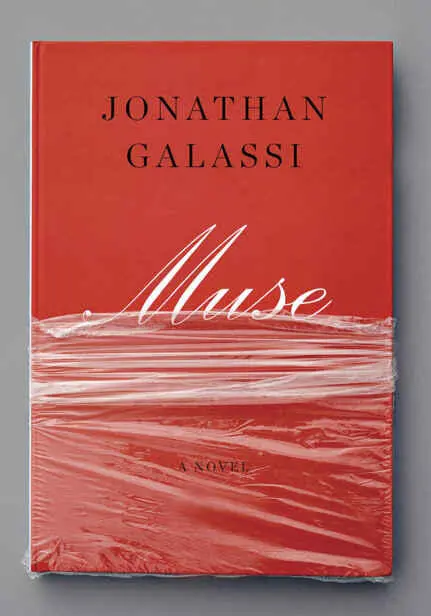
- Название:Muse
- Автор:
- Издательство:Knopf
- Жанр:
- Год:2015
- ISBN:нет данных
- Рейтинг книги:4 / 5. Голосов: 1
-
Избранное:Добавить в избранное
- Отзывы:
-
Ваша оценка:
Muse: краткое содержание, описание и аннотация
Предлагаем к чтению аннотацию, описание, краткое содержание или предисловие (зависит от того, что написал сам автор книги «Muse»). Если вы не нашли необходимую информацию о книге — напишите в комментариях, мы постараемся отыскать её.
Paul Dukach is heir apparent at Purcell & Stern, one of the last independent publishing houses in New York, whose shabby offices on Union Square belie the treasures on its list. Working with his boss, the flamboyant Homer Stern, Paul learns the ins and outs of the book trade — how to work an agent over lunch; how to swim with the literary sharks at the Frankfurt Book Fair; and, most important, how to nurse the fragile egos of the dazzling, volatile authors he adores.
But Paul's deepest admiration has always been reserved for one writer: poet Ida Perkins, whose audacious verse and notorious private life have shaped America's contemporary literary landscape, and whose longtime publisher — also her cousin and erstwhile lover — happens to be Homer’s biggest rival. And when Paul at last has the chance to meet Ida at her Venetian palazzo, she entrusts him with her greatest secret — one that will change all of their lives forever.
Studded with juicy details only a quintessential insider could know, written with both satiric verve and openhearted nostalgia,
is a brilliant, haunting book about the beguiling interplay between life and art, and the eternal romance of literature.
Muse — читать онлайн бесплатно полную книгу (весь текст) целиком
Ниже представлен текст книги, разбитый по страницам. Система сохранения места последней прочитанной страницы, позволяет с удобством читать онлайн бесплатно книгу «Muse», без необходимости каждый раз заново искать на чём Вы остановились. Поставьте закладку, и сможете в любой момент перейти на страницу, на которой закончили чтение.
Интервал:
Закладка:
“Mr. Chavchavadze, for all his political shrewdness, has failed to take on board Arnold Outerbridge’s vital role in denouncing the defensive Babbittry of prewar American society, and the promise of an alternative, however eventually disillusioning, that the Soviet Union once held out,” Pepita wrote in the fifth réplique of her fourteen-letter exchange with Dmitry, which was to prove fatal to their relationship.
“They’re all alike,” he’d been heard to mutter after breaking off their increasingly bitter dialogue — though he left it unspecified who precisely “they” were: Americans, writers, fellow-traveling socialist roaders, women, blacks? It could have been any or all.
Still, Pepita and Dmitry, together or apart, were always and only themselves. Pepita knew what she knew, and brooked no disagreement. But Dmitry was her match, a monument to the egoism of the transcendentally gifted. They were insufferable, both of them, to each other as much as to anyone else — maybe even to themselves, once in a blue moon. Yet, like Pepita, Dmitry, despite his dagger goatee and rotund belly, had undeniable charisma. Even his put-downs of other poets — except for Snell and Vezey, Homer’s other Aces, who were automatically exempted — were delicious. Dmitry knew he was bad, and there was a twinkle in his eye when he was at his most obstreperous, as if he was sharing a joke with you: the joke of his own outrageousness.
“Publishing would be so wonderful without those wretched authors,” one of Homer’s disenchanted colleagues once complained. Not for Paul. He floated on a sea of entrancement, pistol-whipped by the vagaries of his writers’ oversize neediness and self-absorption yet buoyed by the rewards of helping their work see the light of day. He, who was so beset by doubt — about his own talents, his eligibility for love, his capacity for happiness — never for a minute questioned the value of what he was doing. He was made for it, and he knew it. So he kept his head down, at one with his work, while his life flew by.
IV. The World of Sterling Wainwright
Paul met Sterling Wainwright, who at seventy-eight was beginning to bend more than a bit, at an Impetus New Poets reading at the New School seven or eight years into his tenure at P & S, in the fall of 2005. With his ubiquitous pipe and slightly threadbare gentility, Sterling exuded a patrician ease and impersonal openness that the younger man found enthralling, if a bit intimidating.
“Come and see me,” Sterling had offered, but Paul, who was shy with people he looked up to, had been slow to respond. When he’d mustered the gumption to call, they’d met at the Cornelia Street Café one afternoon for iced tea, and then repaired to Sterling’s apartment on Barrow Street for something stronger. They’d talked shop for hours: poetry, translators, the history of Impetus, and endless other topics, and Paul had emerged fascinated with Sterling himself — so offhand, so experienced, such a humble brag, as Paul called people who affected modesty, all the while letting you know just how accomplished they were.
And Sterling seemed to take an interest in Paul, too, gratified that someone from the younger generation knew enough to appreciate what he and his crowd had been up to in their salad days. Sterling had a need to testify, to transmit his lore and wisdom, and he professed to be stunned by the depth of Paul’s knowledge of Ida and her work. He gave the impression that he’d found in Paul the faithful receiver and disciple he’d been waiting for.
Sterling suggested that he and Paul keep talking, so every couple of weeks Paul showed up for another round of stories about Outerbridge, Ida, and the rest of Sterling’s writers, so different from Homer’s, yet equally impressive in their rarefied concentration on the most experimental practitioners of modernism. Slowly, a camaraderie developed. Paul, whose capacity for hero worship was bottomless, became attached to the older man. Sterling could feel it, Paul was sure, and basked in his young friend’s admiration. The fact that Paul worked for one of Sterling’s professional foes only seemed to increase his appeal in Sterling’s eyes.
The antipathy between Homer and Sterling was toxic. Paul was used to Homer’s talking Sterling and Impetus down, having heard about their author-related dustups over the years. They were still fighting, even now, over who should publish Giovanni Di Lorenzo’s letters. Paul had turned down Di Lorenzo’s weak later poems and stories and Di Lorenzo had taken them to Impetus, but his widow had recently collared Homer at a party and implored him to publish Giovanni’s literary remains. Homer, who could be a surprisingly soft touch where wives and daughters were concerned, felt a sentimental obligation to do so, bolstered no doubt by Sterling’s involvement. They had sparred over early Targoff, too, and mid-period Roden. Paul, though, always felt Ida was humming somewhere in the background.
When Paul let it drop that he’d met Sterling, Homer had been grandly condescending.
“I hadn’t realized he was still working. Not that he ever did.” Homer tapped his hand languidly over his mouth in imitation of a yawn. “Sterling Wainwright is a dollar-a-year man if I’ve ever seen one.”
“Impetus seems to be going strong, better than ever,” Paul countered mildly.
“Name their last best seller. I hear Wainwright spends all his time upstate. God, I wish he’d roll over so I could put my hand on Ida Perkins’s thigh.” Homer’s yawn exploded into a guffaw.
Paul got reciprocal static from Sterling.
“How’s Homer?” he’d ask Paul whenever they got together, his question anything but innocent. For Sterling, Homer epitomized everything that had gone wrong with publishing in the course of his career: loud, unlettered Homer was a merchandiser pure and simple, endlessly dumping worthless tripe on the market, like the rest of the big boys, to the detriment of Literature. He cut corners, lured away authors (from Sterling in particular) with promises he had no intention of keeping, and was disrespectful of Sterling’s sacrosanct authorial relationships, not to mention his vital contribution to the art of his time.
Worst of all, “I hear your boss has been sending importuning letters to Ida again,” Sterling would erupt, without a shred of evidence, as Paul would discover when he pushed for it. “Does he have any decency? Doesn’t he understand how embarrassing it is for Ida, having to turn him down year after year? Can’t you do something about it, Paul?”
Sterling’s misreading of Homer amused Paul, but it made him nervous, too. After all, he adored his wisecracking boss and the ramshackle enterprise he’d built, which was far more capable and dedicated to serious writing than Sterling would ever admit (the fact that he was so perennially exercised about Homer told Paul just how good Sterling knew Homer was). Besides, Homer paid Paul an unhandsome but more or less living wage, something Sterling could never have dreamed of doing.
Still, Paul couldn’t quite believe how much Sterling had seen and done in his long and eccentric life in letters. Unlike Homer, who was essentially an organization man, however idiosyncratic, and whose first commitment was to the institution he’d so carefully created and nursed, what mattered most to Sterling was writing itself. He was a walking encyclopedia of authorial genius and malfeasance, too: the ineffable charm and unreliability of Andrei Abramovich; Marina Dello Gioio’s scandalous penchant for younger men; how that so-and-so So-and-So had made it impossible for him to publish Faulkner; why his Aunt Lobelia, who’d been his major benefactor early in his career, hadn’t let him publish Lolita. Every publisher Paul knew had a story about why someone else had prevented him from taking on the risky masterpiece that had turned out not to be risky at all. But Paul had learned over time that most publishers were haunted by the Ones That Got Away — usually thanks to their own blindness or chintziness or lack of nerve. They seemed to matter more than the ones they’d managed to snare.
Читать дальшеИнтервал:
Закладка:
Похожие книги на «Muse»
Представляем Вашему вниманию похожие книги на «Muse» списком для выбора. Мы отобрали схожую по названию и смыслу литературу в надежде предоставить читателям больше вариантов отыскать новые, интересные, ещё непрочитанные произведения.








Обсуждение, отзывы о книге «Muse» и просто собственные мнения читателей. Оставьте ваши комментарии, напишите, что Вы думаете о произведении, его смысле или главных героях. Укажите что конкретно понравилось, а что нет, и почему Вы так считаете.