Jonathan Galassi - Muse
Здесь есть возможность читать онлайн «Jonathan Galassi - Muse» весь текст электронной книги совершенно бесплатно (целиком полную версию без сокращений). В некоторых случаях можно слушать аудио, скачать через торрент в формате fb2 и присутствует краткое содержание. Год выпуска: 2015, Издательство: Knopf, Жанр: Современная проза, на английском языке. Описание произведения, (предисловие) а так же отзывы посетителей доступны на портале библиотеки ЛибКат.
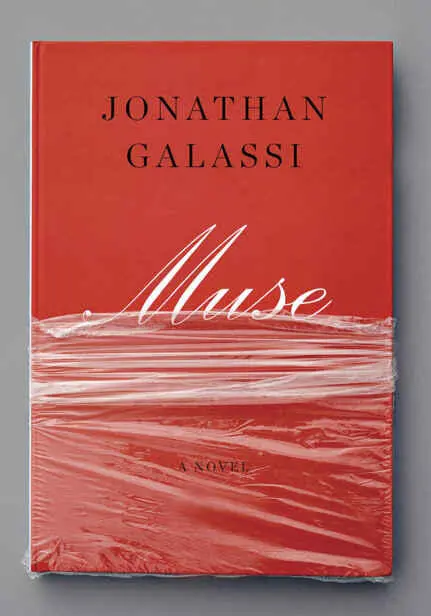
- Название:Muse
- Автор:
- Издательство:Knopf
- Жанр:
- Год:2015
- ISBN:нет данных
- Рейтинг книги:4 / 5. Голосов: 1
-
Избранное:Добавить в избранное
- Отзывы:
-
Ваша оценка:
Muse: краткое содержание, описание и аннотация
Предлагаем к чтению аннотацию, описание, краткое содержание или предисловие (зависит от того, что написал сам автор книги «Muse»). Если вы не нашли необходимую информацию о книге — напишите в комментариях, мы постараемся отыскать её.
Paul Dukach is heir apparent at Purcell & Stern, one of the last independent publishing houses in New York, whose shabby offices on Union Square belie the treasures on its list. Working with his boss, the flamboyant Homer Stern, Paul learns the ins and outs of the book trade — how to work an agent over lunch; how to swim with the literary sharks at the Frankfurt Book Fair; and, most important, how to nurse the fragile egos of the dazzling, volatile authors he adores.
But Paul's deepest admiration has always been reserved for one writer: poet Ida Perkins, whose audacious verse and notorious private life have shaped America's contemporary literary landscape, and whose longtime publisher — also her cousin and erstwhile lover — happens to be Homer’s biggest rival. And when Paul at last has the chance to meet Ida at her Venetian palazzo, she entrusts him with her greatest secret — one that will change all of their lives forever.
Studded with juicy details only a quintessential insider could know, written with both satiric verve and openhearted nostalgia,
is a brilliant, haunting book about the beguiling interplay between life and art, and the eternal romance of literature.
Muse — читать онлайн бесплатно полную книгу (весь текст) целиком
Ниже представлен текст книги, разбитый по страницам. Система сохранения места последней прочитанной страницы, позволяет с удобством читать онлайн бесплатно книгу «Muse», без необходимости каждый раз заново искать на чём Вы остановились. Поставьте закладку, и сможете в любой момент перейти на страницу, на которой закончили чтение.
Интервал:
Закладка:
As he unwound his thread during their evenings together, Sterling told Paul how he’d become a publisher at the behest of Arnold Outerbridge, when Sterling, an impetuous nineteen-year-old rich kid from Cincinnati, had decamped from the stultifying country club that was Princeton in the fall of 1946 and gone to sit at Outerbridge’s feet in war-ravaged London.
Steeped in the lore and poetry of classicism, A.O. had himself been bent as a young man on remaking stolid Edwardian literature into something with the chastity of his essential Greeks. The amazing thing was that he’d done it — he and his older friends and enemies Pound, Eliot, H.D., Moore, Lawrence, and all the others. What came to be known as modernism had remade literature and the other arts once and for all. Where before you might have written, “My love is like a red, red rose” and more or less gotten away with it, suddenly there was serious talk about
scalloped
petals sacrificed on
granite
(Paul looked on in amazement as Sterling threw his head back and recited Hoda Avery’s “Scimitar,” one of her early lyrics in her chastest imagist vein, from memory.)
Outerbridge in London, like Pound in Rapallo, had pulled the strings of his younger puppets in Oxford, New York, and San Francisco, and Sterling was among his willing captives. A.O., as Sterling needlessly reminded Paul, had been born in Nome in 1905, the son of a trapper and an Inuit woman. Somehow he got himself to Harvard, its first Alaskan student, but left after two semesters, in the spring of 1923, arguing, perhaps correctly, that the old Bostonian professorate had nothing to teach him. Instead he lit out, not for New York but London, earning his way across the Atlantic on a freighter, finding odd jobs in the metropolitan printing business, and, unbelievably, working his way deep into the beehive of English literary culture over the next decade. Ottoline Morrell took a shine to him, though Virginia Woolf found him “dull, bumptious” and T. S. Eliot studiously ignored him — until the brute force of Outerbridge’s talent compelled Old Possum to acknowledge that another American was making waves in London. Pound and Eliot, older by a generation, quailed when Arnold started haranguing no one in particular about the poetic “booboisie”—a term of opprobrium stolen from his antagonist and model H. L. Mencken. Brother Arnold, as he had the temerity to call himself, lifted more than a little from Uncle Ez, though Pound affected not to notice. But on top of A.O.’s literary prowess was political commitment as well, for, like Pound, Arnold became a True Believer, though in a very different church.
When the crash came, Arnold stayed put in London, where he fell under the spell of English Communism. He went to the Spanish Civil War with John Cornford, whom he had taught during a brief stint as a master at Stowe, and was by his side when Cornford died near Córdoba the day after his twenty-first birthday, at the end of 1936. Hesperus (1938), A.O.’s heroic elegy for his young comrade, won him fame across the political spectrum. Suddenly, the Left had an unimpeachable literary voice, less sniffily narcissistic than Auden, more expressive and more reliably doctrinaire than Dos Passos.
The brash, contentious American had become a force to contend with in London, widely viewed as the Shelley of his age. His brief affair with Decca Mitford before her marriage to Esmond Romilly was followed by a string of conquests, most of them among the Red Debutantes of Berkeley Square. In September 1940, he married Lady Annabel Grosvenor, estranged youngest daughter of the second Duke of Westminster. Their daughter, Svetlana, was born six months later.
Outerbridge had served with courage and distinction under Montgomery in North Africa during World War II, receiving the Victoria Cross, awarded for “most conspicuous bravery or extreme devotion to duty” for his ferocity at El Alamein. His poem about Stalingrad, Elegy for Evgenia (Heinemann, 1946) — he and Lady Annabel had divorced quietly in 1944—became the poetic rallying cry for worldwide Communism after the war, quoted approvingly by Stalin, translated into thirty-two languages (including into Russian by the up-and-coming Yurii Khodakovsky). Sterling nonchalantly pulled the 1948 American edition off a shelf and handed it to Paul.
Awarded an honorary Red Star in 1947, A.O. was at the peak of his powers. Even the archconservative Eliot wrote (privately) that he’d been moved to tears by A.O.’s epic The Fight (1948; Impetus, 1949), known as the Aeneid of international Communism, a twenty-thousand-line narrative of Russia’s devastating war the likes of which had not been seen since the days of Victor Hugo. Arnold’s autobiography, South from Nome (1950), was likewise an international succès fou (and for decades Sterling’s best-selling book. The Book-of-the-Month Club alone sold 88,000 copies the year it was published).
The Cold War, though, had been hard on A.O. From the left, the crowd around The Protagonist attacked his politics as retrograde and myopic, while Joe McCarthy went after him from the right. Sterling was valiant in presenting and defending Outerbridge’s later work — admittedly not as strong as his heroic period — but A.O. quickly fell out of fashion in the frightened Cold War West of Eisenhower and Eden.
By the time of the Hungarian Revolution in 1956, which A.O. publicly deplored, his career in the States — and in Britain, too — was effectively over. Even in Russia, where he had been made an honorary citizen, the post-Stalinist thaw meant that Outerbridge’s work went into decline under Khrushchev, and the invitations, awards, and emoluments dried up. For a while, Arnold wandered. Always writing, always it seemed with a new woman, he lived for several years on Minorca, almost within swimming distance of his old antagonist Robert Graves, and later in a remote village on the Greek island of Paros, with Svetlana, now married to a British banker, and their three boys in occasional attendance.
A.O. spent his declining years in Venice, holed up in the apartment overlooking his old flame Celine Mannheim’s garden. It was there, in the fall of 1969, that he encountered Ida Perkins again (they’d had a brief affair in London in the late fifties), at a dinner for none other than Homer Stern, who was visiting his cousin. Soon Arnold and Ida were living together, and she was to care for him devotedly for the next twenty years, till he died of emphysema on October 25, 1989, at the age of eighty-four.
Sterling admitted that when he’d first come to Outerbridge in London for advice, Arnold had not been encouraging about the young Princetonian’s forays into verse. “You’ll never make it as a poet, Sterl,” he’d drawled. “Go home and do something useful — like starting a publishing house. We need you.” Crestfallen, then inspired, Sterling had spent a few months skiing and canoodling in Gstaad before wending his way home on the Queen Mary. Less than two years later, Impetus Editions, set up in the old farmer’s cottage on his aunt Lobelia Delano’s estate in Hiram’s Corners, New York, a hundred miles north of the city, was a going concern.
“Impotent Editions,” Outerbridge called it when he was annoyed with Sterling, which turned out to be often over the next forty years. He hadn’t conceived that Sterling, beyond being loyal and well-heeled, might actually have a mind and sensibility of his own. But Impetus soon became anything but a rich man’s plaything. Sterling had been tight with a dollar, he acknowledged, but liberal in his encouragement of writing that he thought mattered and the writers who created it, and over not too many years, his fledgling house had developed from a congeries of Outerbridge acolytes into a small, selective organ of the left-leaning branch of late modernism (as opposed to the by-then-incarcerated Pound’s and the apotheosized Eliot’s rightward-tilting brand) that came to be known as the Movement.
Читать дальшеИнтервал:
Закладка:
Похожие книги на «Muse»
Представляем Вашему вниманию похожие книги на «Muse» списком для выбора. Мы отобрали схожую по названию и смыслу литературу в надежде предоставить читателям больше вариантов отыскать новые, интересные, ещё непрочитанные произведения.







Обсуждение, отзывы о книге «Muse» и просто собственные мнения читателей. Оставьте ваши комментарии, напишите, что Вы думаете о произведении, его смысле или главных героях. Укажите что конкретно понравилось, а что нет, и почему Вы так считаете.